← Back to Blog
Market Trends
Las Cruces, New Mexico Real Estate Market Guide: Prices, Neighborhoods and Timing You Can Actually Trust
By Abe Cardenas
EXIT Realty Horizons
September 2, 2026 · 11 min read
If you have been searching for a Las Cruces, New Mexico real estate market guide you can actually trust, with real prices, honest neighborhood breakdowns, and clear timing advice, this is it. The Las Cruces housing market in September 2026 looks different from what national headlines suggest, and understanding those local details is what separates a confident decision from a costly mistake. This guide covers what buyers, sellers, and people relocating to Las Cruces need to know right now.
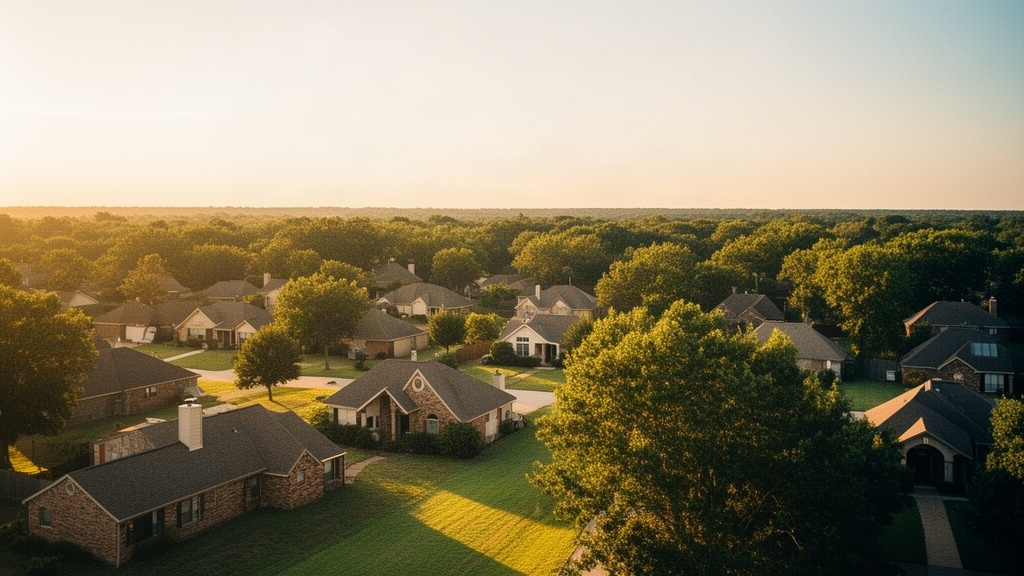
1. What the Las Cruces Housing Market Actually Looks Like Right Now
The Las Cruces market is a moderate seller's market in September 2026, though conditions vary significantly by price tier and area. Homes priced under $300,000 are moving quickly and often receive multiple offers within the first two weeks. Homes priced above $450,000 are sitting longer, giving buyers in that range more room to negotiate.
Current Median Prices and Inventory Levels
As of September 2026, the median sale price for a single-family home in Las Cruces sits in the low-to-mid $270,000s, up from roughly $250,000 in September 2025. According to Redfin's 2026 Las Cruces housing market data, the market has seen steady appreciation without the dramatic swings that hit coastal cities. That kind of measured growth is one reason buyers relocating from higher-cost states find Las Cruces appealing.
Active inventory in Las Cruces currently stands at roughly 500 to 600 listings across all price points, which is tight by historical standards. The average days on market for homes priced correctly is running around 25 to 35 days. Overpriced listings, particularly in the $400,000-plus range, are sitting 60 days or longer, which is an important data point for sellers setting their asking price.
How Las Cruces Compares to National Trends
National housing headlines in 2026 have been dominated by stories of cooling demand and rising inventory. Las Cruces tells a different story. While markets in Phoenix, Austin, and parts of Florida have softened noticeably, the Mesilla Valley has held its footing because its demand drivers are local and structural, not speculative.
This regional divergence is documented in broader housing research. HousingWire has noted that mid-size Sun Belt cities with government and university employment bases have proven more resilient than markets driven primarily by remote-work migration. Las Cruces fits that profile closely. Buyers and sellers here should be skeptical of any advice built entirely on national data.
2. A Neighborhood-by-Neighborhood Price Breakdown
Las Cruces is not a single market. Prices, lot sizes, home ages, and the pace of sales vary considerably depending on which part of the city you are looking at. Here is a factual breakdown of the major areas, so you can match your budget and priorities to the right search zone.
East Mesa and Sonoma Ranch
The East Mesa is the fastest-growing corridor in Las Cruces, stretching out along US-70 toward White Sands. Sonoma Ranch, one of the largest master-planned communities in the region, anchors much of this growth. Homes here were built primarily from the early 2000s onward, so buyers find newer construction, larger lots, and more open floor plans than in central Las Cruces. Median prices in Sonoma Ranch and the surrounding East Mesa communities currently range from the high $280,000s to the mid $400,000s depending on square footage and lot position.
The East Mesa is also where most of the active new construction is happening right now. Builders like D.R. Horton and local custom builders have active subdivisions in this area. Buyers considering new construction should factor in lot premiums, upgrade packages, and the fact that builder incentives in September 2026 have become a real negotiating point as builders work to move remaining inventory before the end of the year.
Mesilla Valley and Historic Mesilla
The Mesilla Valley floor, including the historic village of Mesilla itself, offers a completely different type of housing stock. Adobe construction, territorial-style architecture, and properties dating back to the mid-1800s are common here. Lot sizes tend to be larger, with many properties sitting on irrigated agricultural land along the Rio Grande. Prices in this area range widely: a modest adobe in Mesilla proper might list in the $200,000s, while a larger estate property with acreage along the river can exceed $700,000.
Buyers drawn to the Mesilla Valley should be prepared for a slower, more deliberate search. Inventory in this area is consistently thin because owners hold these properties for long periods. When something comes available, it often sells quickly to buyers who have been watching the market for months. If the Mesilla Valley is your target, having a local agent who knows which properties might be coming to market before they are listed publicly is a real advantage. Abe Cardenas has deep roots in this part of the market and can help you stay ahead of new listings.
Downtown and Central Las Cruces
Central Las Cruces, including the blocks around the Mesilla Valley Mall, NMSU's campus, and the downtown arts district along Main Street, offers the city's most walkable and transit-accessible housing. Homes here are older, typically built between the 1950s and 1980s, and sit on smaller lots. Prices in central Las Cruces are currently the most accessible in the city, with many single-family homes listed in the $160,000 to $240,000 range. Buyers who want proximity to NMSU, the Pan American Center, or the restaurants and galleries along Avenida de Mesilla will find this area worth a close look.
Condition varies considerably in central Las Cruces. Some homes have been well maintained or renovated; others need significant work. Buyers should budget for a thorough inspection and get clear on renovation costs before making an offer. Sellers in this area who have updated kitchens, bathrooms, or HVAC systems are seeing strong buyer interest and faster closings than comparable unrenovated properties.
Picacho Hills and West Side
Picacho Hills, situated on the west side of the Rio Grande near the Picacho Hills Country Club, is one of the more established residential areas in the broader Las Cruces market. Homes here tend to be larger, ranging from 2,000 to over 4,000 square feet, and sit on generous lots with Organ Mountain views. The price range in Picacho Hills currently runs from the mid $300,000s to well over $600,000 for larger custom homes. The west side more broadly, including communities along Avenida de Mesilla and toward Doña Ana, offers a mix of price points from the $200,000s upward.
3. Timing the Las Cruces Market: When to Buy and When to Sell
Timing in real estate is always relative to your personal situation, but Las Cruces does have seasonal patterns worth understanding. Knowing when competition is highest and when it eases can help you negotiate better terms, whether you are buying or selling.
Seasonal Patterns in the Mesilla Valley
The Las Cruces market historically peaks in spring, from March through May, when NMSU activity, military transfers from White Sands Missile Range, and the end of the school year drive the most buyer traffic. Sellers who list in late February or early March tend to see the most competition among buyers. Summer brings a secondary wave of activity tied to military PCS orders and university-related moves. Fall, which is where we are right now in September 2026, is a transitional period: buyer traffic is steady but not frantic, and motivated sellers who did not close in summer are often willing to negotiate on price or terms.
December and January are the slowest months in Las Cruces by transaction volume. Buyers who are flexible on timing and willing to shop in late fall or winter often find less competition and more motivated sellers. Sellers who must list in those months should price carefully and present their homes well, since the pool of active buyers is smaller. If you are a buyer right now in September 2026, you are entering the market at a point where you have more leverage than you would have had in April, without the deep slowdown of winter.
What Interest Rates Are Doing to Local Purchasing Power
Mortgage rates in September 2026 remain elevated compared to the historic lows of 2020 and 2021, sitting in the mid-to-upper 6% range for a 30-year conventional loan. In a market like Las Cruces, where median prices are still well below $300,000, that rate environment is more manageable than in cities where medians are $500,000 or higher. A buyer purchasing a $270,000 home with 10% down at a 6.75% rate is looking at a principal and interest payment around $1,570 per month, which is within reach for many households in the Mesilla Valley.
Buyers who are waiting for rates to drop significantly before purchasing should weigh that against continued home price appreciation. If prices in Las Cruces continue rising at the current pace of roughly 6 to 8 percent annually, waiting 12 months to save on interest could cost more in purchase price than it saves in monthly payment. That math is worth running with a local lender who understands the Las Cruces market.
4. What Drives Las Cruces Home Values That Outsiders Miss
People relocating to Las Cruces from out of state sometimes underestimate how local the demand drivers are here. Three factors in particular shape the Las Cruces market in ways that do not show up in national housing reports.
NMSU and the Government Sector
New Mexico State University employs roughly 4,000 people and enrolls around 14,000 students, making it one of the largest economic anchors in southern New Mexico. Faculty, staff, and graduate students create consistent rental and purchase demand, particularly in central Las Cruces and the neighborhoods immediately surrounding campus. White Sands Missile Range, located about 25 miles east of the city on US-70, employs thousands of federal workers and contractors who live in Las Cruces and commute. That commute runs roughly 30 to 40 minutes depending on security checkpoint wait times, and it is a primary reason the East Mesa continues to grow.
El Paso Proximity and Cross-Border Demand
Las Cruces sits about 45 miles north of El Paso, Texas, and that proximity matters for the housing market. Some buyers priced out of El Paso's market, or seeking more space for the dollar, purchase in Las Cruces and commute south on I-25. That drive runs roughly 45 to 55 minutes without traffic. Additionally, buyers from Ciudad Juarez, Mexico, who want U.S. property ownership have historically been a presence in the Las Cruces market, particularly in the $200,000 to $400,000 range.
New Construction vs. Resale
The relationship between new construction and resale inventory is a key dynamic in the Las Cruces market right now. Active builder communities on the East Mesa are adding supply, which gives buyers in the $280,000 to $380,000 range genuine options. However, builders price their inventory to reflect current costs, and resale homes in comparable locations are often priced similarly. Buyers should compare both carefully, factoring in the age of systems, lot maturity, and the time it takes to close on a new build versus a resale.
For a deeper look at how to evaluate specific listings and what to ask before committing, the buyer's guide to homes for sale in Las Cruces on this site walks through the process step by step.
5. How to Make a Confident Decision in This Market
Having a clear picture of the Las Cruces market is only useful if you translate it into action. Here is what buyers and sellers should be doing right now in September 2026 to position themselves well.
What Buyers Should Know Before Making an Offer
Get pre-approved, not just pre-qualified, before you start touring homes in Las Cruces. In the sub-$300,000 range, sellers are still receiving multiple offers on well-priced homes, and a pre-approval letter from a local lender carries more weight than a generic online pre-qualification. Know your target neighborhoods before you start, because the difference between an East Mesa home and a central Las Cruces home is not just price: it is lot size, home age, proximity to amenities, and commute time.
Inspection contingencies remain standard in Las Cruces and should not be waived lightly, even in a competitive situation. Older adobe and block construction common in central Las Cruces and Mesilla can have specific issues around roof systems, plumbing, and evaporative cooling that a qualified inspector will catch. Budget for the inspection and take the results seriously. If you want to understand what questions to ask your agent before you start, this article on what to ask when interviewing a real estate agent in Las Cruces is worth reading first.
What Sellers Should Know Before Listing
Pricing is the single most important decision a seller makes in the Las Cruces market right now. Homes priced at or slightly below comparable sales are moving in three to four weeks. Homes priced 5 to 10 percent above comps are sitting and accumulating days on market, which signals weakness to buyers and often leads to price reductions that result in a lower final sale price than a correct initial list price would have produced.
Presentation matters more than sellers often expect in a mid-size market like Las Cruces. Professional photography, clean landscaping, and a well-prepared interior consistently produce better results than listings that look rushed. Buyers in September 2026 are more selective than they were two years ago, and they have enough inventory to skip homes that do not show well online. If you want to understand what separates agents who close quickly from those who do not, the article on realtors in Las Cruces with the best track record for getting homes sold quickly is a useful read.
For people relocating to Las Cruces who want to understand the market before they arrive, this relocation guide covers what to expect from the buying process when you are moving from out of state.
FAQ
Is Las Cruces, New Mexico a buyer's market or a seller's market in 2026?
As of September 2026, Las Cruces leans toward a seller's market in the sub-$300,000 price range, where inventory is tight and well-priced homes receive offers within two to three weeks. Above $400,000, the market is more balanced, with homes sitting longer and buyers having more room to negotiate. The overall picture is one of steady demand supported by stable employment at NMSU and White Sands Missile Range, rather than speculative pressure, which makes the market more predictable than many other Sun Belt cities. Buyers and sellers should focus on local comparable sales rather than national headlines when making decisions.
What is the median home price in Las Cruces, New Mexico right now?
The median sale price for a single-family home in Las Cruces is in the low-to-mid $270,000s as of September 2026, up from approximately $250,000 in September 2025. Prices vary significantly by area: central Las Cruces and older neighborhoods near NMSU offer homes in the $160,000 to $240,000 range, while Sonoma Ranch and the East Mesa run from the high $280,000s into the $400,000s. Historic Mesilla and Picacho Hills can reach well above $500,000 for larger properties. For the most current figures, Redfin's Las Cruces market page is updated regularly and is a reliable reference point.
When is the best time of year to buy or sell a home in Las Cruces?
Spring, from March through May, is historically the most active period for both buyers and sellers in Las Cruces, driven by NMSU activity, military PCS transfers from White Sands Missile Range, and school-year transitions. Sellers who list in late February or early March tend to see the most buyer competition. Fall, including September and October, is a solid window for buyers who want less competition than spring without the deep slowdown of winter. December and January see the lowest transaction volume, which can benefit buyers willing to move during that period since motivated sellers are more likely to negotiate on price and terms.