← Back to Blog
Market Trends
Mill Creek, Washington Real Estate Market Guide: Prices, Neighborhoods and Timing
By Agnes AUSTRIA
Pellego
September 29, 2026 · 11 min read
If you are weighing a move to or from Mill Creek, Washington, this real estate market guide covers the numbers, the neighborhoods, and the timing questions that matter most right now in September 2026. Mill Creek sits in southwestern Snohomish County, roughly 20 miles north of downtown Seattle, and its housing market behaves differently from both Seattle proper and the broader Eastside. Here is what buyers, sellers, and relocating households need to understand before making a decision.
1. What Makes Mill Creek's Housing Market Distinct
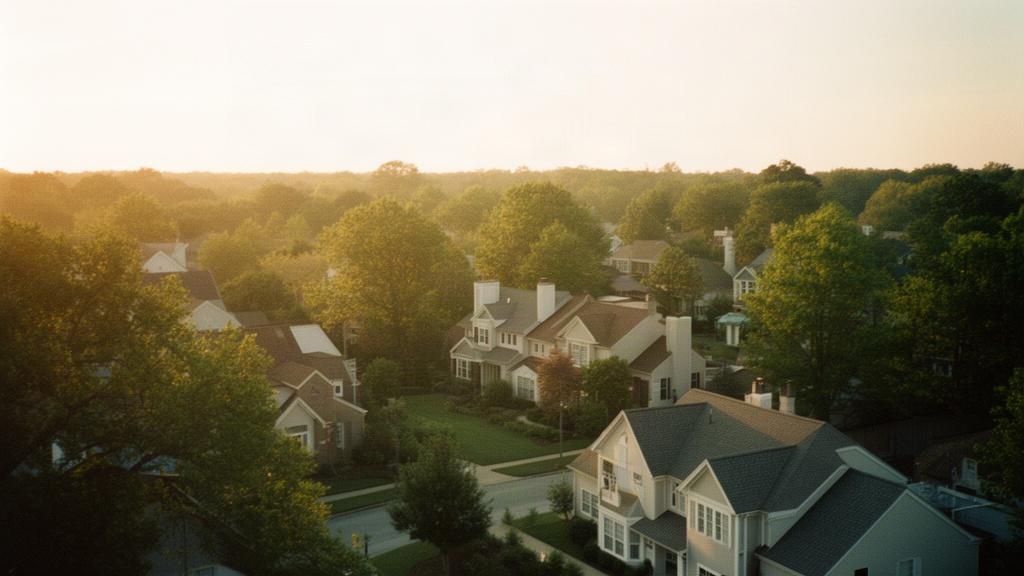
Mill Creek is a planned city, and that origin shapes everything about its real estate market. Incorporated in 1983 and built largely around a master-planned community developed by Pope Resources, Mill Creek was designed with curvilinear streets, extensive trail networks, and deed-restricted lots that limited the kind of ad hoc infill development you see in older Snohomish County cities. The result is a relatively consistent housing stock, a high ratio of single-family homes to multifamily units, and a streetscape that still looks intentional four decades later.
A Planned Community With a Specific Housing Profile
The overwhelming majority of Mill Creek's roughly 22,000 residents live in detached single-family homes built between the mid-1980s and the early 2000s. Most lots run between 6,000 and 10,000 square feet, though larger parcels exist on the eastern edges of the city where the terrain gets hillier and more wooded. Floor plans from this era tend to run 1,800 to 3,200 square feet, with four-bedroom, two-and-a-half-bath layouts being especially common. Townhomes and condominiums exist near the Town Center corridor but represent a smaller share of total inventory than in neighboring Bothell or Lynnwood.
How Mill Creek Fits Into the Snohomish County Picture
Mill Creek consistently prices above the Snohomish County median but below the King County median, which puts it in a specific band that appeals to buyers priced out of Bellevue or Kirkland but still wanting proximity to the SR-527 and I-405 corridors. According to Redfin's Mill Creek housing market data, the city has seen sustained demand over the past several years driven by its location between the tech employment corridors of Bellevue and Bothell and the more affordable price points of Everett to the north. That positioning has not changed materially in September 2026.
2. Current Price Landscape in Mill Creek
Median home prices in Mill Creek as of September 2026 sit in the high $700,000s to low $800,000s for detached single-family homes, depending on the specific subdivision, lot size, and condition. That range reflects a market that has plateaued somewhat after the sharp appreciation of 2021 through 2023, with price growth moderating but not reversing. For a detailed breakdown of the current median figure, the article on average home prices in Mill Creek right now goes deeper into the numbers by property type.
What Homes Actually Cost Right Now
Entry-level inventory in Mill Creek, meaning smaller townhomes and the oldest single-family homes in need of updating, starts around $575,000 to $625,000. Move-in-ready four-bedroom homes in established subdivisions like Settlers Ridge or Heatherstone typically list between $775,000 and $925,000. Homes on larger wooded lots, those backing to the Mill Creek trail system, or properties with recent kitchen and primary suite renovations regularly push past $950,000. True luxury product, custom builds on half-acre or larger parcels, can reach $1.3 million to $1.5 million.
Price per square foot currently runs roughly $340 to $420 for most of the market, with outliers in both directions. Buyers coming from Seattle or the Eastside often find that dollar figure competitive given Mill Creek's lot sizes and the amount of finished square footage they get relative to what those same dollars buy closer to the city core.
Price Variation by Housing Type and Location Within the City
Location within Mill Creek's city limits matters more than many buyers initially expect. Homes on the western side of the city, closer to SR-527 and the commercial spine along Mill Creek Road, tend to price slightly lower than comparable homes deeper in the wooded residential areas to the east. Backing to one of the city's 25-plus miles of trails or sitting adjacent to a greenbelt adds a measurable premium, sometimes $30,000 to $60,000 over a similar floor plan on a standard interior lot. Townhomes near the Town Center, which were built in larger numbers during the 2000s and 2010s, currently list in the $550,000 to $700,000 range.
3. Neighborhood Features and Housing Stock
Mill Creek's residential areas each have a distinct character rooted in when they were built and how they relate to the city's trail and open space network. Understanding those differences helps buyers narrow a search quickly rather than touring homes across the full city.
Mill Creek Town Center Area
The Town Center sits along 164th Street SE and functions as the city's commercial and civic hub. QFC, Bartell Drugs, a branch of the Sno-Isle Libraries system, and a collection of restaurants and service businesses anchor the area. Residential product closest to the Town Center skews toward attached townhomes and smaller single-family homes on compact lots, with some newer mixed-use style condominiums. For a ground-level look at what day-to-day life actually looks like in this part of Mill Creek, the article on daily life in the Mill Creek Town Center neighborhood covers the walkability, errands, and rhythm of living there.
Residential Subdivisions and Wooded Enclaves
The bulk of Mill Creek's housing stock lives in named subdivisions that were platted and built in phases from the mid-1980s through the early 2000s. Subdivisions like Settlers Ridge, Heatherstone, Briarwood, and The Highlands feature homes with two-car garages, mature landscaping, and direct trail access in many cases. Lot sizes in these areas average around 7,500 square feet, though corner lots and cul-de-sac parcels often run larger. The architecture is predominantly Pacific Northwest traditional: cedar siding or brick accents, pitched roofs, and covered front porches. Homes built in the 1990s dominate numerically, which means buyers should budget for roof, HVAC, and water heater updates depending on maintenance history.
New construction in Mill Creek is limited by the city's largely built-out land supply, though infill projects and a handful of small subdivisions continue to add product. For a current look at what is being built, the article on new housing developments and construction projects in Mill Creek in 2026 tracks active projects and what they mean for buyers who want new construction.
The Bothell Connection
Mill Creek shares its southern border with Bothell, and the two cities are functionally intertwined in daily life. Bothell's Canyon Park area, with its concentration of tech and biotech employers along SR-522 and 228th Street SE, sits just minutes from most Mill Creek addresses. UW Bothell and Cascadia College are a short drive south. Buyers who work in Canyon Park or along the Bothell employment corridor often find Mill Creek's residential neighborhoods convenient without paying Bothell's premium for the addresses closest to those employment centers. The two cities also share SR-527 as a main arterial, connecting both to I-405 at Bothell and to Everett to the north.
4. Market Timing: When to Buy or Sell in Mill Creek
Timing the Mill Creek real estate market is not about picking a perfect moment; it is about understanding the seasonal rhythm and current inventory conditions so you can make a realistic plan. Right now in September 2026, the market is in a transitional phase that creates different dynamics for buyers and sellers than what either group experienced in 2022 or 2023.
Seasonal Patterns in Listing Activity
Mill Creek follows the broader Pacific Northwest seasonal pattern: listing volume peaks in April through June, stays active through July, and then softens heading into fall. September sits at the front edge of that fall softening, which means buyers entering the market this month face less competition than they would have in May, but they are also choosing from a narrowing pool of homes. Sellers who list in September typically have genuine motivation; homes that lingered through summer and are still active may have room for negotiation on price.
The spring window from late February through May consistently produces the highest number of competing offers in Mill Creek, which pushes prices toward or above list. Buyers who can be flexible on closing timelines sometimes find that sellers who list in October or November are more open to contingencies or price adjustments than sellers in a peak-spring multiple-offer situation.
What Rising Inventory Means for Your Strategy
Snohomish County has seen meaningful inventory growth in 2026 after several years of historically tight supply. A HousingWire analysis of the Washington housing market noted a 13% inventory drop at the statewide level in an earlier period, but Snohomish County specifically has been adding supply through 2026, giving buyers more options than they had in 2022 or 2023. More inventory generally means longer average days on market, fewer bidding wars, and more room to negotiate inspection repairs or seller concessions.
For sellers, more inventory means your pricing strategy and home presentation matter more than they did in a supply-starved market. Overpriced homes are sitting longer. Homes that are priced accurately and show well are still moving, but the cushion that allowed sellers to list high and negotiate down has compressed. For a current read on whether the market is tilting toward buyers or sellers right now, the article on the Mill Creek housing market in September 2026 breaks down the current balance of power.
Speed of the Market Right Now
Well-priced, move-in-ready homes in Mill Creek are still going under contract within 7 to 21 days in September 2026. Homes that need work or are priced above comparable sales are sitting 30 to 60 days or longer. That gap between well-priced and overpriced homes is wider now than it was two or three years ago, which is useful information for both buyers evaluating whether to make an offer and sellers setting their initial list price. For the specific days-on-market figures, the article tracking how long homes are sitting on the market in Mill Creek this month has the current data.
5. Key Costs and Considerations Beyond the Purchase Price
The purchase price is only part of what you will spend to own a home in Mill Creek. Property taxes, HOA fees, commute costs, and ongoing maintenance all factor into the real monthly cost of ownership, and they vary enough within the city that two homes with identical list prices can have very different total cost profiles.
Property Taxes, HOA Fees, and Ongoing Costs
Mill Creek property tax rates in 2026 run approximately 0.85% to 1.05% of assessed value annually, depending on the specific levy district and any voter-approved measures in effect. On an $800,000 home, that translates to roughly $6,800 to $8,400 per year. Assessed value and market value are not always identical in Snohomish County, so the actual bill can differ from a simple percentage of your purchase price. The article on property taxes in Mill Creek and how they are calculated walks through the mechanics in detail.
Most Mill Creek single-family homes belong to a homeowners association, and HOA fees in the city typically run $40 to $120 per month for standard subdivisions. Townhome communities with shared exterior maintenance can run higher, sometimes $250 to $400 per month. What those fees cover varies considerably: some associations maintain only common area landscaping and trail connections, while others include exterior painting, roof reserves, and amenity facilities. Buyers should review the HOA financials and reserve study before closing, not after.
Commute and Connectivity
Mill Creek's location on the SR-527 corridor puts most addresses roughly 25 to 30 miles from downtown Seattle. Drive times during morning rush hour vary significantly depending on whether you are heading to I-405 south toward Bellevue, I-5 south toward Seattle, or SR-522 west toward Lake Forest Park. The detailed breakdown of commute times and route options from Mill Creek to downtown Seattle is covered in the article on the Mill Creek to downtown Seattle commute during morning rush hour, which includes both driving and transit options.
For buyers who work in the Canyon Park biotech corridor or at one of the major employers along the Bothell-Everett Highway, Mill Creek can be a 10 to 15 minute commute. Boeing's Everett facility is approximately 12 miles north via SR-527 and I-5. Amazon's Bellevue campus is roughly 22 miles south via I-405. Those distances make Mill Creek a reasonable midpoint for dual-income households with jobs in different directions.
Schools and Research Resources
Mill Creek is served by two school districts depending on which part of the city a specific address falls in: the Everett School District and the Mukilteo School District. The district boundary runs through the city, so two homes on the same street can feed into different schools. Buyers with school-age children should verify the specific assignment for any address they are seriously considering by checking directly with the Washington Office of Superintendent of Public Instruction or the relevant district's website, rather than relying on general neighborhood assumptions. The article on which schools serve Mill Creek and how the district boundaries work explains the geography in detail.
Beyond schools, Mill Creek's recreational infrastructure is a consistent draw for buyers who prioritize outdoor access. The city maintains over 25 miles of paved and soft-surface trails that connect residential neighborhoods to Terrace Creek Park, North Creek Park, and the open space corridors along Mill Creek itself. Meadowbrook Farm Interpretive Center, a 460-acre working farm and nature preserve just south of the city in Bothell, adds significant open space within a short drive. The Cascade foothills are accessible within 30 to 45 minutes on a clear day.
FAQ
Is Mill Creek, Washington a good place to buy a home in September 2026?
Mill Creek offers a specific combination of planned-community infrastructure, mature landscaping, trail access, and proximity to Snohomish and King County employment centers that makes it consistently in demand. As of September 2026, inventory has increased compared to the tight market of 2022 and 2023, which gives buyers more negotiating room and more time to evaluate homes carefully. Prices have moderated from their peak but have not declined sharply, so buyers are not getting a bargain relative to historical norms. Whether the timing works for a specific buyer depends on their financing, employment situation, and how long they plan to stay. A local agent who tracks Mill Creek's micro-market closely can help you evaluate whether a specific home is priced accurately relative to recent comparable sales.
How do Mill Creek home prices compare to neighboring Bothell?
Mill Creek and Bothell overlap in price range, but the comparison depends heavily on which part of each city you are looking at. Mill Creek's median for detached single-family homes sits in the high $700,000s to low $800,000s as of September 2026. Bothell's median varies more widely because the city contains a broader range of housing types, from older ramblers near downtown Bothell to newer construction in the Canyon Park area. In general, comparable floor plans and lot sizes in Mill Creek and the residential parts of Bothell price within $30,000 to $70,000 of each other, with location relative to employment corridors, trail access, and school district assignment driving most of the variation. Buyers comparing the two cities should run side-by-side comps on specific addresses rather than relying on citywide medians.
What should sellers in Mill Creek know about pricing their home right now?
The most important thing Mill Creek sellers need to understand in September 2026 is that the market is no longer forgiving of aggressive overpricing. Inventory has grown, buyers have more choices, and homes priced above recent comparable sales are sitting 30 to 60 days or longer before either selling at a reduced price or being withdrawn. Homes that are priced accurately from day one, presented well, and marketed actively are still selling within two to three weeks in most cases. Sellers should request a comparative market analysis based on closed sales from the past 90 days rather than active listings, because active listings represent asking prices, not what buyers are actually paying. A well-prepared seller who prices correctly and makes the home easy to show will outperform a seller who starts high and chases the market down.