← Back to Blog
Market Trends
Dallas Fort Worth, Texas real estate market guide: prices, neighborhoods and timing
By Alex Avelino
Sotheby's International Realty
October 8, 2026 · 5 min read
This Dallas Fort Worth, Texas real estate market guide: prices, neighborhoods and timing gives a practical overview of local price ranges, housing types, commute distances, and steps to prepare whether you are buying, selling, or relocating to DFW. Read on for neighborhood features, concrete cost bands, and a local checklist from Margaret Motheral.
1. What the price ranges look like in DFW
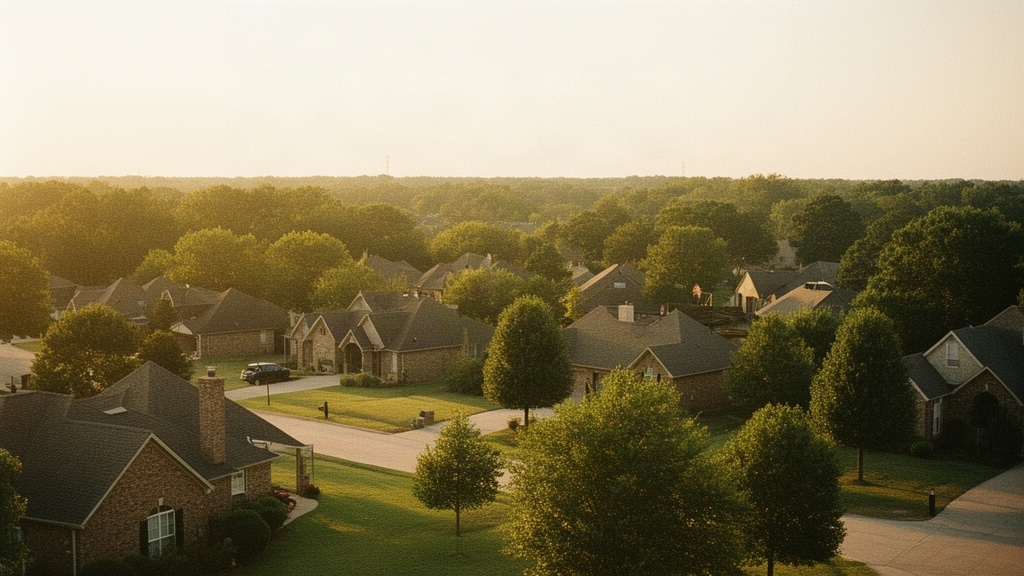
Snapshot of local price bands. Expect different price bands across Dallas and Fort Worth municipalities, with single family homes commonly priced from the low $200,000s in outer suburbs to well over $1,000,000 in certain Dallas neighborhoods. Condominiums and townhomes create a mid-market entry point inside central Dallas and along DART lines.
Metro price bands
Median price: Look up the current median sale price for Dallas County and Tarrant County on local MLS reports when you need an exact figure; those county medians show where the bulk of sales occur and help set expectations for offers.
City-level examples: Frisco and Plano have a higher share of new construction and subdivisions with 0.2 to 0.3 acre lots; prices for detached homes commonly start in the $500,000s in many parts. Arlington and Grand Prairie often offer lower entry prices for similar square footage, with more mid-century and ranch-style stock. Fort Worth has pockets of infill and redevelopment near the Cultural District and West 7th, as well as large suburban tracts in west and south Fort Worth.
2. How neighborhoods differ by housing stock and amenities
Neighborhood features vary widely across the metro. Use housing stock, lot size, and local amenities to narrow choices before asking about schools or crime statistics; those latter topics are personal decisions and should be checked with official sources.
Housing types and lot sizes
Typical stock: Dallas core has a high share of condos, mid-rise apartments, and century homes on smaller lots. Suburbs like McKinney, Frisco, and Rockwall emphasize new build single family homes on quarter- to third-acre lots. Fort Worth suburbs include larger lots and a mix of ranch and newer construction; historic neighborhoods near the Trinity River include bungalows and Craftsman houses.
Parks, transit, and landmarks
Local amenities: Dallas offers White Rock Lake, the Katy Trail, and the Dallas Arts District. Fort Worth highlights include the Cultural District, Sundance Square, and the Fort Worth Stockyards. Commuter rail and light rail corridors, including DART and TEXRail, influence where condos and townhomes cluster near stations.
3. Timing: what to watch and questions to ask
Watch indicators, not headlines. Track a few local metrics to decide timing: active inventory, average days on market, and the number of new permits in a specific city or ZIP code. You can also review local builder activity where new supply enters the market.
Local indicators to monitor
- Active listings: Check your city and ZIP code MLS counts weekly.
- Average days on market: Pull the last 90 days for a clear recent picture.
- New permits: City permit dashboards show how much new housing is coming online.
- Mortgage rate movements: Local buyer budgets change when rates shift; check rate updates from major lenders.
Questions to ask your agent: Which comparable recently sold properties will you use? What list-to-sale price ratio did those comps show? How many offers did the last five comparable listings receive? Those answers tell you how aggressive to be on price and concessions.
4. Practical steps for buyers and sellers in DFW
Buyers need a clear plan. Start with financing, then map neighborhoods by commute and amenities, and finally prepare to act on a solid comparable market analysis.
Five preparation steps for buyers
1. Get preapproved: A lender will give you a firm dollar range tied to current rates and your credit. This clarifies realistic price bands.
2. Define commute and amenities: List acceptable drive times to work, desired transit access, and nearby parks or shopping. For example, I-35E, I-30 and SH 114 corridors set commuting ranges for many buyers.
3. Pull targeted comps: Ask your agent for the last six months of sales in the same school attendance zone and same block patterns where possible. That produces a usable price range for offers.
4. Inspect priorities: Decide what you must have, and what is negotiable. Roof age, HVAC condition, and foundation notes matter in older Dallas and Fort Worth homes.
5. Be ready to move quickly: When a well-priced property in the right location hits MLS, decision time is often measured in hours; have your agent assemble comps and strategy in advance.
Sellers should prepare the home and the pricing plan. Staging, pre-list inspections, and a neighborhood-based pricing analysis help set realistic list price ranges and marketing timelines.
Five preparation steps for sellers
1. Get a neighborhood CMA: Request a comparative market analysis focused on your block, lot size, and updates similar to yours. That narrows list price choices.
2. Address visible repairs: Small investments in paint, landscaping, and lighting often improve buyer perception without large capital outlay.
3. Plan marketing: High-quality photos, 3D tours, and clear floor plans help listings get accurate traffic. Tools like Trolto can generate listing videos automatically from photos, and clear copy helps set expectations for buyers.
4. Set realistic timelines: Decide your ideal closing date and any flexibility for possession. That informs buyer incentives and inspection deadlines.
5. Choose an agent who knows your micro-market: Local experience in your city and ZIP code matters more than broad metro experience. Margaret Motheral of Sotheby's International Realty works on pricing and marketing plans across Dallas and Fort Worth neighborhoods.
5. Resources and next steps
Where to look for verified local data. City permit dashboards, county appraisal districts, your MLS agent portal, and transit agency maps give the hard numbers you need when evaluating a specific property.
Next steps: If you want a tailored plan, Margaret Motheral can pull ZIP code comps, drive-time maps from your work address, and a prioritized checklist for preparing a property for market across Dallas and Fort Worth.
6. Final checklist before you act
- For buyers: Get preapproval, define commute, compile 3 comps, set inspection priorities, and have an offer template ready.
- For sellers: Obtain a neighborhood CMA, complete visible repairs, prepare professional photos and video, set a flexible closing window, and review comparable days on market.
FAQ
How much should I budget for a typical single family home in the DFW area?
Budgeting depends on city and lot size. Entry single family homes on the outer edges of the metro often appear in lower price bands, while suburban cities with new subdivisions commonly start in mid price bands. Ask your agent for a ZIP code-specific median sale price and typical closing costs for that area to produce a precise budget.
Which neighborhood amenities change price expectations in Dallas and Fort Worth?
Proximity to parks like White Rock Lake or to transit corridors such as DART and TEXRail influences buyer interest. Also consider proximity to employment corridors such as I-35E, I-30, and SH 121. Use commute time, transit access, and nearby recreational amenities when comparing listings to set your price expectations.
What local data sources should I check to time my move?
Check MLS active listing counts for your target ZIP code, average days on market pulled for the most recent 90 days, the city permit dashboard for new construction, and county appraisal district records. Industry reporting from outlets like HousingWire can provide broader context on inventory and builder activity across the metro.