
← Back to Blog
Local Living
Relocating to Santaquin, Utah: Neighborhoods, Costs and Timelines
By Allison Peterson
September 27, 2026 · 13 min read
Relocating to Santaquin, Utah puts you in one of Utah County's fastest-growing cities, where you can buy a newer single-family home for considerably less than you would pay closer to Provo, all while staying within commuting distance of the Wasatch Front's major employment centers. This guide covers the distinct areas of town, what homes actually cost right now in September 2026, and how long the move-in process realistically takes from the day you start searching to the day you get your keys.
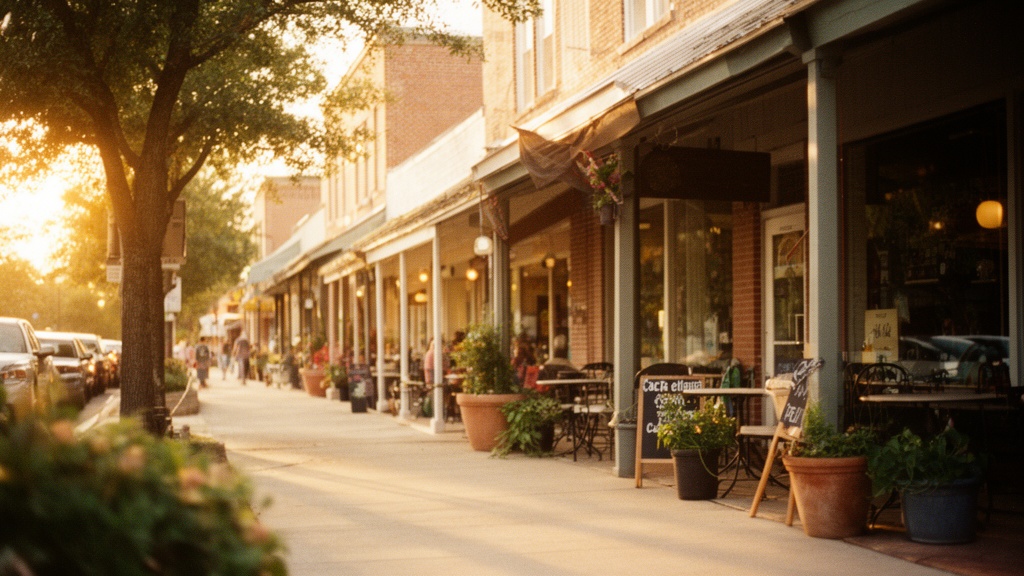
1. What Santaquin Looks Like on the Ground
Santaquin sits at the southern tip of Utah County, roughly 60 miles south of Salt Lake City and about 25 miles south of Provo, at an elevation just above 4,900 feet. The Wasatch Range rises immediately to the east, Santaquin Canyon cuts into the mountains behind the older part of town, and the valley floor opens to the west toward the Goshen Valley. That geography shapes everything: mountain views are common from most streets, summers are warm but rarely brutal, and winters bring measurable snow without the accumulation you find farther north.
The City's Layout and Setting
The city is not large in terms of developed land, but it is growing quickly. The historic core clusters around Main Street and Center Street, where you find older homes, the city park, and the original commercial strip. Newer development has pushed outward in all directions, with the most active construction happening on the western and southern edges of town where flat land is available for large-lot subdivisions.
Interstate 15 runs along the western side of the city, with the Santaquin exit at roughly mile marker 248. That freeway access is one of the most practical features of the location: you can be on I-15 heading north within minutes of leaving most neighborhoods, which matters a great deal for anyone commuting to Utah County or Salt Lake County employers.
What the Housing Stock Looks Like
The overwhelming majority of homes in Santaquin are detached single-family houses. Townhomes and condos exist but represent a small fraction of available inventory. Lot sizes tend to be generous by Wasatch Front standards: quarter-acre lots are common in the newer subdivisions, and older properties near the core sometimes sit on half-acre or larger parcels. Most homes built in the last 15 years are two-story construction with attached two-car or three-car garages, open-plan main floors, and four or more bedrooms.
If you want to understand how the city's growth is reshaping the housing supply, this breakdown of new Santaquin subdivisions and developments in 2026 gives a detailed look at what is currently under construction and what lots are still available.
2. Neighborhoods and Areas: What to Expect in Each Part of Town
Santaquin has three broadly distinct residential zones, each with a different character, price point, and lot configuration. None of them is far from the others; you can drive across the entire city in under ten minutes. The differences that matter most to relocating buyers come down to home age, lot size, proximity to the freeway, and distance to the canyon trailheads.
The Older Core Near Main Street
The streets surrounding Main Street and the blocks radiating out from Santaquin City Park contain the city's oldest housing stock. You will find brick ramblers and two-story homes from the 1950s through the 1990s, many on lots that run 0.25 to 0.5 acres. These homes tend to carry lower list prices than new construction, often in the $340,000 to $420,000 range depending on condition and updates, and they appeal to buyers who want established landscaping and larger yards without paying for a brand-new build.
The core area is also closest to Santaquin Canyon Road, which leads to the Santaquin Canyon Recreation Area and several trailheads. The canyon is a practical amenity: you can be at a trailhead in under five minutes from most streets on the east side of town. The trade-off is that some of the older homes need updating, and buyers should budget for inspections that may surface older electrical panels, original plumbing, or roofs approaching end of life.
The Newer Subdivisions on the West and South Edges
Most of Santaquin's growth since 2010 has happened in planned subdivisions west of Main Street and south of the original townsite. These neighborhoods feature newer construction, typically 2005 to present, with consistent street layouts, HOA-maintained common areas in some communities, and homes ranging from roughly 1,800 to over 3,500 square feet. Prices in these areas currently run from about $400,000 for a modest three-bedroom to $600,000 or more for a larger home with upgrades and a three-car garage.
Proximity to I-15 is closer in the western subdivisions, which shortens the freeway on-ramp drive. Several of these communities sit within a half-mile of the interchange, making the morning commute north toward Provo or south toward Nephi straightforward. The newest streets in these subdivisions are still being built out, so buyers willing to purchase early in a phase sometimes have the option to select lot position and some interior finishes.
Foothills and Canyon-Adjacent Streets
A smaller number of streets climb the lower foothills east of the older core, where lots become irregular, grades increase, and mountain views open up dramatically. Homes in this area are a mix of custom builds and semi-custom construction, often on larger parcels of 0.5 acres or more. These properties come to market less frequently and tend to sell at a premium relative to square footage because of the setting and lot characteristics.
3. Home Costs: What Relocating Buyers Are Actually Paying in September 2026
As of September 2026, the median home price in Santaquin sits in the low-to-mid $400,000s, with active listings ranging from the high $300,000s for smaller or older homes to well above $600,000 for larger new builds. That price range is meaningfully below comparable square footage in Provo, Orem, or Lehi, which is one of the primary reasons buyers relocating from within Utah County or from out of state are increasingly looking at Santaquin as a landing point.
Median Prices and Price Ranges
- Median list price, September 2026: approximately $415,000 to $430,000 for a single-family home in Santaquin, depending on the week and current active inventory.
- Older core homes (pre-2000 construction): typically $340,000 to $420,000; condition and lot size drive the spread.
- Newer subdivision homes (2005 to present): typically $400,000 to $580,000 for three-to-five bedroom layouts; larger or upgraded homes reach $600,000 to $650,000.
- New construction from builders: base prices generally start around $430,000 and climb with lot premiums, elevation packages, and finish upgrades.
- Price per square foot: resale homes commonly land between $175 and $215 per square foot; new construction runs $200 to $240 per square foot before upgrades.
Utah's ongoing lot-size reform legislation, which passed earlier in 2026, is designed to encourage more starter-home construction on smaller parcels. According to HousingWire's coverage of the Utah housing affordability bill, the goal is to create more entry-level inventory in growing cities like Santaquin by allowing denser platting. That may gradually shift the lower end of the price range downward over the next two to three years, though the effect on September 2026 pricing is still limited.
Additional Costs to Budget For
The purchase price is not the only number that matters when relocating to Santaquin, Utah. Buyers should build in room for closing costs, property taxes, and any HOA fees that apply to their specific subdivision.
- Closing costs: buyers in Utah typically pay 1.5% to 3% of the purchase price in closing costs, covering lender fees, title insurance, escrow, and prepaid items. On a $430,000 home that is roughly $6,500 to $12,900.
- Property taxes: Santaquin sits in Utah County, where the effective property tax rate on a primary residence runs approximately 0.5% to 0.6% of assessed value annually. On a $430,000 home, expect roughly $2,150 to $2,580 per year.
- HOA fees: not all Santaquin subdivisions have HOAs, but those that do typically charge $25 to $75 per month for common area maintenance and covenants enforcement.
- Utilities: natural gas, electric, water, and sewer in Santaquin are served by a combination of Rocky Mountain Power, Questar Gas, and city utilities. A typical household budget of $200 to $280 per month covers most of the year, with higher bills in January and February.
For a full breakdown of what closing looks like on a Santaquin purchase, see this detailed guide to Santaquin closing costs, fees, and taxes, which covers each line item you will see on your settlement statement.
4. Realistic Timelines for Relocating to Santaquin
From the moment you decide to move to Santaquin to the day you have keys in hand, the process typically takes 60 to 120 days if you are purchasing a resale home, and 6 to 12 months if you are building new. The wide range reflects how quickly you find a home that fits your criteria, how competitive the market is at that moment, and how long your lender takes to underwrite your loan.
The Search and Offer Phase
Most relocating buyers spend two to six weeks actively searching before writing an offer. Santaquin's inventory has grown compared to a few years ago, which means you are less likely to face the situation where you must write an offer the same day a home hits the market. That said, well-priced homes in the newer subdivisions still move within one to two weeks of listing, so having your pre-approval in hand before you start touring is essential.
If you are relocating from out of state, plan for at least one in-person visit of two to three days where you tour multiple homes and neighborhoods. Some buyers do make offers after a single visit or after virtual tours, but Santaquin's topography and the difference between the older core and the newer subdivisions is easier to understand when you have walked the streets yourself.
Under Contract to Close
Once your offer is accepted, the standard Utah Real Estate Purchase Contract gives you a negotiated closing timeline, most commonly 30 to 45 days. Within the first 14 days you will complete your due diligence period: ordering a home inspection, reviewing seller disclosures, and finalizing your financing. Santaquin's newer homes generally inspect cleanly, but the older core properties sometimes surface items like radon mitigation needs, older HVAC systems, or irrigation system repairs that require negotiation.
- Days 1 to 5 under contract: open escrow, order inspection, submit loan application to underwriting.
- Days 5 to 14: inspection completed, review report, negotiate any repairs or credits, finalize appraisal order.
- Days 14 to 25: appraisal conducted, underwriting review, clear-to-close issued by lender.
- Days 25 to 30 to 45: final walk-through, sign closing documents at title company, fund and record; keys released same day or next business day.
Planning Your Move-In Window
If you are renting in your current city and need to coordinate lease-end with your Santaquin closing date, build in a two-week buffer on each side. Lender delays, appraisal scheduling, and title issues occasionally push a closing by a week, and a two-week buffer keeps you from being caught without housing on either end. Short-term rental options in and around Santaquin are limited, so if your closing slips, your fallback options are staying with contacts in the area or booking something in Payson, which is 10 miles north.
5. Commutes, Services, and Day-to-Day Logistics
One of the first questions buyers ask when relocating to Santaquin, Utah is how long the commute to work will be. The honest answer depends heavily on your destination and what time you leave, but the freeway access and the distance to major employment centers are well-documented.
Getting to Work From Santaquin
- Payson (10 miles north): 12 to 18 minutes by car; Payson has a growing commercial corridor including a hospital, retail, and light industrial employers.
- Spanish Fork (18 miles north): 20 to 28 minutes by car via I-15; significant manufacturing and distribution employment.
- Provo and Orem (25 to 30 miles north): 30 to 45 minutes by car depending on traffic; BYU, Utah Valley University, and the tech corridor along University Parkway are all accessible.
- Salt Lake City (60 miles north): 55 to 80 minutes by car in normal conditions; the FrontRunner commuter rail has a station in Payson, which reduces driving if your employer is near a station farther north.
For a more detailed look at commute options including FrontRunner schedules and park-and-ride locations, see this guide to commuting from Santaquin to Provo and Salt Lake City.
Groceries, Healthcare, and Everyday Errands
Santaquin has a modest commercial base along Main Street, including a Smith's grocery store, a handful of locally owned restaurants, a gas station cluster near the freeway, and basic services. For a larger grocery run, a Home Depot or Costco trip, or a sit-down dinner at a broader range of restaurants, most residents drive to Payson or Spanish Fork. Payson Regional Medical Center, a full-service hospital, is about 12 miles north and handles emergency and specialty care for the southern Utah County area.
The city has a public library, a city park with sports fields, and access to Santaquin Canyon Recreation Area for hiking and mountain biking. Nebo Loop Scenic Byway, one of Utah's designated scenic drives, begins near Payson and passes through terrain accessible from Santaquin, making outdoor recreation a practical part of daily life rather than a weekend road trip.
6. What Out-of-State and Long-Distance Buyers Should Know
Relocating to Santaquin, Utah from another state involves a few practical and legal considerations that differ from a local move. Understanding them early prevents surprises at closing or in the first months after you move in.
Buying Remotely or on a Short Visit
Utah allows remote closings and electronic notarization, which means out-of-state buyers can sign closing documents without flying back to Utah. Most title companies in Utah County are set up for this process. What you cannot fully replicate remotely is the physical experience of touring the home and the neighborhood, so if you are serious about a specific property, a dedicated in-person visit before writing an offer is strongly worth the trip.
NAR's 2024 relocation research found that proximity to family and affordability are the two leading drivers of long-distance moves. According to NAR's report on relocation trends, buyers relocating for affordability are increasingly looking at smaller cities adjacent to major metro areas, which describes Santaquin's position relative to Provo almost exactly.
Utah-Specific Rules That Affect Your Purchase
Utah is a non-disclosure state, meaning sale prices are not publicly recorded in a way that is freely searchable by the public. This matters for out-of-state buyers who are used to looking up recent comparable sales on county assessor websites: you will need your agent to pull MLS data to understand what homes are actually selling for in Santaquin. Your agent can provide a comparative market analysis that shows closed sale prices, which is the only reliable way to evaluate whether a list price is reasonable.
Utah also uses a standardized real estate purchase contract through the Utah Association of Realtors. The due diligence period, financing contingency, and appraisal provisions all have specific default timelines that differ from what buyers in California, Texas, or the Pacific Northwest may be used to. Reading the contract carefully with your agent before you write your first offer will prevent confusion about deadlines and your rights to withdraw.
For a step-by-step walkthrough of the full purchase process in Santaquin, including what happens at each stage from pre-approval to closing, see this complete buyer's guide for Santaquin, Utah.
FAQ
How much does a typical home cost when relocating to Santaquin, Utah in 2026?
As of September 2026, the median single-family home in Santaquin is priced in the low-to-mid $400,000s. Older homes near the Main Street core tend to list between $340,000 and $420,000, while newer subdivision homes run from about $400,000 to $580,000 depending on size and finishes. New construction from builders starts around $430,000 at base price and climbs with lot premiums and upgrade packages. Buyers should also budget for closing costs of 1.5% to 3% of the purchase price and annual property taxes of roughly 0.5% to 0.6% of assessed value.
How long does it realistically take to buy a home and move in when relocating to Santaquin?
For a resale home, most buyers complete the process in 60 to 90 days from the start of their active search to closing day. The search phase typically takes two to six weeks, and the period from accepted offer to closing runs 30 to 45 days. New construction timelines are longer, usually six to twelve months from contract to completion depending on the builder's current backlog and which phase of a subdivision you are purchasing in. Out-of-state buyers should add a buffer week or two on either side of their target closing date to account for potential lender or appraisal delays.
What is the commute like from Santaquin to Provo or Salt Lake City?
Santaquin sits about 25 miles south of Provo, and the drive via I-15 takes 30 to 45 minutes depending on traffic and time of day. Salt Lake City is roughly 60 miles north, which translates to 55 to 80 minutes by car under normal conditions. Buyers who prefer not to drive the full distance to Salt Lake can use the FrontRunner commuter rail, which has a station in Payson about 10 miles north of Santaquin; parking at the Payson station and riding the train into Salt Lake reduces driving significantly. The freeway on-ramp in Santaquin is close to most neighborhoods, so the daily on-ramp-to-freeway portion of the commute is short.