
← Back to Blog
Neighborhoods
What Neighborhoods or Areas Exist Within Santaquin Utah and What Is Each One Generally Like
By Allison Peterson
September 23, 2026 · 9 min read
Santaquin, Utah is a small city with a surprisingly varied landscape of neighborhoods, from newer master-planned subdivisions along the western bench to older, established streets near the historic core. If you are trying to understand what neighborhoods or areas exist within Santaquin Utah and what each one is generally like, this guide breaks it down by housing type, lot size, price range, and the physical features that make each pocket of town distinct. Whether you are relocating from out of state or moving from elsewhere in Utah County, knowing the layout before you shop will save you a lot of time.
1. How Santaquin Is Laid Out Geographically
Santaquin sits at the southern end of Utah County, roughly 60 miles south of Salt Lake City and about 20 miles south of Provo, at the base of the Wasatch Range where the valley narrows before opening into Juab County. Understanding the city's geography is the first step to understanding its neighborhoods, because elevation, road access, and proximity to I-15 shape each area in concrete ways.
The Mountain Bench and the Valley Floor
Santaquin's residential land divides naturally into two elevations. The valley floor holds the historic downtown core and older residential streets, while the bench land climbing toward the Wasatch foothills to the west and north has absorbed most of the new subdivision growth built since the early 2000s. Homes on the bench tend to sit at a noticeably higher elevation than those near Center Street, which translates to longer views across the valley toward the Oquirrh Mountains to the west.
How the Freeway and Main Street Divide the City
I-15 runs along the western edge of the city, and the Santaquin interchange at Exit 244 is the main artery connecting the town to the broader Utah County corridor. Main Street and Center Street form the traditional grid of the older town. East of those streets, the terrain rises quickly toward the canyon mouth. West of I-15, there is very little residential development. Most of the city's housing stock, old and new, sits in the corridor between the freeway and the foothills.
2. The Historic Core and Old Town Area
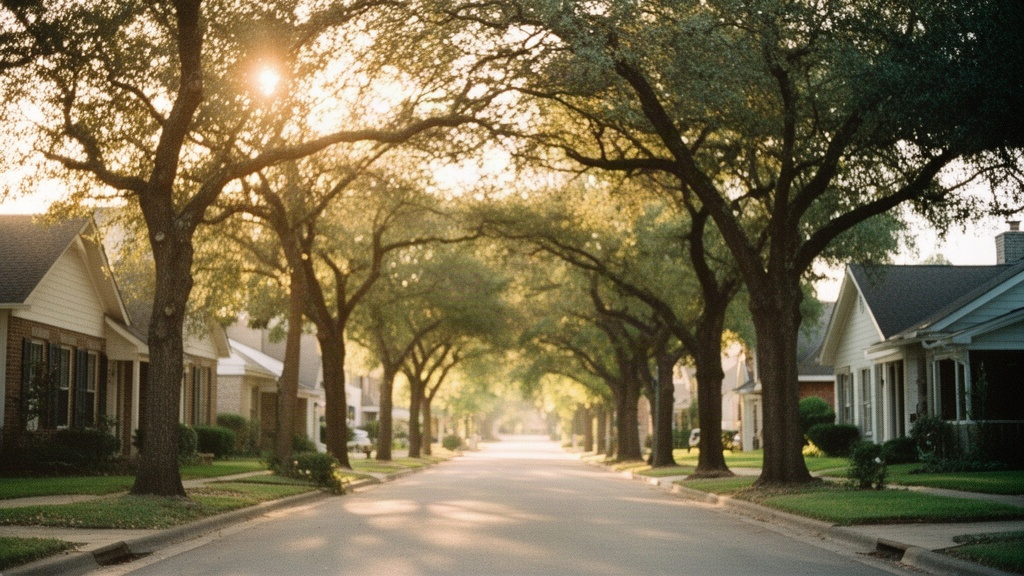
The historic core of Santaquin is the original platted townsite, centered around Main Street, Center Street, and the blocks radiating outward from the old commercial strip. This is where Santaquin's oldest homes sit, and it gives the area a character that is distinct from the newer subdivisions on the bench.
Housing Stock and Lot Sizes Near Center Street
Homes in the Old Town area were largely built between the 1900s and the 1970s, with a mix of bungalows, ranch-style homes, and a handful of two-story farmhouse-style properties. Lot sizes here run generous by modern subdivision standards, commonly between 0.20 and 0.40 acres, with mature trees, established landscaping, and in many cases detached garages or outbuildings. Streets are wider and laid out on the traditional Utah grid, so blocks are long and walkable to the city park and the Santaquin City offices.
The Santaquin Peach Days festival, held each September near the city center, draws crowds to this part of town. The event reflects the agricultural heritage of the area, and you can still find older orchards and large garden spaces on some lots in the surrounding residential blocks. Santaquin City Park, located near the historic core, offers ball fields, picnic areas, and open lawn space within walking distance of these streets.
Price Range and What Buyers Typically Find
Older homes in the historic core tend to list at lower price points than comparable square footage in the newer subdivisions, largely because of age and the need for updates. In September 2026, entry-level properties in this part of Santaquin can be found in the low-to-mid $300,000s, though updated or larger homes on bigger lots push into the $400,000s. Buyers who want more land, mature trees, and a traditional neighborhood grid often find this area worth a close look. For a broader view of what prices are doing across the city right now, see the breakdown of home prices in Santaquin in September 2026.
3. The Western Bench Subdivisions
The bench land west and northwest of the historic core is where the majority of Santaquin's residential growth has occurred over the past two decades. Several named subdivisions sit in this zone, each with its own layout, lot sizes, and price range. These communities represent the bulk of what buyers searching for newer construction in Santaquin will encounter.
Quail Cove and Santaquin Meadows
Quail Cove is one of the more established subdivisions on the bench, with homes built primarily in the 2000s and early 2010s. Lots here run between 0.15 and 0.25 acres, and the homes are predominantly two-story, with attached two-car garages and open floor plans typical of that construction era. Streets curve around the natural contours of the bench, and many lots back up to open hillside or drainage corridors that provide a buffer between homes.
Santaquin Meadows sits adjacent to Quail Cove and shares a similar profile in terms of construction vintage and lot size. Homes in both communities typically range from about 1,800 to 2,800 square feet. Views from the upper streets in these subdivisions extend across the valley floor toward the West Desert and the Oquirrh Mountains, which is one of the more notable physical features of living at this elevation in Santaquin.
Sage Hills and Surrounding Communities
Sage Hills is a newer development on the northern portion of the bench, with construction running through the mid-2010s and into the 2020s. Homes here tend to be larger, with many floor plans starting at 2,200 square feet and stretching past 3,500 square feet for the bigger models. Lot sizes vary, but a number of properties in Sage Hills sit on 0.20-to-0.30-acre lots, giving more outdoor space than the tighter layouts found in some older Utah County suburbs.
Several smaller platted communities sit between and around these named subdivisions, including pockets of development along 400 North and 600 North that blend into the bench grid. Some of these streets were developed as individual custom lots rather than as part of a master-planned community, so the architecture is more varied and lot sizes can be larger than in the planned subdivisions. You can find additional community and market context for these areas through the Santaquin community guide on Homes.com, which aggregates listing and neighborhood-level data.
Price Ranges and Home Sizes on the Bench
Bench subdivision homes in Santaquin currently list in a wide band depending on size, age, and condition. In September 2026, a three-bedroom home in Quail Cove or Santaquin Meadows typically lists between the mid-$350,000s and $450,000. Larger or newer homes in Sage Hills and comparable communities push into the $450,000-to-$550,000 range, and fully updated properties with finished basements can reach higher. These subdivisions make up the largest share of active inventory in Santaquin at any given time, so buyers have the widest selection here.
4. The Southern and Eastern Edges of Town
As you move south and east from the historic core, Santaquin's residential density drops and lot sizes grow. This part of the city transitions toward rural residential and agricultural land, and the properties here have a distinctly different character from the bench subdivisions to the north and west.
Rural Residential and Larger Lot Properties
The southern portion of Santaquin's city limits includes properties on half-acre to multi-acre parcels, some with accessory structures, horse privileges, or agricultural use. Homes in this zone range from older ranch-style builds to newer custom construction, and the spread in price reflects that variety. A modest older home on a large lot might list in the $380,000s, while a newer custom build on several acres can exceed $700,000 depending on finishes and acreage.
Buyers looking for space between neighbors, room for animals, or the ability to have a large garden or workshop often focus their search in this part of Santaquin. Zoning in this area is worth verifying carefully before making an offer, as agricultural and rural residential designations carry specific rules about accessory structures, animals, and subdivision potential. Allison Peterson can walk you through what current zoning means for any specific parcel you are considering.
Proximity to Open Space and the Santaquin Canyon
The eastern edge of Santaquin borders the mouth of Santaquin Canyon, which feeds into the Uinta National Forest. Homes on the far east side of the city sit closest to this canyon access, with some properties backing up to open foothills or having direct views of the canyon entrance. The canyon itself provides access to hiking and dispersed recreation, and the drive from the eastern residential streets to the canyon mouth is under five minutes. This proximity to undeveloped land is a concrete physical feature that distinguishes the eastern edge of Santaquin from the bench subdivisions.
5. What to Know Before Choosing an Area in Santaquin
Once you understand what neighborhoods or areas exist within Santaquin Utah and what each one is generally like, the next step is matching those features to your own priorities. Three practical factors tend to drive that decision: commute access, HOA status, and current market conditions.
Commute Considerations by Location
All of Santaquin's residential areas funnel to the same I-15 interchange at Exit 244, so commute time differences between neighborhoods are measured in minutes, not in meaningful distance. Homes on the far eastern edge or the southern rural lots add a short internal drive before reaching the freeway, but the difference is rarely more than five minutes compared to a bench subdivision home. The more relevant commute variable is the drive north on I-15 to your workplace. Provo is roughly 20 to 25 minutes north; Salt Lake City is approximately 55 to 65 minutes depending on traffic. For a full breakdown of commute options from Santaquin, the article on commuting from Santaquin to Provo and Salt Lake City covers FrontRunner, carpooling, and drive-time data in detail.
HOA Status and Utility Differences
Several of the bench subdivisions, including portions of Quail Cove and Sage Hills, carry homeowners association fees and CC&Rs that govern exterior modifications, parking, and landscaping. The historic core and the rural residential areas to the south and east typically do not have HOAs, which gives owners more flexibility but also means no shared maintenance of common areas. HOA fees in Santaquin's subdivisions are generally modest, often in the $25-to-$75 per month range, but you should confirm the exact amount and what it covers before closing. Utility service providers can also vary by location within the city, so verifying water, sewer, and culinary water connections for any specific address is worth doing early in the process.
Market Conditions by Area in September 2026
Inventory across all of Santaquin's neighborhoods remains tighter than in larger Utah County cities, which means well-priced homes in any area move relatively quickly. The bench subdivisions see the most transaction volume simply because they hold the most homes. The historic core and rural edges see fewer sales per year, which can make pricing comparisons less straightforward. If you are weighing areas based on value per square foot, it is worth noting that older homes in the core often cost less per square foot than newer bench homes, but they may also carry deferred maintenance or older mechanical systems that affect the true cost of ownership.
Property taxes also vary slightly based on assessed value and any applicable exemptions, and Santaquin's overall tax burden compares reasonably to other Utah County cities. For a detailed look at what you would pay on a specific purchase price, the guide to property tax rates in Santaquin Utah breaks down the numbers clearly.
For broader context on how Santaquin's neighborhoods compare in terms of housing density, ownership rates, and other data points, NeighborhoodScout's Santaquin profile aggregates census-level data that can be useful for your own research.
FAQ
Are there gated communities or master-planned communities in Santaquin, Utah?
Santaquin does not currently have any fully gated communities, but several of the bench subdivisions, including portions of Quail Cove and Sage Hills, are master-planned in the sense that they were developed under a unified plat with CC&Rs and HOA governance. These communities have consistent setbacks, architectural standards, and shared common area maintenance. They are not gated, so access is open, but the HOA rules do provide a level of consistency in how properties are maintained and modified. If a gated community is a priority for you, Allison Peterson can help you explore options in adjacent Utah County cities as well.
What is the difference between buying in the historic core versus a bench subdivision in Santaquin?
The historic core offers larger lots, mature trees, and older home character at generally lower price points per square foot, but homes there often need updating and may have older plumbing, electrical, or HVAC systems. Bench subdivisions offer newer construction with modern floor plans, attached garages, and in some cases HOA-maintained common areas, but lots are typically smaller and the landscaping is less established. The right choice depends on what you value more: space and character versus newer systems and layout. Both areas sit within a short drive of the I-15 interchange, so commute access is comparable. A conversation with Allison Peterson about your specific priorities can help narrow down which area fits your situation.
Are there any new construction homes currently available in Santaquin's neighborhoods?
Yes, as of September 2026, there is active new construction in Santaquin, primarily concentrated on the bench land in and around the Sage Hills area and in newer phases of development on the northern and western edges of the city. Some builders are offering production homes with standard floor plans, while a smaller number of lots allow for semi-custom builds. New construction in Santaquin currently starts in the low-to-mid $400,000s for standard floor plans and climbs from there based on lot size and upgrades. Availability changes quickly, so checking current listings is the best way to see what is actively being built. Allison Peterson tracks new construction inventory in Santaquin closely and can connect you with current opportunities.