
← Back to Blog
Market Trends
Santaquin, Utah Vacant Land Real Estate Market Guide: Prices, Neighborhoods and Timing
By Allison Peterson
September 27, 2026 · 12 min read
Vacant land in Santaquin, Utah is one of the most active and nuanced segments of the local real estate market right now, yet it gets far less attention than finished homes. This guide covers current lot prices, where land parcels are concentrated across Santaquin's growing areas, what zoning and utilities mean for your purchase price, and how to read the market timing so you buy or sell at the right moment. Whether you are planning to build a custom home, hold raw acreage as an investment, or sell a parcel you already own, the details here will help you move with confidence.
1. What Vacant Land in Santaquin Actually Looks Like Right Now
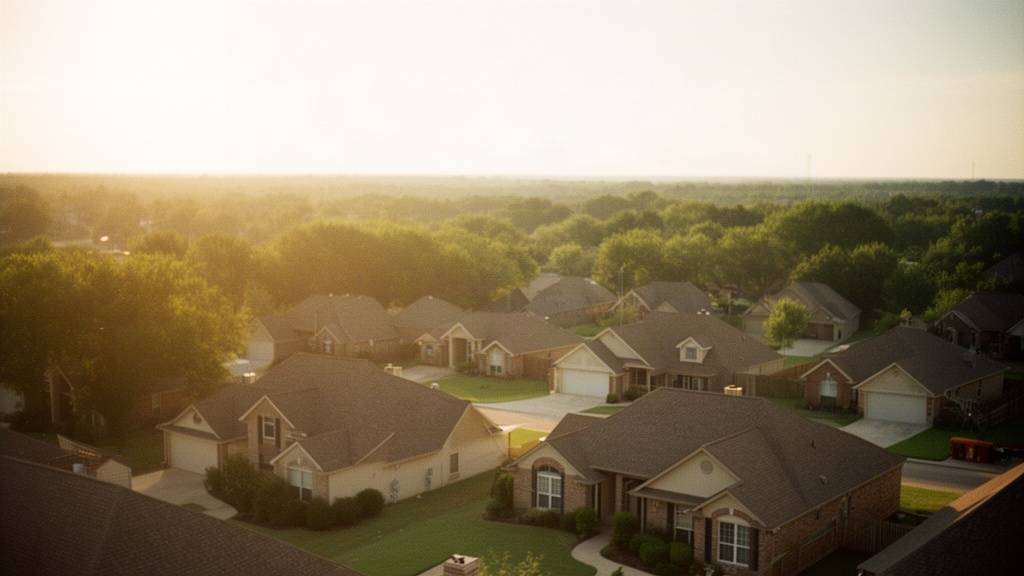
Santaquin's vacant land inventory is more varied than most people expect. You will find everything from quarter-acre infill lots tucked between existing homes on older streets near Main Street, to multi-acre agricultural parcels along the city's eastern and western edges where the Wasatch foothills begin to rise. That range matters because the purchase process, the costs, and the timeline to build are very different depending on which type of parcel you are considering.
Types of Land Available
The three main categories circulating in the Santaquin market right now are residential lots inside platted subdivisions, infill lots within already-established neighborhoods, and raw agricultural or rural acreage outside the city's developed core. Subdivision lots typically come with utilities stubbed to the lot line, recorded plats, and CC&Rs already in place. Infill lots require more due diligence on utility availability and may have older easements or encroachments to resolve. Raw acreage is the most complex category because it may sit outside city limits, carry agricultural zoning, and require annexation before a residential permit is possible.
Lot Sizes and Configurations
Santaquin's newer subdivisions, including those platted under the city's recent growth push, generally offer lots ranging from about 0.20 to 0.45 acres, which is consistent with Utah County's standard single-family residential footprint. Larger lots of one to five acres appear more frequently in areas transitioning from agricultural to residential use, particularly south of 400 South and along the Highway 6 corridor toward the city's rural boundaries. Parcels above ten acres are uncommon inside city limits but do appear in the Utah County unincorporated areas immediately surrounding Santaquin. Understanding which jurisdiction a parcel sits in, Santaquin City or Utah County, changes everything about permitting, zoning, and utility access.
2. Current Vacant Land Prices in Santaquin, Utah
As of September 2026, vacant lot prices in Santaquin span a wide range depending on size, location, and utility status. Platted residential lots inside active subdivisions are currently trading in the $90,000 to $160,000 range for standard quarter-acre to half-acre parcels. Infill lots in established areas closer to downtown run $70,000 to $120,000, though they can carry additional preparation costs. Larger agricultural parcels of two to ten acres outside the developed core are priced between $60,000 and $200,000 total, with per-acre values varying considerably based on road access, water rights, and proximity to utilities.
For context, Utah's land market has shown resilience at the state and national level. The National Association of REALTORS' land market research consistently shows that residential land adjacent to growing communities holds value better than raw rural acreage, which is exactly the dynamic playing out in Santaquin given its population trajectory. Buyers coming from the Provo-Orem metro area have driven steady demand for buildable lots as finished-home prices have climbed.
Price Per Acre Benchmarks
Breaking land prices down to a per-acre figure makes comparison easier across different parcel sizes. Subdivision lots in Santaquin currently price out at roughly $250,000 to $400,000 per acre when you do the math on a standard 0.25 to 0.35 acre parcel. That premium over raw land reflects the cost of infrastructure: roads, curb and gutter, water and sewer stubs, and the plat recording itself. Raw agricultural land outside the city's service area runs considerably lower, often $20,000 to $60,000 per acre, but the gap narrows quickly once you factor in the cost of bringing utilities to the site, which can add $30,000 to $80,000 or more depending on distance.
What Drives Price Differences Between Parcels
Several factors create meaningful price gaps between otherwise similar-looking parcels in Santaquin. Topography is one of the biggest: flat, graded lots require less site preparation and command a premium over sloped parcels that need significant grading before a foundation can be poured. Views of the Wasatch Range or Mount Nebo to the south can add value, but steep lots facing those views often offset the premium with higher construction costs. Utility status, meaning whether water, sewer, gas, and electric are already stubbed to the lot line versus requiring extension from a distant main, is the second largest price driver. Road access, whether paved or dirt, is the third.
Water rights are a separate consideration that is easy to overlook. In Utah, water rights are property rights, and a parcel with adjudicated irrigation shares or secondary water access is worth more than one without. If you are looking at agricultural land, always ask the seller to provide documentation of any water rights associated with the parcel before you make an offer.
3. Where Vacant Land Is Located Across Santaquin's Neighborhoods
Land availability in Santaquin is not evenly distributed. Understanding which parts of the city hold the most active inventory, and what each area's character means for your build or investment, is essential before you start making offers. The city's growth has pushed development in multiple directions simultaneously, so the land market reflects several distinct micro-areas.
Infill Lots Near Downtown and Established Streets
The area surrounding Main Street and the blocks radiating out from Santaquin's historic core occasionally produces infill lots when older structures are demolished or when large parcels are subdivided. These lots are typically smaller, often under 0.25 acres, and are zoned for single-family residential use. The advantage is proximity to Santaquin's existing commercial strip along State Street, the Santaquin City Park, and the Santaquin Covered Bridge Historic Site, which is one of the few remaining covered bridges in Utah. The trade-off is that older utility infrastructure in this area may require upgrades at the buyer's expense, and lot dimensions can be irregular due to how the original town plat was laid out in the 1800s.
If you are curious about what is happening in the downtown core specifically, the Downtown Santaquin Real Estate Market Guide covers that submarket in detail, including finished-home prices and how the area compares to Santaquin's newer developments.
Lots Inside Active Subdivisions
The largest concentration of available vacant lots right now sits inside Santaquin's newer residential subdivisions, most of which are located north and west of the city's historic center, along the corridors connecting to I-15 at Exit 244. These subdivisions feature paved roads, curb and gutter, and utilities stubbed to each lot, which dramatically reduces the pre-construction work a buyer needs to do. Lots in these areas are the most straightforward to purchase and finance because lenders are more comfortable with improved, platted land than with raw acreage. Many of these subdivisions also have active builders already operating within them, which means a buyer purchasing a lot can often negotiate a build contract with a production builder already familiar with the neighborhood's CC&Rs and design standards.
For a detailed look at which specific subdivisions are actively under construction in Santaquin right now, the New Housing Developments and Subdivisions guide for 2026 breaks down each project, the builder involved, and where lots remain available.
Outlying Acreage Along the Foothills and Agricultural Edges
South and east of the city's developed core, Santaquin transitions quickly into agricultural land and foothills terrain that leads toward the Santaquin Canyon and the Nebo Loop Scenic Byway. Parcels in this zone tend to be larger, one acre and up, and are often listed under Utah County jurisdiction rather than Santaquin City. The Nebo Loop, which runs through the Uinta-Wasatch-Cache National Forest and passes Mount Nebo at over 11,900 feet in elevation, creates a distinctive backdrop for properties on Santaquin's southeastern edge. Buyers interested in acreage here need to verify whether the land is inside or outside city limits, what the current zoning designation is, and whether annexation into the city is feasible if residential development is the goal.
4. Zoning, Utilities, and Costs That Affect Your Land Budget
The purchase price of a vacant lot is only the starting point of your total land investment. Zoning restrictions, utility connection costs, and municipal impact fees can add tens of thousands of dollars to your budget before a single wall goes up. Buyers who skip this due diligence often end up with a parcel they cannot build on as planned, or with a project budget that is significantly higher than anticipated.
Zoning Categories to Know
Santaquin City's zoning ordinance divides land into several residential categories, the most common being R-1-10, R-1-15, and R-1-20, where the number represents the minimum lot size in thousands of square feet. An R-1-10 parcel requires a minimum of 10,000 square feet, roughly 0.23 acres, while R-1-20 requires 20,000 square feet or about 0.46 acres. Agricultural zones, designated A-1 or A-2, permit residential use but impose larger minimum lot sizes and may restrict the density of development. If you are purchasing land with the intent to subdivide or build multiple units, you will need to verify whether the zoning permits that use or whether a rezone application is required, which adds both time and cost to your project.
Utility Connection Costs
Utility costs vary significantly based on how far a parcel sits from existing infrastructure. For a platted subdivision lot with utilities already stubbed to the lot line, connection fees typically run $5,000 to $15,000 depending on the specific utility providers and connection sizes required. For a raw parcel that needs a sewer lateral extended from a distant main, that number can jump to $20,000 to $60,000 or more. Properties outside city sewer service areas may require a septic system, which in Utah County runs $8,000 to $20,000 for a conventional system, plus a percolation test and county permit. Well drilling, if public water is not available, adds another $10,000 to $30,000 depending on depth.
Natural gas service in Santaquin is provided by Dominion Energy, and most platted lots within the city have gas available. Electric service comes through Utah Power. Both utilities require connection fees that are generally modest for in-city lots but can escalate for rural parcels requiring line extensions. Broadband internet infrastructure has expanded considerably in Santaquin over the past two years, though coverage on outlying agricultural parcels can still be inconsistent.
Impact Fees and Permits
Santaquin City charges development impact fees that are assessed at the time a building permit is issued, not at the time of land purchase. These fees cover the proportional cost of new development on city infrastructure including roads, parks, water, and sewer capacity. As of 2026, Santaquin's impact fees for a single-family home are in the range of $8,000 to $14,000 total, though buyers should confirm current fee schedules directly with Santaquin City because these figures are updated periodically. Building permit fees are assessed separately and are based on the construction valuation of the home. Budget these costs into your land-to-finished-home financial model from the start.
For a full picture of what closing on any Santaquin real estate transaction costs, including land purchases, the Santaquin closing costs, fees, and taxes guide walks through every line item you should expect to see on a settlement statement.
5. Market Timing for Buying or Selling Vacant Land in Santaquin
Land markets follow different seasonal rhythms than the finished-home market, and Santaquin is no exception. Understanding those rhythms, and layering in the current state of Santaquin's supply and demand, gives buyers and sellers a meaningful edge when deciding when to act.
Seasonal Patterns in Land Sales
Vacant land in Utah tends to see its highest buyer activity in the spring and early summer months, roughly March through June, when buyers who want to break ground the same year are actively searching. Activity softens in late summer and into fall as the construction window shortens and buyers who missed the spring cycle step back. September 2026, right now, sits in that softer window, which creates an interesting dynamic: there is less competition among buyers, but motivated sellers who listed in spring and have not yet sold are often more willing to negotiate on price or terms. For buyers, this is a real advantage. For sellers, pricing correctly from day one matters more in the fall than it does in a spring multiple-offer environment.
How to Read Current Supply and Demand
Santaquin's land market in September 2026 reflects a broader Utah pattern where supply has increased modestly from the near-zero inventory levels of 2021 and 2022, but demand from relocating buyers and local move-up purchasers keeps absorption rates relatively tight. The National Association of REALTORS has noted that land markets near growing communities have demonstrated notable price resilience even as interest rate pressures have cooled the broader residential market. That assessment applies directly to Santaquin, where the city's location between Provo and the Spanish Fork corridor continues to attract buyers priced out of finished homes in those larger markets.
Days on market for vacant lots in Santaquin currently averages 60 to 120 days, longer than finished homes but shorter than rural acreage in more remote parts of Utah County. Lots with utilities in place and flat topography move fastest. Sloped parcels, lots with easement complications, or acreage requiring annexation can sit considerably longer. Tracking the ratio of active listings to closed sales over a 90-day window gives you the clearest read on whether the market is tilting toward buyers or sellers at any given moment.
Santaquin's growth story is a key part of why land demand stays durable. The city's population has grown substantially over the past decade, driven by its position along the I-15 corridor and its relative affordability compared to northern Utah County cities. The Santaquin population and housing growth guide explains the specific drivers behind that growth and what they mean for long-term land values.
Timing Considerations for Sellers
If you own a vacant lot or acreage in Santaquin and are considering selling, the timing calculus is different from selling a finished home. Land buyers are a smaller pool than home buyers, and many of them are builders or developers who are actively monitoring inventory year-round rather than shopping seasonally. That means a well-priced, well-marketed land listing can generate serious buyer interest in any month, including the fall. The key variables for sellers are pricing the parcel accurately relative to recent comparable land sales, presenting clear utility and zoning information upfront to reduce buyer hesitation, and being prepared for a longer escrow period than a typical home sale because land financing and due diligence take more time.
Land loans and construction loans operate under different underwriting rules than conventional mortgages, which affects how quickly a buyer can close. Sellers who understand this and build realistic timelines into their expectations tend to have smoother transactions. If you are weighing whether to sell now or hold, the broader market timing article on whether September 2026 is the right moment to sell in Santaquin addresses that question in depth for all property types including land.
FAQ
Can I get a mortgage to buy vacant land in Santaquin, Utah?
Standard conventional mortgages do not apply to vacant land purchases. Buyers typically use a land loan, which is a specialized product offered by local banks, credit unions, and some agricultural lenders. Land loans generally require a larger down payment than home loans, often 20 to 35 percent, and carry higher interest rates because lenders view unimproved land as higher risk collateral. If your plan is to build immediately, a construction-to-permanent loan may be a better option because it finances both the land purchase and the construction in a single closing, converting to a standard mortgage once the home is complete. Speaking with a Utah County lender who handles land transactions regularly is the most efficient first step.
What should I check before making an offer on a vacant lot in Santaquin?
Before submitting an offer, confirm the parcel's current zoning designation with Santaquin City and verify that your intended use is permitted outright rather than requiring a conditional use permit or rezone. Request a preliminary utility availability letter from the city to understand what is stubbed to the lot versus what would need to be extended at your cost. Pull the Utah County parcel record to identify any recorded easements, setback requirements, or deed restrictions. If the parcel is agricultural land, ask the seller to provide documentation of any water rights associated with the property. Finally, visit the lot in person at different times of day to assess drainage, slope, access road condition, and any neighboring uses that could affect your build plans.
How long does it take to go from buying a vacant lot in Santaquin to having a finished home?
The timeline from land purchase to move-in varies considerably based on the lot type and your building approach. For a platted subdivision lot with utilities already in place, a production builder working in that subdivision can often deliver a finished home in 10 to 18 months from the time you sign a build contract, assuming no major supply chain disruptions. A custom home on a raw lot requiring utility extensions, site grading, and potentially a septic system or well can take 18 to 36 months from land purchase to occupancy when you account for permitting, site preparation, and construction. The permitting phase alone through Santaquin City and Utah County can take 30 to 90 days depending on plan complexity and current permit volume. Building in buffer time at every phase is the single most important thing a land buyer can do to protect their project timeline.