← Back to Blog
Market Trends
York, Canada: Refer Their Own Clients to a Real Estate Market Guide on Prices, Neighborhoods and Timing
By Amanda Ferri-Magrone
September 28, 2026 · 11 min read
When a trusted friend, colleague, or professional refers you to the York, Canada real estate market, the first thing you want is a reliable, honest guide covering prices, neighborhoods and timing. This article gives referred buyers and sellers exactly that: a grounded look at what the York market looks like in September 2026, which pockets of the city are seeing the most activity, and how to think about timing your move.
1. Why Referrals Matter in the York Real Estate Market
Referred clients arrive with a head start. When someone you trust says "call this agent" or "read this guide before you do anything," you come to the table with more context and less anxiety than someone who starts cold on a property search portal. In a market like York, Canada, where conditions can shift meaningfully between neighbourhoods that sit only a few kilometres apart, that context is worth a great deal.
How Referred Clients Arrive Differently
A referral carries implicit trust. Whether a mortgage broker, a lawyer, a relocating colleague, or a family member pointed you toward a specific agent or resource, you are starting with a vetted recommendation rather than a cold Google result. That matters in a city like York, where the difference between a well-priced offer and an overpriced one can be $40,000 to $80,000 depending on the street and the season.
Personal referrals are increasingly driving real estate decisions across Canada and internationally. According to reporting from Inman, personal referrals are now one of the primary channels through which buyers, particularly those relocating from other cities or countries, connect with local agents. In York, that pattern holds: many of the buyers and sellers who work with local agents arrive through a referral from someone who already transacted in the area.
What a Good Referral Actually Provides
A referral is only as good as the information that comes with it. If you were sent here by someone who bought or sold in York, they likely told you the market is competitive and that local knowledge matters. What they may not have had time to explain is the current price landscape, which neighbourhoods have the most inventory, and whether September 2026 is a good moment to act. That is what this guide covers.
If you are relocating and want a broader orientation before this conversation, the relocating to York guide on this site covers neighbourhood character, cost of living benchmarks, and typical timelines from first search to keys in hand.
2. Current Prices Across York: What the Numbers Say in September 2026
York Region is not a single market. The municipality of York, the broader York Region, and the City of Toronto's York district each have distinct price bands, inventory levels, and buyer profiles. Understanding which layer you are operating in changes every number in this guide.
Detached and Semi-Detached Homes
As of September 2026, detached homes in the York district of the City of Toronto are trading in a wide band. Smaller wartime-era detached homes in neighbourhoods like Weston, Keelesdale, and Rockcliffe-Smythe are generally listed in the $850,000 to $1.1 million range, depending on lot depth, renovation status, and proximity to transit. Larger detached homes on wider lots, particularly in the northern reaches near Humber Summit or in pockets of Mount Dennis that have seen recent infrastructure investment, can push past $1.2 million when updated.
Semi-detached homes remain one of the most active segments in York right now. They offer a detached-like footprint at a meaningful discount, typically landing between $780,000 and $1.05 million depending on the street. Brick semis built in the 1940s through 1960s, which make up a large share of York's housing stock, are particularly active because they offer full basements, private driveways, and established lot sizes that newer townhouses cannot match.
Condos and Townhouses
Condo prices in York currently sit in a more compressed range than the broader Toronto market. One-bedroom units in newer buildings near the Eglinton Crosstown LRT corridor are generally priced between $520,000 and $650,000. Two-bedroom units in the same corridors tend to fall between $680,000 and $850,000. Stacked townhouses and traditional freehold townhouses, which are more prevalent in the northern parts of York near the Steeles Avenue boundary, typically list between $750,000 and $950,000.
For a deeper look at the condo segment specifically, the North York condo buying guide on this site walks through what to examine in a status certificate, which building types are holding value, and how to structure an offer in a multi-unit environment.
Price Shifts Year Over Year
Compared to September 2025, the York market in September 2026 is showing modest price stabilization across most property types. Detached homes are roughly flat to slightly up in the 1 to 3 percent range year over year, while condos have seen a bit more softening, with some segments down 3 to 5 percent from their 2025 peaks as new supply from recently completed Eglinton corridor projects has added inventory. The REMAX York Region Housing Market Outlook provides a useful regional frame for these shifts.
For the most current regional context, the REMAX York Region Housing Market Outlook tracks broader York Region trends including sales volume, days on market, and list-to-sale price ratios across property categories. Cross-referencing that data with hyperlocal neighbourhood conditions is where a local agent adds the most value.
3. York Neighborhoods: A Factual Look at What Each Area Offers
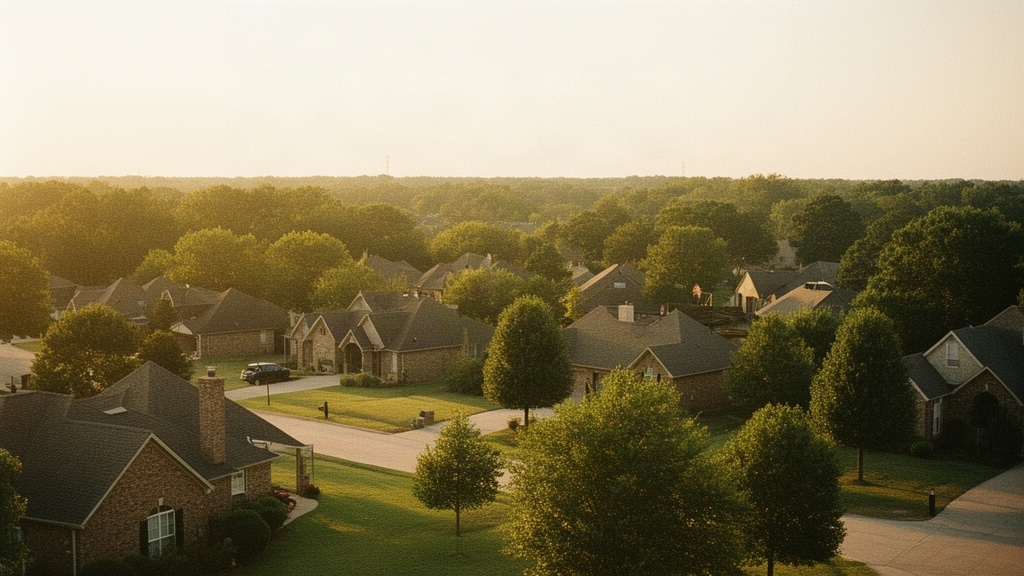
York's neighbourhoods each have a distinct physical character shaped by their history, street grid, and housing stock. Rather than ranking them, this section describes what is physically present in each area so you can assess fit based on your own priorities around commute, space, and amenities.
Weston and the Humber River Corridor
Weston sits along the Humber River in the western portion of York, with Weston Road as its commercial spine. The neighbourhood's housing stock is predominantly detached and semi-detached brick homes built between the 1920s and 1960s, many on lots of 25 to 33 feet wide. The UP Express connects Weston Station to Union Station in roughly 15 minutes, making it one of the faster downtown rail links in the city. The Humber River trail system runs directly through the neighbourhood, providing access to over 50 kilometres of multi-use paths.
Weston Road itself has seen ongoing commercial revitalization, with independent food businesses, a renovated library branch, and community investment from the city's Neighbourhood Improvement Area program. Prices here sit at the more accessible end of the York detached market, which is why buyers referred from other parts of the city often look here first when detached ownership is the goal.
Mount Dennis and Keelesdale
Mount Dennis anchors the eastern edge of York, bordered by Eglinton Avenue West to the south and Weston Road to the west. The Mount Dennis station on the Eglinton Crosstown LRT opened as part of the phased rollout and connects riders east toward Midtown and west toward Renforth Drive. The housing here is a mix of detached brick homes, converted duplexes, and a small number of newer infill townhouses. Lot sizes tend to be narrower than Weston, often 20 to 25 feet, but many properties include rear laneways that allow for parking or laneway suite potential.
Keelesdale sits just north of Mount Dennis, with Keele Street as its main corridor. The neighbourhood has a higher proportion of detached homes relative to semis, and several streets of larger 1.5-storey homes with finished basements. Rockcliffe-Smythe, which borders Keelesdale to the south along St. Clair Avenue West, has a similar housing profile and shares the same TTC streetcar access along St. Clair.
Woodbridge and Vaughan Fringe Areas
Woodbridge, technically within the City of Vaughan but immediately north of York's boundary, is a frequent reference point for buyers who find York's detached prices too compressed for the space they need. Detached homes in Woodbridge typically offer larger lot sizes, often 40 to 50 feet wide, with double-car garages and finished basements. Prices generally start around $1.1 million for a smaller detached and can reach $1.8 million or more for larger estate-style homes in established courts. The Hwy 400 and Hwy 7 interchange provides regional access, and the Vaughan Metropolitan Centre subway station is a short drive or bus ride for those commuting into Toronto.
Thornhill and the Northern Boundary
Thornhill straddles the boundary between the City of Vaughan and the Town of Markham, sitting at York Region's southern edge. The housing stock here ranges from 1970s and 1980s two-storey detached homes on 40-foot lots to newer infill townhouses built in the 2010s. Yonge Street is the main commercial corridor, with a mix of independent retail, national chains, and established restaurants. The area is approximately 25 kilometres from downtown Toronto, with YRT bus connections to the Finch subway station providing transit access.
Buyers who have been referred specifically to Thornhill and want a detailed breakdown of the purchase process, typical costs, and what to expect at each stage can read the Thornhill home buying guide on this site.
4. Timing the York Market: When to Buy, When to List
Timing in York is not about finding a perfect moment; it is about understanding which conditions favour buyers and which favour sellers, and positioning accordingly. September 2026 represents one of the two strongest listing windows of the year, alongside March and April. Inventory rises, serious buyers return from summer, and properties that are priced and presented well tend to move within two to three weeks.
The September Window Explained
September is active because it combines motivated buyers with realistic sellers. Buyers who did not find something in spring or summer are often under real time pressure by September: lease renewals, school year considerations, and year-end financial planning all create urgency. Sellers who list in September rather than waiting until spring avoid competing with the larger inventory wave that typically arrives in March. In York specifically, the fall market tends to see tighter list-to-sale ratios on detached homes than the spring, because fewer competing listings are available.
If you are a seller wondering whether to list now or hold until spring, the detailed analysis on this site covers exactly that decision. The article on listing in September 2026 versus waiting walks through the trade-offs with York-specific data.
What Slows the Market and What Accelerates It
Interest rate movement remains the single largest external factor shaping buyer activity in York right now. When the Bank of Canada signals rate cuts or holds, pre-approved buyers tend to act quickly because they know their purchasing power is locked. When rates are uncertain, buyers often pause. In September 2026, the rate environment has stabilized enough that pre-approved buyers in the $900,000 to $1.3 million range are active and competing on well-priced detached and semi-detached properties.
Local infrastructure is also a timing factor specific to York. The Eglinton Crosstown LRT's continued phased opening has created price sensitivity along the corridor: properties within a short walk of confirmed stations have seen stronger price support than those further from transit. Buyers who understand which stations are open versus planned can use that information to identify value where perception has not yet caught up to reality.
5. What Referred Clients Should Do Before Their First Appointment
Arriving prepared makes the first meeting with your agent far more productive. Whether you are buying or selling, there are three concrete steps that referred clients in York should complete before sitting down with an agent, because they shape every conversation that follows.
Get Pre-Approved Before Touring
Pre-approval is not the same as pre-qualification, and in York's market the distinction matters. A pre-approval means a lender has reviewed your income documents, credit, and liabilities and issued a written commitment at a specific rate and amount. Pre-qualification is an estimate. Sellers in York, particularly on detached homes priced above $1 million, are increasingly reluctant to accept offers without financing conditions unless the buyer can demonstrate strong pre-approval documentation. Getting this done before your first property tour means you can move quickly when the right property appears.
Understand Closing Costs Beyond the Purchase Price
Many referred buyers arrive focused entirely on the purchase price and underestimate the total cash required to close. In Ontario, buyers pay both provincial and municipal land transfer tax, legal fees, title insurance, home inspection costs, and, in some cases, HST on new construction. On a $1 million purchase in York, total closing costs outside the down payment typically range from $25,000 to $40,000 depending on whether the buyer is a first-time purchaser eligible for land transfer tax rebates. Understanding this number before you set your budget prevents the unpleasant surprise of discovering you are short at the lawyer's office.
Ask the Right Questions of Your Agent
The best first meeting is a two-way conversation, not a one-way presentation. Come prepared to ask about recent comparable sales on the streets you are considering, not just the neighbourhood average. Ask how many of the agent's recent transactions were in York specifically, and how they handled multiple-offer situations. Ask what their process is for identifying off-market or pre-list opportunities, which do exist in York, particularly through agent networks.
If you are selling and want to understand how agent strategy affects your final sale price, the analysis on who consistently gets sellers the highest price in York is worth reading before your first listing appointment. It covers pricing strategy, marketing approach, and negotiation tactics with York-specific examples.
FAQ
What does it mean when someone says they refer their own clients to the York, Canada real estate market?
It means a professional, such as a mortgage broker, lawyer, financial planner, or previous client, is directing someone they already work with toward a specific agent or resource in York because they trust that source to serve their client well. In real estate, referrals carry weight because the person making the referral has skin in the game: their own reputation is attached to the recommendation. In York specifically, where the market has distinct neighbourhood-by-neighbourhood pricing dynamics, being referred to someone with genuine local expertise is a meaningful advantage over starting a property search without guidance.
How do prices in York, Canada compare across different property types in September 2026?
As of September 2026, detached homes in York's residential neighbourhoods generally range from approximately $850,000 on the lower end for smaller wartime-era homes to over $1.2 million for updated or larger properties on wider lots. Semi-detached homes tend to fall between $780,000 and $1.05 million. Condos in newer buildings near transit corridors like the Eglinton Crosstown LRT typically range from $520,000 for a one-bedroom to $850,000 for a two-bedroom. Townhouses, both freehold and stacked, generally sit between $750,000 and $950,000. These ranges shift meaningfully by street and proximity to transit, so individual property analysis matters more than neighbourhood-wide averages.
Is September 2026 a good time to buy or sell in York, Canada?
September 2026 is one of the two strongest windows of the year for both buyers and sellers in York. For sellers, fall listings face less competition than the spring wave, and motivated buyers who did not transact earlier in the year are actively searching with real urgency. For buyers, the fall market tends to offer more realistic negotiating conditions than the compressed spring season, and pre-approved buyers in the $900,000 to $1.3 million range are finding that well-priced properties are moving within two to three weeks. The stabilized rate environment in September 2026 has also made financing more predictable than it was in 2024 and early 2025, which reduces uncertainty for both sides of a transaction.