
← Back to Blog
Market Trends
Oak Ridge Tennessee Real Estate Market Guide
By Amy Evans, 865-294-5848 Office
Realty One Group Anthem · License# 266320
September 1, 2026 · 12 min read
Whether you are buying, selling, or relocating, understanding the Oak Ridge, Tennessee real estate market guide covering prices, neighborhoods, and timing is the single most useful thing you can do before making a move. Oak Ridge sits in Anderson County along the Clinch River, about 25 miles west of Knoxville, and its housing market has its own rhythm shaped by the city's scientific and federal workforce, its varied housing stock, and its tight inventory. This guide breaks down what the market looks like right now in September 2026, what different parts of the city offer, and when the numbers tend to work in your favor.
1. What the Oak Ridge Housing Market Looks Like Right Now
Oak Ridge is a mid-sized city of roughly 31,000 residents, and its housing market reflects a stable, workforce-driven economy rather than speculative swings. Median home prices in Oak Ridge sit in the $260,000 to $310,000 range as of September 2026, depending on the week and the specific pocket of the city. That figure has risen from roughly $220,000 in late 2023, driven by constrained inventory and continued demand from workers at Oak Ridge National Laboratory, Y-12 National Security Complex, and their contractor ecosystems.
Current Median Prices
For a fuller picture of where prices stand month to month, Redfin's Oak Ridge housing market page tracks median sale price, price per square foot, and list-to-sale ratios updated in near real time. As a general benchmark, single-family homes in established Oak Ridge neighborhoods are selling in the $230,000 to $350,000 range, with newer construction or extensively renovated properties pushing past $400,000 in some cases.
Condominiums and townhomes are a smaller slice of the Oak Ridge inventory but tend to price between $150,000 and $220,000, making them a practical entry point for first-time buyers or those downsizing from a larger single-family home. Price per square foot across the city runs roughly $130 to $175 for move-in-ready homes, though older homes needing updates can come in below that range.
Inventory and Days on Market
Inventory in Oak Ridge has remained tight. Most months in 2026 have seen fewer than 80 active listings across all price points, which keeps well-priced homes moving quickly. The median days on market for homes priced correctly has hovered between 18 and 30 days, though homes that need significant work or are overpriced relative to the neighborhood can sit for 60 days or more before sellers adjust.
Multiple-offer situations still occur in the $250,000 to $320,000 range, which is where the largest pool of qualified buyers competes. Above $375,000, the market moves more slowly and buyers tend to have more negotiating room on price and contingencies.
How Oak Ridge Compares to the Broader Knoxville Metro
Knoxville's median sale price has climbed past $350,000 in 2026, which means Oak Ridge still offers a meaningful price advantage for buyers who are willing to make the roughly 25-mile commute west on Highway 62 or Interstate 40. The drive from central Oak Ridge to downtown Knoxville runs about 30 to 40 minutes in normal traffic. For buyers who work in Oak Ridge itself, there is no commute trade-off at all.
2. Oak Ridge Neighborhoods: What Each Area Offers
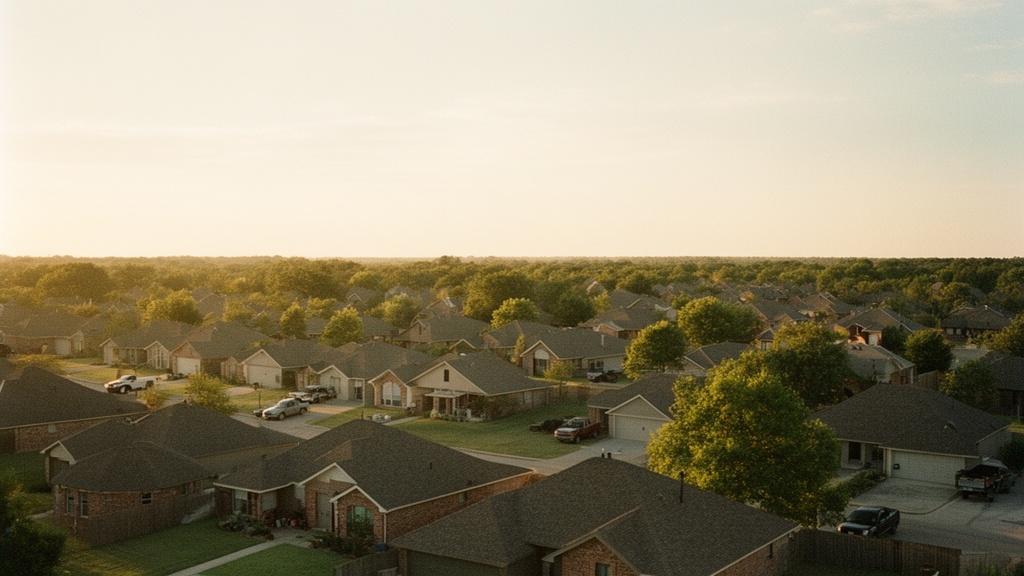
Oak Ridge was built rapidly in the 1940s as part of the Manhattan Project, which means the city has a distinct urban planning history unlike almost anywhere else in Tennessee. The original neighborhood grid still shapes the city today, and different sections of Oak Ridge offer different housing types, lot configurations, and price points.
For a deeper look at what the city's housing stock and community infrastructure look like on the ground, this overview of living in Oak Ridge covers the community layout and what residents typically encounter day to day.
The Turnpike Corridor and Downtown Adjacent Streets
The area closest to Illinois Avenue and the Oak Ridge Turnpike contains some of the city's oldest housing stock, including original cemesto homes from the 1940s. These homes typically range from 900 to 1,400 square feet on relatively compact lots, and prices reflect their age and condition: updated cemesto homes sell in the $180,000 to $260,000 range, while those needing full renovation can be found below $150,000.
This corridor gives residents walkable access to the Main Street Oak Ridge retail district, the Civic Center, and the Children's Museum of Oak Ridge. The American Museum of Science and Energy is also nearby on Illinois Avenue, making this part of the city particularly dense with civic and cultural destinations.
West Oak Ridge and Scarboro Road Area
Moving west along Oak Ridge Turnpike toward the Scarboro Road corridor, the housing stock transitions to a mix of mid-century ranch homes and split-levels built through the 1960s and 1970s. Lot sizes here tend to be larger, often a quarter to a half acre, with mature tree canopy. Prices in this section typically run $220,000 to $320,000 for updated homes.
The Scarboro community is one of the historically significant areas of Oak Ridge, with roots going back to the city's earliest days. Buyers interested in the history of the area will find it well documented at the Oak Ridge Heritage and Preservation Association.
Woodland and Jefferson Areas
The Woodland and Jefferson sections of Oak Ridge contain some of the city's larger post-war homes, many of them brick ranch and split-level designs on lots ranging from a third to three-quarters of an acre. This part of the city tends to attract buyers looking for more square footage, typically 1,600 to 2,400 square feet, at prices between $270,000 and $380,000.
Jefferson Middle School and the surrounding streets give this section a well-established residential feel. Melton Lake Drive runs along the southern edge of this area, providing access to Melton Lake Park, the rowing venue that hosts competitive events on Melton Hill Lake.
Emory Valley and the Western Reaches
Emory Valley Road leads into the western portions of Oak Ridge where the terrain becomes more rolling and wooded. Homes here tend to sit on larger parcels, sometimes exceeding an acre, and the housing styles range from brick colonials to contemporary builds from the 1990s and 2000s. Prices in this area span $290,000 to $450,000 depending on lot size, updates, and proximity to the Clinch River.
Buyers who want more land and more privacy without leaving city limits often concentrate their search in this corridor. The trade-off is a slightly longer drive to Oak Ridge's commercial center, typically 10 to 15 minutes.
3. What Drives Oak Ridge Home Values
Oak Ridge home values are shaped by a combination of factors that are specific to this city and do not apply the same way elsewhere in East Tennessee. Understanding these drivers helps both buyers and sellers price and negotiate more accurately.
The Federal and Scientific Employment Base
Oak Ridge National Laboratory employs roughly 6,000 people directly and supports thousands more contractor positions. Y-12 National Security Complex adds another several thousand jobs. This workforce is largely salaried, highly credentialed, and generates consistent housing demand that buffers Oak Ridge from the volatility that affects more tourism or retail-dependent markets in Tennessee. When federal budgets expand, Oak Ridge tends to see an uptick in relocation demand from researchers and engineers moving from other national lab cities.
This employment stability is one reason the Oak Ridge market held its value better than many comparable-sized Tennessee cities during the rate increases of 2022 and 2023. Long-term appreciation data, including decade-over-decade trends, is tracked by NeighborhoodScout's Oak Ridge real estate appreciation page, which shows how the city has performed against state and national benchmarks.
Lot Sizes, Architecture, and Housing Eras
Because Oak Ridge was built in distinct phases, the era of construction is a meaningful value driver. Original 1940s cemesto homes have a niche appeal and can command premium prices when fully restored, but they also come with the maintenance realities of 80-year-old structures. Mid-century brick ranches from the 1950s through 1970s are the most common housing type and tend to be the most liquid segment of the market.
Homes built after 1990 are less common in Oak Ridge than in surrounding Anderson County communities like Clinton or Oliver Springs, which means newer construction in the city carries a scarcity premium. A 2005-built home with an open floor plan and updated mechanicals will often sell faster and closer to list price than a comparable-sized 1960s home, even if the older home has a larger lot.
Proximity to the Clinch River Greenway and Recreation
The Clinch River Greenway runs along the southern edge of the city and connects to Melton Lake Park, a 44-acre park with a 1.5-mile paved trail along the lake, boat ramps, and a picnic area. Homes within a short walk or bike ride of the greenway tend to sell at a slight premium compared to similar homes further inland. Buyers relocating from larger cities often cite the greenway access as a meaningful quality-of-life factor.
Beyond the greenway, the city maintains over 60 miles of trails within and adjacent to Oak Ridge, including access to the Black Oak Ridge Conservation Area. This trail network is a concrete, measurable amenity that shows up in buyer conversations and, increasingly, in appraisals.
4. Timing the Market: When to Buy and When to Sell in Oak Ridge
Timing in the Oak Ridge real estate market follows some predictable seasonal patterns, but it also responds to interest rate movements in ways that buyers and sellers need to understand before making decisions.
Seasonal Patterns in Listing Activity
Spring is the most active listing season in Oak Ridge. March through June typically sees the highest volume of new listings, which gives buyers more choices but also more competition. Sellers who list in April or May tend to see the fastest sales and the closest offers to list price, because buyer demand peaks at the same time inventory rises.
Late summer and early fall, which is where the market sits right now in September 2026, is a transitional period. Some buyers who did not find a home in spring are still active, and sellers who missed the peak window are still listing. This creates a more negotiable environment than the spring rush, particularly for homes that have been sitting for 30 or more days.
November through January is the quietest stretch. Inventory drops, but so does competition. Buyers who are willing to search in winter often find sellers who are more motivated and more flexible on price and terms.
Interest Rate Sensitivity in This Market
Oak Ridge's price range means that monthly payment changes from rate shifts are meaningful but not catastrophic for most buyers. A 0.5% rate move on a $280,000 loan changes the monthly payment by roughly $85 to $95. That is real money, but it is not the kind of swing that prices most Oak Ridge buyers out of the market entirely.
The more significant rate effect in Oak Ridge is on seller behavior. Many current homeowners locked in rates below 4% between 2020 and 2022 and are reluctant to sell and take on a higher rate on a new purchase. This lock-in effect has kept inventory low throughout 2025 and into 2026, and it is one reason well-priced homes still move quickly despite rates being higher than they were four years ago.
Seller Timing Considerations
For sellers, the data consistently points to March through May as the window that produces the best outcomes in Oak Ridge. Homes listed in that window spend fewer days on market and are more likely to receive offers at or above asking price. Sellers who list in September, as some are doing right now, are entering a market with fewer competing listings than spring but also fewer active buyers.
That said, a well-prepared home listed at the right price in September can still sell quickly if it is priced accurately for current conditions. Overpricing in the fall is a more costly mistake than in spring, because there are fewer buyers to absorb a price reduction and generate new interest.
5. Practical Steps for Buyers and Sellers in Oak Ridge
Knowing the market is useful; knowing what to do with that knowledge is what actually moves a transaction forward. Here is what buyers, sellers, and relocating households should focus on in the current Oak Ridge market.
Steps for Buyers
Get pre-approved before you start touring. In a market where well-priced homes in the $250,000 to $320,000 range can attract multiple offers within days, arriving without a pre-approval letter puts you at an immediate disadvantage. Sellers in Oak Ridge, particularly those who have received multiple offers, will not take an unverified offer seriously.
Understand the inspection realities of Oak Ridge's older housing stock. Homes built in the 1950s and 1960s may have original electrical panels, galvanized plumbing, or HVAC systems approaching end of life. A thorough inspection is not optional; it is the step that tells you whether the price you are paying reflects the condition of the home. Budget for inspection costs of $350 to $500 for a standard single-family home in this market.
For a more detailed walkthrough of the buying process specific to Oak Ridge, the Oak Ridge buyer's guide on this site covers the full sequence from search to closing.
Steps for Sellers
Price based on closed sales, not active listings. Active listings show you what sellers are asking; closed sales show you what buyers are actually paying. In a market like Oak Ridge where inventory is low, it is tempting to test a higher price, but overpricing in a low-inventory environment does not attract more buyers. It simply makes your home the one that sits while others sell.
Presentation matters more than sellers often expect in this price range. Professional photography, a clean exterior, and addressed deferred maintenance items consistently shorten days on market in Oak Ridge. Buyers in the $260,000 to $340,000 range have options, and a home that photographs well will get more showings than one that does not, regardless of underlying square footage.
Relocation Considerations
People relocating to Oak Ridge for ORNL, Y-12, or contractor positions often have a compressed timeline and limited ability to tour extensively before making a decision. If you are relocating from outside Tennessee, it is worth understanding that Oak Ridge's housing stock is quite different from what you might find in suburban markets in the mid-Atlantic or Pacific Northwest. The city's original planned-community layout means streets are not on a simple grid, neighborhoods have distinct characters, and lot sizes vary considerably within a short distance.
Anderson County's property tax rate is one factor worth calculating early in your budget process. As of 2026, Anderson County's combined city and county property tax rate for Oak Ridge residents runs approximately $2.20 to $2.50 per $100 of assessed value, which is assessed at 25% of appraised value in Tennessee. On a $300,000 home, that translates to roughly $1,650 to $1,875 per year in property taxes, a figure meaningfully lower than most comparable metro areas in the Southeast.
FAQ
What is the average home price in Oak Ridge, Tennessee right now?
As of September 2026, the median home price in Oak Ridge sits in the $260,000 to $310,000 range for single-family homes, with condominiums and townhomes typically coming in between $150,000 and $220,000. Price per square foot for move-in-ready homes runs roughly $130 to $175. Homes in the upper end of the market, meaning those above $375,000, tend to be newer construction or extensively renovated properties on larger lots in the western sections of the city. Prices have risen from the low-to-mid $220,000s in late 2023, driven by tight inventory and consistent demand from the federal and scientific workforce.
Is Oak Ridge, Tennessee a good place to buy a home compared to Knoxville?
Oak Ridge offers a lower median price point than Knoxville, where medians have climbed past $350,000 in 2026, and the commute between the two cities runs 30 to 40 minutes on Highway 62 or Interstate 40. For buyers who work in Oak Ridge at ORNL, Y-12, or a related contractor, there is no commute trade-off at all. Oak Ridge also has its own commercial infrastructure, including the Main Street district, the Civic Center, and significant trail and greenway access, so residents are not dependent on Knoxville for daily needs. The trade-off is that Oak Ridge's housing stock skews older, with most homes built between the 1940s and 1980s, which means buyers should budget for inspection and potential renovation costs.
When is the best time of year to sell a home in Oak Ridge, TN?
The spring window from March through May consistently produces the best outcomes for sellers in Oak Ridge, with faster sales and offers closer to or above asking price. Buyer demand peaks during this period and aligns with the highest volume of new listings, creating the most competitive conditions for sellers. Late summer and fall, including September 2026, are transitional months where there are fewer competing listings but also fewer active buyers. Winter listings from November through January tend to attract the most motivated buyers, which can work in a seller's favor if the home is priced correctly, though the overall pool of buyers is smaller. A local agent with current market data is the best resource for deciding exactly when to list based on your specific home and neighborhood.