← Back to Blog
Local Living
Powell Ohio Community Feel Day to Day: Parks, Amenities and Getting Around
By ANDREW NEWCOMB
September 26, 2026 · 12 min read
If you are trying to understand what the Powell Ohio community feel is like day to day, the answer lives in the details: the trail systems that connect neighborhoods to the Olentangy River, the village-scale downtown that still hosts a farmers market, and commute corridors that put Columbus, Dublin, and Westerville all within reach. This guide covers the parks, amenities, and transportation realities that shape everyday life in Powell so you can decide whether this community matches how you actually want to live.
1. What Powell, Ohio Looks and Feels Like on a Normal Day
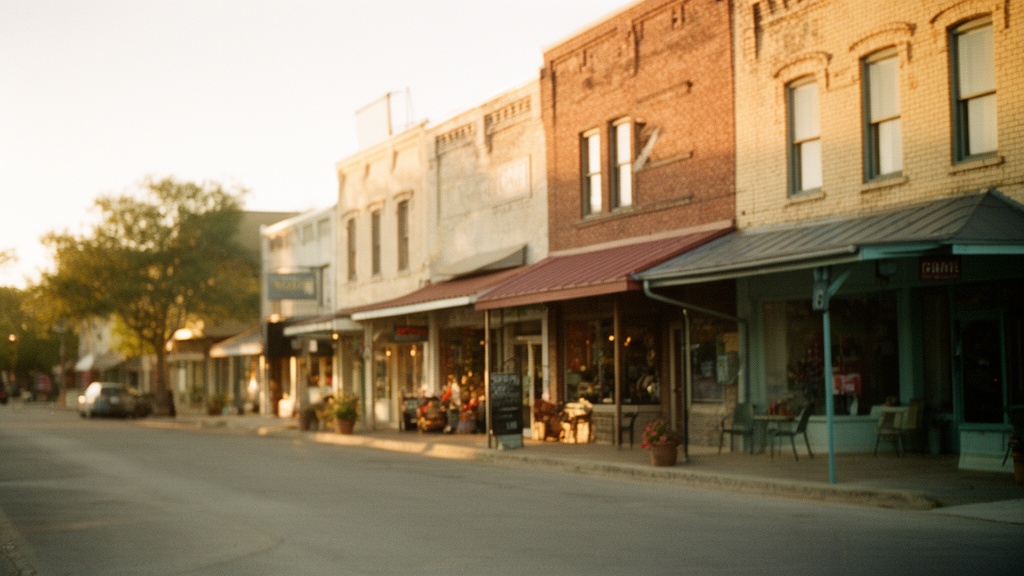
Powell has the texture of a small town that happens to sit inside a fast-growing metro area. The incorporated village covers roughly 12 square miles in northern Delaware County, with a walkable historic core along Grace Street and Liberty Street that anchors the community's identity. On a weekday morning you will see residents walking dogs along the Olentangy Trail, stopping at one of the coffee shops near the village green, and then pulling onto US-23 for the drive south toward Columbus. That rhythm, quiet residential streets feeding into a compact downtown and then onto a regional highway, is what defines the Powell Ohio community feel day to day.
The Village Core and Its Character
Downtown Powell is genuinely walkable by suburban Ohio standards. The village green at the intersection of Olentangy Street and Liberty Street serves as a gathering point, with benches, a small amphitheater space, and proximity to local restaurants and boutiques. The streetscape along Liberty Street features brick sidewalks, period-appropriate lighting, and a mix of renovated historic storefronts and newer infill buildings that maintain the low-rise scale. Nothing here feels like a strip mall; the blocks are short and the buildings sit close to the sidewalk.
Powell was incorporated as a village in 1947 and retains that legal designation today, which gives it a degree of local governance and planning control that shapes development decisions. The City of Powell (the community uses both terms) has consistently enforced design standards in its commercial districts, which is part of why the downtown looks cohesive rather than haphazard. If you are relocating from a larger city and worried about losing a sense of place, the Powell village core tends to answer that concern quickly.
Housing Stock That Shapes the Streets
The residential streets surrounding downtown are a mix of older in-town homes on smaller lots and the large planned subdivisions that expanded outward from the 1990s onward. Homes within a half-mile of the village center tend to be on lots of 0.1 to 0.25 acres with mature tree canopy overhead. Move further out toward Scioto Reserve, Tartan Fields, or the Estates at Scioto Bluffs and the lots grow to a quarter-acre and beyond, with newer construction ranging from the mid-$400,000s to well over $1 million. The variety means the physical character of Powell shifts noticeably depending on which block you are on, but the overall impression is of a community that has invested in landscaping, sidewalks, and curb presence. For more on specific subdivisions and what distinguishes them, see the neighborhoods and subdivisions guide for Powell, Ohio.
2. Parks, Trails, and Outdoor Amenities in Powell
Outdoor access is one of the most consistent reasons people cite when they describe the Powell Ohio community feel day to day. The city maintains several parks of its own, and the regional Olentangy Greenway Trail runs directly through the community, connecting Powell to a broader network that extends south toward Columbus and north toward Delaware. For a detailed breakdown of trail distances and park features, Angelina Fox Smith and Company has published a useful overview of Powell's outdoor living options that complements what is covered here.
Scioto Reserve and the Olentangy Greenway
The Olentangy Greenway Trail passes through Powell along the river corridor and connects to paved paths that run through and adjacent to the Scioto Reserve neighborhood. The trail surface is asphalt, wide enough for cyclists and pedestrians to pass comfortably, and shaded by a mix of sycamore, cottonwood, and oak trees along the riverbank. Residents in subdivisions near the river can access the trail directly from neighborhood connectors without driving to a trailhead. The total paved trail network accessible from Powell extends for dozens of miles when you include the Delaware County and Columbus sections to the north and south.
Scioto Reserve Community Park, located within the Scioto Reserve subdivision off of Scioto Reserve Boulevard, includes a shelter house, open green space, and access points to the adjacent trail system. It is a practical park rather than a destination park, meaning it serves the surrounding neighborhood well for informal use on any given afternoon.
Neighborhood Parks and Recreation Facilities
Powell maintains a network of smaller parks distributed across the city, including Antrim Park, Veterans Park near the village center, and several pocket parks embedded within newer subdivisions. Veterans Park on Selby Boulevard includes a pavilion, open lawn, and parking, and it sits close enough to downtown that it functions as an extension of the village green during larger community events. The Powell Community Center on Selby Boulevard is the hub for organized recreation programming, offering indoor courts, fitness space, and meeting rooms. Membership and program fees are set by the city and are publicly posted on the Powell Parks and Recreation website.
The Delaware County District Library operates a Powell branch on Selby Boulevard, roughly half a mile from the village center. The building is modern, well-stocked, and frequently hosts programming for all ages. For a community of Powell's size, the library is a meaningful civic anchor.
Columbus Zoo and Powell Road Corridor
The Columbus Zoo and Aquarium sits directly on Powell Road (State Route 257) at the southern edge of the city, making it a literal neighbor for many Powell residents. The zoo spans over 580 acres and draws more than 2 million visitors annually, which means the Powell Road corridor sees significant traffic on weekends and during peak season. For residents who live near the zoo entrance, this is worth knowing before you buy. For those who value having one of the country's larger zoological parks within a five-minute drive, it is a meaningful amenity. Adjacent to the zoo is Zoombezi Bay water park, which operates seasonally and shares the same general campus.
3. Shopping, Dining, and Day-to-Day Errands
Daily errands in Powell are manageable without leaving the immediate area for most routine needs. The community is not a large retail hub, but it has enough grocery, dining, and service options to handle the basics, with Dublin and Lewis Center filling in the gaps for big-box and specialty retail.
Downtown Powell and Local Retail
The Liberty Street and Grace Street corridor in downtown Powell has a concentration of locally owned restaurants, coffee shops, wine bars, and specialty retail that gives the village center a distinct character. You will find sit-down dining options ranging from casual American fare to Italian and Asian cuisine, several bakeries and coffee roasters, and a handful of boutique shops. The Powell Farmers Market operates seasonally on Saturday mornings near the village green, drawing vendors from across Delaware and Franklin counties. It is a genuine weekly event rather than a token market.
Grocery and Big-Box Access
Powell has a Kroger on Sawmill Road near the southern boundary of the city, and a Meijer in Lewis Center roughly three miles north on US-23. For Whole Foods, Trader Joe's, or Costco, residents typically drive to the Dublin or Polaris areas, both of which are within 10 to 15 minutes depending on traffic. Target, Home Depot, and similar big-box stores are clustered around the Polaris Parkway corridor in Columbus, which borders Powell to the south along I-71. The practical reality is that Powell is not a self-contained retail destination, but its proximity to the Polaris area means most needs are covered within a short drive.
Healthcare and Services
OhioHealth operates facilities in the greater Powell and Dublin area, and the OhioHealth Dublin Methodist Hospital on Emerald Parkway is approximately 12 miles from the Powell village center, typically a 15 to 20-minute drive. Urgent care clinics and primary care practices are present within Powell and in adjacent Lewis Center. Dental offices, optometrists, and veterinary practices are distributed across the US-23 corridor and Sawmill Road, meaning routine appointments generally do not require a long drive.
4. Getting Around: Commutes, Roads, and Transit Options
Getting around is primarily car-dependent in Powell, which is consistent with most of suburban Central Ohio. The road network is well-maintained, and the city's position between US-23 and I-71 gives it reasonable access to multiple employment corridors. Understanding commute times is essential when evaluating whether the Powell Ohio community feel day to day works for your specific situation.
Driving to Columbus and Major Employment Hubs
From the Powell village center, the drive to downtown Columbus is approximately 20 to 25 miles, which translates to 25 to 40 minutes depending on time of day and route. The most direct path is US-23 south to I-270 and then east or south toward Columbus proper. The Polaris area, which hosts a significant concentration of office parks and corporate headquarters, is about 8 to 10 miles from Powell and reachable in 15 minutes under normal conditions. Dublin, another major employment hub with a dense corporate corridor along Emerald Parkway, is roughly 12 miles to the southwest and takes 15 to 20 minutes. Ohio State University's main campus is about 22 miles south, typically 30 to 35 minutes without peak congestion.
Key Roads and Traffic Patterns
US-23 is the primary north-south spine through Powell and carries the heaviest commuter traffic. The section between Powell Road and I-270 can back up noticeably during the 7 to 9 a.m. and 4 to 6 p.m. windows on weekdays. Sawmill Road provides an east-west connection to Dublin and the I-270 interchange at Tuttle Crossing. Liberty Road and Selby Boulevard serve internal circulation within Powell and are generally free of significant congestion. For residents in the northern parts of Powell near Lewis Center Road, State Route 750 and Orange Road offer alternative east-west routing.
One practical note for buyers: homes on the east side of US-23 versus the west side can have meaningfully different commute experiences depending on your destination. If you work in the Polaris area or along I-71, the eastern sections of Powell give you a more direct route. If Dublin or the I-270 west side is your destination, the Sawmill Road corridor is more efficient. It is worth mapping your specific commute before committing to a particular neighborhood.
Biking and Pedestrian Infrastructure
Powell has invested in sidewalk connectivity and shared-use paths more than many comparable Ohio suburbs. Most subdivisions built after 2000 include sidewalks on both sides of the street and shared-use paths along collector roads. The Olentangy Greenway Trail makes it possible to commute by bike to parts of Columbus or Delaware without riding on a major road, though this is a realistic option for a small subset of commuters given the distances involved. Within Powell itself, biking to the village center from most neighborhoods is practical, with the downtown grid being compact enough to navigate without a car.
COTA, the Central Ohio Transit Authority, does not operate frequent fixed-route service into Powell as of September 2026. This is a straightforward limitation: if you do not drive or prefer not to, Powell requires more planning than an urban neighborhood with transit access. Rideshare services operate in the area but are not a substitute for a car-dependent lifestyle in most cases.
5. Community Events, Culture, and Civic Life
The Powell Ohio community feel day to day is shaped significantly by the city's calendar of events and the density of civic participation relative to its size. Powell has a population of approximately 14,000 to 15,000 residents, which is small enough that community events draw a meaningful percentage of the population and large enough to sustain a varied calendar.
Seasonal Events in the Village
The city hosts a summer concert series in the village, typically running Friday evenings from June through August with local and regional bands performing on the village green. The Powell Festival, held annually in September, is one of the larger community events and includes a parade, food vendors, live music, and craft booths along Liberty Street. In December, the downtown lights up for a holiday celebration with a tree lighting ceremony and extended hours for local merchants. These are not large-scale regional festivals; they are community-scale events where you are likely to see the same neighbors repeatedly, which is part of what gives Powell its small-town texture inside a growing metro area.
The Powell Farmers Market runs Saturday mornings from May through October, with roughly 30 to 50 vendors depending on the week. Produce, baked goods, honey, flowers, and prepared foods are all represented. It is a weekly ritual for a significant portion of the community and one of the more consistent gathering points outside of organized recreation.
Schools and Civic Organizations
Most of Powell falls within the Olentangy Local School District, one of the larger districts in Delaware County. For detailed information about school assignments, test scores, and district programs, the Ohio Department of Education's school report cards and the Olentangy Local School District's own website are the appropriate sources to consult directly. School boundaries can vary by address, so confirming which school a specific home feeds into before making an offer is worth doing as part of your due diligence.
The Powell Chamber of Commerce is active and hosts networking events, business spotlights, and community initiatives that connect residents and local business owners. Several religious congregations operate in and around Powell, and a range of youth sports leagues, including baseball, soccer, and lacrosse, use the city's park facilities and surrounding fields. Civic participation in Powell tends to be higher than average for a community of its size, which contributes to the sense of cohesion that many residents describe when they talk about what drew them here.
If you are weighing the broader question of whether buying in Powell makes sense given your priorities, the article on buying a home in Powell, Ohio covers the financial and process side in detail. And if you are curious about how competitive the market currently is, the Powell Ohio housing market competitiveness guide gives you current context on pricing and offer dynamics as of September 2026.
FAQ
Is Powell, Ohio walkable for daily errands?
Powell is walkable within its village center, where the downtown blocks along Liberty Street and Grace Street are compact and pedestrian-friendly. Most residential subdivisions outside the core are not walkable for grocery or errand trips and require a car. The Olentangy Greenway Trail makes it possible to reach the village center on foot or by bike from neighborhoods near the river, but for the majority of Powell residents, a car is necessary for most daily tasks. If walkability is a priority, focusing your search on homes within a half-mile of the village green will give you the most options.
How far is Powell, Ohio from downtown Columbus?
The Powell village center is approximately 20 to 25 miles from downtown Columbus, depending on the specific origin and destination points. Under typical weekday conditions, the drive takes 25 to 40 minutes via US-23 south to I-270 and then east or south. The Polaris area, which is a major employment corridor, is considerably closer at about 8 to 10 miles and 15 minutes. Dublin is roughly 12 miles southwest and takes 15 to 20 minutes. Traffic on US-23 between Powell and I-270 is the most consistent source of delay during peak commute hours.
What outdoor amenities are available in Powell, Ohio?
Powell has direct access to the Olentangy Greenway Trail, a paved multi-use path that runs along the Olentangy River and connects to a regional trail network extending north toward Delaware and south toward Columbus. Within the city, residents have access to Veterans Park, Scioto Reserve Community Park, and several smaller neighborhood parks, as well as the Powell Community Center on Selby Boulevard for indoor recreation. The Columbus Zoo and Aquarium is located on Powell Road at the southern edge of the city, giving residents close proximity to one of the country's larger zoological parks. The Delaware County District Library's Powell branch on Selby Boulevard is also a well-used community resource.