← Back to Blog
Market Trends
Layton, Utah real estate market guide: prices, neighborhoods and timing
By Annette Judd
Real Broker LLC · DRE# 8932026-AB00
September 1, 2026 · 11 min read
If you are trying to understand the Layton, Utah real estate market guide covering prices, neighborhoods and timing, this article gives you the ground-level detail you need before making any move. Layton sits at the center of Davis County, and its market behaves differently from Salt Lake City or Ogden in ways that matter whether you are buying, selling, or relocating. Here is what the numbers and the streets actually show right now.
1. What the Layton, Utah Housing Market Looks Like Right Now
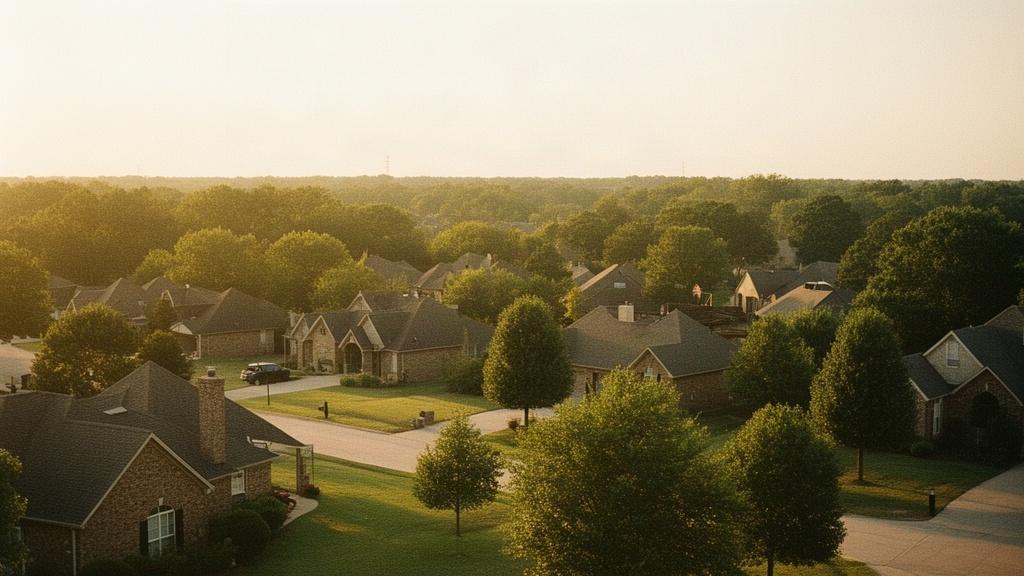
Layton is a mid-sized city of roughly 80,000 residents in north Davis County, and its real estate market in September 2026 reflects a market that has stabilized after several volatile years. Prices are not falling sharply, but the frenzied multiple-offer environment of 2021 and 2022 has cooled into something more measured.
Median Price and Price Per Square Foot
The median sale price for a single-family home in Layton currently sits in the low-to-mid $450,000 range, with price per square foot landing between $195 and $230 depending on the specific street, lot size, and finish level. Attached housing, including townhomes and condos, generally trades between $290,000 and $370,000. You can track current sale prices and trends on Redfin's Layton housing market page, which is updated regularly with closed sale data.
Entry-level homes in Layton, typically three bedrooms and under 1,600 square feet, are concentrated in the $390,000 to $430,000 range. Larger homes on bigger lots, particularly those with four or five bedrooms and finished basements, push toward $500,000 to $600,000 and occasionally beyond for updated properties near the foothills.
How Layton Compares Within Davis County
Within Davis County, Layton generally prices below Farmington and Centerville to the south, which carry a premium partly due to their proximity to the Farmington Station shopping and transit hub. Bountiful, at the southern end of Davis County, skews toward an older housing stock, while Syracuse and Clinton to the west of Layton tend to offer newer subdivisions at slightly lower per-square-foot prices. Layton sits in the middle of that range and offers a wider variety of home types than most of its neighbors.
Inventory and Days on Market
Active inventory in Layton has grown compared to the near-zero supply of 2021 and 2022. As of September 2026, a typical well-priced home sits on the market between 18 and 35 days before going under contract. Homes that are overpriced relative to recent comps are sitting longer, sometimes 60 days or more, which gives buyers more room to negotiate than they have had in years.
The list-to-sale price ratio has also normalized. Most homes are closing at or slightly below list price, a reversal from the 103 to 106 percent over-ask environment that defined the pandemic-era market. Sellers who price accurately from day one are still finding buyers; those chasing a 2022 number are not.
2. Layton's Housing Stock: What You Will Actually Find
Layton's housing inventory is one of the most diverse in Davis County, spanning decades of construction and a wide range of lot sizes and styles. Understanding what is actually available helps buyers set realistic expectations before they start touring.
Single-Family Homes and Lot Sizes
The bulk of Layton's single-family inventory was built between the 1960s and the early 2000s. Homes from the 1960s through the 1980s tend to sit on larger lots, often 8,000 to 12,000 square feet, with mature trees and established landscaping. Many have been updated with new kitchens, baths, and HVAC systems, though buyers should still budget for potential electrical panel upgrades and plumbing inspections on older stock.
Homes built in the 1990s and early 2000s typically feature more open floor plans and two-car garages as a standard feature. Lot sizes in this era of construction shrank somewhat, usually landing between 6,000 and 9,000 square feet. These homes are often the most move-in-ready segment of the market without the price premium of new construction.
Townhomes, Condos, and Attached Housing
Layton has a growing supply of townhomes and condos, concentrated near the Layton Hills Mall corridor along Highway 89 and in pockets along Antelope Drive. These attached units appeal to buyers who want to own without the maintenance of a large yard, and they represent the most accessible price points in the city. HOA fees vary by community and typically cover exterior maintenance, landscaping, and sometimes water, so buyers should read HOA documents carefully before making an offer.
New Construction Activity
New construction in Layton is limited by available land, but builders are active on the west side of the city near the Hill Air Force Base boundary and in a few infill developments closer to the foothills. New builds in Layton are currently pricing from the upper $400,000s into the $550,000 range for standard finishes. Builder incentives such as rate buydowns or closing cost credits have returned in 2026 as builders compete for a smaller pool of buyers.
One important note for buyers considering new construction: having your own buyer's agent represent you at a builder's sales office costs you nothing and gives you an advocate who is not on the builder's payroll. The builder's on-site agent works for the builder, not for you. For more on how agent representation works in Layton, see this breakdown of local versus national brokerage representation.
3. Neighborhood Geography and What Each Area Offers
Layton spans roughly 22 square miles and is divided informally by elevation, age of development, and proximity to major roads. Each part of the city has a distinct character in terms of housing stock, lot size, and what is walkable or drivable from your front door.
West Layton and the I-15 Corridor
West Layton, the area generally between I-15 and the railroad tracks, contains a mix of older ranch-style homes and more recent townhome developments. This part of the city is flat, close to the Layton Trax station (which opened on the FrontRunner commuter rail line), and within a short drive of the Layton Hills Mall, Costco, and a dense concentration of retail along Highway 89. Homes here tend to price at the lower end of the Layton range, making them attractive entry points.
Proximity to Hill Air Force Base is a practical factor in this part of Layton. The base employs tens of thousands of military and civilian workers and generates consistent housing demand across the entire city, but especially on the west side where commute times to the base gates are shortest.
East Layton Foothills
East Layton climbs toward the Wasatch foothills and carries the city's highest price points. Homes here often sit on larger lots with views of the Great Salt Lake to the west and the Wasatch Range to the east. Streets like Kays Creek Parkway and the neighborhoods surrounding Mueller Park offer access to hiking and trail systems within minutes of the front door. Mueller Park Trail, for example, is a well-known local route that gains significant elevation through oak and maple canopy before opening into alpine terrain.
Homes in east Layton frequently include finished walkout basements, RV parking, and three-car garages. The trade-off is distance from the freeway and a longer commute for anyone heading south toward Salt Lake City, so buyers should factor that into their decision.
North and South Layton Pockets
North Layton, near the border with Kaysville, contains some of the city's quieter residential streets with a mix of 1970s and 1980s construction alongside newer infill homes. South Layton transitions into Kaysville and includes several established subdivisions with larger lots and mature landscaping. Homes in both areas tend to sit on streets with low through-traffic, which appeals to buyers who want a quieter setting while remaining close to Layton's commercial core.
For a deeper look at how Layton's neighborhoods break down by housing type, lot size, and proximity to amenities, the North Davis County buyer's guide covers the surrounding cities in detail alongside Layton.
4. Commutes, Amenities, and What Drives Layton's Demand
Location is one of the primary reasons Layton continues to attract buyers from both Salt Lake City and Ogden. It sits almost exactly halfway between the two cities, which gives residents options for employment, entertainment, and services in either direction.
Commute Times to Salt Lake City and Ogden
By car, Layton is approximately 25 miles north of downtown Salt Lake City and 15 miles south of downtown Ogden. Under normal traffic conditions, the drive to Salt Lake City via I-15 takes 30 to 40 minutes. During peak morning commute hours, that can stretch to 50 to 60 minutes southbound. The drive to Ogden is typically 20 to 25 minutes.
The Layton FrontRunner station on the UTA commuter rail line offers a car-free option for Salt Lake City commuters. The train runs from Ogden to Provo with stops throughout the Wasatch Front, and the Layton station connects to local bus routes. Commute time by rail from Layton to Salt Lake City Central Station is roughly 45 to 55 minutes depending on the schedule.
Parks, Trails, and Outdoor Access
Layton maintains an extensive parks system with over 30 city parks spread across the city. Layton Commons Park is the largest, featuring sports fields, a splash pad, a skate park, and an outdoor amphitheater. The Layton Surf Park, a wave pool facility that opened in recent years, has become a regional draw. Kays Creek Parkway runs as a paved trail corridor through much of the city, connecting residential areas to parks without requiring a car.
For buyers who prioritize outdoor recreation, the proximity to the Wasatch Range is a significant draw. Mueller Park Trail in the foothills above east Layton is accessible without a long drive. Snowbasin Resort is approximately 30 miles east via Highway 89 and Highway 167, making it a realistic option for a morning ski run before work during winter months.
Shopping, Dining, and Everyday Conveniences
Layton Hills Mall anchors the city's commercial core and is surrounded by a dense cluster of national retailers, grocery stores, restaurants, and medical offices. Costco, Target, and multiple grocery chains are all within a few minutes of most Layton addresses. The restaurant scene along Main Street and Antelope Drive includes a mix of local spots and national chains, with enough variety that most residents handle the majority of their errands without leaving the city.
5. Timing the Layton Market: When to Buy and When to Sell
Timing in real estate is never a perfect science, but Layton does follow seasonal patterns that are worth understanding before you list or make an offer. The broader Utah housing context matters too. As noted by HousingWire in their coverage of Utah's shifting affordability landscape, the state's rapid price appreciation has changed the calculus for both buyers and sellers compared to just a few years ago.
Seasonal Patterns in Layton Real Estate
Spring, roughly March through June, is consistently the busiest listing season in Layton. More homes come to market, more buyers are active, and competition tends to be highest during this window. Sellers who list in March or April typically see the most showing traffic and the strongest offers.
Summer slows slightly as families manage vacations and back-to-school transitions. Fall, particularly September and October, sees a secondary wave of activity as buyers who missed spring try again before the holidays. Winter is the slowest period, but homes that sell in November through January often do so with serious, motivated buyers who are not browsing casually.
What Rising Rates Mean for Your Budget
Mortgage rates remain elevated compared to the historic lows of 2020 and 2021, and that reality reshapes what buyers can afford in Layton. At current rate levels, a $450,000 home with 10 percent down produces a principal and interest payment in the $2,700 to $2,900 range per month, depending on the rate secured. Buyers who locked in rates below 3 percent in prior years and are now considering moving face a real financial trade-off, which is part of why existing inventory has remained somewhat constrained.
Rate buydowns, seller concessions, and adjustable-rate options are all worth exploring with a lender before you assume a purchase is out of reach. Some Layton sellers are offering concessions specifically to help buyers reduce their rate, which effectively lowers the monthly payment without reducing the sale price.
Signals That Tell You the Market Has Shifted
Watch these specific indicators to understand where the Layton market is heading at any given moment. Days on market is the most immediate signal: when that number rises above 45 days on average, buyers have leverage. When it drops below 20, sellers have the upper hand. Price reductions per week are another useful signal; a spike in reductions tells you sellers are catching up to where the market actually is.
Active listings relative to closed sales, called months of supply, is the most comprehensive measure. A market with less than three months of supply favors sellers. Three to six months is considered balanced. Above six months, buyers have real negotiating room. Layton is currently operating near the balanced range, which means neither side holds a dramatic advantage in September 2026.
If you are weighing whether to sell now or wait, the Layton, Utah timing decision guide goes deeper into the specific factors that should drive that decision for your property.
And if you are still in the process of choosing who to work with, the article on what to look for when choosing a Realtor to sell your home in Layton covers the questions worth asking before you sign anything.
FAQ
What is the current median home price in Layton, Utah?
As of September 2026, the median sale price for a single-family home in Layton sits in the low-to-mid $450,000 range. Attached housing such as townhomes and condos generally trades between $290,000 and $370,000. Price per square foot for single-family homes ranges from roughly $195 to $230 depending on the age, location, and condition of the property. Entry-level homes under 1,600 square feet are concentrated in the $390,000 to $430,000 range, while larger updated homes near the foothills can exceed $550,000.
Is Layton, Utah a buyer's market or a seller's market right now?
Layton is operating near a balanced market in September 2026, meaning neither buyers nor sellers hold a dramatic advantage. Days on market for well-priced homes average between 18 and 35 days, and most homes are closing at or slightly below list price rather than significantly over. Buyers have more negotiating room than they did in 2021 and 2022, but well-priced, move-in-ready homes still attract multiple interested parties. Overpriced homes are sitting, which is a meaningful shift from the prior few years.
What should I know about commuting from Layton, Utah?
Layton is approximately 25 miles north of downtown Salt Lake City and 15 miles south of downtown Ogden, making it a practical base for employment in either city. By car, the drive to Salt Lake City takes 30 to 40 minutes under normal conditions and up to 60 minutes during peak southbound traffic. The Layton FrontRunner commuter rail station offers a car-free option, with train travel to Salt Lake City Central Station taking roughly 45 to 55 minutes. For workers at Hill Air Force Base, which sits on Layton's western boundary, the commute from most Layton addresses is under 15 minutes.