← Back to Blog
Market Trends
Investment Property Guide for Montgomery, Alabama
By April Papacharalambous
September 15, 2026 · 12 min read
This investment property guide for Montgomery, Alabama covers the local numbers, property types, financing steps, and practical details that matter before you commit capital to this market. Montgomery offers relatively low acquisition costs compared to most Sun Belt cities, a consistent renter base tied to state government employment and Maxwell-Gunter Air Force Base, and a housing stock that ranges from 1940s craftsman bungalows to new construction in the Pike Road corridor. Whether you are buying your first rental or adding to an existing portfolio, the specifics below will help you move forward with a clear picture of what this market actually looks like in September 2026.
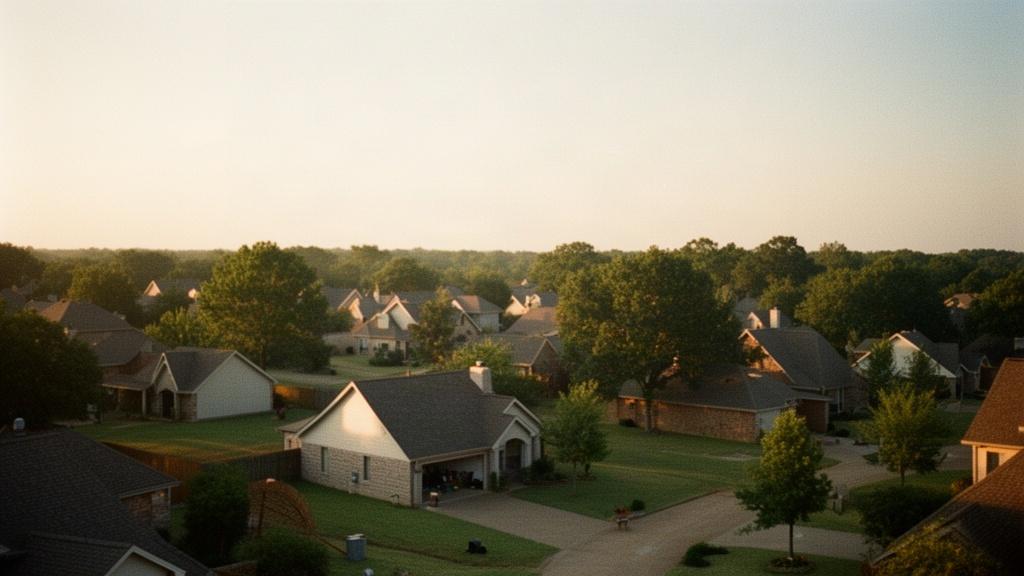
1. Why Montgomery's Market Attracts Rental Investors
Montgomery draws rental investors primarily because of its low acquisition cost relative to the rent it can support. Median home prices in Montgomery hover in the low-to-mid $200,000 range as of September 2026, while comparable properties in Birmingham or Huntsville often trade $50,000 to $100,000 higher. That spread means a Montgomery investor can sometimes clear a gross yield above 8% on a single-family rental, a figure that is increasingly hard to find in larger Alabama metros.
For a broader look at how Montgomery's market has trended over recent years, Norada Real Estate's Montgomery market analysis provides useful context on price appreciation, days on market, and inventory levels that investors should review before forming return assumptions.
Low Entry Costs and Gross Yield Potential
A three-bedroom, two-bath home in established Montgomery neighborhoods like Chisholm, Dalraida, or the older sections of East Montgomery can often be purchased in the $150,000 to $210,000 range. Those same homes rent for $1,100 to $1,500 per month depending on condition and location. At a $180,000 purchase price with $1,250 monthly rent, the gross rent multiplier sits around 12, which is a reasonable starting point for further analysis. Net yield after expenses is a different calculation, covered in detail in Section 3 below.
Stable Employment Anchors
Montgomery's two largest employment anchors are the State of Alabama government complex and Maxwell-Gunter Air Force Base, which together employ tens of thousands of workers. State employees and military personnel tend to be stable, long-term renters, which reduces the vacancy and turnover risk that can erode returns in markets driven by a single private employer. The Hyundai Motor Manufacturing plant in nearby Montgomery County adds another layer of blue-collar employment that supports demand for workforce housing in the $900 to $1,300 monthly rent range.
Alabama State University and Auburn University at Montgomery (AUM) also generate student and faculty housing demand, particularly in neighborhoods within a few miles of their respective campuses on South University Drive and Taylor Road. Investors targeting those corridors should account for the seasonal vacancy patterns that come with academic calendars.
2. Property Types and Where to Find Them in Montgomery
Montgomery's housing stock is unusually varied for a city its size. You will find everything from 1920s craftsman bungalows in Old Cloverdale to brick ranch homes from the 1960s and 1970s spread across the central and eastern parts of the city, to newer vinyl-sided construction in subdivisions along Vaughn Road and in Pike Road. Each property type carries different maintenance profiles, renter demographics, and financing considerations.
Single-Family Homes
Single-family rentals remain the most common entry point for Montgomery investors. Brick ranch homes from the 1960s through the 1980s are particularly prevalent in the $140,000 to $200,000 price range and tend to attract long-term tenants. These homes typically sit on lots of 7,000 to 10,000 square feet, have 1,200 to 1,600 square feet of living space, and carry lower insurance costs than wood-frame construction, which matters in Alabama's storm-prone climate.
Older homes in the Cloverdale area and near the Garden District offer character that commands slightly higher rents, but they also come with older plumbing, electrical panels, and HVAC systems that require careful inspection. If you want a deeper look at what the Cloverdale submarket looks like specifically, the guide on this site covering Cloverdale real estate prices and neighborhood details is worth reading before you start touring properties there.
Small Multifamily Properties
Duplexes and four-plexes exist in Montgomery, though the inventory is thinner than in some other Alabama cities. When they do come to market, they are often found in the central city areas near Alabama State University or along corridors like Mobile Road and Atlanta Highway. Purchase prices for a duplex in rentable condition typically range from $130,000 to $220,000, and combined rents on a two-unit property can reach $1,800 to $2,400 per month, which improves the income-to-price ratio compared to single-family rentals.
The tradeoff is that multifamily properties in older parts of Montgomery often need capital improvements before they can be rented at market rates. Budgeting for a renovation contingency of $15,000 to $40,000 on a value-add duplex is not unusual. Investors who can manage that renovation process tend to see the strongest returns in this segment.
Newer Construction in Pike Road and EastChase
The Pike Road corridor and the EastChase area near the intersection of Interstate 85 and Taylor Road represent the newer end of Montgomery's housing stock. Homes here were largely built after 2000 and frequently after 2010. Purchase prices in Pike Road run from the mid-$200,000s to well above $400,000 for larger four-bedroom homes. Rents in this corridor range from $1,400 to $2,200 per month. The gross yields are lower than in older neighborhoods, but deferred maintenance costs are also lower, and tenant turnover tends to be less frequent.
3. Running the Numbers on a Montgomery Rental
Return calculations are only as good as the inputs, and Montgomery-specific numbers differ meaningfully from national averages. Property taxes in Montgomery County run roughly 0.4% to 0.6% of assessed value annually for non-owner-occupied properties, which is low by national standards. Homeowner's insurance on a rental home in Montgomery typically costs $1,200 to $2,000 per year depending on the home's age, construction type, and coverage level. Alabama's exposure to severe weather, including tornadoes and tropical storm remnants, means skimping on coverage is not advisable.
Purchase Price and Rent Ranges
To anchor the numbers, here is a snapshot of what the Montgomery rental market looks like in September 2026 across three property tiers:
- Entry-level single-family (3 bed / 1 bath, older brick ranch): Purchase price $130,000 to $165,000; monthly rent $950 to $1,150.
- Mid-range single-family (3 bed / 2 bath, updated ranch or newer build): Purchase price $175,000 to $240,000; monthly rent $1,200 to $1,600.
- Higher-end single-family (4 bed / 2 bath, Pike Road or EastChase): Purchase price $260,000 to $380,000; monthly rent $1,500 to $2,200.
Expenses to Budget For
Beyond mortgage principal and interest, a Montgomery investor needs to account for the following recurring costs:
- Property taxes: Roughly $600 to $1,200 per year on a $180,000 rental property in Montgomery County.
- Insurance: $1,200 to $2,000 per year; higher for older wood-frame homes.
- Property management: 8% to 10% of collected rent if you hire a local manager, which is common for out-of-state investors.
- Maintenance and repairs: Budget 1% of the purchase price annually as a baseline; older homes may run higher.
- Vacancy allowance: A conservative 8% vacancy rate (roughly one month per year) is a reasonable planning assumption for Montgomery.
Cash-on-Cash Return Example
On a $190,000 purchase with 25% down ($47,500), a 7.25% 30-year investment loan carries a principal and interest payment of roughly $970 per month. Add taxes ($85/month), insurance ($140/month), management ($120/month on $1,300 rent), maintenance reserve ($160/month), and vacancy reserve ($104/month), and total monthly expenses land around $1,579. Against $1,300 in rent, that property runs slightly negative on a monthly basis before accounting for principal paydown and appreciation. Adjusting the purchase price downward to $165,000 or finding a rent of $1,450 or more changes the picture meaningfully, which illustrates why precise local pricing matters more than general market optimism.
4. Financing an Investment Property in Montgomery
Investment property financing works differently from a primary residence loan, and the differences affect your numbers from day one. Lenders typically require a minimum 20% to 25% down payment on a non-owner-occupied property, and interest rates run 0.5% to 0.875% higher than rates on equivalent owner-occupied loans. As of September 2026, conventional investment property rates in the 6.75% to 7.5% range are common, though your credit score, reserves, and loan-to-value ratio will move that number.
Conventional Investment Loans
Conventional loans backed by Fannie Mae or Freddie Mac allow investors to finance up to 10 properties simultaneously, though underwriting gets stricter after the fourth property. For a first or second investment property, a borrower with a 720+ credit score, six months of reserves, and a debt-to-income ratio below 45% will generally qualify without difficulty. Montgomery's lower price points mean the loan amounts often fall well within conforming limits, which simplifies the process.
DSCR Loans
Debt Service Coverage Ratio (DSCR) loans have become a popular tool for Montgomery investors who want to qualify based on the property's income rather than their personal income. A DSCR of 1.0 means the property's gross rent exactly covers the principal, interest, taxes, and insurance payment. Most DSCR lenders want to see 1.1 or higher. On a $180,000 Montgomery rental generating $1,300 per month in rent, a DSCR loan with a 25% down payment and a 7.5% rate produces a PITIA of roughly $1,100 to $1,150, giving a DSCR just above 1.1, which is workable. Rates on DSCR loans typically run 0.5% to 1% above conventional investment rates.
Local and Regional Lenders
Montgomery-area investors often find that local banks and credit unions, including institutions like Peoples Independent Bancorp and several Alabama credit unions with Montgomery branches, offer portfolio loans with more flexible underwriting than national lenders. Portfolio lenders hold the loan on their own books rather than selling it to the secondary market, which gives them latitude to approve deals that conventional underwriting might decline. If you are purchasing a property that needs work, or if you are self-employed with complex income documentation, a portfolio lender conversation is worth having early in the process.
5. Due Diligence Steps Before You Close
The due diligence period on an investment property purchase in Alabama is typically 10 to 14 days, and every day of it matters. Montgomery's housing stock includes a large number of homes built before 1980, which means deferred maintenance, aging systems, and in some cases environmental concerns like asbestos-containing materials or older cast-iron sewer lines are real possibilities. A thorough inspection is not optional.
Inspection and Deferred Maintenance
Beyond the standard home inspection, investment properties in Montgomery warrant a sewer scope inspection (typically $150 to $250), especially on homes built before 1970 where clay or cast-iron sewer lines may be deteriorating. HVAC systems over 12 years old should be evaluated for remaining useful life. Roof condition is critical: a replacement in Montgomery costs $8,000 to $18,000 depending on size and materials, and an aging roof that fails during a tenant's lease creates both financial and legal complications.
Title and Zoning
Title searches in Montgomery occasionally surface unpaid municipal liens, code enforcement violations, or estate issues on older properties that have changed hands informally over the years. An owner's title insurance policy protects against these issues post-closing and costs a one-time premium of roughly $500 to $900 on a $180,000 purchase. Confirm with the City of Montgomery's planning and zoning department that the property is zoned for the use you intend, particularly if you are considering a short-term rental or a duplex conversion.
Property Management Considerations
If you plan to self-manage, Alabama landlord-tenant law requires specific procedures for security deposit handling, lease disclosures, and the eviction process. The Alabama Uniform Residential Landlord and Tenant Act governs most residential rentals and sets timelines for returning deposits (within 60 days of lease termination) and providing written notice for lease violations. Investors who are new to landlording or who live outside Montgomery often find that a local property management company, which typically charges 8% to 10% of monthly rent, pays for itself through reduced vacancy and avoided legal missteps.
6. Common Mistakes Montgomery Investors Make
Several patterns show up repeatedly among investors who underperform in the Montgomery market. Knowing them in advance is the most efficient way to avoid them.
Overestimating rent is the most common error. Investors who pull national rent averages or use figures from a different Alabama city often set asking rents 10% to 15% above what the local market will bear, leading to extended vacancy that wipes out months of projected income. Before you close, verify current asking rents for comparable properties on the market right now in the specific zip code you are buying in, not county-wide averages.
Underestimating renovation costs is the second most frequent problem. Montgomery has a healthy base of local contractors, but material costs have remained elevated through 2026, and skilled labor in trades like plumbing and electrical is in high demand. A kitchen update that an investor budgets at $8,000 can easily run $13,000 to $15,000 once the project is underway and additional issues are uncovered. Build a 20% contingency into every renovation budget.
Ignoring the holding cost of a vacant property during renovation is a third mistake. A four-month renovation on a property with a $970 monthly mortgage payment, $85 in taxes, and $140 in insurance costs you roughly $4,780 before you collect a single dollar in rent. That holding cost needs to be factored into your acquisition offer, not discovered after closing.
Investors who want a broader strategic framework for building wealth through Montgomery real estate can also review this strategic guide for Montgomery AL investors, which covers portfolio-building concepts specific to this market.
Finally, skipping professional representation on the buy side is a mistake that costs more than it saves. A local Montgomery agent who works with investors regularly knows which neighborhoods have the tightest rental demand, which streets have deferred infrastructure issues, and how to structure an offer that protects your due diligence rights. The seller pays the buyer's agent commission in most Alabama transactions, so the representation costs you nothing directly while giving you access to local knowledge that no online search can replicate.
FAQ
Is Montgomery, Alabama a good market for rental property investment?
Montgomery offers several characteristics that rental investors look for: low acquisition prices relative to achievable rents, a diversified employment base anchored by state government and Maxwell-Gunter Air Force Base, and a consistent pool of long-term renters. Gross yields on single-family rentals in the $150,000 to $220,000 price range can reach 7% to 9% before expenses, which compares favorably to larger Alabama metros. That said, net returns depend heavily on the specific property, its condition, and the rent that particular address can support. Doing property-level due diligence rather than relying on market-wide averages is essential before committing capital.
How much do I need to put down to buy an investment property in Montgomery?
Most conventional lenders require 20% to 25% down on a non-owner-occupied investment property, which means $35,000 to $47,500 on a $190,000 purchase. DSCR loans, which qualify the borrower based on the property's rental income rather than personal income, also typically require 20% to 25% down. Some local portfolio lenders may work with slightly different terms, but underwriting for investment properties is meaningfully stricter than for primary residences in every category: down payment, interest rate, and reserve requirements. Plan to have at least six months of mortgage payments in liquid reserves in addition to your down payment and closing costs.
What are the landlord-tenant rules I need to know before renting a property in Montgomery?
Alabama's Uniform Residential Landlord and Tenant Act governs most residential rental relationships in Montgomery. Key provisions include: security deposits must be returned within 60 days of the tenant vacating, along with an itemized statement of any deductions; landlords must provide written notice of lease violations before beginning eviction proceedings; and the eviction process (unlawful detainer) runs through Montgomery County Circuit Court, which means self-help evictions, such as changing locks or removing belongings, are illegal. The City of Montgomery also has a rental property registration requirement, so confirm current local requirements with the city's inspection and code enforcement office before placing your first tenant. Consulting a local real estate attorney before your first lease is money well spent.