
← Back to Blog
Market Trends
Wichita, Kansas This Year Real Estate Market Guide: Prices, Neighborhoods and Timing
By Ashley LeMaster, REALTOR
Keller Williams Hometown Partners
September 27, 2026 · 11 min read
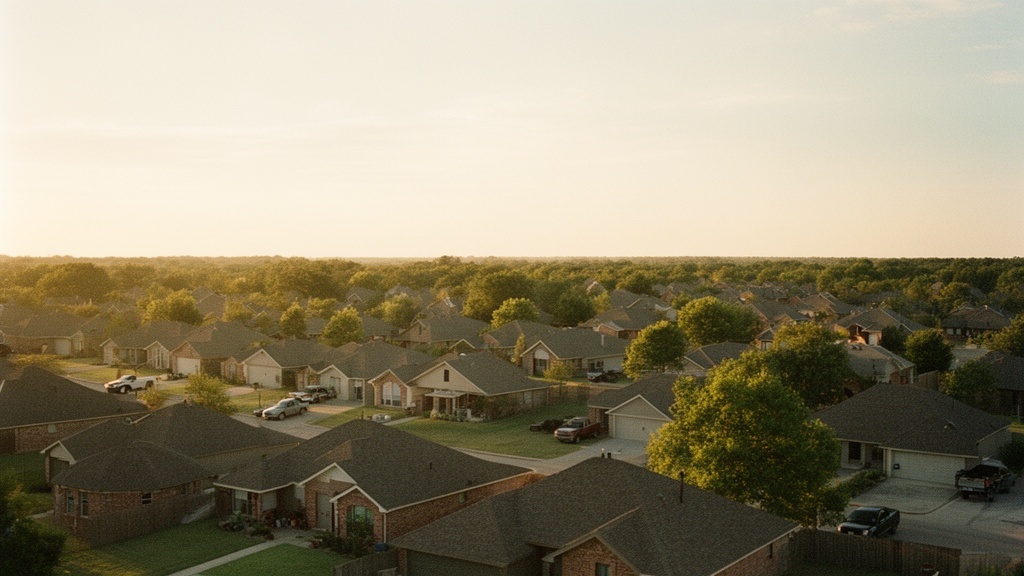
If you are trying to make sense of the Wichita, Kansas real estate market this year, you are not alone. Prices have shifted, inventory has moved in unexpected directions, and the timing question has become more complicated than it was two or three years ago. This guide covers what buyers, sellers, and people relocating to Wichita need to know right now, from median sale prices and days on market to which pockets of the city are seeing the most activity in September 2026.
1. Where Wichita Home Prices Stand Right Now
Wichita home prices in September 2026 are holding in a range that still makes the city one of the more accessible mid-sized markets in the country. The median sale price for a single-family home in Wichita currently sits in the low-to-mid $200,000s, with the broader metro area pulling that figure slightly higher when suburban communities like Andover and Derby are included.
Median Sale Price and Price Per Square Foot
Price per square foot tells a more granular story. Across Wichita proper, buyers are generally paying somewhere in the $115 to $145 per square foot range depending on condition, location, and lot size. Older brick ranches in established east-side neighborhoods often land at the lower end of that range, while updated homes near the Arkansas River corridor or in newer west-side subdivisions can push toward the top. Luxury properties in the $400,000 and above tier operate in a separate market segment entirely, which Ashley LeMaster covers in depth in the luxury home market guide for Wichita.
For a real-time look at how these figures are tracking month over month, Redfin's Wichita housing market page publishes updated median price data, sale-to-list ratios, and migration trends that are worth bookmarking if you are actively watching the market.
How Wichita Compares to the Broader Midwest
Wichita has attracted attention from analysts this year because Midwest housing markets broadly have outperformed coastal markets in terms of price stability. HousingWire noted in its Midwest housing market outlook for 2026 that cities like Wichita benefit from lower land costs, a diversified employment base, and relatively steady in-migration from higher-cost metros. That combination has kept price appreciation moderate rather than volatile, which is a meaningful distinction for buyers trying to plan a purchase without fear of overpaying at a peak.
Year over year, Wichita prices have increased at a single-digit percentage rate through 2026, which is slower than the double-digit surges seen during 2021 and 2022 but more durable. That kind of measured appreciation is generally a healthier sign for long-term homeowners than rapid spikes followed by corrections.
2. Inventory and Demand: What the Numbers Are Telling Us
Wichita's housing inventory in September 2026 is meaningfully tighter than it was in early 2024, but it has loosened compared to the near-zero supply conditions of 2021 and 2022. The market currently sits in a moderate seller's-advantage position, meaning well-priced homes in desirable pockets move quickly while overpriced listings linger.
Active Listings and Absorption Rate
The Wichita metro area currently carries roughly two to three months of supply, depending on price tier. Homes priced under $250,000 are absorbing the fastest, often receiving multiple offers within the first week on market when they are priced correctly and show well. The $300,000 to $400,000 range has a bit more breathing room, giving buyers slightly more time to schedule showings and negotiate. Above $450,000, supply is relatively more abundant and buyers hold more leverage.
A balanced market is generally defined as five to six months of supply. Wichita is below that threshold in most price brackets right now, which matters for both pricing strategy and offer terms. Sellers who understand this dynamic can price with confidence; buyers who understand it know they need to be prepared to move quickly when the right home appears.
Days on Market in September 2026
The average days on market for Wichita homes this month is running in the 25 to 35 day range across all price points, though that average masks wide variation. A move-in-ready three-bedroom ranch in College Hill or a well-staged home near Kellogg Avenue might go under contract in under ten days. A home that needs significant updating or is priced above comparable sales may sit for 60 days or more before a price reduction brings buyers back to the table.
For a closer look at how days on market breaks down by area and price point, the dedicated article on homes and days on market in Wichita this September goes deeper into the data.
3. Neighborhood Snapshots Across Wichita
Wichita is a city of distinct neighborhoods, each with its own housing stock, price range, lot characteristics, and proximity to employers, parks, and commercial corridors. Understanding those differences is essential whether you are buying, selling, or figuring out where to plant roots after a relocation.
East Side and College Hill
The east side of Wichita covers a wide swath of the city and includes some of its most established residential streets. College Hill, centered roughly around the intersection of Douglas and Oliver, is known for its early-twentieth-century bungalows, Tudor revivals, and brick two-stories sitting on lots that range from 6,000 to over 10,000 square feet. Prices in College Hill proper typically run from the high $200,000s to the mid $400,000s for updated homes, with outliers on both ends depending on size and condition.
The broader east side stretching toward Rock Road and beyond includes more ranch-style construction from the 1950s through the 1980s, with median prices generally in the $180,000 to $260,000 range. These homes often offer larger square footage per dollar than comparable properties closer to downtown, which draws buyers who prioritize space. The area has convenient access to the K-96 corridor and is within a reasonable drive of several major Wichita employers.
West Side, Delano and Riverside
Delano sits just west of downtown across the Arkansas River and has seen consistent renovation activity over the past several years. The neighborhood is home to a mix of late-Victorian and early Craftsman housing stock, with many homes on narrow lots in the 4,000 to 7,000 square foot range. Prices here have climbed as renovation activity has increased, with updated homes now commonly listed in the $175,000 to $310,000 range. Buyers willing to take on a project can still find opportunities below $150,000, though competition for those properties tends to be brisk.
Riverside, which runs along the Arkansas River north of downtown, offers a different character entirely. The neighborhood is adjacent to Riverside Park, one of Wichita's oldest green spaces, and the Wichita Art Museum. Homes here range from modest post-war bungalows to larger two-story colonials, with prices spanning roughly $200,000 to $450,000 depending on size, updates, and river proximity. For a detailed look at what is happening specifically in that market, the Riverside neighborhood real estate guide covers it thoroughly.
Suburbs: Andover, Derby and Beyond
Andover, located about 12 miles east of downtown Wichita, and Derby, about 10 miles to the south, are the two most active suburban communities in the metro right now. Both offer newer construction subdivisions with homes typically in the $275,000 to $450,000 range, larger lot sizes than you find inside city limits, and access to Wichita's employment centers via K-96 and I-35 respectively. Commute times from Andover or Derby into downtown Wichita generally run 20 to 30 minutes in normal traffic, though that can stretch during peak hours. The dedicated commute comparison for Andover and Derby breaks down the drive time differences in detail.
Other communities worth tracking include Maize to the northwest, where new subdivision development has been active, and Goddard to the west, which offers more affordable entry points in the $220,000 to $330,000 range. For a side-by-side look at how the northeast and southwest quadrants of Wichita differ in terms of amenities and housing character, the northeast vs southwest Wichita comparison is a useful read.
4. Timing the Market: When to Buy or Sell in Wichita This Year
Timing in real estate is always relative to your personal situation, but market conditions do create windows that are more or less favorable depending on which side of the transaction you are on. In September 2026, Wichita presents a nuanced picture for both buyers and sellers.
What Fall 2026 Means for Sellers
Sellers in Wichita this fall are working with a meaningful advantage in the sub-$300,000 price range. Inventory remains limited relative to buyer demand in that tier, which means a well-prepared home listed at a realistic price can still attract multiple offers. The key word is realistic. Overpricing by even five to eight percent in the current environment tends to produce extended days on market and eventual price reductions, which signal weakness to subsequent buyers.
Fall traditionally sees a modest dip in buyer traffic compared to spring, but serious buyers are still actively searching in September and October. Sellers who list now avoid the compressed spring competition when more homes hit the market simultaneously. For a fuller breakdown of what selling in fall 2026 looks like from a strategy standpoint, the article on fall 2026 market conditions for Wichita sellers is worth reading before you make any decisions.
What Fall 2026 Means for Buyers
Buyers entering the Wichita market this fall have a few things working in their favor. Seller motivation tends to increase as the calendar moves toward the end of the year. Homeowners who listed in summer and have not yet sold are often more willing to negotiate on price, closing costs, or repairs than they were in June. Interest rates remain a variable, but Wichita's lower price points mean that even at current rates, monthly payments are more manageable here than in most major metros.
Buyers should also factor in closing costs, which in Wichita typically add two to three percent of the purchase price on top of the down payment. The breakdown of what those costs actually include is covered in the article on closing costs for buyers in Wichita.
5. What Drives Wichita Home Values in 2026
Understanding what actually moves prices in Wichita helps buyers and sellers make decisions grounded in local reality rather than national headlines. Several forces are particularly relevant to the Wichita market right now.
Employment and the Aviation Industry
Wichita remains one of the largest general aviation manufacturing centers in the world. Companies including Spirit AeroSystems, Textron Aviation, and Bombardier Learjet maintain significant operations here, collectively employing tens of thousands of workers across the metro. When those employers are hiring and expanding, housing demand in Wichita rises. When they face headwinds, the local housing market feels it. In 2026, the aviation sector has shown relative stability, which is a positive signal for housing demand.
Beyond aviation, Wichita has a growing healthcare sector anchored by Via Christi Health and Wesley Medical Center, as well as a logistics and distribution presence tied to its central geographic location. That employment diversity provides a cushion that single-industry cities lack, and it contributes to the steady, if unspectacular, price appreciation Wichita has produced over the past decade.
New Construction and Its Effect on Resale Prices
New construction activity in Wichita's suburbs has been a meaningful factor in 2026. Subdivisions in Andover, Maize, and along the northwest growth corridor near 53rd Street North have added inventory in the $280,000 to $420,000 range. That new supply competes directly with resale homes in the same price bracket, which is one reason sellers in that tier need to be particularly sharp on pricing and presentation.
New construction also tends to push buyers toward the suburbs, which can leave some inner-city neighborhoods with longer absorption times. However, buyers who want walkable proximity to Douglas Avenue restaurants, the Keeper of the Plains, or the Old Town entertainment district often find that resale homes in Delano, Riverside, or College Hill offer location advantages that new construction in Andover simply cannot replicate.
Interest Rates and Affordability
Interest rates have been the defining variable in housing affordability nationally, and Wichita is no exception. Rates in the mid-to-upper six percent range have compressed purchasing power compared to the sub-three percent environment of 2020 and 2021. A buyer who could afford a $300,000 home at three percent now qualifies for meaningfully less at current rates, which is one reason the entry-level segment under $220,000 remains so competitive in Wichita: there are more buyers chasing fewer homes at that price point.
The WSU Center for Real Estate publishes regular housing market forecasts specific to the Wichita metro area. Their housing market forecast data is one of the most locally grounded sources available and worth reviewing if you want a data-driven perspective on where Wichita prices and demand are headed over the next 12 months.
One important note for buyers: Wichita's lower price points mean that even modest rate reductions have an outsized positive effect on monthly payments here compared to higher-cost markets. A half-point rate drop on a $220,000 loan saves roughly $70 per month, which is meaningful but not the dramatic shift it would be on a $700,000 California mortgage. That context matters when deciding whether to wait for rates to fall or move forward now.
FAQ
What is the current median home price in Wichita, Kansas in September 2026?
The median sale price for a single-family home in Wichita proper currently sits in the low-to-mid $200,000s as of September 2026, with the broader metro area pulling that figure somewhat higher when suburban communities like Andover and Derby are factored in. Price per square foot across Wichita generally runs between $115 and $145 depending on neighborhood, home condition, and lot size. Entry-level homes under $220,000 are in the highest demand and tend to move the fastest. Updated homes in established neighborhoods like College Hill or Riverside can reach the $350,000 to $450,000 range. The WSU Center for Real Estate publishes local-specific forecast data that provides a more granular look at price trends by submarket.
Is it a buyer's market or seller's market in Wichita right now?
Wichita currently leans toward a seller's market in the sub-$300,000 price range, where inventory sits at roughly two to three months of supply, well below the five to six months that defines a balanced market. In the $300,000 to $400,000 range, conditions are closer to balanced, giving buyers a bit more room to negotiate. Above $450,000, buyers hold more leverage because supply is relatively more abundant at that tier. The most competitive segment right now is entry-level housing under $220,000, where well-priced homes frequently attract multiple offers within the first week of listing. Pricing strategy and preparation matter significantly in any part of this market.
Is fall a good time to buy or sell a home in Wichita?
Fall in Wichita brings fewer competing listings compared to the spring rush, which can actually benefit sellers who list in September or October because their home faces less direct competition. Buyers who are active in the fall tend to be serious and motivated, which reduces the likelihood of time-wasting offers. For buyers, fall can be an opportunity to negotiate with sellers who listed in summer and have not yet closed a deal, as those sellers are often more flexible on price and terms. Interest rates and personal financial readiness matter more than the season in most cases, but timing a listing or offer around market conditions can make a measurable difference in outcome. Ashley LeMaster can help you evaluate your specific situation and determine whether now or a few months from now makes more sense for your goals.