
← Back to Blog
Buying
Investment Property Guide for Pelham, New Hampshire: What Every Investor Needs to Know
By Ashley OConnor
William Raveis
September 24, 2026 · 11 min read
This investment property guide for Pelham, New Hampshire covers everything a real estate investor needs before putting money into this southern New Hampshire town: current price ranges, rental demand drivers, property tax math, financing considerations, and the local market conditions shaping returns in September 2026. Pelham sits in Hillsborough County about 40 miles north of Boston, and its position just across the Massachusetts border has made it a consistent draw for renters and buyers who want New Hampshire's tax structure without a long commute.
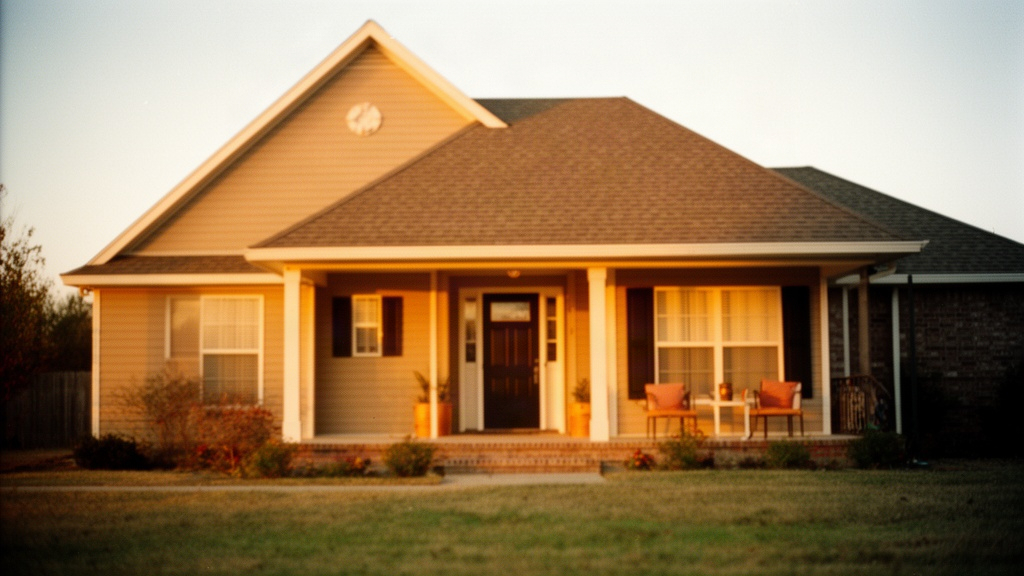
1. Why Pelham, NH Attracts Real Estate Investors
Pelham draws investors for a specific set of structural reasons, not just because it is a pleasant town to own property in. The combination of New Hampshire's tax environment, a tight housing supply, and strong commuter demand creates a landlord-favorable backdrop that is genuinely different from what you find 20 miles south in Massachusetts.
The No-Income-Tax Advantage
New Hampshire has no state income tax and no state sales tax. For a landlord collecting rent, that means rental income is not subject to a New Hampshire state income tax layer on top of federal obligations. Investors who relocate here from Massachusetts or who own property here while living elsewhere often cite this as a meaningful difference in their net return calculation. New Hampshire does tax interest and dividend income under its Investment Income Tax, but that is being phased out and is separate from earned or rental income.
Proximity to the Massachusetts Border
Pelham's southern edge sits directly on the Massachusetts state line, with Route 38 and Route 111 connecting residents to Lowell in roughly 20 minutes and to the I-93 corridor in about the same time. That commute window keeps Pelham inside the orbit of Greater Boston's job market, which means a large pool of working tenants who need housing but cannot afford or do not want to pay Massachusetts property prices or income taxes. You can read more about commute times and distances in the Pelham to Boston commute guide published here.
Rental Demand Fundamentals
Pelham is a town of roughly 14,000 people with no downtown commercial core, no apartment complexes of significant scale, and a housing stock that is overwhelmingly single-family. That means the rental market here is driven almost entirely by single-family rentals and the occasional small multi-unit building. Vacancy rates for well-maintained single-family rentals in town have historically stayed low because the supply of available rental units is structurally limited. When a decent rental property comes on the market, it tends to move quickly.
2. What Investment Properties in Pelham Actually Cost
Acquisition cost is the single biggest variable in any return calculation, so grounding your expectations in current Pelham pricing is essential before you model anything else. Prices in Pelham have climbed steadily since 2020, and the September 2026 market reflects a town where inventory remains tight and buyer competition keeps values elevated relative to surrounding Hillsborough County towns.
Single-Family Rental Prices
As of September 2026, median single-family home prices in Pelham are running in the mid-to-upper $500,000s for move-in-ready homes. Smaller ranches and Cape Cods from the 1960s and 1970s, which are common throughout town, can still be found in the $420,000 to $480,000 range depending on condition and lot size. Colonials from the 1990s and 2000s, which make up a large portion of Pelham's residential inventory, typically list in the $520,000 to $650,000 range. For a deeper look at what prices are doing right now, the September 2026 Pelham home prices article breaks this down by property type.
Multi-Family and Small Apartment Buildings
True multi-family inventory in Pelham is scarce. The town's zoning has historically favored single-family residential development, so two-family and three-family properties are relatively rare and tend to command a premium when they do appear. When a duplex or converted two-family comes to market in Pelham, it is not unusual for it to attract multiple offers, particularly if both units are already occupied with paying tenants. Investors looking specifically for multi-unit buildings may need to be patient or consider whether a single-family rental better fits the local inventory reality.
Price Per Square Foot Context
Pelham's price per square foot for single-family homes has been running in the $230 to $280 range in 2026, varying by condition, lot, and location within town. Waterfront and water-access properties near Beaver Lake carry a meaningful premium above that range. The Beaver Lake area in particular has its own pricing dynamics worth understanding separately; the Beaver Lake area real estate guide covers that market in detail.
3. Understanding Property Taxes as an Investor
Property tax is the single largest recurring operating expense for most Pelham investment properties, and it is the number that investors most often underestimate when they are modeling deals from out of state. New Hampshire funds local services almost entirely through property taxes, which means Pelham's rate is higher than what buyers from income-tax states sometimes expect.
How Pelham's Tax Rate Affects Net Operating Income
Pelham's 2026 property tax rate is approximately $16.00 to $17.00 per $1,000 of assessed value. On a home assessed at $480,000, that translates to roughly $7,680 to $8,160 per year in property taxes, or $640 to $680 per month. That monthly figure comes directly out of your gross rental income before you account for insurance, maintenance, vacancy, or any mortgage payment. Investors who model Pelham deals using Massachusetts or Connecticut tax assumptions often find their pro forma numbers look very different once they plug in the actual New Hampshire rate. The full breakdown of how Pelham's tax rate is calculated and how assessments work is covered in the Pelham property tax rate guide.
Calculating Your Real Carrying Cost
A realistic monthly carrying cost for a Pelham investment property includes the mortgage principal and interest, property taxes, landlord insurance (typically $1,200 to $2,000 annually for a single-family), and a maintenance reserve. Most experienced investors set aside 8 to 10 percent of gross annual rent as a maintenance reserve, and an additional 5 to 8 percent for vacancy. On a property renting for $2,800 per month, that is roughly $370 to $430 per month in reserves before any mortgage cost. Running these numbers honestly before you make an offer is not optional; it is the difference between a property that cash-flows and one that costs you money every month.
4. Financing an Investment Property in Pelham
Financing rules for investment properties are materially different from owner-occupied purchase loans, and first-time investors are often caught off guard by the requirements. Understanding the lending landscape before you start shopping saves time and prevents deals from falling apart at the financing stage.
Conventional Investment Loans
Most investors buying a single-family or small multi-family property in Pelham will use a conventional investment property loan through Fannie Mae or Freddie Mac guidelines. These loans carry a higher interest rate than owner-occupied loans, typically 0.5 to 0.75 percentage points above the primary residence rate for the same borrower profile. As of September 2026, investors with strong credit are seeing investment property rates in the 7.25 to 7.75 percent range for 30-year fixed loans, though rates shift with market conditions. The NAR's consumer guide on real estate investing readiness is a useful starting point for understanding what lenders look at before approving an investment purchase.
Down Payment Requirements
Investment property loans require a minimum 15 percent down payment for a single-family rental, and 25 percent for a two-to-four unit property. On a $500,000 Pelham single-family, that is $75,000 to $125,000 in cash at closing before you add closing costs, which in New Hampshire typically run 2 to 4 percent of the purchase price. Some investors use a cash-out refinance on an existing property or a home equity line of credit to fund the down payment; lenders will scrutinize the source of funds, so document everything clearly.
How Rental Income Affects Qualification
Lenders will allow you to count a portion of projected or actual rental income toward your qualifying income, but the rules vary by loan program and lender. For a purchase where the property is not yet rented, many lenders will use 75 percent of the market rent shown on an appraiser's rent schedule to offset the proposed mortgage payment. If you already own rentals, lenders will review your Schedule E from your most recent two years of tax returns to determine whether those properties help or hurt your debt-to-income ratio. Working with a lender who regularly handles investment property loans in New Hampshire is worth the effort before you start making offers.
5. What to Look for When Evaluating a Pelham Investment Property
Not every property that comes to market in Pelham makes sense as a rental, even if the location is appealing. Evaluating investment properties here requires a different checklist than buying a primary residence, and the local nuances matter.
Location Within Town
Pelham does not have a single central village; the town is spread across roughly 26 square miles with residential pockets connected by Routes 38, 111, and Mammoth Road. Properties closer to the Route 38 and Route 111 corridors tend to be more accessible for tenants who commute south toward Lowell or east toward Route 93. Properties deeper into the residential interior of town, particularly those on dirt or unpaved roads, can be harder to rent because tenants without four-wheel-drive vehicles may be hesitant during New Hampshire winters. Proximity to Pelham's amenities, including Pelham Village, the town's recreation areas, and the public library on Main Street, can be a factor in tenant preference.
Property Condition and Age of Systems
A large share of Pelham's housing stock was built between 1960 and 2000, which means many properties have systems approaching or past their expected service life. Roofs, heating systems, and septic systems are the three biggest capital expenses for Pelham landlords. New Hampshire requires private septic systems for most properties outside of the small areas served by municipal sewer, and a failing septic system can cost $15,000 to $40,000 to replace depending on soil conditions and lot size. Always commission a full home inspection and, for properties on well and septic, a separate well water test and septic evaluation before you remove your inspection contingency.
Rent-to-Price Ratio Benchmarks
The traditional gross rent multiplier benchmark of 1 percent of purchase price per month in rent is difficult to hit in Pelham in September 2026. A property priced at $500,000 would need to rent for $5,000 per month to meet that threshold, and Pelham single-family rents are realistically in the $2,400 to $3,200 range depending on size and condition. That means Pelham investment properties are generally appreciation plays with modest current cash flow, not high-yield cash-flow plays. Investors who understand that going in, and who buy with a long time horizon, tend to fare better than those chasing immediate yield. The Forbes guide to rental property investing trends provides useful context on how markets like Pelham fit into the broader national picture for investors.
6. Common Mistakes Pelham Investors Make
Most investment mistakes in Pelham are not unique to real estate investing in general; they are specific to how investors misread the local market or underestimate local costs. Knowing where others have gone wrong is a practical shortcut to avoiding the same problems.
Underestimating Carrying Costs
The most common error is building a pro forma that accounts for the mortgage and taxes but ignores insurance, maintenance, vacancy, and property management. If you plan to self-manage, factor in the time cost honestly. If you plan to hire a property manager, budget 8 to 10 percent of gross rent for management fees, which in Pelham's rent range amounts to $225 to $320 per month on a typical single-family. These costs do not disappear in good years; they are the baseline operating reality of owning a rental property.
Skipping the Local Market Check
Investors who rely on national rental data or regional averages without checking what comparable properties actually rent for in Pelham specifically will overpay for deals that look better on paper than they are in practice. Pelham is a small town with a specific rental pool. Pulling comps from Manchester or Nashua, both of which are 15 to 20 miles north and have different renter demographics and inventory dynamics, will give you misleading numbers. A local agent who actively works the Pelham market can pull actual closed lease data and give you a realistic rent range for a specific property before you make an offer.
Ignoring the Exit Strategy
Every investment property should have a clear exit strategy before you buy it, not after. In Pelham, the most common exits are selling to an owner-occupant buyer or selling to another investor. Because Pelham's buyer pool skews toward primary residence purchasers, a well-maintained single-family rental in good condition will typically attract strong resale interest. Properties that have been heavily modified for rental use, or that have deferred maintenance, can be harder to sell at top dollar. If you plan to eventually sell, buying a property that an owner-occupant would also want gives you the broadest exit.
Timing your eventual sale matters too. The fall 2026 versus spring 2027 selling analysis covers how Pelham's seasonal market patterns affect seller outcomes, which is directly relevant if you are planning to liquidate a rental property in the near term.
FAQ
Is Pelham, NH a good market for rental property investment in 2026?
Pelham offers a structurally tight rental supply, no state income tax, and consistent demand from workers commuting to the Massachusetts border corridor. The trade-off is that acquisition prices are high relative to achievable rents, so most Pelham investment properties produce modest current cash flow rather than strong yield. Investors who buy with a 7 to 10 year horizon and prioritize appreciation alongside rental income tend to find the market more rewarding than those looking for immediate cash-on-cash returns. The market is competitive and inventory is limited, so being prepared to move quickly with financing in place is essential.
What types of investment properties are available in Pelham, NH?
Pelham's housing stock is overwhelmingly single-family, with a mix of ranches and Capes from the 1960s and 1970s, Colonials from the 1990s and 2000s, and a smaller number of newer construction homes. True multi-family properties, meaning two-family or three-family buildings, are rare in Pelham because of the town's historically single-family zoning. Investors looking for multi-unit buildings should expect to wait for the right property to come available, or consider whether a single-family rental better matches what the local market offers. Waterfront properties near Beaver Lake represent a separate niche with higher acquisition costs and different rental dynamics.
Do I need a local real estate agent to buy an investment property in Pelham, NH?
Working with an agent who actively works the Pelham market gives you access to accurate local rent comps, off-market or pre-market opportunities, and guidance on which properties are realistically rentable versus which ones look good on paper but have practical issues. A local agent can also tell you which areas of town tend to attract tenants more readily, which road types and property characteristics create challenges, and what the current seller landscape looks like for investment-specific offers. In a competitive market with limited inventory, having a local expert in your corner is a practical advantage, not just a convenience. Ashley OConnor works the Pelham market closely and can help you evaluate specific properties against real local data.