← Back to Blog
Buying
Buying a Home in Douglas, Massachusetts: Would You Recommend It? Process, Costs and Timeline
By Ashley Vanmoerkerque
Century 21 North East
September 3, 2026 · 12 min read
Buying a home in Douglas, Massachusetts is a decision that deserves a straight answer, not a sales pitch. This guide walks through the full process, the real costs involved, and an honest timeline so you can plan your move with confidence.
1. What Makes Douglas, Massachusetts a Distinct Place to Buy
Douglas is a town worth understanding before you commit. It sits in Worcester County in south-central Massachusetts, bordering Rhode Island to the south and the towns of Uxbridge, Sutton, Webster, and Northbridge. The town covers roughly 37 square miles, most of it wooded, with Douglas State Forest at its center covering over 5,000 acres. That landscape shapes what the housing stock looks like and how the town feels day to day.
The Housing Stock and Price Range
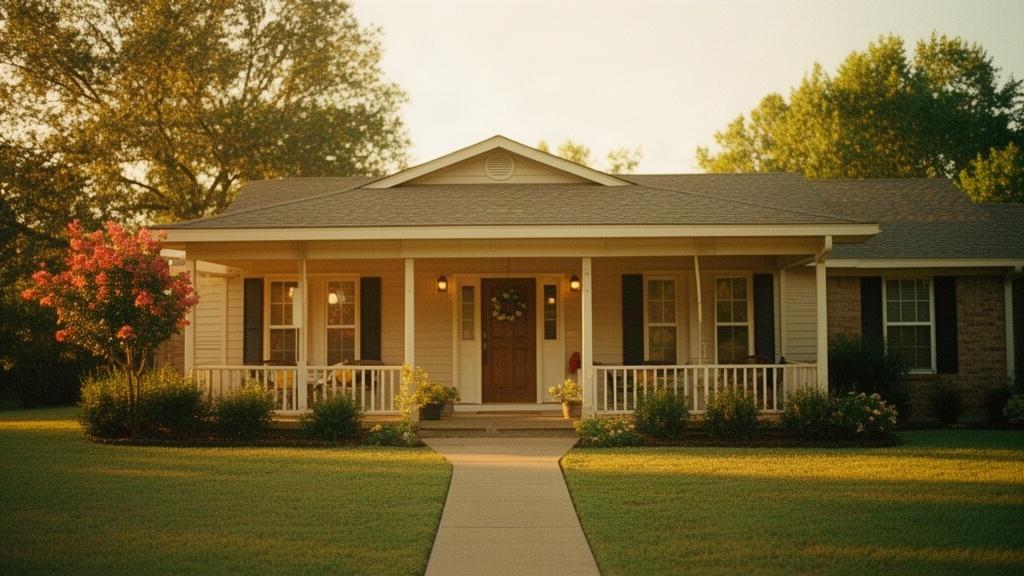
Most homes in Douglas are single-family houses on generous lots. You will find a mix of colonial and cape-style homes built between the 1970s and 2000s, along with newer construction in smaller subdivisions and the occasional antique farmhouse on larger acreage. Condominiums and townhouses exist but are a smaller share of the market than in neighboring cities like Worcester or Milford.
As of September 2026, median home prices in Douglas are running in the low-to-mid $500,000 range for single-family homes, with entry-level properties starting closer to $380,000 and larger homes on multi-acre lots reaching $750,000 or more. That places Douglas at a premium compared to some nearby Worcester County towns, reflecting the town's rural character and relatively low density. For broader Massachusetts context, Forbes Advisor's July 2026 median home price data shows Massachusetts as one of the higher-priced states in the country, so Douglas pricing, while meaningful, is not out of step with the broader regional picture.
What You Get for Your Money Here
A $500,000 budget in Douglas typically buys a three or four-bedroom colonial with a two-car garage, half an acre or more of land, and a quiet road. That same budget in a Metro West town like Framingham or Natick would likely get you something smaller on a smaller lot. The tradeoff is that Douglas has no downtown commercial district in the traditional sense. Grocery shopping, restaurants, and most services are in neighboring Uxbridge, Webster, or across the Rhode Island line in Woonsocket or Burrillville.
Douglas State Forest offers hiking, equestrian trails, swimming at Wallum Lake, and miles of snowmobile and off-road trails. The Mumford River runs through town, and the East Douglas and West Douglas village centers each have their own character, with the East Douglas area containing the town common and most of the civic buildings.
2. The Home Buying Process in Douglas, Step by Step
The process of buying a home in Douglas follows Massachusetts state law and standard purchase and sale conventions. There are no Douglas-specific quirks that override the standard Massachusetts transaction, but knowing the sequence in advance prevents surprises. For a detailed statutory overview, the 8 Steps to Buying a House in Massachusetts guide is a solid reference for the legal and procedural framework.
Getting Pre-Approved and Finding an Agent
Step one is a mortgage pre-approval, not a pre-qualification. In a market where Douglas homes can move quickly, sellers expect to see a full pre-approval letter with a verified credit check and income documentation before they take an offer seriously. Contact a lender before you start touring homes so you know your actual ceiling and can act without delay.
Choosing a buyer's agent who knows Douglas specifically is the next critical step. Douglas is a small town with limited inventory at any given time, and an agent who covers the area from a distance will not have the same awareness of which roads flood seasonally, which subdivisions have HOA restrictions, or which properties have well and septic systems that need careful due diligence. See our guide on how to find a good Realtor in Douglas who knows the local market for what to look for in that conversation.
Searching, Offering and Going Under Agreement
Douglas typically has between 15 and 35 active single-family listings at any given time, which is a thin inventory pool. That means you may need to be patient or be ready to act quickly when the right property appears. Your agent should set up automated MLS alerts and also be aware of off-market or coming-soon listings that circulate locally before hitting the public portals.
When you find the right home, your agent will write an offer that includes the purchase price, financing contingency, inspection contingency, and proposed closing date. In Douglas, most offers also include a home inspection contingency by default because the majority of homes have private wells and septic systems, which require their own specialized inspections beyond the standard home inspection. If the seller accepts, you sign a formal Purchase and Sale Agreement, typically within 10 days, and deliver an earnest money deposit, usually 5% of the purchase price.
Inspections, Financing and Closing
Inspections in Douglas deserve particular attention. Because most properties outside the village centers rely on private wells and Title 5-compliant septic systems, you should budget for a well water quality test, a flow rate test, and a Title 5 septic inspection in addition to the standard home inspection. A Title 5 inspection is legally required before the sale of a property with a private septic system in Massachusetts, and if the system fails, it must be repaired or replaced before closing or the parties must escrow funds to cover the work.
Once inspections are resolved, your lender orders an appraisal and finalizes the loan. The closing itself takes place at a registry of deeds or a title company, with a real estate attorney present as required under Massachusetts law. Massachusetts is an attorney-closing state, meaning a licensed attorney must oversee the closing and certify the title, which is different from some other states where a title company alone handles it.
3. What Does It Actually Cost to Buy a Home in Douglas, Massachusetts
The purchase price is only one part of the total cost. Buyers in Douglas need to budget for down payment, closing costs, inspection fees, prepaid expenses, and moving costs. Running these numbers before you start shopping prevents the unpleasant surprise of a closing day shortfall.
Purchase Price and Down Payment
Conventional loans typically require 5% to 20% down, depending on your credit profile and loan type. On a $500,000 home, that is $25,000 at 5% or $100,000 at 20%. Putting down less than 20% on a conventional loan triggers private mortgage insurance, which adds to your monthly payment. FHA loans allow 3.5% down for qualifying buyers but carry their own mortgage insurance premiums. First-time buyers in Massachusetts should also look into MassHousing loan programs and the ONE Mortgage program, both of which offer down payment assistance and below-market interest rates to eligible applicants.
Closing Costs and Prepaid Items
Massachusetts closing costs for buyers typically run between 2% and 4% of the purchase price. On a $500,000 purchase, plan for $10,000 to $20,000 in closing costs. The NAR has published data on how closing costs compare across states, and Massachusetts sits in the mid-to-upper range nationally. The main line items include attorney fees (typically $900 to $1,500), lender origination fees, title insurance, recording fees, and the Massachusetts deed excise tax, which is paid by the seller but is worth understanding as part of the transaction.
Prepaid items are separate from closing costs and include homeowner's insurance (usually one full year paid upfront), prepaid mortgage interest from closing date to end of month, and the initial escrow deposit for property taxes and insurance. Douglas property taxes as of fiscal year 2026 run approximately $14 to $16 per $1,000 of assessed value, so a home assessed at $500,000 carries roughly $7,000 to $8,000 in annual property taxes. Your lender will collect two to three months of this upfront into escrow at closing.
Ongoing Costs After Closing
Inspection costs are out-of-pocket before closing and non-refundable. Budget $500 to $600 for a standard home inspection, $150 to $250 for a well water test, $400 to $600 for a Title 5 septic inspection, and potentially $300 to $500 for a radon test. Homes in Douglas and surrounding Worcester County towns have elevated radon potential due to the underlying granite geology, so testing is genuinely worth doing, not optional.
After closing, plan for the ongoing costs of owning a property on well and septic: annual septic pumping ($300 to $500), periodic well pump maintenance, and the eventual cost of system replacement if the septic or well is aging. These are normal costs of rural homeownership in Douglas and should factor into your long-term budget.
4. Realistic Timeline: From First Search to Keys in Hand
Most buyers in Douglas take four to six months from serious search to closing, though the range is wide. A buyer who is pre-approved, decisive, and working with a well-connected local agent can sometimes close in under three months. A buyer who needs time to find the right property in a thin inventory market may take six months or longer. Here is how the phases typically break down.
Phase One: Preparation
Getting finances in order takes two to four weeks for most buyers. This includes pulling credit reports, gathering tax returns and pay stubs, choosing a lender, and completing the pre-approval application. If your credit needs work or you are self-employed with complex income documentation, allow more time. Choosing your buyer's agent happens in parallel, not after, so you are ready to move the moment you have your letter.
Phase Two: Active Search and Offer
Active home searching in Douglas can take anywhere from two weeks to four months, depending on inventory and how specific your criteria are. If you need a specific lot size, a garage, or a particular village area, the pool of matching homes at any moment may be two or three properties. Patience is part of the process. Once you find the right home, the offer-to-accepted-offer stage typically resolves within two to five days.
After acceptance, the Purchase and Sale Agreement is signed within 7 to 10 days, and your earnest money deposit is delivered. This is the point at which you are formally under agreement and the clock starts on your contingency deadlines.
Phase Three: Under Agreement to Closing
The under-agreement period in Massachusetts typically runs 45 to 60 days, though 30-day closes are possible with cash or a highly organized financed buyer. During this period, inspections happen in the first 7 to 14 days, the lender orders the appraisal (which can take 10 to 21 days to schedule and receive), and the attorney performs the title search. If inspection negotiations or septic repair escrow agreements are needed, they add a week or two to the timeline but rarely derail a deal when handled proactively.
A final walkthrough happens 24 to 48 hours before closing to confirm the property is in the agreed condition. Closing day itself takes one to two hours. You leave with keys.
5. Things to Know Before You Commit to Douglas
Buying a home in Douglas, Massachusetts is a genuine commitment to a rural lifestyle with real tradeoffs. Understanding those tradeoffs before you make an offer is more useful than discovering them after you move in.
Commute and Location Realities
Douglas is approximately 20 miles south of Worcester and about 55 miles southwest of Boston. Route 16 is the main east-west corridor through town, connecting to Interstate 395 about 5 miles east in Webster. From Webster, I-395 runs north to Worcester in roughly 25 minutes under normal traffic conditions and south to Connecticut. There is no commuter rail in Douglas itself, so if you need rail access, Grafton and Uxbridge are the nearest stations, both requiring a drive.
Providence, Rhode Island is about 30 miles south via I-395 and I-295, making Douglas a reasonable option for buyers who work in Providence or the surrounding Rhode Island market. The town's position on the Massachusetts-Rhode Island border also makes it worth comparing to nearby Burrillville, Rhode Island, which shares a similar rural character and price range. Our Burrillville RI neighborhood guide for Douglas MA buyers covers that comparison in depth.
The Local Market Conditions Right Now
As of September 2026, Douglas remains a seller's market, though conditions have moderated compared to the peak activity of 2022 and 2023. Homes that are priced accurately and in good condition still attract multiple offers within the first two weeks. Overpriced homes are sitting longer, sometimes 60 to 90 days, which gives buyers more negotiating leverage in those specific cases. Inventory has ticked up slightly from its historic lows but remains below what would be considered a balanced market.
Mortgage rates in September 2026 are meaningfully higher than the historically low rates of 2020 and 2021, which affects monthly payment calculations significantly. A $450,000 loan at current rates carries a principal and interest payment that would have been considerably lower three years ago. Running your numbers at current rates, not rates you remember reading about in a news headline from 2021, is essential to making a sound decision.
For a deeper look at how the Douglas market is performing right now, see the full Douglas, Massachusetts real estate market guide covering prices, neighborhoods, and timing.
Working With a Local Agent Makes a Measurable Difference
In a town with thin inventory and properties that often have well and septic systems, oil heat, and older mechanicals, having a buyer's agent who has seen the inside of many Douglas homes is not a luxury. A locally experienced agent knows which roads have had drainage issues, which neighborhoods have deed restrictions, and which properties have histories that do not appear in the MLS listing. That knowledge protects you from costly surprises and helps you compete effectively when a strong property comes to market.
Ashley Vanmoerkerque of Century 21 North East works specifically in Douglas and the surrounding area. She brings the kind of on-the-ground familiarity with this market that makes a real difference when you are navigating a purchase in a small town with limited comparable sales data and properties that each have their own particular characteristics.
FAQ
How long does it take to buy a home in Douglas, Massachusetts from start to finish?
The full process, from getting pre-approved to closing day, typically takes four to six months in Douglas, though motivated buyers with financing in order have closed in under three months. The search phase is often the longest variable because Douglas has limited inventory at any given time, typically 15 to 35 active single-family listings. Once you are under agreement, the closing period is usually 45 to 60 days. Planning for five months as a realistic midpoint gives you enough flexibility without over-extending your timeline.
What are the biggest costs buyers overlook when purchasing a home in Douglas?
The most commonly overlooked costs in Douglas involve well and septic due diligence. Most homes outside the village centers use private wells and Title 5 septic systems, which require separate specialized inspections costing $600 to $1,100 combined, on top of the standard home inspection. If a septic system fails its Title 5 inspection, repair or replacement costs can run $15,000 to $40,000 or more, and the parties must address it before closing. Radon testing is also worth budgeting for given the local geology. Beyond inspections, prepaid property taxes and homeowner's insurance at closing often catch buyers off guard, adding several thousand dollars to the cash needed on closing day.
Is buying a home in Douglas, Massachusetts worth it compared to nearby towns?
Douglas offers larger lots, more wooded surroundings, and a quieter pace than many nearby Worcester County towns, generally at prices that reflect those attributes. The town's position near I-395 provides reasonable access to Worcester, Providence, and Connecticut without being in a densely developed corridor. The tradeoffs are real: no downtown commercial area, reliance on a car for all errands, and the ongoing costs of well and septic ownership. Whether those tradeoffs work for you depends entirely on your lifestyle priorities, your commute destination, and your budget for ongoing property maintenance. Researching the town directly, visiting at different times of day, and talking to a locally grounded agent like Ashley Vanmoerkerque will give you a clearer picture than any article can.