
← Back to Blog
Market Trends
Douglas, Massachusetts Real Estate Market Guide: What Agents Refer Their Clients to for Prices, Neighborhoods and Timing
By Ashley Vanmoerkerque
Century 21 North East
September 24, 2026 · 13 min read
If you are researching the Douglas, Massachusetts real estate market and want the kind of grounded, specific information that agents refer their clients to, this is the guide for you. It covers current prices, the distinct character of each part of town, and the timing factors that determine whether buyers and sellers come out ahead. Douglas is a town of roughly 9,000 residents in southern Worcester County, and its market behaves differently from the broader Greater Boston region, so generic statewide data will only take you so far.
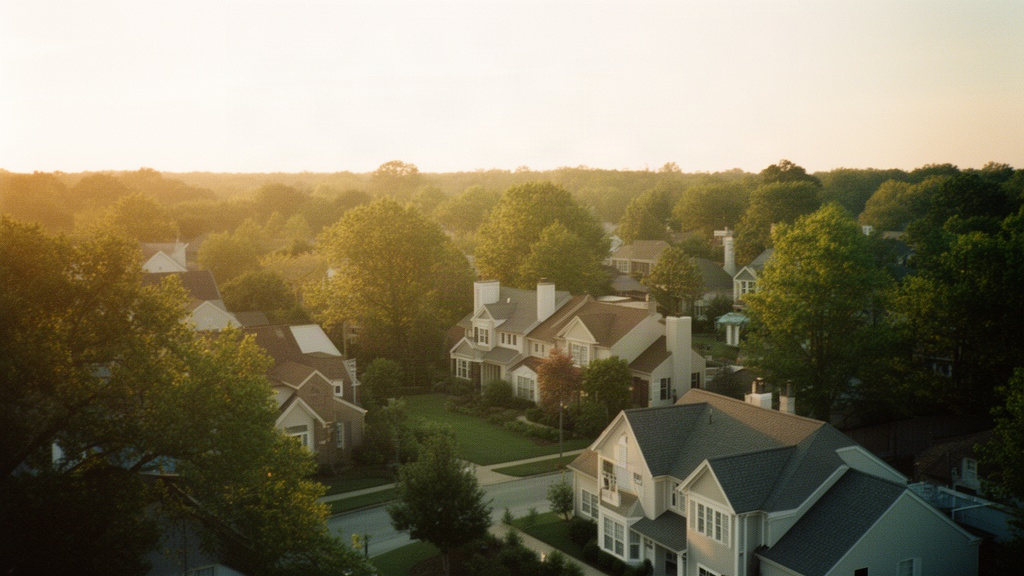
1. What Makes Douglas, MA a Distinct Real Estate Market
Douglas sits at the intersection of two very different real estate worlds. It is rural enough to offer large lots, conservation land, and a genuine sense of quiet, yet close enough to Worcester, Milford, and the Massachusetts Turnpike to function as a practical commuter town. That combination creates a market with its own logic, one that does not track perfectly with Worcester County averages or the broader suburban Boston trends covered in national housing reports.
The town spans about 37 square miles, which means a lot of land relative to its population. Douglas State Forest alone covers more than 5,000 acres in and around the town, and several ponds including Wallum Lake, Flat Rock Pond, and Carbuncle Pond shape the geography of the southern and western sections. Properties near water or forest edge carry a different price profile than those closer to the town center or Route 16.
For a fuller picture of what daily life and local services look like in Douglas, see the article on whether Douglas MA is considered a rural town and what amenities are available locally. That context matters when you are evaluating whether a property fits your lifestyle, not just your budget.
A Town Between Rural and Suburban
Douglas has no commercial downtown in the traditional sense. The town center has a historic common, a few civic buildings, and a modest cluster of small businesses, but residents drive to Uxbridge, Milford, or Webster for most retail and dining. That trade-off keeps property taxes lower than many neighboring towns and preserves the open character of the landscape, but it is something every buyer needs to factor in honestly before committing.
Douglas is also a border town. It shares its southern boundary with Rhode Island, specifically with Burrillville and Glocester. Some buyers who start their search in Douglas end up looking just across the state line, where price points and property tax structures differ. If that describes your situation, the cost of living comparison between Burrillville RI and Douglas MA is worth reading before you narrow your search.
What the Housing Stock Actually Looks Like
The majority of homes in Douglas are single-family detached houses. Condominiums and multifamily properties exist but are a small slice of the overall inventory. The architectural range runs from 18th and 19th century colonial and cape-style homes near the town center to ranch and split-level construction from the 1960s through the 1980s, to newer colonials and contemporaries built in subdivisions from the 1990s onward. Lot sizes tend to be generous by Massachusetts standards; one to two acres is common, and parcels of three acres or more appear regularly, particularly in the western and southern parts of town.
Newer construction has been added in pockets throughout the 2000s and into the 2020s. For details on what is currently being built and where, the article on new housing developments and subdivisions in Douglas MA covers the active projects and what to expect in terms of pricing and lot availability.
2. Current Home Prices in Douglas, Massachusetts
As of September 2026, the median sale price for single-family homes in Douglas sits in the range of $480,000 to $510,000, depending on the week and which closings are included in the calculation. That figure represents meaningful appreciation over the past three years, driven by constrained inventory and sustained demand from buyers priced out of closer-in suburbs. Price per square foot for finished living space currently runs between $230 and $270 for most of the market, with waterfront or pond-access properties commanding premiums that push well above that range.
Median Price and Price Per Square Foot
The entry point for a move-in-ready single-family home in Douglas currently starts around $380,000 to $400,000 for a smaller cape or ranch with a modest lot. Three-bedroom colonials on one to two acres in decent condition typically list between $450,000 and $540,000. Larger homes, four bedrooms or more, with updated kitchens and bathrooms on lots of two acres or greater, regularly close between $550,000 and $650,000. Properties with direct pond frontage or significant acreage can exceed $700,000.
These price bands have held relatively stable through the summer of 2026, with modest upward pressure. The broader Massachusetts market context matters here: the Greater Boston region has been one of the most competitive housing markets in the country, as noted in reporting by HousingWire on Boston's housing market dynamics. Douglas benefits from spillover demand as buyers seek more space and lower per-square-foot costs further from the city core.
How Douglas Compares to Surrounding Towns
Uxbridge, immediately to the north of Douglas, runs slightly higher on median price, typically $510,000 to $540,000, partly because of its closer proximity to Route 146 and the Blackstone Valley corridor. Sutton, to the northeast, also trends higher. Millville and Northbridge offer comparable or slightly lower medians depending on the neighborhood. Webster, to the west along Route 16, has a broader range of price points including older multifamily stock that pulls its median down. Douglas sits in a middle position: more affordable than Uxbridge or Sutton on a per-square-foot basis, but with larger lots and more open space than buyers typically find at equivalent prices in those towns.
For a detailed breakdown of what property taxes add to your monthly cost at current price levels, the article on property tax rates in Douglas MA and what you would pay on a $450,000 home walks through the current mill rate and annual cost estimates.
3. Neighborhoods and Areas of Douglas: What Buyers Need to Know
Douglas does not have formally named neighborhoods in the way that a city does, but distinct areas of town have different characters, price profiles, and practical considerations. Understanding those differences is one of the most valuable things a local agent brings to this market, because the MLS alone will not tell you why two homes priced identically feel like completely different propositions.
Douglas Center and the Town Common Area
The area around the town common on Main Street and the surrounding streets represents the oldest residential fabric in Douglas. Homes here include 18th and early 19th century colonials, antique capes, and Greek Revival houses on lots that are often smaller than what you find further out, typically a quarter to half an acre. These properties appeal to buyers who want architectural character and walkability to the town common, the public library, and local civic buildings. Prices for antique homes in this area can vary widely based on condition and how much updating has been done.
Route 16 runs through the center of Douglas and connects the town to Webster to the west and Uxbridge to the east. Properties directly on Route 16 tend to move more slowly than those on quieter side streets, and buyers should evaluate traffic noise carefully before committing. The trade-off is convenience: Route 16 is the primary artery for reaching most services.
West Douglas
West Douglas is a distinct village area with its own post office designation and a cluster of homes along Depot Street, West Street, and the surrounding roads. The housing stock here includes a mix of older New England vernacular homes and mid-century ranches, with lot sizes that vary considerably. West Douglas sits closer to the Rhode Island border and to the quieter, more wooded sections of town. The West Douglas real estate market guide covers this specific area in greater depth, including pricing patterns and what buyers tend to prioritize when they focus their search there.
The State Forest Perimeter and Pond Road Corridor
Properties that border or sit near Douglas State Forest are among the most sought-after in town, and they command a clear price premium. Wallum Lake Road, Pond Street, and the roads running south toward the Rhode Island line offer homes with direct trail access, wooded buffers, and in some cases water frontage on Wallum Lake or the smaller ponds within the forest boundary. These properties rarely sit on the market long, and when they do list, they often attract multiple offers within the first week.
The state forest itself offers swimming at Wallum Lake Beach, miles of hiking and equestrian trails, and boat launch access, all of which are public amenities that add practical value to nearby addresses without adding to property taxes. Buyers who prioritize outdoor access often find that the premium paid for a forest-adjacent property in Douglas is lower than what they would pay for a comparable setting in Sutton, Mendon, or other towns with similar conservation land.
New Subdivisions and Newer Construction
Scattered through the northern and eastern portions of Douglas are subdivisions built primarily between 1995 and 2015, with some more recent additions. These neighborhoods typically feature colonial-style homes ranging from 1,800 to 2,800 square feet on lots of one to two acres, with two-car garages, open floor plans, and updated mechanicals. Buyers who want predictable maintenance costs and newer systems often gravitate toward this part of the inventory. Prices in these subdivisions currently cluster between $470,000 and $590,000 depending on square footage, lot size, and updates.
4. Timing the Douglas Market: When to Buy and When to Sell
Timing in the Douglas market follows a recognizable seasonal pattern, but local inventory conditions in 2026 have added a layer of complexity that buyers and sellers both need to understand. The town consistently runs with low available inventory, which compresses the advantage that a buyer might otherwise gain by waiting for a slower season.
Seasonal Patterns in Douglas
Spring, from late March through June, is historically the most active listing season in Douglas. More homes come to market, more buyers are actively searching, and competition tends to be highest. Sellers who list in April or May typically see the most showings and the strongest offer activity. Summer remains active, particularly for properties near the state forest or ponds, because buyers can evaluate outdoor features at their best. Fall, from September through November, sees a second wave of activity as buyers who did not find a home in the spring return to the market with renewed urgency before the holidays.
December through February is the slowest stretch, with fewer listings and fewer active buyers. For buyers, this window can occasionally produce a better negotiating position, but the trade-off is a thinner selection of available homes. For sellers, listing in the winter is not ideal unless circumstances require it, though a well-priced home in Douglas will find a buyer in any month given current demand levels.
Days on Market and What It Signals
In September 2026, well-priced homes in Douglas are going under agreement in roughly 14 to 25 days from the date they list. Homes that sit longer than 30 days are almost always either overpriced for their condition, have a specific issue that buyers are flagging, or both. When a Douglas listing crosses 45 days on market without an accepted offer, it is a signal worth examining carefully, whether you are a buyer considering making an offer or a seller wondering whether a price adjustment is warranted.
For sellers, the connection between accurate pricing and time on market is direct. The NAR's guidance on determining asking price reinforces what experienced local agents see consistently: homes priced at or just below market value generate more competitive offers and ultimately close at higher net proceeds than homes that start high and require reductions.
Inventory Levels Right Now
As of September 2026, active inventory in Douglas remains well below what would constitute a balanced market. A balanced market typically carries four to six months of supply. Douglas is currently running closer to one to two months of supply in most price ranges, which keeps negotiating leverage tilted toward sellers. That said, the market has moderated slightly from the extreme competition of 2021 and 2022, and buyers are no longer routinely waiving inspection contingencies across the board. Offers are more carefully structured now, and sellers who price aggressively without justification are seeing longer times on market than they would have two or three years ago.
For a deeper look at how long homes are sitting and what that means for your strategy, the article on how long it typically takes to sell a house in Douglas MA in the current market provides a month-by-month breakdown with context for both buyers and sellers.
5. Practical Steps for Buyers and Sellers Using This Market Guide
Understanding the Douglas market is one thing; translating that understanding into action is another. Whether you are buying or selling, the steps below reflect what actually moves the needle in this specific town, not generic advice that applies to any market anywhere.
For Buyers: How to Position Yourself
Get fully pre-approved, not just pre-qualified, before you start touring homes. In a market where desirable Douglas listings go under agreement within two to three weeks, a pre-qualification letter is not enough to compete. Sellers and their agents want to see a full underwritten pre-approval from a lender who has reviewed your income, assets, and credit. That document tells a seller you are genuinely ready to close.
Know which trade-offs matter to you before you start touring. In Douglas, the common trade-offs are: more acreage versus a newer home, proximity to the state forest versus proximity to Route 16 for commuting, antique character versus updated systems. Buyers who have thought through those priorities in advance make faster, more confident decisions when the right property appears. Hesitation is expensive in a low-inventory market.
Understand the commute before you commit to a location. Douglas is roughly 20 miles from Worcester and about 55 miles from Boston, but actual drive times vary significantly depending on which part of town the home is in and which route you take. The article on commute times from Douglas to Worcester and Boston breaks down realistic travel times by route and time of day.
For Sellers: How to Price and Prepare
Pricing accuracy is the single most controllable variable in your outcome as a seller. In Douglas, where the pool of active buyers at any given time is relatively small compared to a suburban city, an overpriced listing does not just sit; it develops a reputation. Buyers and their agents notice when a home has been on the market for 60 days, and they start to assume something is wrong even if the only issue was the initial list price. A well-supported comparative market analysis, based on actual closed sales in Douglas within the past 90 to 120 days, is the foundation of a sound pricing decision.
Preparation matters more in Douglas than in markets where buyers expect to renovate. Buyers in this price range, $450,000 to $600,000, generally want a home that is move-in ready or close to it. Deferred maintenance, outdated systems, or cosmetic issues that could be addressed before listing will suppress both your sale price and the number of offers you receive. A pre-listing inspection is worth considering; it lets you address surprises on your own terms rather than during a buyer's inspection negotiation.
Sellers who are also planning to downsize within the Douglas area have a specific set of considerations around timing and sequencing. The article on downsizing options, costs and timing in Douglas MA covers the practical questions around what to sell, what to buy, and how to sequence those transactions in a low-inventory environment.
FAQ
What is the median home price in Douglas, Massachusetts right now?
As of September 2026, the median sale price for single-family homes in Douglas is in the range of $480,000 to $510,000. Entry-level move-in-ready homes start around $380,000 to $400,000, while larger updated homes on two or more acres regularly close between $550,000 and $650,000. Waterfront or pond-access properties and those bordering Douglas State Forest can exceed $700,000. These figures reflect a market that has appreciated steadily over the past three years, driven by persistent low inventory and demand from buyers seeking more space at lower per-square-foot costs than closer-in suburbs offer.
How long does it take to sell a home in Douglas, MA in the current market?
Well-priced homes in Douglas are currently going under agreement in approximately 14 to 25 days from the list date as of September 2026. Properties that are priced accurately for their condition and location attract the strongest early activity, and many see offers within the first one to two weeks. Homes that are overpriced relative to recent comparable sales tend to sit longer, often crossing 30 to 45 days on market before a price reduction brings renewed interest. The key variable is pricing: Douglas is a small enough market that buyers and agents track active listings closely, and an overpriced home becomes a known quantity quickly.
Is Douglas, Massachusetts a good market for buyers right now, or does it favor sellers?
The Douglas market in September 2026 continues to favor sellers in most price ranges, with active inventory running at roughly one to two months of supply against a balanced market standard of four to six months. That said, the extreme competition of 2021 and 2022 has moderated; buyers are generally not waiving inspection contingencies across the board, and sellers who overprice their homes are seeing longer times on market. Buyers who are fully pre-approved, clear on their priorities, and working with an agent who knows the Douglas inventory in real time are still finding homes and closing successfully. The market rewards preparation and decisiveness more than it rewards waiting.