
← Back to Blog
Neighborhoods
What Is It Actually Like to Live in the Arcadia Neighborhood of Phoenix Arizona Day to Day
By Azucena Reyes Sandoval
September 20, 2026 · 13 min read
If you have been wondering what is it actually like to live in the Arcadia neighborhood of Phoenix Arizona day to day, the short answer is this: it is a walkable, citrus-tree-lined pocket of central Phoenix where 1950s ranch homes sit next to remodeled luxury builds, and where morning coffee, a trail run, and a sit-down dinner are all within a mile of each other. This guide covers the streets, the housing stock, the commute times, the food scene, and everything else a buyer or renter genuinely needs to know before making a move.
1. Where Arcadia Actually Sits and How the Streets Feel
Arcadia sits between two cities without fully belonging to either. The neighborhood straddles the border of Phoenix and Scottsdale, running roughly from 44th Street on the west to 68th Street on the east, and from Camelback Road on the north down to Indian School Road on the south. A portion east of 56th Street falls within Scottsdale city limits, which matters for utility billing and municipal services, but on the ground the streets flow seamlessly from one side to the other.
The Boundaries and the Grid
The street grid in Arcadia is not a perfect Phoenix-style numbered system. You get a mix of numbered avenues and named streets, with curving cul-de-sacs tucked inside the larger blocks. First-time visitors often find it slightly disorienting compared to the rest of central Phoenix, but residents say that irregularity is part of what makes the area feel less like a subdivision and more like a real neighborhood.
The neighborhood is sometimes divided informally into Arcadia Proper and Arcadia Lite. Arcadia Proper generally refers to the blocks north of Thomas Road, where lots are larger and older citrus groves once stood. Arcadia Lite refers to the area south of Thomas Road toward Indian School, where lots tend to be smaller and price points come in a bit lower. Both areas share the same zip codes, 85018 on the Phoenix side and parts of 85251 on the Scottsdale side.
Street Character and Canopy
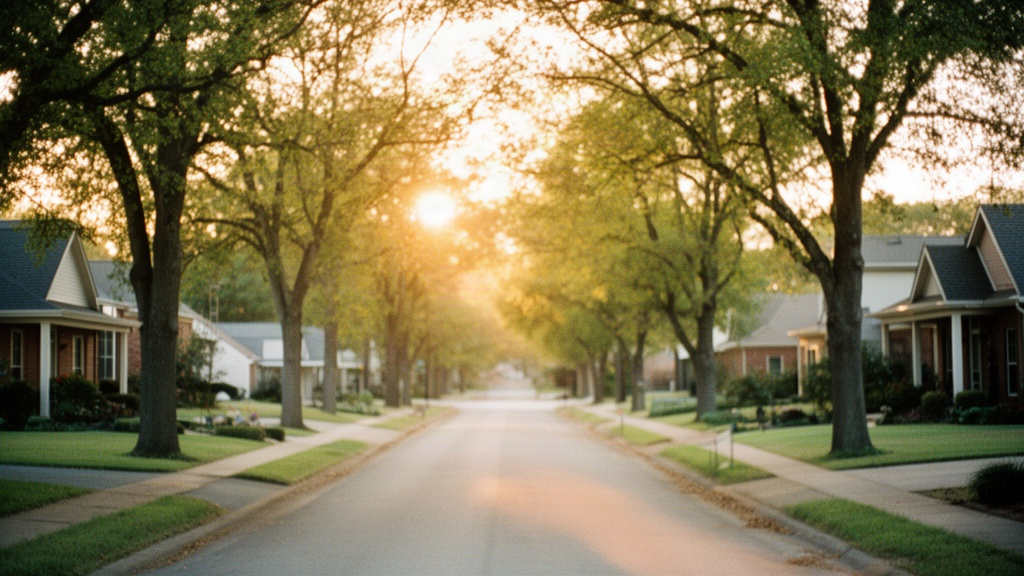
What strikes most people on their first drive through is the tree canopy. Arcadia has one of the densest concentrations of mature citrus, olive, and palm trees in all of central Phoenix. Many of the orange and grapefruit trees are remnants of the agricultural operations that covered this land before World War II. Walking the residential blocks in October or November, you can smell citrus in the air. That is not a marketing line; longtime residents mention it as one of the things they would miss most if they moved.
The streets themselves are mostly quiet and residential, with very little through-traffic on the interior blocks. Camelback Road and Indian School Road carry the bulk of commercial traffic along the northern and southern edges. Inside the neighborhood, you can walk or bike for stretches without encountering a stoplight. That said, sidewalks are inconsistent, and some blocks have none at all, which is worth noting if you plan to walk regularly with a stroller or mobility aid.
2. The Housing Stock: What You Are Looking At When You Drive Through
Arcadia's housing stock is one of the most distinctive in all of Phoenix. The dominant style is the mid-century ranch home, built primarily between the late 1940s and the mid-1960s. These are single-story block construction homes with low-pitched roofs, wide lots, and large backyards. Many still have their original terrazzo floors, jalousie windows, and carports, while others have been fully renovated or torn down and replaced with modern builds.
Ranch Homes and Lot Sizes
Lot sizes in Arcadia Proper typically run between 10,000 and 20,000 square feet, which is unusually generous for a neighborhood this close to central Phoenix. Many properties have room for a pool, a detached casita, and a garden, and a significant number already have all three. In Arcadia Lite, lots tend to be in the 6,000 to 9,000 square foot range, which is still larger than most infill Phoenix neighborhoods at a comparable price point.
Original ranch homes in livable but unupdated condition typically run between 1,200 and 1,800 square feet of living space. Fully remodeled versions of the same footprint can be considerably larger if the owner added square footage during the renovation. The neighborhood also has a handful of two-story custom homes built in the 1990s and 2000s, though these are the exception rather than the rule. For more detail on how Arcadia compares to broader Phoenix pricing right now, see the breakdown of average home prices in Phoenix in September 2026.
Remodels, New Builds, and Price Ranges
The remodel wave that hit Arcadia in the 2010s has not stopped. You will find homes where the original block shell remains but everything inside has been replaced: open floor plans, chef kitchens with waterfall islands, primary suites with spa bathrooms, and resort-style pools with baja shelves and fire features. These fully renovated homes are the ones that tend to draw the most attention on listing sites, and they are priced accordingly.
As of September 2026, entry-level homes in Arcadia Lite start around $700,000 to $800,000 for a modest, dated ranch. Fully remodeled homes in Arcadia Proper with pools and larger lots regularly list between $1.5 million and $3 million. New custom builds on premium lots can exceed $4 million. The price range is wide because the condition and lot size variation is wide. Two homes on the same block can differ by $1 million depending on what has been done to them.
There are no master-planned HOA communities in Arcadia. Most homes are on individual lots with no mandatory HOA, which means no monthly dues and no architectural committee approvals for a new fence or paint color. A small number of subdivisions within the broader Arcadia area do have voluntary neighborhood associations, but these are not the norm. This is one of the structural differences between Arcadia and newer Phoenix suburbs.
3. Day-to-Day Living in Arcadia Phoenix: Food, Errands, and Outdoor Life
Understanding what is it actually like to live in the Arcadia neighborhood of Phoenix Arizona day to day means looking at the practical texture of a Tuesday, not just the highlights. Here is what that actually looks like.
The Restaurant and Coffee Scene
Arcadia has one of the most concentrated dining strips in Phoenix along the Camelback Road corridor. The stretch between 44th Street and 68th Street includes everything from counter-service breakfast spots to full-service dinner restaurants with James Beard-nominated chefs. Postino WineCafe, which helped anchor the neighborhood's food identity in the early 2010s, remains a fixture. The Vig Arcadia on 40th Street draws a steady crowd for its outdoor patio. Cibo on 7th Street, technically just west of Arcadia, is a short drive away.
For coffee, residents have multiple options within a few minutes. Lux Central on Central Avenue is a short drive west and has been a Phoenix institution for over two decades. Cartel Coffee Lab has a location close by on Camelback. On weekday mornings, both spots fill up with people who work from laptops, which tells you something about the work-from-home density in the area. If you prefer a drive-through, Dutch Bros and Starbucks locations are both on Camelback.
The dining scene extends into Scottsdale along the eastern edge of Arcadia without any noticeable break. Old Town Scottsdale is about a 10-minute drive east, adding several hundred more restaurant options. Residents who live on the Scottsdale side of Arcadia often use both sets of options interchangeably. For a broader look at what the Arcadia lifestyle looks like from a local perspective, the Arcadia AZ Life Today guide from Historic Phoenix Districts covers the neighborhood's commercial evolution in detail.
Grocery and Errand Reality
Grocery access in Arcadia is strong. A Whole Foods Market sits on Camelback near 44th Street, which is the western anchor of the neighborhood's commercial corridor. A Sprouts Farmers Market is located nearby on Thomas Road. For conventional grocery runs, a Safeway on Indian School Road covers the southern edge. Most residents report being able to get to a grocery store in under five minutes by car.
For other errands, the neighborhood is well-positioned but not fully walkable in the traditional sense. A pharmacy, urgent care, dry cleaner, and hardware store are all within a short drive. The Biltmore Fashion Park mall, about two miles west on Camelback at 24th Street, handles most retail needs including Apple, Macy's, and a number of specialty shops. Day-to-day life here is car-dependent for most people, but the distances involved are short.
Parks, Trails, and Camelback Mountain
Camelback Mountain is the defining outdoor feature of Arcadia's daily life. The Echo Canyon trailhead on the north side of the mountain, accessed from McDonald Drive, is less than two miles from the center of Arcadia. The Summit Trail there is 1.2 miles each way with about 1,280 feet of elevation gain, making it one of the more demanding urban hikes in the Phoenix metro. On weekend mornings, the parking lot fills by 6:30 a.m. and the trailhead can have a wait. Weekday mornings are considerably quieter.
The Cholla Trail on the east side of Camelback is accessible from Invergordon Road, which runs through the eastern edge of Arcadia. This trail is 1.5 miles each way with about 1,100 feet of gain and tends to be slightly less crowded than Echo Canyon. Both trails are dog-friendly on leash. Arcadia Park, a neighborhood park on 56th Street, has a playground, ramadas, and open grass areas. Papago Park, with its red sandstone buttes, fishing lake, and the Phoenix Zoo, is about a 10-minute drive south.
4. Getting Around: Commutes, Traffic, and How Car-Dependent Arcadia Really Is
Arcadia is a car-dependent neighborhood, full stop. There is no light rail service within the neighborhood itself. The closest light rail stations are at 44th Street and Washington Street to the south, and at Camelback and Central Avenue to the west, both requiring a drive or a bike ride to reach. If you are curious about Phoenix neighborhoods that do have light rail access, that is covered in a separate guide on Phoenix light rail neighborhoods with homes under $400,000.
Driving to Downtown Phoenix and Scottsdale
The drive from central Arcadia to downtown Phoenix runs about 6 to 8 miles depending on your exact starting point. During off-peak hours, that trip takes 15 to 20 minutes via Camelback Road to 7th Street heading south, or via Thomas Road to the I-10 on-ramp. During peak morning commute hours, roughly 7:30 to 9:00 a.m., surface streets back up on Camelback and Indian School, and the same trip can take 30 to 40 minutes. The I-10 interchange at 44th Street is the fastest freeway access point heading west.
Getting to Old Town Scottsdale from Arcadia is a 10 to 15 minute drive under normal conditions. The Scottsdale Financial District and the Loop 101 corridor are about 20 to 25 minutes east. Sky Harbor International Airport is approximately 10 to 15 minutes south via 44th Street, which is one of the more practical aspects of living in Arcadia for people who travel frequently for work. The airport proximity does mean some flight noise, particularly for homes south of Camelback Road, though this varies considerably by block.
Biking and Walking in Practice
Biking within Arcadia for leisure is genuinely pleasant on the interior residential streets. The low traffic volume and tree canopy make weekend rides comfortable. Biking to run errands on Camelback Road is a different experience: the road is wide, fast, and has bike lanes that are inconsistently maintained. Most residents who bike do so recreationally within the neighborhood rather than for transportation on the major arterials.
Walking to restaurants and coffee shops from a home on the northern blocks of Arcadia Proper is realistic for some destinations. If you live within three or four blocks of the Camelback corridor, a walk to Postino or Whole Foods is a 10 to 15 minute walk each way. For residents on the southern end near Indian School Road, most destinations require a car. The walkability experience in Arcadia depends heavily on which block your home is on.
5. What Living in Arcadia Actually Costs Month to Month
The cost of living in Arcadia is one of the most common questions people ask before relocating to this part of Phoenix. Here is a grounded look at the numbers as of September 2026.
Home Prices in September 2026
Arcadia commands a significant price premium over the Phoenix metro median. The median sale price for homes in the 85018 zip code in September 2026 sits in the range of $1.1 million to $1.3 million, depending on the month's specific transaction mix. The price per square foot for renovated homes typically runs between $450 and $650. Original, unupdated ranch homes trade at lower per-square-foot figures, but the land value alone in Arcadia Proper keeps even dated homes well above $700,000 in most cases.
The rental market in Arcadia reflects the ownership prices. A three-bedroom, two-bathroom home with a pool in good condition typically rents for $4,500 to $6,500 per month as of September 2026. Smaller two-bedroom homes or casitas can be found in the $2,500 to $3,500 range, though supply is limited. Arcadia does not have apartment complexes within the residential core; the rental inventory is almost entirely single-family homes and detached casitas.
Property Taxes, HOAs, and Ongoing Costs
Arizona's property tax rates are relatively low compared to many other states. For a home assessed at $1.2 million in Maricopa County, the annual property tax bill typically falls in the range of $5,000 to $8,000 depending on the specific assessed value and applicable tax rates. Homes on the Scottsdale side of Arcadia fall under Scottsdale's municipal tax structure, which differs slightly from Phoenix's. It is worth verifying the specific parcel's tax history before making an offer.
As noted earlier, most Arcadia homes have no mandatory HOA, which eliminates a monthly fee that can run $200 to $600 in many Phoenix master-planned communities. The tradeoff is that there is no HOA to enforce landscaping standards or maintain common areas, so the look of any given block depends entirely on individual homeowners. Utility costs in Arcadia are consistent with the broader Phoenix metro: APS electric bills for a home with central air and a pool can run $300 to $500 per month in summer, and $80 to $150 in winter.
6. Schools, Practical Research, and What to Check Before You Buy
Schools are one of the first questions buyers with children ask about Arcadia, and the answer is more complicated than a simple rating. Because Arcadia straddles Phoenix and Scottsdale, homes in the neighborhood feed into different school districts depending on which side of the city boundary they sit on. Homes west of 56th Street are generally zoned to the Phoenix Union High School District and the Creighton Elementary School District. Homes east of 56th Street in Scottsdale fall under the Scottsdale Unified School District.
Rather than characterizing any specific school or district, the right approach is to research directly from primary sources. The Arizona Department of Education maintains school-level data at azed.gov, including enrollment figures, program offerings, and assessment results. Each district's own website lists attendance boundaries by address. Before writing an offer on any Arcadia home, confirm the specific school assignments for that parcel using the district's boundary lookup tool, since boundaries can shift and individual homes sometimes feed into different schools than their neighbors.
Arcadia also has several private school options within a short drive. Brophy College Preparatory, Xavier College Preparatory, and Phoenix Country Day School are all within 15 minutes of the neighborhood's center. These are independent decisions that every household should evaluate based on their own priorities, tuition budgets, and educational values. The presence of multiple options is simply worth knowing as you plan.
For a broader picture of what the day-to-day lifestyle in Arcadia looks like from multiple angles, the Visit Phoenix guide to Arcadia covers the neighborhood's commercial and outdoor character in useful detail.
If you are comparing Arcadia to other Phoenix-area options as part of a broader home search, the Phoenix buyer's guide covers the full process from search to close and is worth reading alongside this neighborhood overview.
FAQ
Is Arcadia in Phoenix or Scottsdale?
Arcadia spans both cities. The western portion of the neighborhood, roughly west of 56th Street, falls within Phoenix city limits, while the eastern portion is in Scottsdale. Both sides share the same residential character, tree canopy, and access to the Camelback Road commercial corridor. The city boundary matters for utility providers, municipal services, and school district assignments, so it is worth confirming which side a specific property sits on before making an offer. Most buyers find the distinction less significant in daily life than it sounds on paper.
What is the day-to-day commute like from Arcadia to downtown Phoenix?
The drive from central Arcadia to downtown Phoenix covers roughly 6 to 8 miles and takes 15 to 20 minutes during off-peak hours. During morning rush hour, from about 7:30 to 9:00 a.m., surface streets on Camelback Road and Indian School Road back up, and the same trip can stretch to 30 to 40 minutes. The I-10 freeway is accessible via 44th Street for commuters heading farther west or south. There is no light rail service within Arcadia itself, so virtually all commuting is done by car. Sky Harbor Airport is about 10 to 15 minutes south, which is a practical advantage for frequent travelers.
Are there HOA fees in Arcadia Phoenix?
Most homes in Arcadia have no mandatory homeowners association and no monthly HOA fees. The neighborhood developed primarily in the 1950s and 1960s as individual lots rather than master-planned communities, so the HOA structure common in newer Phoenix suburbs simply does not exist here in most cases. A small number of subdivisions within the broader Arcadia area have voluntary neighborhood associations, but these are not typical. The absence of an HOA means no architectural review process and no monthly dues, but it also means no organization to maintain common areas or enforce neighborhood-wide standards.