← Back to Blog
Market Trends
Caracas, Spain Today Real Estate Market Guide: Prices, Neighborhoods and Timing
By Barbara Marin
September 8, 2026 · 10 min read
If you are trying to understand the Caracas, Spain today real estate market guide covering prices, neighborhoods and timing, this article gives you the concrete numbers and local context you need to make a confident decision in September 2026. Caracas is a small municipality in the province of León, Castilla y León, and its market moves differently from larger Spanish cities, so generic national data rarely tells the full story. Here is what the local picture actually looks like right now.
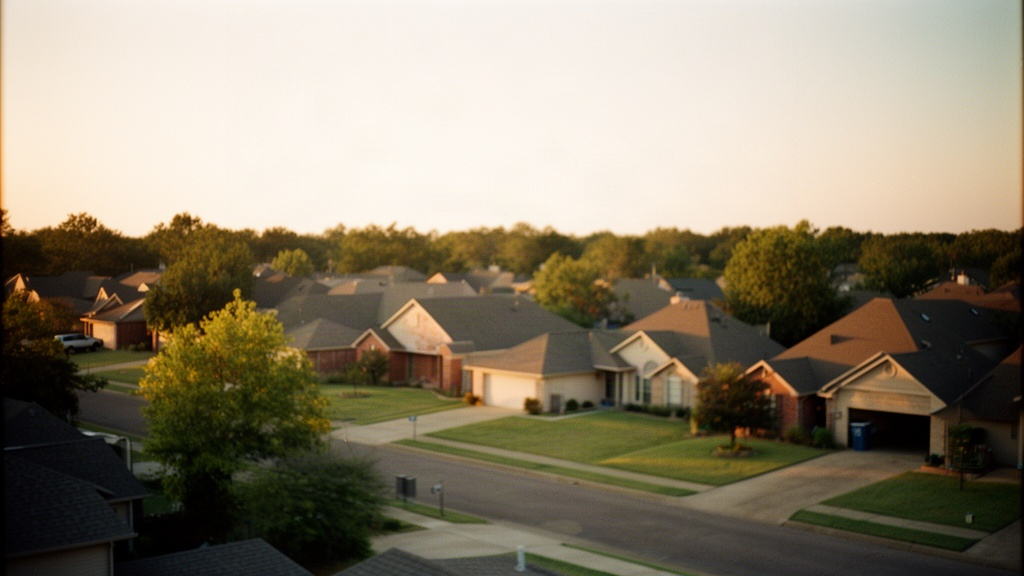
1. What the Caracas, Spain Market Looks Like Right Now
The Caracas, Spain real estate market in September 2026 is a low-volume, high-specificity market. Because the municipality has a relatively small permanent population, the number of properties changing hands in any given month is modest. That means individual transactions carry significant weight in shaping local price trends, and a single well-priced listing can move faster than buyers expect.
Transaction Volume and Demand Signals
Demand in Caracas comes from several overlapping groups: León city residents seeking a quieter setting within a reasonable commute, buyers from other parts of Spain looking for rural property at prices well below coastal markets, and a smaller but consistent stream of people relocating from abroad who want authentic Castilian village life. The N-630 corridor connecting Caracas to León city, roughly 18 to 22 kilometres depending on the exact route, makes daily commuting realistic for many households.
Online listing portals currently show between five and fifteen active residential properties in and immediately around Caracas at any given moment. That inventory level is tight. When a well-maintained home appears at a realistic asking price, it tends to attract enquiries within the first two weeks rather than sitting for months.
How Caracas Compares to the León Province Baseline
According to data published by the Spanish Ministry of Housing and Urban Agenda, average residential property values in the province of León have held relatively stable through 2025 and into 2026, with modest upward pressure in rural municipalities that offer commutable distance to the capital. Caracas sits within that commutable band, which has kept demand from evaporating the way it has in more isolated villages further from León.
Rural León as a whole trades at a substantial discount to national Spanish averages, which currently hover above 1,900 euros per square metre. In Caracas and the surrounding comarca, prices are considerably lower, which is precisely what attracts buyers priced out of León city's more established residential zones.
2. Current Prices in Caracas, Spain: What Buyers and Sellers Are Seeing
Prices in Caracas, Spain in September 2026 vary significantly by property type, condition, and plot size. The range is wide enough that two properties on the same street can carry asking prices that differ by 50 percent or more, depending on whether one has been renovated and the other retains original fabric from the mid-twentieth century.
Price per Square Metre Across Housing Types
Traditional stone village houses in move-in condition are currently listing in the range of 600 to 900 euros per square metre. Unrenovated properties requiring full rehabilitation can appear below 400 euros per square metre, sometimes significantly so, though buyers need to factor in the cost of works, which in rural Castilla y León can add 600 to 1,000 euros per square metre depending on the scope. Finished properties with modern kitchens, updated plumbing and insulation, and legal documentation in order tend to close closer to the upper end of that range.
Plots and rural land parcels are priced separately from built structures. Agricultural land in the Caracas area trades at a fraction of built-property values, but buyers interested in self-build projects should verify planning permissions carefully with the Ayuntamiento before committing, as rural land classification in Castilla y León limits what can be constructed.
What Drives Price Differences Within the Municipality
Four factors account for most of the price variation you will see in the Caracas market right now. First, renovation quality: a property with a new roof, double-glazed windows, and a modern heating system commands a real premium over one that looks similar from the street but has deferred maintenance. Second, plot size: homes with generous enclosed gardens or outbuildings for storage attract buyers who want space and are willing to pay for it. Third, legal clarity: properties with fully regularised documentation, clear title, and no outstanding debts on the cadastral record close faster and at stronger prices. Fourth, access and road quality: properties directly on a paved road versus those reached by an unpaved track see different buyer pools and different pricing dynamics.
For a detailed breakdown of the purchase costs you will pay on top of the agreed sale price, including ITP transfer tax, notary fees, and land registry charges, see the guide on how much it costs to buy a house in Caracas, Spain published on this site.
3. Housing Stock and Neighbourhood Character in Caracas
Caracas, Spain is a compact rural municipality, and its housing stock reflects centuries of Castilian vernacular construction alongside more recent additions. Understanding what is physically available, and what distinguishes each part of the village, helps buyers match their expectations to what actually exists in the market.
Village Core and Traditional Stone Construction
The historic core of Caracas is built primarily in local stone, with thick walls that provide natural insulation against the extremes of the Castilian climate: cold winters that can drop well below freezing, and dry summers where temperatures regularly exceed 30 degrees Celsius. Houses here tend to be two storeys, with ground-floor spaces that historically served agricultural functions and upper floors used as living quarters. Many have been converted entirely to residential use, though the original layout often means lower ceiling heights on the ground floor and narrower stairwells than modern builds.
Properties in the village core benefit from proximity to whatever local services exist, including the church, any communal spaces, and the main road connections. Parking can be limited on the narrowest streets, which is worth factoring in if you rely on a vehicle for the daily commute to León.
Peripheral and Rural Plots
On the edges of the municipality, properties tend to sit on larger plots with more outdoor space. Some include traditional stone outbuildings, corrales, or hórreo-style structures that can be converted or used for storage. These properties attract buyers who want space for a vegetable garden, animals, or simply privacy. The tradeoff is that utilities, particularly mains water and sewage connections, may require verification, and heating costs in winter are a practical consideration given the exposed location.
New Build Activity Near Caracas
New construction within Caracas itself is limited, as is typical for small rural municipalities in Castilla y León where planning permissions on rural land are tightly controlled. Buyers interested in new-build options should look at what is happening in the broader León metropolitan area and in nearby towns with active development pipelines. The article on new housing developments and new build projects near Caracas, Spain in 2026 covers this in detail.
4. Timing the Caracas, Spain Market: When to Buy and When to Sell
Timing in a small rural market like Caracas is less about chasing a seasonal window and more about understanding the specific dynamics that make a property move quickly or sit for months. That said, there are genuine seasonal and macroeconomic patterns worth knowing before you decide when to list or when to make an offer.
Seasonal Patterns in Rural León Markets
Spring, specifically March through June, is historically the most active period for rural property enquiries in León province. Buyers who spent winter thinking about a move tend to act when the weather improves and properties look their best. September, where we are right now, marks the start of a secondary active period: families who held off during the summer holidays are returning to their property search, and serious buyers are motivated to close before the end of the year for tax and planning reasons.
For sellers, listing in September 2026 means your property is visible to that returning wave of buyers. The risk of listing in deep winter, November through January, is that viewing activity drops sharply and properties can sit long enough to develop a perception of being difficult to sell, even when the underlying reason is simply the season.
Interest Rate Context in September 2026
The European Central Bank's rate decisions through 2025 and into 2026 have materially affected mortgage affordability across Spain. After the rate increases of 2022 and 2023, Spanish lenders have been offering more competitive fixed-rate products as the ECB moved to ease policy through 2024 and 2025. Buyers financing a Caracas purchase with a mortgage should get a formal pre-approval in hand before making an offer, both to understand their actual budget and to signal credibility to sellers in a market where cash buyers are not uncommon.
For a current read on whether September 2026 is a good moment to act, the article on whether right now is a good time to buy a home in Caracas, Spain walks through the key factors in more depth.
How Long Homes Are Sitting Before Sale
In the Caracas market, days-on-market varies enormously by price accuracy. Properties priced at or slightly below realistic market value are moving in four to ten weeks from listing to accepted offer. Properties that start above market and then reduce tend to take four to eight months, and sometimes longer. Because the buyer pool for any individual property in a small municipality is inherently limited, overpricing at launch is particularly costly: the buyers who were most interested see the property early, decide it is overpriced, and move on. By the time the price drops, those buyers may have already committed elsewhere.
5. Practical Steps for Buyers and Sellers in Caracas Right Now
Whether you are buying or selling in Caracas, Spain in September 2026, the steps that matter most are the ones that happen before the transaction officially begins. Getting the groundwork right saves time, reduces stress, and protects you from the most common mistakes in rural Spanish property transactions.
For Buyers: What to Prepare Before You Offer
Before you make an offer on any property in Caracas, confirm your financing position in writing, whether that is a mortgage pre-approval or confirmation of available funds. Engage a Spanish abogado (property lawyer) who is independent of the selling agent; their job is to verify the nota simple from the land registry, confirm there are no outstanding charges or debts attached to the property, and check that the cadastral description matches what you are actually buying. In rural properties, discrepancies between the registered size and the actual size are not uncommon and need to be resolved before notarisation.
Also verify the property's energy certificate (certificado de eficiencia energética), which is legally required for any sale. Rural stone properties in Castilla y León frequently carry E or F ratings, reflecting the age of the construction and the heating systems. This is not necessarily a dealbreaker, but it affects your ongoing energy costs and may influence your renovation priorities after purchase.
The full step-by-step process from search to notary signing is covered in the guide on buying a home in Caracas, Spain, which includes the typical timeline from offer to completion.
For Sellers: How to Price Accurately in a Small Market
Accurate pricing in Caracas requires looking at actual closed transactions, not just active listings. Active listings tell you what sellers are hoping to get; closed transactions tell you what buyers were actually willing to pay. In a municipality with low transaction volume, an agent with direct knowledge of recent local sales has a meaningful informational advantage over automated valuation tools, which often lack sufficient comparable data for small rural markets and can produce estimates that are significantly off.
Presentation matters even in rural markets. Properties that are clean, decluttered, and photographed with natural light in good weather attract more online enquiries, and in a low-inventory market, more enquiries translate directly into stronger offers. Consider addressing any obvious deferred maintenance before listing: a cracked window, a visibly damaged roof tile, or a non-functioning front gate all give buyers a reason to negotiate down.
Costs Beyond the Sale Price
Buyers in Spain should budget for total acquisition costs of approximately 10 to 13 percent above the agreed purchase price. This covers ITP (Impuesto de Transmisiones Patrimoniales) for resale properties, which in Castilla y León is levied at 8 percent on the first 400,000 euros of the transaction value, plus notary fees, land registry fees, and your lawyer's fees. Sellers face their own costs including capital gains tax on any profit, plusvalía municipal (the local land value increment tax paid to the Ayuntamiento), and any outstanding IBI (property tax) balances that must be settled before the sale completes.
For a complete breakdown of what the Castilla y León Junta de Castilla y León publishes on regional property taxes and transfer costs, the Agencia Tributaria de Castilla y León is the authoritative source for current rates and exemptions applicable to your specific transaction.
FAQ
What are typical property prices in Caracas, Spain right now?
As of September 2026, renovated traditional stone houses in Caracas are listing in the range of 600 to 900 euros per square metre, while unrenovated properties requiring full rehabilitation can appear below 400 euros per square metre. The wide range reflects condition, plot size, legal clarity, and access quality rather than location within the village alone. Because transaction volume is low, individual sales carry significant weight, and prices can shift noticeably from one quarter to the next. Working with an agent who tracks actual closed sales, not just active listings, gives you the most reliable picture of where the market truly sits.
Is September 2026 a good time to buy or sell in Caracas, Spain?
September marks the start of a secondary active period in rural León markets, as buyers return from summer and look to close before year-end. For sellers, this means listing now puts your property in front of motivated buyers before the market quiets in deep winter. For buyers, the combination of relatively stable rural León prices and a more competitive mortgage environment compared to 2023 makes the current window reasonable, though your personal financial readiness matters more than any single market moment. Properties priced accurately are moving in four to ten weeks right now, which suggests genuine buyer appetite rather than a stagnant market.
How does the commute from Caracas, Spain to León city affect property values?
Caracas sits roughly 18 to 22 kilometres from León city, making it commutable by car for many working households. That commutable distance is one of the key reasons demand in Caracas has held up better than in more isolated rural municipalities in the province. Properties that are easy to reach from the main road connection to León tend to attract a broader buyer pool than those requiring a longer unpaved approach. For a detailed look at commute times and transport options between Caracas and León, the dedicated article on this site covers both driving and public transport routes.