

← Back to Blog
Market Trends
The Shorter Avenue Area of Rome, GA Real Estate Market Guide: Prices, Neighborhoods and Timing
By Brianna Hightower
EXP Realty · DRE# 428363
September 15, 2026 · 11 min read
The Shorter Avenue area of Rome, GA is one of the city's most distinct residential corridors, running southwest from the historic downtown toward the Etowah River and carrying a mix of bungalows, mid-century ranches, and larger traditional homes that you rarely find in newer subdivisions. This real estate market guide covers current prices, what the housing stock actually looks like, how the surrounding neighborhoods connect, and the timing factors that matter most for buyers and sellers in September 2026.
1. What Makes the Shorter Avenue Area Distinct
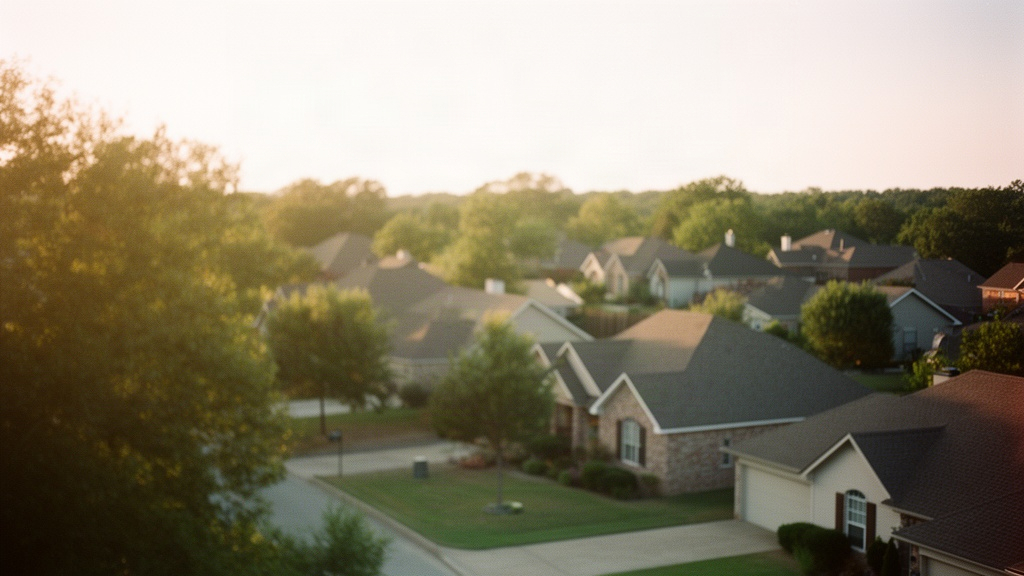
Shorter Avenue is a genuine residential spine in Rome, GA. The road runs southwest from the area near Broad Street and the Rome Clock Tower, passing through established neighborhoods before it reaches the Etowah River corridor. It is not a suburban collector road lined with strip malls; it is a street of houses, trees, and sidewalks, which is part of why buyers who find it tend to stay interested.
The Physical Corridor
The Shorter Avenue corridor sits in the western quadrant of Rome, roughly between the US 27 interchange area and the river. Lots tend to run deeper than they are wide, a pattern common in Rome's older platted neighborhoods, and mature hardwoods shade most of the streetscape. The elevation shifts noticeably as you move toward the river, which means some properties have genuine topographic character, including basement levels that open to grade in the rear.
The area is roughly two miles from Rome's downtown riverfront, which puts it within a ten-minute drive of Harbin Medical Center, Berry College's main gate on US 27, and the Rome Tennis Center at Berry College. That proximity to major employment and activity nodes is a consistent factor in how buyers evaluate the corridor.
Housing Stock and Architecture
The housing stock along and near Shorter Avenue is heavily weighted toward pre-1970 construction. You find craftsman bungalows from the 1920s and 1930s, brick ranches from the 1950s and 1960s, and a smaller number of two-story traditional homes built through the 1980s. Square footage on the bungalows typically runs between 1,000 and 1,600 square feet. The ranches land between 1,200 and 2,000 square feet. The larger two-story homes can reach 2,400 to 3,200 square feet, though those are less common on the avenue itself and more prevalent on the side streets feeding into it.
Original hardwood floors, plaster walls, and wood windows are common in the older homes. Many have been updated over the decades, but buyers should expect to find a range of renovation levels, from fully modernized kitchens and baths to homes that have had minimal cosmetic work since the 1980s. That range is actually a feature of the market here: entry-level buyers can find a project, while buyers who want move-in condition can find that too, usually at a meaningful price gap between the two.
Proximity to Key Rome Landmarks
Shorter Avenue's position in Rome gives residents quick access to several anchors that matter for daily life. Harbin Medical Center, one of Floyd County's largest employers, is within five minutes by car. The Etowah River Greenway trailhead is accessible from the western end of the corridor. Rome's Historic Downtown, with its restaurants, the Rome Area History Museum, and the Broad Street retail corridor, is a short drive or a manageable bike ride northeast. Berry College, with its 27,000-acre campus, borders the area to the north along US 27.
2. Shorter Avenue Area Real Estate Prices in September 2026
Prices in the Shorter Avenue area currently range from the upper $100,000s for smaller bungalows needing significant work, up to the mid $300,000s for fully renovated or larger traditional homes on the side streets. The bulk of transactions in the corridor fall between $210,000 and $290,000, which positions this market as one of the more accessible established-neighborhood options in Rome proper.
Current Price Ranges by Property Type
- Craftsman bungalows (1,000 to 1,400 sq ft, original condition or partial updates): Typically priced from the upper $170,000s to around $230,000 in September 2026, depending on lot depth and roof age.
- Brick ranches (1,200 to 1,800 sq ft, 1950s to 1970s): Generally listed between $215,000 and $265,000. Updated kitchens and baths push these toward the top of that band.
- Larger traditional homes (2,000 to 3,200 sq ft, side streets off Shorter): Listed from $270,000 to $340,000. Fully renovated examples with new mechanicals and updated baths land at the higher end.
- Fixer-uppers and estate sales: Occasionally priced from $140,000 to $180,000 for properties needing full rehabilitation. These move quickly when priced correctly.
How Shorter Avenue Compares to Rome's Broader Market
Rome's citywide median home price in September 2026 sits in the mid $240,000s, consistent with the steady appreciation the Georgia market has seen through 2026. The Shorter Avenue corridor tracks close to that median, though the variance within the corridor is wider than in newer subdivisions because the age and condition range is so broad. For context on how Rome compares to other Georgia metros, the Georgia Association of REALTORS notes that the state's housing market held steady through 2025, and that trajectory has continued into 2026 with modest appreciation rather than the sharp swings seen in larger metros.
Compared to newer construction in Rome's growth areas, Shorter Avenue homes offer more square footage per dollar in many cases, but buyers absorb more maintenance risk. Compared to the downtown-adjacent streets covered in other parts of Rome's market, Shorter Avenue tends to offer slightly more parking and larger lots, with less foot-traffic noise. For a broader look at what prices are doing across Rome right now, the home prices overview for Rome GA in September 2026 gives a useful city-wide baseline.
3. Neighborhoods That Border and Feed Into the Shorter Avenue Area
The Shorter Avenue area does not exist in isolation. Several distinct residential pockets connect to it, and understanding their character helps buyers figure out exactly where they want to land within this part of Rome.
West Rome and the Etowah Side
As Shorter Avenue approaches the Etowah River, the lots get larger and the tree canopy thickens. This western edge of the corridor blends into what locals broadly call West Rome, a collection of streets with a mix of mid-century and 1970s construction. Lot sizes here often run a quarter-acre to nearly half an acre, which is meaningfully larger than what you find closer to downtown. The Etowah River Greenway provides walking and cycling access from this end of the neighborhood, connecting through to other parts of the river trail system.
Prices on the Etowah-adjacent streets tend to run slightly lower than the Shorter Avenue corridor average, reflecting the older stock and the occasional flood zone considerations near the river. Buyers interested in this pocket should verify FEMA flood zone status for any specific parcel, as it varies block by block along the river.
The Garden Lakes Pocket
North and northwest of Shorter Avenue, the Garden Lakes area offers a different flavor of established Rome housing. Garden Lakes is built around a small lake system, and homes there tend to be 1960s through 1980s construction, often brick ranch or split-level style. Prices in the Garden Lakes pocket currently range from the low $200,000s to around $310,000, with lakefront or lake-view lots commanding a premium at the top of that band. The streets are quiet and heavily wooded, and the lake access is a genuine differentiator for buyers who want that feature without leaving Rome city limits.
Connecting to Broader Rome
Shorter Avenue feeds naturally into Rome's broader west-side street grid, which means buyers considering this corridor often look at neighboring streets simultaneously. The Coosa neighborhood to the east, the downtown-adjacent streets to the northeast, and the US 27 corridor to the north all intersect with buyer searches that start on Shorter Avenue. If you are comparing options across these areas, the guide on what it is like to live in the Coosa neighborhood and the overview of neighborhoods closest to downtown Rome give useful side-by-side context.
4. Market Timing: When to Buy or Sell Near Shorter Avenue
September 2026 is a transitional moment in Rome's real estate cycle, and that transition plays out differently for buyers versus sellers in the Shorter Avenue area. Understanding what is happening right now, rather than relying on national headlines, gives you a real advantage in this specific corridor.
What September 2026 Looks Like for Sellers
Sellers in the Shorter Avenue corridor are currently operating in a market where well-priced, well-presented homes still move within two to four weeks. The spring 2026 buying surge has eased, but demand from buyers relocating to Rome for Harbin Medical Center employment and Berry College positions has kept the fall market active. Overpriced listings, particularly those that ignore deferred maintenance, are sitting longer, sometimes 60 to 90 days, which is a signal that buyers in this corridor are doing their homework.
Sellers who invest in pre-listing repairs, particularly roof, HVAC, and electrical updates on older homes, are seeing stronger offers and fewer inspection-related renegotiations. In a corridor where buyers expect some age, demonstrating that the big-ticket systems are current is a meaningful differentiator.
What September 2026 Looks Like for Buyers
For buyers, the fall 2026 market near Shorter Avenue offers more negotiating room than the peak spring window did. Sellers who listed in spring and did not sell are more open to price adjustments and seller concessions than they were six months ago. Buyers with conventional financing and solid pre-approval letters are in a stronger position than they would have been in March or April 2026, when multiple-offer situations were more common on move-in-ready homes.
Mortgage rates in September 2026 remain a factor, but Rome's price point means monthly payments on a $240,000 purchase are more manageable than in larger Georgia metros. The NAR's data on metropolitan median prices and affordability shows that smaller metros like Rome continue to offer relative value compared to Atlanta-area submarkets, even after the appreciation of the past several years.
Days on Market and Inventory Signals
Inventory in the Shorter Avenue area is tighter than in Rome's newer subdivisions, simply because the corridor is fully built out. New listings appear when owners sell after long tenures, which means turnover is episodic rather than continuous. In September 2026, the typical well-priced home in this corridor is going under contract in 18 to 35 days. Homes priced above $300,000 in this area are taking longer, sometimes 45 to 60 days, reflecting the smaller buyer pool at that price point in an established-neighborhood context.
Because inventory is episodic, buyers who wait for the perfect listing can miss months of opportunity. Setting up automated alerts and working with an agent who knows when homes are about to come to market, before they are formally listed, is a practical advantage in this corridor.
5. What to Know Before You Buy or Sell on Shorter Avenue
The practical details of buying or selling in an older, established corridor like Shorter Avenue differ from what you encounter in a newer subdivision, and knowing those differences ahead of time prevents surprises at inspection and closing.
Property Condition and Age Considerations
Homes built before 1978 may contain lead paint, and many Shorter Avenue bungalows predate that threshold significantly. Buyers using FHA or VA financing need to be aware that lead paint disclosures and potential remediation requirements can affect those loan types. Knob-and-tube wiring and cast iron plumbing are present in some of the oldest homes and may require updating before certain lenders will fund the loan. A thorough inspection by a Rome-area inspector familiar with pre-1960 construction is not optional here; it is essential.
Sellers should consider a pre-listing inspection to identify and address these issues before buyers find them. A seller who can show a clean inspection report, or a report with documented repairs completed, commands more confidence from buyers and typically fewer post-inspection concession requests.
Lot Sizes and Parking
Most Shorter Avenue area lots run between 0.15 and 0.35 acres, which is a meaningful size in an urban Rome context. Many homes have detached garages or carports from the original construction era, and those structures add practical value even when they need cosmetic work. Buyers who need off-street parking for multiple vehicles will generally find it here, unlike some of the tighter downtown-adjacent streets. Corner lots in this corridor occasionally offer additional parking pad potential, which is worth noting for buyers with boats, trailers, or home-based businesses.
Costs Beyond the Purchase Price
Floyd County property taxes are a consistent line item for buyers to model before making an offer. On a $240,000 home in Floyd County, annual property taxes typically run between $1,800 and $2,400 depending on applicable exemptions. The full breakdown of how those numbers work is covered in the guide on property taxes on a $300,000 home in Floyd County, which you can scale down proportionally for lower purchase prices.
Homeowner's insurance on older Rome-area homes can run higher than on new construction, particularly if the roof is original or the home lacks updated electrical. Buyers should get insurance quotes before closing, not after, so they can factor the actual annual premium into their monthly budget. Closing costs for buyers in Georgia typically add 2 to 3 percent of the purchase price to the upfront cash requirement; for a $240,000 home that is roughly $4,800 to $7,200 in addition to the down payment.
If you are relocating to Rome from another state or metro and want to understand the broader buyer process, the Rome GA buyer's guide covers the full picture from search to closing.
FAQ
What is the typical price per square foot in the Shorter Avenue area of Rome, GA right now?
In September 2026, the Shorter Avenue corridor generally runs between $120 and $160 per square foot for move-in-ready homes, with fully renovated examples occasionally touching $170 per square foot. Fixer-uppers and estate sales can come in below $110 per square foot, which is part of what draws renovation-minded buyers to the corridor. That range is slightly below the citywide Rome average for comparable square footage, reflecting the older construction and the condition variance that is inherent to a pre-1970 housing stock. Buyers comparing price per square foot should also account for lot value, since Shorter Avenue lots are meaningfully larger than what you find in attached or townhome products elsewhere in Rome.
Are there flood zone concerns for homes near Shorter Avenue and the Etowah River?
Some parcels on the western end of the Shorter Avenue corridor, particularly those closest to the Etowah River, fall within FEMA-designated Special Flood Hazard Areas, which would require flood insurance as a condition of most mortgage financing. The flood zone boundary is not uniform across the area; it varies parcel by parcel, so buyers should request the specific flood zone designation for any property they are seriously considering. Your lender will order a flood zone determination as part of the loan process, but it is worth knowing before you make an offer so you can factor potential flood insurance premiums into your monthly cost estimate. The Floyd County GIS system and FEMA's Flood Map Service Center both allow parcel-level lookups that buyers can check independently.
How long does it typically take to close on a home in the Shorter Avenue area of Rome, GA?
Closing timelines in the Shorter Avenue corridor follow Rome's broader pattern: conventional loans typically close in 30 to 45 days from contract, while FHA and VA loans can run 45 to 60 days, particularly on older homes where appraisal conditions or inspection items require documentation. Cash transactions in this corridor have closed in as few as 14 to 21 days when sellers are motivated and title is clean. One factor that can extend timelines on Shorter Avenue specifically is the inspection and negotiation period, since older homes more frequently generate repair requests or loan condition requirements. The detailed breakdown of closing timelines for Rome, GA is covered in the guide on