← Back to Blog
Neighborhoods
What Are the Different Neighborhoods in Dover Delaware and What Is Each One Like to Live In
By Brooke Jerman
September 10, 2026 · 12 min read
Dover, Delaware has more variety in its neighborhoods than most people expect from a state capital of its size. If you are wondering what the different neighborhoods in Dover Delaware are and what each one is like to live in, this guide breaks down the city area by area, with real details on housing stock, price ranges, commute distances, and what you will find on the ground. Whether you are relocating to Dover, buying your first home, or selling and thinking about your next move, understanding how these areas differ is the starting point for making a good decision.
1. A Quick Orientation to Dover, Delaware
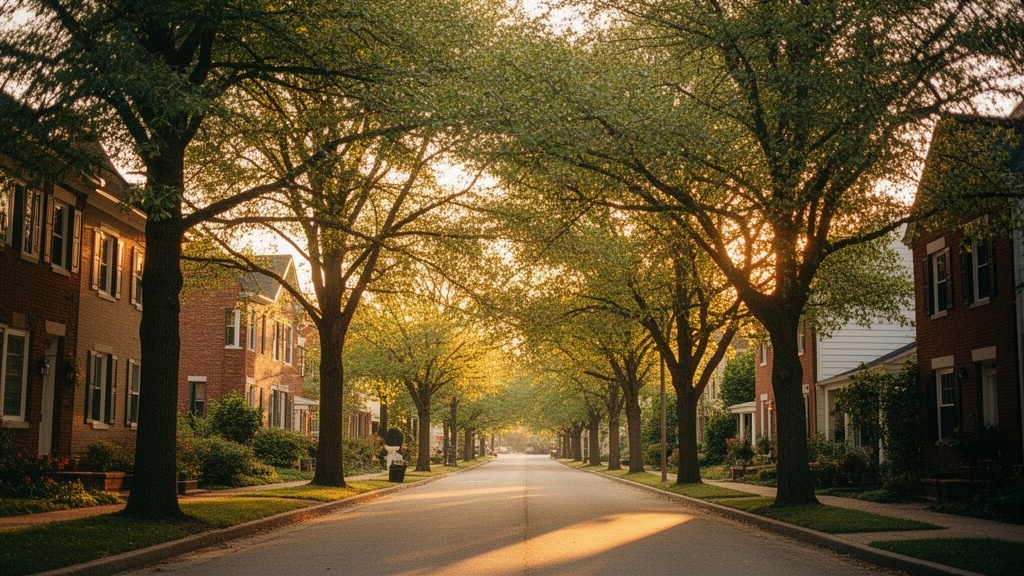
Dover sits near the center of Delaware, roughly 45 miles south of Wilmington and about 75 miles south of Philadelphia. As the state capital, it carries a mix of government employment, a strong military presence through Dover Air Force Base, and a growing commercial corridor along Route 13. The city proper covers around 23 square miles, and its neighborhoods range from century-old streets lined with Victorian and Colonial Revival homes to sprawling post-2000 subdivisions with attached garages and open floor plans.
How Dover Is Laid Out
The city's core is anchored by The Green, a historic square that dates to 1683 and sits at the intersection of State Street and Legislative Avenue. From there, Dover expands outward in four rough directions. The north side holds older residential streets close to Delaware State University. The south side runs along Route 13, where commercial development is dense. The west side is where most of the newer planned communities were built from the 1980s onward. The east side sits closest to Dover Air Force Base, which shapes that area's character significantly.
What the Housing Market Looks Like Right Now
As of September 2026, Dover's median home sale price sits in the low-to-mid $300,000s, though that number shifts noticeably depending on which part of the city you are looking in. Entry-level properties in older sections of town can still be found in the $180,000 to $230,000 range, while newer construction in west Dover's subdivisions regularly lists between $350,000 and $500,000. Delaware's lack of a sales tax and its relatively low property tax rates compared to neighboring states make Dover an attractive destination for buyers coming from Maryland, New Jersey, or Pennsylvania. For a broader statistical snapshot of the market, NeighborhoodScout's Dover data provides regularly updated figures on appreciation rates, median values, and rental percentages across the city.
2. The Different Neighborhoods in Dover Delaware and What Each One Is Like
Dover's neighborhoods each have a distinct physical character shaped by when they were built, what surrounds them, and how close they sit to the city's major employment and transit corridors. Here is a detailed look at the main areas buyers and sellers encounter.
Historic Downtown Dover and the North Side
The blocks immediately surrounding The Green and stretching north toward Delaware State University contain some of Dover's oldest residential architecture. You will find two-story brick Colonials, Victorian-era row homes, and Craftsman bungalows on lots that typically run 5,000 to 8,000 square feet. Streets like North State Street, North Bradford Street, and the blocks off West Division Street are part of Dover's historic district, and many properties here are on the National Register of Historic Places. That designation comes with certain renovation considerations that buyers should understand before making an offer.
Price range in this area: Homes in the historic core and immediate north side typically list between $180,000 and $310,000 as of September 2026, depending on condition, lot size, and whether the property has been updated. Fully renovated historic homes with original millwork and updated mechanicals can push toward the upper end of that range. Unrenovated properties with good bones are still available in the $180,000 to $220,000 range, which draws buyers interested in a renovation project close to the center of city life.
The north side also includes streets near Delaware State University, a historically Black university founded in 1891. Housing near the campus is a mix of single-family homes, duplexes, and some student rental properties. Lot sizes are modest. The area is walkable to the Legislative Mall, the Delaware Public Archives, and the First State Heritage Park, which occupies several blocks around The Green and tells the story of Delaware's colonial and early American history.
South Dover and the Route 13 Corridor
South Dover runs along and off Route 13 (South DuPont Highway), which is the city's main commercial spine. This stretch carries big-box retail, fast food, car dealerships, medical offices, and light industrial uses. The residential streets that sit a few blocks east and west of Route 13 in this section are largely post-World War II construction: ranch homes, split-levels, and Cape Cods on lots of 7,000 to 12,000 square feet. Many were built between the 1950s and 1970s and have been updated to varying degrees.
Price range in south Dover: Expect to see listings in the $200,000 to $290,000 range for solid mid-century ranch and split-level homes. Updated properties with new roofs, HVAC systems, and kitchens move quickly in this price band because they represent genuine value compared to newer construction at higher price points elsewhere in the city.
The south Dover area is also where you find Dover Downs Hotel and Casino, now rebranded as the Bally's Dover Casino Resort, and the Dover International Speedway, which draws NASCAR race weekends each spring and fall. Those events bring significant traffic to the area for a few weekends a year, which is worth knowing if you are evaluating a property within a mile or two of the track.
West Dover and the Suburban Subdivisions
West Dover is where most of the city's planned residential growth happened from the 1980s through the 2010s, and it is the area that feels most like a traditional American suburb. Subdivisions like Hamlet, Fox Hall, Village of Westover, Woodmill, and Olde Dover are clustered in this part of the city, offering two-story Colonial and transitional-style homes with attached two-car garages, HOA-maintained common areas, and cul-de-sac street layouts. Lot sizes here generally run from 8,000 square feet to just under a quarter acre.
Price range in west Dover subdivisions: This is the most active price band in the city right now. Homes in established west Dover subdivisions list from the mid-$280,000s up to around $480,000, with newer construction or extensively renovated properties at the upper end. Square footage typically runs from 1,600 to 2,800 square feet. HOA fees, where they apply, generally run between $150 and $400 per year and cover common area maintenance.
West Dover also sits closest to Killens Pond State Park, which is about 12 miles south on Route 13 and offers a water park, fishing pond, camping, and walking trails. Closer to home, Silver Lake Park and Schutte Park are both within a few miles and provide walking paths, athletic fields, and open green space. The Christiana Medical Center's Dover campus and several urgent care and specialty medical offices are also concentrated on the west side, making this area a hub for healthcare employment in the city.
East Dover and the Areas Near Dover Air Force Base
The east side of Dover is defined largely by its proximity to Dover Air Force Base, one of the largest military installations on the East Coast and the home of the 436th Airlift Wing. The base sits directly east of the city center, and the neighborhoods that border it, including areas along Saulsbury Road and the streets off Route 113, are a mix of older ranch homes, small Cape Cods, and some newer townhome developments built to serve the military housing market.
Price range near the base: Homes in east Dover and the communities immediately adjacent to the base tend to run from the low $200,000s to around $320,000. Townhomes and smaller single-family homes are the dominant housing type. The rental market in this corridor is active because of the consistent demand from military personnel on short-term assignments, which also makes it a market that investor buyers watch closely.
The Air Mobility Command Museum is located on the base and is open to the public on certain days, offering a collection of historic military aircraft. The east side also connects to the St. Jones River corridor, where the Delaware Museum of Nature and Science and the John Dickinson Plantation sit within a short drive. The Plantation, a preserved 18th-century farm and residence, is a working historic site managed by the Delaware Division of Historical and Cultural Affairs.
3. Housing Costs and Market Conditions Across Dover Neighborhoods
Dover's housing market in September 2026 is competitive at the entry and mid-level price points, with inventory remaining tighter than buyers would like below $325,000. Above that threshold, there is more room to negotiate, particularly in west Dover subdivisions where some sellers priced optimistically during the 2024 and 2025 run-up are now adjusting expectations.
Median Prices by Area
Historic downtown and north Dover: $180,000 to $310,000. South Dover (Route 13 corridor): $200,000 to $290,000. West Dover subdivisions: $280,000 to $480,000. East Dover and base-adjacent communities: $200,000 to $320,000. These ranges reflect active listings and recent sales as of September 2026 and will shift with market conditions, so verifying current data with a local agent before making any offer is essential.
What Your Budget Gets You in Dover Right Now
At $250,000, you are looking at a 3-bedroom ranch or Cape Cod in south or east Dover, likely with original kitchens and bathrooms but solid mechanicals and a usable yard. At $350,000, you enter west Dover subdivision territory with 1,800 to 2,200 square feet, an attached garage, and a neighborhood with HOA-maintained common areas. At $450,000 and above, you can find newer construction or fully renovated homes in west Dover with 2,400 or more square feet, updated kitchens with granite or quartz countertops, and primary suites with walk-in closets.
Delaware's property tax rates are among the lowest in the Mid-Atlantic region. A home assessed at $300,000 in Kent County typically carries an annual property tax bill well under $1,500, which is a meaningful difference for buyers comparing Dover to similar-sized cities in Maryland or New Jersey. For a broader overview of what it costs to live in Dover and how the city compares to other Delaware markets, the moving guide to Dover from EZHomeSearch covers cost-of-living context alongside neighborhood and amenity information.
4. Commutes, Amenities, and Day-to-Day Life in Dover
Understanding what the different neighborhoods in Dover Delaware are like to live in means going beyond square footage and price per square foot. How long does it take to get to work? Where do you buy groceries? What do you do on a Saturday afternoon? Those details vary more than most people expect across Dover's different areas.
Getting Around Dover
Dover is a car-dependent city. DART First State provides bus service along several routes through the city, but the vast majority of residents drive for daily errands and commutes. Getting from west Dover to the state government complex downtown takes about 10 to 15 minutes by car in normal traffic. The drive to Dover Air Force Base from the west side runs roughly 15 to 20 minutes depending on the specific origin and destination on the base.
For buyers who commute out of Dover, the drive to Wilmington takes approximately 50 to 60 minutes via Route 1 North under normal conditions. Philadelphia is roughly 90 minutes from Dover via Route 1 to I-95, and Baltimore is about 90 minutes via Route 13 to I-95 South. Dover does not have Amtrak service; the nearest station is in Wilmington, which adds time for rail commuters.
Parks, Recreation, and Local Landmarks
Dover's green space is concentrated in a handful of well-used parks. Silver Lake Park, just west of the historic district, wraps around a 65-acre lake with a walking path, a beach area, and a boat ramp. Schutte Park on the west side has athletic fields, a community center, and a dog park. The Legislative Mall, a formal green space in the city center, connects the historic district to state government buildings and is used for outdoor events throughout the year.
For grocery shopping, Dover has a Walmart Supercenter and a Target on the Route 13 corridor, along with an ALDI, a Food Lion, and a Weis Markets. The Dover Mall on Route 13 is the city's main enclosed shopping center. For healthcare, Bayhealth Medical Center operates two hospital campuses in the Dover area: Kent Campus on South State Street and the newer Milford Campus about 20 miles south. The Kent Campus is the primary acute care facility serving central Delaware.
5. How to Choose the Right Dover Neighborhood for Your Situation
Knowing what the different neighborhoods in Dover Delaware are and what each one is like gives you a framework, but the right choice depends on your specific priorities. A few focused questions will narrow the field considerably before you start scheduling showings.
Questions to Ask Before You Commit
Where is your primary workplace, and how much commute time are you willing to accept? If you work on Dover Air Force Base, east Dover and the Route 113 corridor cut your drive to minutes. If you work in the state government complex downtown, the historic north side puts you within walking distance. If you commute to Wilmington, you want to be near Route 1 North, which favors west Dover and the northern parts of the city.
What type of home do you want, and what is your maintenance tolerance? Historic homes downtown offer character and walkability but often require more maintenance and come with restrictions if they are in a designated historic district. West Dover subdivisions offer newer construction with fewer surprises but a more uniform streetscape. South Dover's mid-century ranches offer single-level living and larger lots at lower price points, but may need updating.
Do you want walkability or space? The historic district and immediate downtown area are the only parts of Dover where you can walk to coffee shops, government offices, and parks without a car. Every other part of the city is car-dependent for most errands. If walkability matters to you, the north side and historic core are the only areas that deliver it.
Schools and Other Personal Research
School assignment in Dover depends on which district and zone a specific property falls within, and those lines do not always follow neighborhood boundaries cleanly. The Capital School District and the Caesar Rodney School District both serve parts of the Dover area. For detailed, current information on school assignments, boundaries, and performance data, go directly to the Delaware Department of Education website and the individual district sites. School selection is a personal decision that deserves firsthand research rather than relying on secondhand summaries.
For any other neighborhood research you want to do on your own terms, the City of Dover's municipal website publishes zoning maps, public meeting records, and development project updates that give you a clear picture of what is planned for any given area. The Kent County Recorder of Deeds office maintains property transfer records that show recent sale prices at the parcel level, which is useful context before making an offer.
FAQ
What is the most affordable neighborhood in Dover, Delaware?
As of September 2026, the most affordable single-family homes in Dover are concentrated in the south Dover corridor along and off Route 13, and in the east Dover communities near Dover Air Force Base. In those areas, buyers can find 3-bedroom ranch and Cape Cod homes in the $180,000 to $240,000 range, depending on condition. The historic north side also has lower-priced properties, though unrenovated homes in that area may require significant investment to bring up to date. Working with a local agent who knows current inventory is the best way to identify genuine value in any of these areas.
What are the newest neighborhoods in Dover, Delaware?
Most of Dover's newer residential development is concentrated on the west side of the city, where subdivisions built from the late 1980s through the 2010s offer two-story Colonial and transitional-style homes with modern floor plans. Communities like Fox Hall, Village of Westover, and Woodmill represent this era of construction. There has also been some newer townhome development near the Route 113 corridor on the east side. If new construction is a priority, your agent can identify any active building projects or recently completed phases within the city limits and in the surrounding Kent County communities just outside Dover's borders.
Is Dover, Delaware a good place to buy a home right now?
Dover's housing market in September 2026 continues to offer meaningful value compared to other Mid-Atlantic cities of similar size, particularly because Delaware has no sales tax, relatively low property taxes, and no estate tax for most residents. The city's economy is anchored by state government employment, Dover Air Force Base, and a growing healthcare sector, which provides a relatively stable employment base. Inventory below $325,000 remains tight, so buyers in that price range should be prepared to move quickly on well-priced properties. Above that threshold, there is more negotiating room. A local agent with current market data can give you a precise picture of what conditions look like in the specific neighborhood and price range you are targeting.