← Back to Blog
Market Trends
Ocala, Florida Is Known for Its Real Estate Market: A Guide to Prices, Neighborhoods and Timing
By Cameron Cowart
Dalton Wade
September 28, 2026 · 12 min read
Ocala, Florida is known for a real estate market that draws buyers from across the state and beyond, offering a wide range of housing options from rural acreage to master-planned subdivisions, all at price points that remain competitive with larger Florida metros. This guide covers what makes Ocala's market distinct, where prices stand right now in September 2026, what the major residential areas offer, and how to read the market's timing whether you are buying, selling, or relocating. If you want a clear, grounded picture of what to expect, this is the place to start.
1. What Ocala's Real Estate Market Is Actually Known For
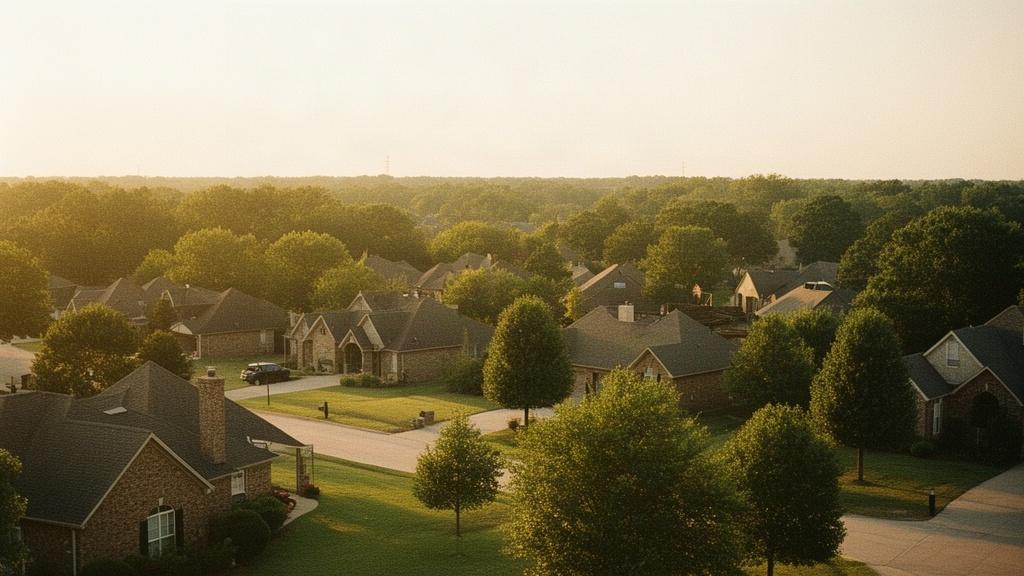
Ocala's real estate market is known for three things that set it apart from most Florida cities: a deep inventory of rural and equestrian land, a price range that spans from the low $100s to well over $1 million, and a steady pipeline of new construction that has run without interruption for several years.
Horse Country and Land Inventory
Marion County is home to more thoroughbred horses than any other county in the United States. That fact shapes the real estate landscape in a direct way. Large portions of the county are zoned for agricultural use, and five-acre, ten-acre, and twenty-acre parcels with horse facilities are common listings alongside traditional residential homes. The World Equestrian Center, which opened on the northwest side of Ocala and spans roughly 1,400 acres, has added a new layer of demand for both short-term and long-term housing in that corridor.
That land inventory is one reason buyers who want space find Ocala appealing. A half-acre lot in a neighborhood like Fore Ranch or Quail Meadow sits alongside listings for 20-acre horse farms in Reddick or Williston Road, all within the same county. If you want to understand the full scope of what is available, Cameron Cowart's guide on selling vacant land and rural acreage in Ocala explains how those properties are priced and marketed differently from standard residential homes.
A Broad Price Spectrum
Few Florida markets offer this much range in a single county. You can find a two-bedroom concrete block home in Marion Oaks listed under $160,000, a four-bedroom pool home in Fore Ranch in the $350,000 to $450,000 range, and a gated equestrian estate on Hwy 225 listed above $2 million, all within about 30 minutes of each other. That breadth means buyers with very different budgets are all shopping in the same metro, which creates a layered and sometimes competitive market depending on the price tier.
New Construction Alongside Established Neighborhoods
Ocala has been one of the more active new construction markets in central Florida for several years running. Builders including D.R. Horton, Lennar, and Adams Homes have active communities in areas like Heath Brook, Shires of Paddock Park, and along SW 60th Avenue. At the same time, established neighborhoods built in the 1980s and 1990s, such as Golden Ocala and the areas around SE 36th Avenue, offer resale inventory with mature trees and larger lots. The mix of new and existing homes means buyers have genuine choices rather than being pushed toward one type of product.
2. Current Prices in Ocala's Housing Market
As of September 2026, Ocala's median home price sits in the low-to-mid $270,000 range for single-family resale homes, with new construction adding upward pressure in certain corridors. Prices have moderated from the peak years of 2021 and 2022, when rapid appreciation pushed values up sharply, but the market has not reversed to pre-pandemic levels. For current and regularly updated data, the Ocala/Marion County Association of REALTORS housing statistics page publishes monthly figures drawn directly from MLS activity.
Median Home Prices Right Now
The median sale price for all property types in Marion County currently runs between $255,000 and $285,000 depending on the month and the mix of closings. Single-family homes specifically tend to close slightly above the all-types median because condominiums and manufactured homes pull the blended figure down. Townhomes and villas, which are common in communities like On Top of the World, typically close in the $180,000 to $260,000 range depending on size and interior updates.
Price Variation by Property Type
Property type creates significant price differences within the same zip code. A three-bedroom, two-bathroom manufactured home on a half-acre lot in the 34472 zip code might close at $130,000 to $160,000, while a site-built three-two on a similar lot in the same zip closes at $230,000 to $280,000. Buyers financing with conventional loans need to be aware of lender restrictions on manufactured housing, which can limit options in some parts of the county where that product type is more prevalent.
For buyers trying to budget accurately, the closing costs article on this site walks through what to expect beyond the purchase price. You can read typical closing costs for Ocala home buyers to understand what additional funds you should have ready at the table.
How Ocala Compares to the Rest of Florida
Ocala's median price remains well below the statewide Florida median, which has hovered near $420,000 to $440,000 in 2026. Compared to metro areas like Orlando, Tampa, or Jacksonville, Ocala offers more square footage per dollar and larger lot sizes. The tradeoff is that Ocala is not a coastal market, and buyers who want beach proximity will need to factor in the roughly 90-minute drive to the Gulf Coast near Crystal River or the Atlantic coast near Daytona. For buyers whose priorities are space, land, and cost of ownership rather than ocean access, the value proposition in Ocala's market is straightforward.
3. Ocala's Residential Areas: What Each One Offers
Ocala's residential geography is not uniform. The city proper, the surrounding unincorporated county, and the smaller municipalities like Dunnellon and Belleview each have distinct housing stock, lot sizes, and price points. Understanding the differences helps buyers narrow their search before they start scheduling showings.
Southwest Ocala and the Planned Communities
Southwest Ocala is home to some of the most heavily developed residential corridors in Marion County. Communities like Fore Ranch, Heath Brook, and the neighborhoods clustered around SW College Road and SW 60th Avenue feature subdivision-style homes built primarily between 2000 and the present. Lot sizes typically run from 0.15 to 0.35 acres. The area has strong retail and dining infrastructure, with the Paddock Mall, Publix, Target, and dozens of restaurants all within a short drive. Homes in this corridor tend to close between $280,000 and $450,000 for three and four-bedroom single-family product.
On Top of the World, the large age-restricted community on the west side of SW 80th Avenue, is its own category. It includes thousands of homes across multiple villages, with golf courses, a sports complex, and an indoor recreation center all within the gates. Resale prices there range from around $160,000 for a smaller villa to over $500,000 for a larger custom home, depending on the village and finish level. The community has its own HOA structure and deed restrictions that buyers need to review carefully before making an offer.
For a deeper look at how southwest and northeast Ocala differ in daily life and amenities, this comparison article breaks it down in practical terms.
Northeast Ocala and the Acreage Corridor
Northeast Ocala and the roads leading toward Anthony, Reddick, and the Hwy 225 corridor are where you find the bulk of Ocala's horse farms and larger acreage properties. The landscape shifts noticeably here: rolling pasture, live oaks draped in Spanish moss, and properties with barns, paddocks, and training tracks are common. Lot sizes jump from under an acre to 10, 20, or 40 acres. Prices vary enormously based on improvements, acreage, and water features. A modest three-bedroom farmhouse on five acres might list around $400,000, while a fully equipped equestrian facility with a main residence, guest quarters, and covered arena can exceed $3 million.
The northeast side also includes more conventional residential neighborhoods closer to the city limits. Areas near NE 14th Street and NE 25th Avenue include older concrete block homes built in the 1960s through 1980s, often on quarter-acre to half-acre lots. These homes tend to close in the $180,000 to $280,000 range and attract buyers who want proximity to downtown Ocala and the Historic Square without paying new construction prices.
Marion Oaks, Dunnellon, and the Outer Ring
Marion Oaks, located in the southern part of the county along Hwy 484, is one of the most price-accessible areas in the Ocala market. Lots there were originally platted in large numbers decades ago, and the area has seen significant infill construction over the past several years. Three-bedroom, two-bathroom homes in Marion Oaks currently list and close in the $200,000 to $270,000 range. The tradeoff is distance: Marion Oaks sits roughly 15 to 20 minutes south of downtown Ocala, and the infrastructure for retail and dining is thinner than in the southwest corridor.
Dunnellon, about 20 miles west of Ocala on Hwy 41, sits at the confluence of the Rainbow River and the Withlacoochee River. Properties here include riverfront and river-access homes, which command a premium over comparable non-waterfront product. A three-bedroom home with direct Rainbow River frontage can list anywhere from $450,000 to over $900,000 depending on lot size and dock access. Dunnellon also has a small downtown with local restaurants and shops, and the Rainbow Springs State Park draws visitors year-round for tubing and kayaking.
4. Reading the Market: Timing for Buyers and Sellers
Timing in Ocala's market matters more than many buyers and sellers realize. The gap between a well-timed transaction and a poorly timed one can represent tens of thousands of dollars in either direction.
Inventory Levels and Days on Market
Inventory in Marion County has risen steadily through 2026 compared to the tight conditions of 2021 and 2022. As of September 2026, active listings have increased enough to give buyers more choices and more time to make decisions, but the market has not tipped into a strong buyer's market across all price tiers. Homes priced correctly and in good condition in the $250,000 to $350,000 range still move within two to four weeks in many cases. Homes priced above $500,000 are sitting longer, with average days on market stretching past 60 days in that tier.
For a month-by-month look at how long homes are actually sitting before going under contract, this article on current days on market in Ocala provides the most current figures available.
Seasonal Patterns in Marion County
Ocala does not follow the same seasonal rhythm as northern markets where winter shuts down activity. Buyer activity tends to pick up in January through April, driven partly by snowbirds and partly by families trying to close before the school year ends. Summer in Ocala can slow slightly due to heat and hurricane season uncertainty, but closings continue year-round. Fall, which is where the market sits right now in September 2026, tends to see motivated sellers who have not yet closed and are open to negotiation, while buyer competition is somewhat lower than the spring peak.
Sellers considering whether fall is a good window to list can find a detailed breakdown in the article on whether fall 2026 is a good time to sell in Ocala, which covers current absorption rates and what sellers are actually netting right now.
What the Data Says About Negotiating Room
The list-to-sale price ratio in Marion County has softened from the 100-plus percent ratios seen during the 2021 frenzy. In September 2026, many homes in the $250,000 to $400,000 range are closing at 96 to 99 percent of list price, meaning buyers have some room to negotiate but are not getting large discounts on well-priced homes. Overpriced homes, particularly those that have been sitting for 45 days or more, are seeing price reductions and more seller concessions on closing costs and repairs. Buyers who can identify those situations early have the most leverage.
Sellers who want to understand what pricing strategy produces the best outcome can review the article on selling a home in Ocala: pricing, timeline and what to expect, which explains how list price, condition, and timing interact.
5. What Relocating Buyers Need to Know Before They Arrive
Ocala's real estate market is well known among out-of-state buyers, particularly those coming from the Northeast, Midwest, and South Florida. Relocating buyers face a specific set of decisions that local buyers do not, and getting those details wrong can be costly.
Commute Realities from Ocala
Ocala sits at the intersection of I-75 and the Florida Turnpike extension, which makes it more connected than its size might suggest. The drive from downtown Ocala to downtown Orlando via I-75 South and the Florida Turnpike runs roughly 85 miles and takes between 75 and 95 minutes depending on traffic. Gainesville is about 40 miles north on I-75, typically a 40 to 50-minute drive. The Villages, the large retirement community immediately south of Marion County, is roughly 20 to 30 minutes from south Ocala via Hwy 441 or I-75. Buyers who need to commute to any of these destinations should factor drive time into their neighborhood choice, since the distance from, say, Marion Oaks to I-75 adds meaningful time compared to a home near the SW College Road interchange.
Property Taxes and Cost of Ownership
Marion County's effective property tax rate runs roughly 0.9 to 1.1 percent of assessed value for non-homesteaded properties. Florida's homestead exemption reduces the assessed value by $25,000 for the first layer and provides an additional $25,000 exemption on the value between $50,000 and $75,000, which translates to meaningful annual savings for primary residents. Buyers relocating from high-tax states like New York, New Jersey, or Illinois often find that even with insurance costs factored in, their total carrying cost in Ocala is lower than what they were paying on a less valuable property up north.
Homeowners insurance is the wildcard in Florida cost-of-ownership calculations. Marion County is inland and not in a high-risk coastal flood zone, which generally makes insurance more affordable than in coastal counties. However, wind mitigation and the age of the roof are significant factors in what insurers will quote. Homes with roofs older than 15 years can face difficulty obtaining coverage or receive substantially higher premiums. Buyers should request a wind mitigation report and 4-point inspection as part of due diligence on any resale home.
Due Diligence Steps Specific to Marion County
Marion County has specific due diligence considerations that buyers unfamiliar with rural Florida may not anticipate. Well and septic systems are common outside the city limits, and a well water test and septic inspection are non-negotiable steps on any property not connected to municipal utilities. Sinkhole activity is a documented concern in parts of central Florida, and buyers should ask their lender and insurer about sinkhole coverage specifically. Agricultural land adjacent to residential properties can affect noise, odor, and pesticide exposure during certain seasons, which is worth investigating before committing to a property near active farmland.
For school zone research, which is a common priority for relocating buyers, the Florida Department of Education and the Marion County Public Schools district website publish attendance boundary maps and performance data that buyers can review directly. That research is best done by the buyer based on their own priorities rather than relying on generalized descriptions, since boundaries shift periodically and individual family needs vary.
For a broader look at what the Ocala, Florida market is known for and how it has performed over recent years, Norada Real Estate's Ocala market analysis provides historical price trend data and forecasting context that complements local MLS figures.
FAQ
What is the median home price in Ocala, Florida right now?
As of September 2026, the median sale price for single-family homes in Ocala and Marion County is in the low-to-mid $270,000 range, though this shifts month to month based on the mix of closings. New construction homes tend to push the average higher in certain corridors like southwest Ocala, while manufactured homes and older concrete block homes in areas like Marion Oaks and northeast Ocala pull the blended median down. For the most current figures, the Ocala/Marion County Association of REALTORS publishes monthly housing statistics drawn directly from MLS data. Property type, location within the county, and lot size all create significant price variation within the same zip code.
Is Ocala, Florida a buyer's market or a seller's market right now?
In September 2026, Ocala's market is closer to balanced than it has been in several years, though conditions vary by price tier. Homes priced between $250,000 and $350,000 in good condition still receive competitive interest and often close within two to four weeks of listing. Homes above $500,000 are sitting longer, with days on market extending past 60 days in many cases, giving buyers in that range more negotiating room. List-to-sale price ratios in the mid-price range are running around 96 to 99 percent, meaning sellers are still achieving close to their asking price on well-priced homes but are no longer routinely receiving offers above list. The market's direction in the next six months will depend largely on interest rate movement and whether new construction inventory continues to expand.
What should out-of-state buyers know before purchasing in Ocala?
Out-of-state buyers should plan for several Marion County-specific due diligence steps that differ from other markets. Well and septic systems are common on properties outside the city limits, and both require independent inspection and, for wells, a water quality test. Homeowners insurance in Florida is more complex than in most states, and buyers should obtain quotes before going under contract rather than after, since roof age and wind mitigation ratings directly affect premium costs and insurability. Florida's homestead exemption provides meaningful property tax savings for primary residents, but it only applies after the first January 1 following purchase, so buyers should budget for a full non-homesteaded tax bill in their first year. Working with a local agent who knows Marion County's zoning, utility infrastructure, and neighborhood-level pricing is the most direct way to avoid costly surprises.