
← Back to Blog
Market Trends
Ocala, Florida Real Estate Market Guide: Prices, Neighborhoods and Timing
By Cameron Cowart
Dalton Wade
September 25, 2026 · 11 min read
If you are buying, selling, or relocating to Ocala, Florida, this real estate market guide covers what you need to know right now: median prices as of September 2026, how inventory has shifted, what different parts of Marion County offer, and how to time your move in a market that has changed considerably over the past two years.
1. What the Ocala Market Looks Like Right Now
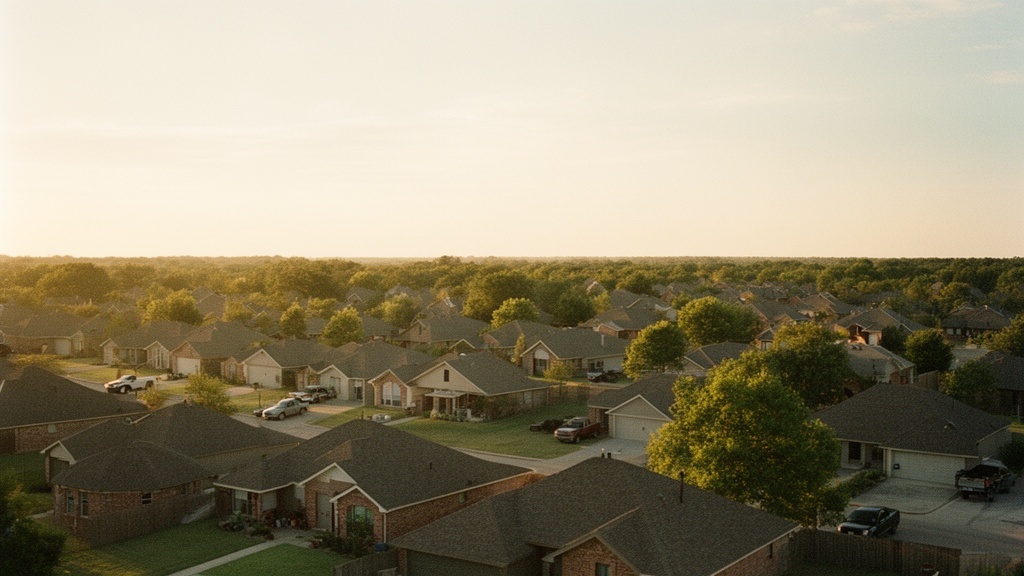
Ocala's housing market in September 2026 is meaningfully different from the frenzied conditions of 2022 and 2023. Inventory has risen, price growth has cooled, and buyers have regained negotiating leverage they had not seen in years. That does not mean prices have collapsed; it means the market has rebalanced toward something closer to equilibrium.
Where Prices Stand in September 2026
The median sale price for a single-family home in Ocala and Marion County currently sits in the low-to-mid $280,000s, depending on the submarket and property type. Entry-level homes under 1,500 square feet in established city neighborhoods can be found from the upper $150,000s to the mid $220,000s. Larger homes in the 2,000 to 3,000 square foot range in newer subdivisions typically list between $280,000 and $380,000. Luxury properties on acreage or in gated equestrian communities can reach $600,000 to well over $1 million.
For context on where Ocala has been, the NAR's Q1 2024 Local Market Report for Ocala documented the market at a median of roughly $285,000 at that time, with days on market beginning to stretch. By September 2026, that figure has moderated slightly in some segments while holding firm in others, particularly in communities with newer construction and larger lot sizes.
How Inventory Has Changed
Active listings in Marion County have risen substantially since 2023. Florida as a whole has seen a surge in for-sale inventory, and Ocala reflects that statewide trend. More homes on the market means buyers have real choices, and sellers can no longer expect multiple offers within days of listing. Homes are averaging 60 to 90 days on market in many price brackets, compared to under 30 days at the peak.
This shift has been covered broadly across Florida. HousingWire's reporting on surging for-sale inventory notes that the state has transitioned toward buyer-favorable conditions in many metros, and Ocala is no exception. Buyers relocating from higher-cost states still find Marion County attractive on price, which continues to support demand even as supply grows.
2. Ocala Neighborhoods and Price Ranges Across Marion County
Marion County covers roughly 1,600 square miles, and the real estate experience varies considerably depending on where you focus. Understanding the physical differences between Ocala's submarkets helps you figure out which areas to research further based on your priorities around commute, lot size, home age, and proximity to specific amenities.
Inside the City Limits
The city of Ocala itself contains a mix of historic bungalows, mid-century ranch homes, and infill construction. The area around the Ocala Historic District, centered on the downtown square and Tuscawilla Park, features older homes on smaller lots, many built between the 1920s and 1960s. These properties typically range from the $160,000s to the $280,000s depending on size and condition. Downtown Ocala has seen investment in dining, arts venues, and the Reilly Arts Center, which draws foot traffic to the surrounding residential streets.
North Ocala, near the College of Central Florida and Ocala International Airport, has a denser mix of older subdivisions and small commercial corridors. Homes here tend to be more affordable, often in the $140,000 to $220,000 range, with larger lots common. These areas are typically within 10 to 15 minutes of downtown by car.
Southwest Ocala and the SR 200 Corridor
The State Road 200 corridor running southwest from downtown toward Dunnellon is one of the most active real estate corridors in Marion County. This stretch includes communities such as On Top of the World, a large active-adult development with multiple neighborhoods, golf courses, and extensive amenities. Homes within On Top of the World range from attached villas in the $180,000s to detached single-family homes exceeding $400,000 depending on the specific village and square footage.
Beyond On Top of the World, the SR 200 corridor has seen significant retail and medical development, including the Ocala Health system campuses and major shopping centers at SW 27th Avenue. Neighborhoods like Kingsland Country Estates and Fore Ranch offer newer construction on quarter-acre to half-acre lots, typically priced between $270,000 and $420,000. Commute times to downtown Ocala from this corridor run 15 to 25 minutes depending on traffic.
Northeast Ocala and the Silver Springs Area
Northeast of downtown, the landscape shifts toward more rural character, with larger parcels, horse properties, and proximity to Silver Springs State Park. Silver Springs State Park, one of Florida's oldest tourist attractions, sits about 7 miles from downtown Ocala and anchors a stretch of the Silver River that draws kayakers, divers, and wildlife watchers. Residential properties in this area range from modest homes near SR 40 in the $150,000s to multi-acre equestrian estates priced well above $500,000.
The World Equestrian Center, which opened in 2021 about 4 miles northwest of downtown, has influenced property values in the broader northwest and northeast Ocala area. Buyers seeking horse properties within a short haul of a major competition venue have kept demand active for agricultural-zoned parcels in Marion County, where the Ocala National Forest and rolling pastureland define much of the landscape.
Ocala's Master-Planned Communities
Several large master-planned communities have shaped Ocala's growth over the past decade. Summerglen, located on SW 80th Street, is a gated 55-plus community with a golf course, clubhouse, and pool; homes there typically sell between $200,000 and $320,000. Ocala Preserve, near NW 35th Street, is a newer development with walking trails along a natural preserve and homes ranging from the low $200,000s to the mid $400,000s. Stone Creek by Del Webb, also in the northwest quadrant, follows a similar format with resort-style amenities and a range of floor plans.
These communities carry HOA fees that vary significantly, from roughly $150 to over $450 per month, so buyers should factor that into their total monthly cost when comparing options. Each community has its own rules around rentals, pets, and exterior modifications, which is worth reviewing carefully before making an offer.
3. New Construction vs. Resale Homes in Ocala
Ocala is one of the more active new-construction markets in Florida, and buyers here have a genuine choice between brand-new homes and existing inventory. That choice involves real trade-offs around price, timeline, location, and what you get for your money.
The Case for New Construction
Builders in Marion County have been active, with DR Horton, Lennar, and Maronda among the national names with communities in and around Ocala. New construction typically starts around $240,000 for a basic three-bedroom plan and can reach $450,000 or more with lot premiums and upgrades. Builders have been offering incentives in 2026, including mortgage rate buydowns and closing cost contributions, to move inventory as the market has softened. A new home comes with a builder warranty, modern energy standards, and no deferred maintenance, which reduces near-term out-of-pocket costs.
The trade-off is location and lot size. Most new construction in Ocala sits on the outer edges of the metro, in areas like Marion Oaks, Dunnellon Road communities, or the far northeast. These locations can mean longer drives to downtown, hospitals, or employment centers. Lot sizes in newer subdivisions are often smaller than what you find in established neighborhoods built in the 1980s and 1990s.
What Resale Homes Offer
Resale homes in Ocala often sit on larger lots, in more established locations, with mature landscaping and finished upgrades already in place. A 2,200-square-foot home built in 2005 in a southwest Ocala subdivision might list at $310,000 with a screened lanai, updated kitchen, and a quarter-acre lot, which is difficult to replicate in new construction at the same price. The inspection process matters more with resale homes, particularly for roof age, HVAC systems, and any history of water intrusion given Florida's climate.
If you are comparing new construction and resale options side by side, having a local agent who knows both the builder communities and the resale inventory in Ocala is worth more than any online search tool. Cameron Cowart of Dalton Wade works across both segments of the Ocala market and can walk you through the real cost differences between specific communities and floor plans.
4. Timing the Ocala Market as a Buyer or Seller
Timing a real estate transaction is never a perfect science, but understanding seasonal patterns and current conditions in Ocala gives you a real advantage. The Ocala, Florida real estate market guide picture in September 2026 is one where buyers hold more cards than they have in years, while sellers need to be more strategic about pricing and presentation.
Seasonal Patterns in Marion County
Ocala's market follows a pattern shaped partly by Florida's climate and partly by the influx of out-of-state buyers. Activity tends to pick up from October through March as snowbirds and relocating buyers from the Northeast and Midwest arrive. The summer months, June through August, are typically slower, with fewer showings and more price reductions. September sits at the start of the fall uptick, meaning inventory is still elevated from the summer but buyer activity is beginning to increase.
What Buyers Should Do Right Now
Buyers in September 2026 are in a position to negotiate in ways that were not possible two years ago. With homes sitting on the market longer, sellers are more willing to accept inspection contingencies, contribute to closing costs, and negotiate on price. Buyers should still get pre-approved before shopping, because sellers will not take an offer seriously without it. Locking in a rate when you find the right home matters; rates have been volatile, and waiting for a perfect rate while the right property sells is a common mistake.
First-time buyers in particular should understand the full cost picture before making an offer. The article on finding a real estate agent in Ocala for first-time buyers covers what to look for in representation when you are navigating the process for the first time.
What Sellers Should Do Right Now
Sellers in Ocala who price accurately from day one are still selling. The homes sitting on the market for 90-plus days are almost universally overpriced relative to what comparable homes have actually closed for. In a market with rising inventory, buyers have the data to spot an inflated list price immediately, and overpriced listings get fewer showings, not more time to find the right buyer.
Presentation matters more now than it did in 2022. Professional photography, a clean and decluttered interior, and addressing obvious deferred maintenance before listing all reduce the likelihood of a buyer using the inspection to renegotiate or walk away. Sellers who want guidance on choosing the right agent for this environment can review the article on what to look for when choosing a realtor to sell your home in Ocala.
5. What Relocating to Ocala Actually Looks Like
Ocala draws relocating buyers from across the country, and the reasons are consistent: lower home prices than most Florida metros, no state income tax, a slower pace than Tampa or Orlando, and access to outdoor recreation that is genuinely hard to find elsewhere in the state. Understanding the practical realities helps you set accurate expectations before you move.
Distance and Commute Context
Ocala sits roughly 80 miles north of Orlando and about 70 miles southeast of Gainesville via I-75. The drive to Orlando International Airport takes approximately 90 minutes in normal traffic. Tampa is about 90 miles to the southwest, accessible via I-75 in roughly 90 minutes as well. For buyers who work remotely or whose employment is in Ocala itself, this geography is a non-issue. For those commuting to Gainesville, the 45-to-55-minute drive along I-75 is manageable. Commuting daily to Orlando from Ocala would be a significant undertaking.
Outdoor Amenities and Daily Life
Marion County has over 200,000 acres of the Ocala National Forest within its borders, the largest sand pine scrub forest in the world. The forest contains Alexander Springs, Juniper Springs, and Salt Springs, all first-magnitude or second-magnitude springs open for swimming, kayaking, and camping. The Rainbow River in nearby Dunnellon, about 25 miles west of downtown Ocala, is one of the clearest rivers in Florida and a popular tubing destination. The World Equestrian Center hosts year-round competitions and events that draw visitors from across the country.
For daily errands, Ocala has two major hospital systems (Advent Health and HCA Florida Ocala Hospital), a regional mall at Paddock Mall on SW 17th Street, and a full range of grocery and retail options concentrated along SR 200 and US 27. The College of Central Florida provides local higher education, and the University of Florida in Gainesville is about 40 miles north.
Insurance and Carrying Costs
Homeowners insurance in Marion County is generally lower than in coastal Florida counties, because Ocala sits inland and away from the primary hurricane surge zones. That said, insurance costs in Florida broadly have risen sharply since 2021, and buyers should get insurance quotes before finalizing any purchase. A home that pencils out on mortgage payment alone can look different once you add $3,000 to $5,000 annually in insurance costs. Wind mitigation inspections can help reduce premiums on older homes.
Property taxes in Marion County are calculated on assessed value, with the homestead exemption reducing the taxable value by $25,000 for primary residents, plus an additional exemption on the portion above $50,000. The effective property tax rate in Marion County typically runs between 0.8% and 1.1% of market value for homesteaded properties, which is moderate by Florida standards.
FAQ
Is Ocala, Florida a buyer's market or a seller's market right now?
As of September 2026, Ocala is operating as a buyer's market in most price segments. Active inventory has risen significantly compared to 2023 and 2024, homes are sitting on the market longer (averaging 60 to 90 days in many brackets), and sellers are more willing to negotiate on price, closing costs, and contingencies. That said, well-priced homes in desirable communities, particularly in the SR 200 corridor and established master-planned communities, still move faster than the broader market average. Buyers have leverage, but they should not assume every seller is desperate; pricing and condition still vary widely.
What is the median home price in Ocala, Florida in 2026?
The median sale price for a single-family home in Ocala and Marion County currently sits in the low-to-mid $280,000s as of September 2026, though this varies significantly by submarket. Entry-level homes in established city neighborhoods can be found from the upper $150,000s, while newer construction in master-planned communities typically starts in the mid $240,000s and can exceed $450,000 with lot premiums and upgrades. Equestrian properties and acreage parcels in the northwest and northeast parts of the county reach into the $500,000s and beyond. Always verify current comps with a local agent, because list prices and sale prices can diverge considerably in a softening market.
How do I research schools in Ocala before buying a home?
School information for Marion County is published directly by the Marion County Public Schools district and by the Florida Department of Education. Both sources provide enrollment data, grade configurations, and performance reports that you can review on your own. Because school assignments can depend on your specific address, the district's website allows you to look up which school serves a given property. This is a personal research step every buyer should complete independently, and Cameron Cowart can help you identify the address of any property you are considering so you can look up the relevant school information through official channels.