← Back to Blog
Market Trends
Tifton, Georgia Real Estate Market Guide: Prices, Neighborhoods and Timing
By Carah Dorminy
September 3, 2026 · 10 min read
This Tifton, Georgia real estate market guide covers everything buyers, sellers, and people relocating need to know right now: what homes cost, what different parts of the city offer, and when to make your move. Tifton sits at the crossroads of I-75 and US-82 in Tift County, and its housing market reflects a city that is genuinely affordable, physically compact, and connected to a broader South Georgia economy anchored by agriculture, healthcare, and the University of Georgia's Tifton Campus.
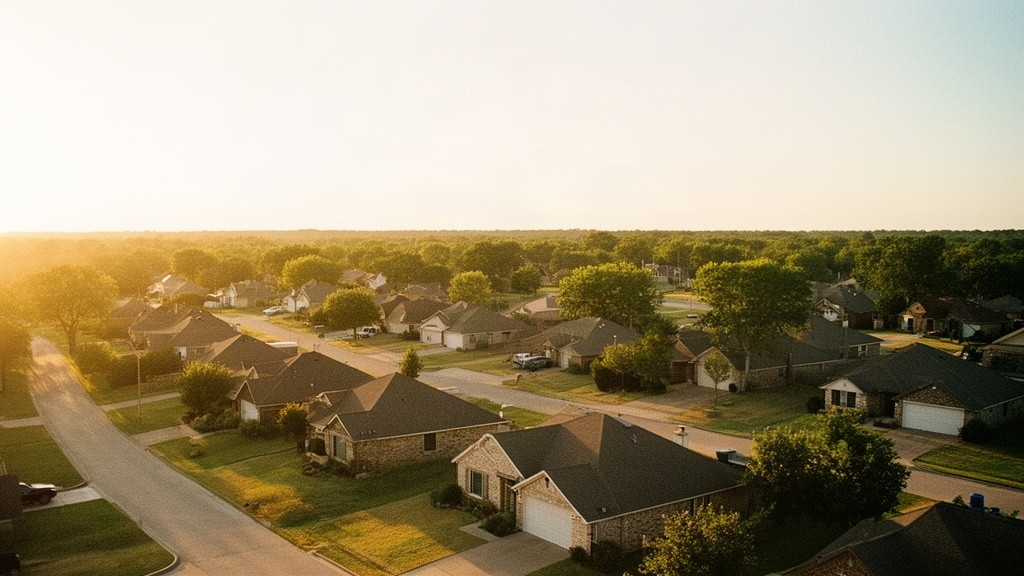
1. What the Tifton, Georgia Real Estate Market Looks Like Right Now
Tifton's housing market in September 2026 remains one of the most accessible in Georgia by price, while showing tighter inventory than it did two years ago. Homes are moving at a measured pace compared to the frenzied conditions of 2021 and 2022, giving buyers more time to think without the market going cold on sellers.
Median Prices and Inventory Levels
As of September 2026, the median sale price for a single-family home in Tifton sits in the low-to-mid $200,000s, with active listings typically ranging from around $120,000 for smaller older homes to $450,000 and above for larger properties on acreage or in newer subdivisions. Days on market for well-priced homes currently averages in the 30 to 55 day range, which means sellers who price accurately are still finding buyers, and buyers who act decisively are not losing out to bidding wars the way they did a few years ago.
You can track live price trends and recent sale data for Tifton on Redfin's Tifton housing market page, which updates regularly with median prices, sale-to-list ratios, and months of supply. That data, paired with local context from an agent who works in the market every week, gives you the clearest picture.
How Tifton Compares to Statewide Trends
Georgia's housing market has been notable in 2026 for a sharp divide between metro Atlanta and smaller cities. Larger metros have seen inventory loosen significantly while smaller markets like Tifton have held steadier, partly because local demand is driven by employment at Tift Regional Medical Center, the UGA Tifton Campus, and the surrounding agricultural economy rather than by speculative investment.
Research from HousingWire on Georgia's housing market contrasts highlights how homes in smaller Georgia cities are selling at a different pace than those in the Atlanta suburbs, a pattern that holds true in Tifton. Buyers priced out of larger Georgia cities have been looking at Tifton as a practical alternative, which has kept demand from softening sharply even as rates remain elevated.
2. A Practical Look at Tifton's Neighborhoods and Housing Stock
Tifton's residential areas each have a distinct physical character shaped by when they were built, their proximity to major roads, and their lot sizes. Understanding what each part of the city actually contains helps buyers narrow their search before they ever step foot in a house.
Established Neighborhoods Near Downtown
The streets closest to downtown Tifton and the historic commercial district along Love Avenue feature older housing stock built primarily between the 1940s and 1970s. These homes tend to be brick or wood-frame construction, sitting on lots ranging from 0.1 to 0.4 acres, with mature tree canopy and shorter distances to Tift Regional Medical Center, the Tifton Museum of Arts and Heritage, and the downtown commercial corridor. Prices in these established blocks often start below $150,000 for homes that need updating and climb toward $220,000 for move-in-ready properties.
Walkability within central Tifton is reasonable by South Georgia standards. Abraham Baldwin Agricultural College's Tifton campus, several city parks including Fulwood Park, and the downtown dining and retail options along Main Street are all reachable within a short drive or, in some cases, a walk from these older neighborhoods.
Subdivisions Along the Northern and Eastern Corridors
Growth in Tifton over the past two decades has moved primarily north along US-319 and east toward the I-75 interchange. Subdivisions in these corridors feature homes built from the 1990s through the present, with larger floor plans, two-car garages, and lots that typically run between a quarter acre and half an acre. Construction styles shift from traditional brick ranch to vinyl-sided two-story homes depending on the subdivision and era.
Prices in these newer subdivisions generally range from the upper $180,000s into the $320,000s, with newer construction or larger lots pushing higher. Proximity to Walmart, Lowe's, and the retail concentration along US-82 East makes these areas convenient for day-to-day errands. The drive from most northern Tifton subdivisions to downtown takes roughly 8 to 12 minutes under normal traffic conditions.
Rural Acreage and Outlying Areas
Tift County beyond the city limits offers a range of rural properties, from 2-acre ranchettes to 20-plus-acre tracts with ponds, timber, or agricultural history. These properties appeal to buyers who want more land without paying the premium that acreage commands in metro markets. Rural homes in Tift County can range from the $130,000s for older farmhouses needing work to $400,000 and above for well-maintained properties with significant acreage.
Buyers considering rural Tift County should factor in well and septic systems, longer distances to emergency services, and the possibility of gravel road access on some parcels. These are standard considerations in South Georgia rural real estate and not dealbreakers, but they affect insurance costs, maintenance expectations, and financing options.
3. What Your Budget Gets You in Tifton
Tifton's price points give buyers at multiple income levels genuine options, which is one of the defining characteristics of this market compared to larger Georgia cities. Here is a realistic breakdown of what each price band delivers as of September 2026.
Under $200,000
Below $200,000 in Tifton, buyers can find three-bedroom, one-or-two-bathroom homes in established central neighborhoods, smaller homes on larger rural lots, and older properties that are structurally sound but need cosmetic updating. First-time buyers using FHA financing with a 3.5 percent down payment will find this price range accessible, though competition for the cleanest homes under $175,000 can still be active. Buyers who are open to a renovation project will have more breathing room.
The $200,000 to $350,000 Range
This is the most active segment of the Tifton market right now. In this range, buyers can expect three-to-four-bedroom homes with two bathrooms, a two-car garage, and updated kitchens or baths in the newer subdivisions north and east of downtown. Homes built in the 2000s and 2010s are common here, and some listings include screened porches, fenced yards, and community amenities.
For buyers who want to browse active listings in this range and understand what is currently on the market, the Tifton buyer's guide on this site walks through the buying process step by step and explains what to look for when evaluating homes in this segment.
Above $350,000
Above $350,000, Tifton's inventory shifts toward larger custom-built homes, properties with significant acreage, or homes in the most established parts of the city with large lots and substantial square footage. New construction at this price point is also present, with builders offering four-bedroom homes with open floor plans, primary suites with walk-in closets, and higher-end finishes. Buyers in this range typically have more negotiating room and longer days on market to work with.
4. Timing the Tifton Market: When to Buy and When to Sell
Timing matters in any real estate market, and Tifton has its own seasonal rhythms shaped by the local economy, the academic calendar, and the South Georgia climate. Understanding those patterns helps both buyers and sellers make smarter decisions about when to act.
Seasonal Patterns in Tifton Listings
Spring, from March through May, is when Tifton sees the highest volume of new listings come to market. Sellers who list in this window benefit from buyers who want to close and move before summer heat peaks and before the school year begins. For buyers, spring offers the widest selection but also the most competition on well-priced homes.
Fall, particularly September through November, tends to bring motivated sellers who did not close over the summer. Right now, in September 2026, buyers entering the market may find sellers more willing to negotiate on price or closing costs than they were in the spring. Inventory is thinner but competition is also lower, which can work in a prepared buyer's favor.
For sellers, the strategic window is late February through April, when buyer demand is highest. Homes listed in that window in Tifton historically sell faster and closer to list price than those listed in July or December. If you are planning to sell in 2026 and have not listed yet, the current fall market still offers a reasonable window before the holiday slowdown arrives in late November.
Rate Environment and Purchasing Power in 2026
Mortgage rates in 2026 remain elevated compared to the historic lows of 2020 and 2021, but Tifton's lower price points soften the impact on monthly payments more than in higher-priced markets. A buyer financing a $220,000 home in Tifton carries a significantly lower monthly obligation than a buyer financing a $450,000 home in a larger Georgia city at the same rate. That affordability gap is part of what continues to draw relocating buyers to smaller South Georgia markets.
Buyers waiting for rates to drop meaningfully before purchasing should weigh that wait against the reality that Tifton prices have not declined significantly even as rates rose. If rates do fall, more buyers will enter the market and competition will increase. Locking in a purchase now and refinancing later remains a strategy worth discussing with both your lender and your agent.
5. What Buyers Relocating to Tifton Should Know Before They Search
Relocating to a new city means evaluating more than just the house itself. Tifton has a specific geographic position, a particular set of amenities, and practical considerations that out-of-town buyers need to understand before they commit to a neighborhood or a price range.
Commute and Connectivity
Tifton sits at the intersection of I-75 and US-82, which makes it a genuine hub for South Georgia. Valdosta is approximately 75 miles south on I-75, a drive of about 70 minutes under normal conditions. Albany is roughly 70 miles northwest via US-82, taking about 65 minutes. Macon is approximately 165 miles north on I-75, roughly a two-hour drive. For buyers whose work requires occasional travel to larger cities, Tifton's interstate access is a practical asset.
Within Tifton itself, most points of interest are within 10 to 15 minutes of each other. Tift Regional Medical Center, the primary employer in the healthcare sector, is located near the center of the city. The Georgia Museum of Agriculture and Historic Village on the ABAC campus is a notable local landmark. The Tifton Amtrak station provides passenger rail service on the Sunset Limited route, connecting Tifton to New Orleans and Los Angeles for travelers who prefer rail.
Amenities, Healthcare, and Daily Life
Tift Regional Medical Center is a full-service regional hospital serving Tift County and surrounding counties, which matters for buyers evaluating healthcare access. The city has a range of grocery options including a Publix, a Walmart Supercenter, and several local markets. Dining along US-82 and downtown covers a range from national chains to locally owned restaurants. Outdoor recreation includes several city parks, the Tifton Multiplex recreational complex, and proximity to Reed Bingham State Park in nearby Colquitt County, which offers swimming, camping, and boating about 20 miles from central Tifton.
Due Diligence Checklist for Out-of-Town Buyers
Buyers relocating from outside Tifton should work through several specific items before closing. First, verify flood zone status using FEMA's flood map service, since parts of Tift County near the Alapaha River watershed carry flood risk that affects insurance costs. Second, confirm internet service availability at the specific property address, as fiber and cable coverage varies within the county. Third, review the Tift County School System's own website and the Georgia Department of Education's data for school attendance zones and performance reports, since those are personal decisions every buyer should research directly from primary sources.
Fourth, budget for a thorough home inspection, including HVAC systems, roofing, and any evidence of moisture intrusion, since South Georgia's humidity and heat cycles put real wear on mechanical systems. Fifth, if you are buying rural acreage, commission a survey if one is not current, and have the well and septic system inspected independently. Carah Dorminy can connect relocating buyers with local inspectors, lenders, and other service providers who know Tifton's specific conditions.
FAQ
Is Tifton, Georgia a buyer's market or a seller's market right now?
As of September 2026, Tifton sits in a balanced-to-slightly-seller-favoring market, meaning well-priced homes are still selling within a reasonable timeframe but buyers have more negotiating room than they did in 2021 or 2022. Inventory has tightened compared to the broader Georgia market, particularly in the $175,000 to $280,000 range where demand from first-time buyers and relocating workers remains consistent. Buyers who come pre-approved and prepared to act within a few days of a showing are in the strongest position. Sellers who price accurately based on recent comparable sales rather than peak-market expectations are seeing solid results.
What are property taxes like on a home in Tifton, Georgia?
Property taxes in Tift County are calculated using the county's millage rate applied to the assessed value of the home, which in Georgia is 40 percent of the fair market value. The total effective rate including county, city, and school district millage has historically kept Tifton's annual property tax bills lower than those in metro Atlanta counties for comparable home values. Homestead exemptions are available for primary residents and can meaningfully reduce the taxable value. Buyers should request the most recent tax bill from the seller as part of due diligence and confirm current millage rates with the Tift County Tax Commissioner's office, since rates can adjust annually.
How long does it typically take to buy a home in Tifton once you find the right property?
From accepted offer to closing, most residential transactions in Tifton take between 30 and 45 days, assuming conventional or FHA financing. The timeline depends on lender processing speed, the results of the home inspection and any negotiated repairs, and the appraisal turnaround. Cash buyers can often close in 14 to 21 days if the title search moves quickly. Out-of-town buyers should plan for at least one in-person visit to conduct a thorough walkthrough and inspection, and should have their financing pre-approval letter ready before making an offer, since sellers in Tifton are unlikely to hold a property without it.