← Back to Blog
Market Trends
What Has Happened to Home Prices in the Wright-Dunbar and Five Oaks Neighborhoods in Dayton Over the Past Few Years
By Carie Chesser
September 26, 2026 · 12 min read
Home prices in the Wright-Dunbar and Five Oaks neighborhoods in Dayton have shifted noticeably over the past few years, and understanding those changes matters whether you are buying, selling, or relocating to the area. These two West Dayton corridors have distinct housing stock, different price points, and separate trajectories worth examining side by side. This article breaks down what the numbers look like, what is driving them, and what buyers and sellers should realistically expect right now in September 2026.
1. A Quick Look at Wright-Dunbar and Five Oaks
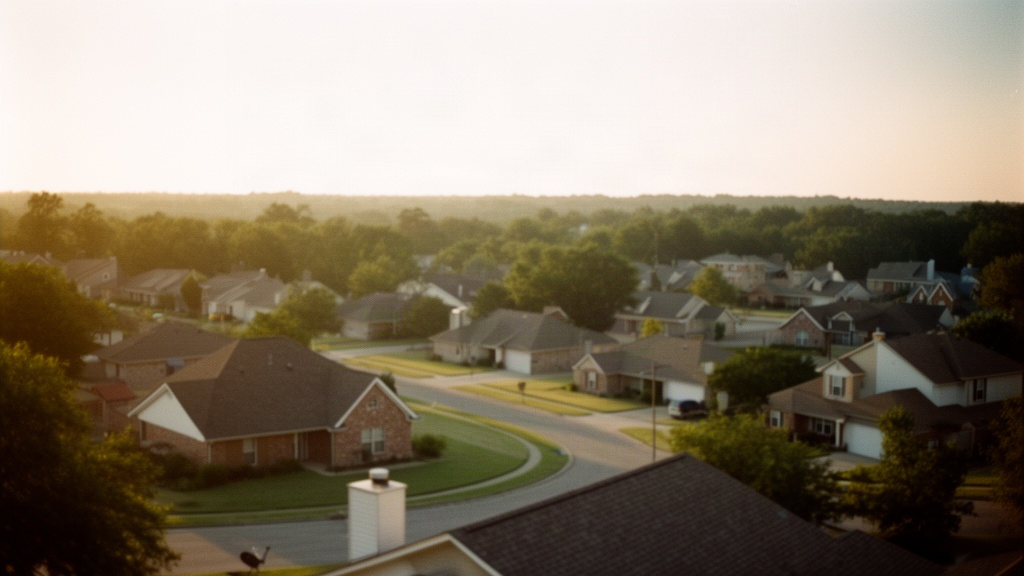
Both neighborhoods sit on Dayton's west side, but they are not interchangeable. Wright-Dunbar and Five Oaks each have their own architectural character, price range, and pace of change. Knowing the difference is the starting point for understanding what has happened to home prices in the Wright-Dunbar and Five Oaks neighborhoods in Dayton over the past few years.
What Wright-Dunbar Looks Like on the Ground
Wright-Dunbar sits along West Third Street, roughly between Broadway Street and North Williams Street. The neighborhood is named for two of Dayton's most famous residents: aviation pioneers Wilbur and Orville Wright, who operated their bicycle shop on West Third Street, and poet Paul Laurence Dunbar, who grew up nearby. The Wright Cycle Company Complex is a federally designated National Historic Landmark and an active unit of Dayton Aviation Heritage National Historical Park, which draws visitors and gives the corridor a recognized identity that most urban neighborhoods in mid-size Ohio cities simply do not have.
The housing stock in Wright-Dunbar is dense and old. Most homes are late 19th and early 20th century two-story frame houses and brick doubles, typically sitting on narrow lots between 25 and 40 feet wide. Square footage for single-family homes generally runs between 1,000 and 1,800 square feet. Many properties were subdivided into rentals decades ago, and the neighborhood has a high proportion of rental-occupied units relative to owner-occupied ones, though that ratio has been shifting.
What Five Oaks Looks Like on the Ground
Five Oaks occupies a roughly rectangular area north of West Third Street, bounded loosely by North James H. McGee Boulevard to the east and North Gettysburg Avenue to the west. The housing here is more varied in style and size than Wright-Dunbar. You will find Craftsman bungalows, Tudor-influenced homes from the 1920s and 1930s, and larger two-story colonials, many of them with original woodwork, built-in cabinetry, and front porches that reflect the era when Five Oaks was a prosperous middle-class neighborhood.
Lot sizes in Five Oaks tend to run a bit larger than in Wright-Dunbar, with many parcels between 5,000 and 7,500 square feet. Interior square footage often falls between 1,200 and 2,400 square feet, and the neighborhood has a number of homes that would be considered large by Dayton's west side standards. The Five Oaks Association has been an active community organization for decades, coordinating neighborhood events and working with the city on preservation and reinvestment efforts.
2. How Home Prices Have Moved in Wright-Dunbar Over the Past Few Years
Home prices in Wright-Dunbar have risen from a very low base, and the gains are real but the absolute numbers remain modest compared to Dayton's east and south suburbs. The neighborhood has historically been one of the most affordable areas in the city, and that remains true in September 2026, even after several years of upward pressure.
Where Prices Stood Before 2023
In 2021 and 2022, single-family home sales in Wright-Dunbar were regularly closing in the $30,000 to $65,000 range for unrenovated properties. Renovated or move-in-ready homes occasionally reached $80,000 to $95,000, but those were the outliers. The neighborhood had a high number of vacant and distressed properties, and investor purchases at tax auctions and sheriff's sales were common. Owner-occupant buyers were a smaller share of transactions than in most Dayton neighborhoods.
The 2024 to 2026 Price Shift
By 2024 and into 2025, the floor for habitable single-family homes in Wright-Dunbar had moved up noticeably. Properties in livable condition were trading in the $55,000 to $90,000 range more consistently, and homes that had received substantive renovation work, updated kitchens, new roofs, and functioning mechanical systems, were crossing the $100,000 mark with more regularity. That threshold crossing matters psychologically and practically for buyers seeking conventional financing, since some loan programs have minimum property condition requirements that distressed homes cannot meet.
As of September 2026, the median sale price for single-family homes in Wright-Dunbar is estimated in the $75,000 to $110,000 range, depending on condition and whether the property has been updated. That represents a meaningful percentage gain from where the neighborhood stood in 2021, even if the raw dollar increase looks modest compared to suburban Dayton markets. For context, the broader Dayton metro area has seen consistent price appreciation; reporting from the Dayton Daily News noted steady price growth across the metro even as sales volume slowed in early 2025, a pattern that has continued into 2026.
What Is Selling and at What Price Today
The transactions happening in Wright-Dunbar right now fall into a few distinct categories. Distressed properties and those needing full rehabilitation are still moving at $30,000 to $55,000, primarily to investors and cash buyers comfortable with significant renovation budgets. Move-in-ready homes with updated systems are selling from $85,000 to $120,000. A small number of fully renovated properties with historic character preserved, original hardwood floors, restored trim, and updated kitchens, have tested the $130,000 to $150,000 range. Those upper-end sales are not yet common, but they are happening, and they are setting new comparable sales that influence appraisals across the neighborhood.
3. How Home Prices Have Moved in Five Oaks Over the Past Few Years
Five Oaks has followed a similar directional trend to Wright-Dunbar but from a higher starting point and with a wider price spread. The neighborhood's larger homes and more varied condition profile mean that buyers and sellers encounter a broader range of asking prices within just a few blocks of each other.
The Price Baseline in Five Oaks
In 2021 and 2022, Five Oaks single-family homes in average condition were selling in the $50,000 to $90,000 range. The larger Craftsman and Tudor-style homes that had been well maintained or partially updated were reaching $100,000 to $130,000. The neighborhood had a stronger owner-occupant base than Wright-Dunbar, and that stability kept prices somewhat more consistent from block to block, though pockets of vacancy and deferred maintenance existed throughout.
Recent Price Movement and Inventory
By 2024 and 2025, Five Oaks prices had moved upward across nearly every condition tier. Average-condition homes were regularly closing between $75,000 and $115,000. Updated properties with renovated kitchens, newer roofs, and restored original woodwork were pushing into the $130,000 to $165,000 range. Inventory has remained tight relative to demand, which has kept multiple-offer situations present even in a neighborhood that would have had little buyer competition just four or five years earlier.
The Five Oaks Association's ongoing engagement with the city and with community development financial institutions has helped channel renovation grant programs and low-interest loan products into the neighborhood. Those programs have incentivized owner-occupant purchases and full rehabilitations, which in turn produce higher comparable sales and lift the appraisal ceiling for the whole area.
What Buyers Are Finding Right Now
As of September 2026, the active market in Five Oaks shows single-family homes listed from roughly $70,000 for properties needing full work up to $175,000 for the most comprehensively renovated homes. The sweet spot for move-in-ready purchases sits between $110,000 and $150,000. Buyers who are willing to take on a project with a renovation loan, such as an FHA 203(k) or a conventional rehab product, can still find significant upside in Five Oaks, particularly on the larger Craftsman homes where the bones justify the investment.
If you want to understand how these price points compare to other Dayton neighborhoods, the complete Dayton real estate market guide on this site covers pricing across the metro in detail.
4. What Is Driving Price Changes in Both Neighborhoods
Several forces have combined to push prices upward in Wright-Dunbar and Five Oaks, and understanding them helps buyers and sellers set realistic expectations going forward.
Renovation Activity and Historic Preservation
Renovation activity is the single biggest internal driver of price appreciation in both neighborhoods. When a vacant double on West Third Street gets fully rehabilitated and sold to an owner-occupant at $140,000, that sale becomes a comparable that appraisers use for the next transaction on the block. Over time, a cluster of rehabilitated properties creates a new price floor that did not exist before. Wright-Dunbar's designation as part of the Dayton Aviation Heritage National Historical Park area has made it eligible for federal historic tax credits, which can cover up to 20 percent of qualified rehabilitation costs on income-producing properties. That credit has attracted developers who might otherwise have passed on the neighborhood.
Five Oaks benefits from the Dayton Historic Preservation Office's recognition of the neighborhood's architectural character, and several blocks have been identified as candidates for local historic district designation. That process, if completed, would give homeowners access to additional preservation incentives and could further stabilize property values by creating design standards that protect the neighborhood's visual character over time.
Broader Dayton Market Pressure
The Dayton metro housing market has been under consistent price pressure since 2020, driven by limited inventory and sustained buyer demand. As prices in more established Dayton neighborhoods and suburbs like Oakwood, Kettering, and Beavercreek have climbed, buyers with smaller budgets have expanded their search radius. Wright-Dunbar and Five Oaks, with their lower price points and proximity to downtown Dayton, approximately two miles west of the central business district, have attracted buyers who are priced out elsewhere. That demand has absorbed inventory that previously sat for months and has pushed list prices upward.
According to Norada Real Estate's Dayton market analysis, the Dayton metro has seen year-over-year price appreciation in the range of 6 to 9 percent across most zip codes in 2025 and into 2026. West Dayton neighborhoods, including Wright-Dunbar and Five Oaks, have experienced appreciation rates at or above that range in percentage terms, though their lower absolute prices mean the dollar gains are smaller than in higher-priced areas.
Days on Market and Competition
Days on market in both neighborhoods have compressed significantly compared to four or five years ago. In 2021, a move-in-ready home in Five Oaks might have sat for 45 to 90 days before finding a buyer. By 2025 and into 2026, well-priced, move-in-ready properties in both Wright-Dunbar and Five Oaks have been going under contract in 10 to 25 days, and the most competitively priced listings have attracted multiple offers within the first week. That compression in days on market is one of the clearest indicators that buyer demand in these neighborhoods has grown materially.
For a broader view of how days on market are trending across Dayton, the article on how long homes are sitting on the market in Dayton covers that data in detail.
5. What Buyers and Sellers Should Know Before Acting
The price trends in Wright-Dunbar and Five Oaks create different opportunities and considerations depending on which side of the transaction you are on. Here is what each group should keep in mind.
Advice for Buyers Considering These Neighborhoods
Financing is the first thing to sort out before you start looking at homes in Wright-Dunbar or Five Oaks. Many properties in both neighborhoods, particularly those priced below $80,000, will not meet the minimum property condition standards for FHA or conventional financing in their current state. Cash purchases and renovation loans are common here. If you plan to use a renovation loan, get pre-approved for that specific product before you make an offer, because the underwriting timeline and appraisal process differ from a standard purchase loan.
Comparable sales in these neighborhoods can be difficult to interpret without local knowledge. A sale at $45,000 two blocks from a sale at $135,000 does not mean the market is inconsistent; it means one property was a distressed cash sale and the other was a fully renovated owner-occupant purchase. Understanding which comparable sales are relevant to the property you are buying requires someone who knows these streets and has tracked the transactions over time.
Commute times from Wright-Dunbar and Five Oaks into downtown Dayton are short. Both neighborhoods are approximately two miles from the central business district, and the drive along West Third Street or through the surface street grid typically runs 8 to 15 minutes even during morning rush hour. If you are also evaluating suburban options, the article on commute times from Beavercreek and Centerville into downtown Dayton gives useful context for comparison.
Advice for Sellers in Wright-Dunbar or Five Oaks
Pricing strategy in these neighborhoods requires more care than in markets where comparable sales are plentiful and condition is consistent. Overpricing relative to condition is a common mistake, particularly when sellers see a high sale price from a fully renovated property nearby and assume their unrenovated home will command a similar number. Appraisers and buyers will both push back on that logic. The gap between a distressed property and a renovated one in Wright-Dunbar or Five Oaks can easily be $50,000 to $80,000, and pricing without accounting for condition will result in a stale listing.
Targeted pre-sale improvements can move a property from one buyer pool to a larger one. A home that is not financeable because of a failed roof or non-functioning furnace will attract only cash buyers, which limits competition and suppresses the sale price. Spending $8,000 to $15,000 to address those specific issues can open the property to FHA and conventional buyers, which meaningfully broadens the buyer pool and can result in a sale price $20,000 to $35,000 higher than the cash-only market would have produced. Knowing which repairs cross that threshold is something an experienced local agent can help you identify before you spend anything.
For a detailed look at what the selling process looks like in Dayton right now, the guide on selling a home in Dayton and what to expect on pricing and timeline walks through the full process.
Investors looking at Wright-Dunbar or Five Oaks as rental or flip opportunities should also review the investment property guide for Dayton, Ohio, which covers financing options, return expectations, and what to look for in a Dayton investment property before you commit.
FAQ
Are home prices in Wright-Dunbar and Five Oaks still rising as of September 2026?
Yes, prices in both neighborhoods continue to trend upward as of September 2026, though the pace of appreciation has moderated compared to the sharp gains seen between 2021 and 2023. Move-in-ready homes in Five Oaks are closing in the $110,000 to $165,000 range, and comparable properties in Wright-Dunbar are selling between $85,000 and $130,000 depending on condition and the extent of any renovation work. The continued compression in days on market, with well-priced homes going under contract in two to three weeks rather than two to three months, suggests that buyer demand remains ahead of available inventory in both neighborhoods. Price growth is being supported by ongoing renovation activity and by buyers expanding their search from higher-priced parts of the Dayton metro.
Can I get a regular mortgage to buy a home in Wright-Dunbar or Five Oaks?
It depends on the condition of the specific property you are buying. Move-in-ready homes priced above $80,000 in both neighborhoods can typically be financed with FHA or conventional loans, provided the property passes the required appraisal and inspection standards. Homes with significant deferred maintenance, such as a failed roof, missing mechanicals, or structural issues, will often not meet the minimum property condition requirements for government-backed or conventional financing. In those cases, buyers typically use cash, a hard money loan for a flip, or a renovation loan product like an FHA 203(k) or a Fannie Mae HomeStyle loan. Getting pre-approved for the right loan product before you start touring homes in these neighborhoods is essential, because the financing path affects which properties you can realistically pursue.
How do Wright-Dunbar and Five Oaks home prices compare to other Dayton neighborhoods?
Both neighborhoods remain significantly more affordable than Dayton's established suburbs and most of the city's east and south side neighborhoods. As of September 2026, median sale prices in Kettering, Beavercreek, and Oakwood range from roughly $200,000 to well above $300,000 for single-family homes, while Wright-Dunbar and Five Oaks are still producing median sales in the $85,000 to $150,000 range for move-in-ready properties. That gap reflects condition variation, the proportion of distressed sales still occurring in both neighborhoods, and the earlier stage of their reinvestment cycle compared to more fully stabilized parts of the metro. For buyers whose budget does not stretch to suburban price points, these two west side neighborhoods offer the most square footage and architectural character per dollar currently available close to downtown Dayton.