← Back to Blog
Market Trends
Champaign, Illinois: Refer Their Own Friends Real Estate Market Guide — Prices, Neighborhoods and Timing
By Carter Salvani
September 28, 2026 · 12 min read
When people move to or from Champaign, Illinois, one of the first things they do is ask someone they trust for a recommendation on a neighborhood, a price range, or when to make a move. This guide is built for exactly that situation: whether you are the one relocating or the friend doing the referring, here is a practical, current look at Champaign real estate prices, neighborhood character, and market timing as of September 2026.
1. Why Champaign Real Estate Referrals Work Differently Than in Other Markets
Champaign operates on a rhythm that most mid-size Illinois cities do not. The University of Illinois at Urbana-Champaign enrolls around 56,000 students and employs thousands of faculty and staff, which means the housing market sees a predictable surge of buyers, renters, and relocating families every single year. That cycle shapes everything from listing prices to how quickly homes go under contract, and it is one of the first things worth explaining when you refer a friend here.
The University of Illinois Effect
Faculty hires, visiting researchers, and graduate students arriving from other states and countries generate a steady stream of buyers who are often purchasing on short timelines. Many of them rely heavily on personal referrals to find an agent and a neighborhood, because they have no local knowledge and limited time to research. According to Inman's reporting on international buyer referrals, personal referrals are now driving a significant share of real estate transactions involving buyers relocating from abroad, a trend that maps directly onto what happens in university towns like Champaign every August and January.
This also means that when you refer your own friends to the Champaign, Illinois real estate market, the information you share carries real weight. A friend who arrives with accurate expectations about price ranges, neighborhood character, and timing will be in a far stronger position than one who is starting from scratch. That is what this guide is designed to give you.
How Referrals Shape Buying and Selling Decisions Here
Champaign is a market where word-of-mouth carries unusual authority. Because the city draws so many people from outside Illinois, buyers often have no existing frame of reference for neighborhoods like Savanna Green, the Kenwood corridor, or the streets around Windsor Road. A trusted referral from someone who has lived here, or who has worked with a knowledgeable local agent, can compress weeks of research into a single conversation.
If you are selling and your buyer comes through a personal referral network, that buyer often arrives more motivated and better prepared than one who found the listing cold on a portal. Sellers who understand this dynamic can work with their agent to position their home in ways that reach referral-driven buyers early, before a listing even hits the MLS.
2. Current Prices in the Champaign, Illinois Real Estate Market
As of September 2026, the Champaign market is holding steady at median sale prices in the low-to-mid $200,000s for single-family homes across the broader metro area, with meaningful variation depending on the specific neighborhood and property condition. Inventory remains tighter than historical norms, which continues to give sellers a degree of leverage, though not to the extreme seen in 2021 and 2022.
What Buyers Are Paying Right Now
Entry-level single-family homes in Champaign, particularly older ranch and split-level homes in established neighborhoods north and west of downtown, are trading in the $160,000 to $210,000 range. Move-up homes with three or four bedrooms, updated kitchens, and lots in the 7,000 to 10,000 square foot range typically fall between $230,000 and $320,000. Newer construction in subdivisions on the city's southwest and northwest edges, including developments along Olympian Drive and beyond, pushes into the $350,000 to $500,000 range and sometimes higher for larger footprints.
The luxury segment, loosely defined as homes priced above $500,000, exists in Champaign but is a smaller share of total volume than in larger Illinois metros. Buyers in that tier are typically purchasing custom builds, extensively renovated older homes on larger lots, or properties with distinctive features like finished walkout basements or dedicated home offices. For a deeper look at that segment, the luxury home market guide for Champaign covers what buyers in that range should know.
Price Variation Across Property Types
Condominiums and townhomes in Champaign, many of them concentrated near the university and along Neil Street, generally list between $100,000 and $180,000. These are popular with buyers who want lower maintenance or who are purchasing as investment properties to rent to graduate students and university employees. Investors evaluating that angle will find detailed numbers in the investment property guide for Champaign.
Days on market for well-priced, well-presented homes in Champaign currently averages in the two-to-three week range, with some properties in the $200,000 to $280,000 tier receiving multiple offers within the first weekend. Homes that linger past 30 days almost always have a pricing or presentation issue rather than a demand problem. The article on what sells homes fastest in Champaign breaks down the specific factors that drive quick sales.
3. Neighborhood Breakdown: What Each Area of Champaign Actually Looks Like
When you refer friends to Champaign, the neighborhood question comes up immediately. Here is a factual, street-level look at the main areas so your referral arrives with a real picture rather than a vague impression.
Campustown and the University District
The blocks immediately surrounding the University of Illinois campus, roughly bounded by Green Street to the north, Florida Avenue to the south, Wright Street to the west, and Fourth Street to the east, are dominated by high-density rental housing, older two-flats, and small apartment buildings. Owner-occupied single-family homes are rare in this zone, but the area is extremely walkable, with restaurants, coffee shops, the Illini Union, and the Main Library all within a few blocks. Buyers purchasing here are almost always doing so as investment properties.
Just south and west of the core campus area, streets like Busey Avenue, Lincoln Avenue, and the blocks between University Avenue and Springfield Avenue contain a mix of older craftsman and colonial-style homes from the early-to-mid 20th century. Lot sizes here tend to run 5,000 to 7,500 square feet, homes average 1,200 to 1,800 square feet of living space, and prices in this zone typically fall between $180,000 and $260,000 depending on condition and updates.
Southwest Champaign
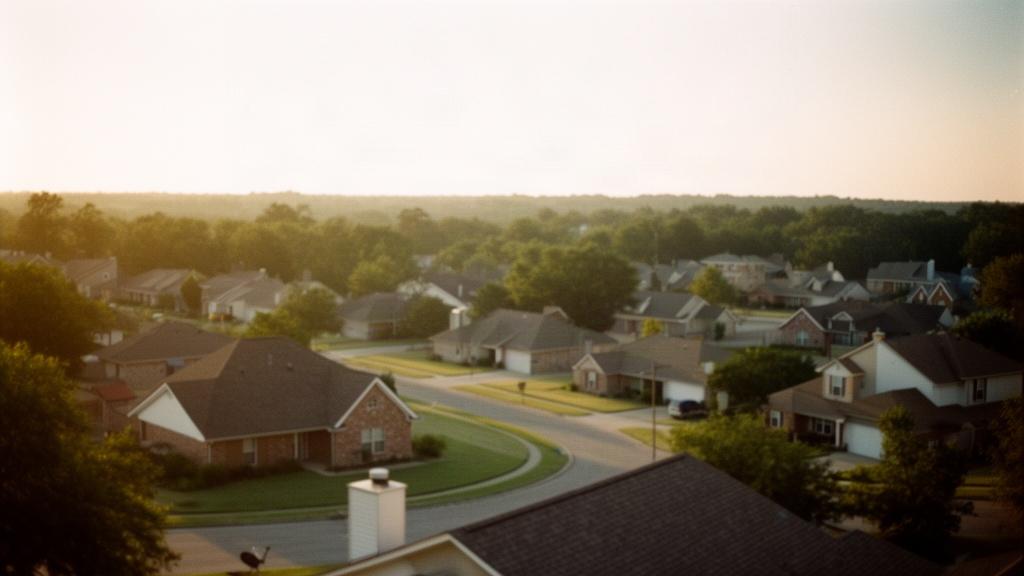
The southwest quadrant of Champaign, roughly the area south of Kirby Avenue and west of Neil Street extending toward the Champaign-Urbana border with Savoy, is where much of the city's newer residential construction has concentrated over the past two decades. Subdivisions here feature homes built from the early 2000s through the present, with larger floor plans, attached two-car garages, and lots in the 8,000 to 12,000 square foot range. Streets are laid out in curving patterns rather than the grid that defines older parts of the city.
Prices in southwest Champaign span a wide range. Older sections from the 1990s and early 2000s trade in the $240,000 to $320,000 range, while newer builds closer to Olympian Drive and the Savoy line push toward $380,000 to $480,000. The Savanna Green neighborhood guide gives a detailed look at one of the area's established planned subdivisions, including street layout, lot sizes, and typical home configurations.
Northwest Champaign
Northwest Champaign, the area north of University Avenue and west of Prospect Avenue, contains some of the city's most established residential streets. The Kenwood neighborhood sits in this zone, with tree-lined streets, homes from the 1950s through 1980s, and lot sizes that frequently exceed 9,000 square feet. Buyers here often value the proximity to Centennial High School, the Champaign Park District's Kaufman Lake, and the Schnucks and Meijer retail corridors along Prospect Avenue.
Homes in northwest Champaign typically range from $200,000 to $330,000, with well-maintained brick ranches and two-stories at the upper end. The area has lower turnover than newer subdivisions, meaning fewer listings come to market each year, which can create competitive conditions when a well-priced home does appear.
Savanna Green and Newer Subdivisions
Savanna Green is one of Champaign's more recognizable planned neighborhoods, located on the city's southwest side near the intersection of Windsor Road and Prospect Avenue. Homes here were built primarily between the late 1990s and mid-2010s, with square footage ranging from roughly 1,600 to 2,800 square feet. Streets curve through the development and connect to a network of walking paths. Current prices in Savanna Green run from approximately $260,000 to $380,000 depending on size, lot position, and how recently the home has been updated.
Other newer subdivisions on the city's perimeter, including areas along Olympian Drive west of Neil Street and north of I-74, offer some of Champaign's most recently built inventory. These homes often include open floor plans, energy-efficient construction, and larger primary suites. For buyers who want to understand what is being built right now, the guide to new residential developments in Champaign for 2026 covers active projects and what to expect from new construction.
4. Timing the Champaign Market: When to Buy and When to Sell
Timing in Champaign follows a pattern that is partly seasonal and partly driven by the university calendar, and understanding both layers is what separates a well-timed transaction from a frustrating one.
Seasonal Patterns Unique to a College Town
The spring market in Champaign, typically March through June, is the highest-volume period for both listings and sales. Faculty and staff who receive job offers in the spring want to close before the August start of the academic year, which compresses buyer demand into a relatively short window. This creates the most competitive conditions of the year for buyers and the strongest negotiating position for sellers.
Summer sees continued activity through July as the August move-in deadline approaches. After Labor Day, volume typically softens, though serious buyers remain active and competition for well-priced homes does not disappear entirely. The winter months of November through February are the slowest, with fewer listings and fewer buyers, but the buyers who are active tend to be highly motivated.
September 2026 Conditions Right Now
Right now, in September 2026, the Champaign market is in its post-summer transition. The peak buying frenzy tied to the August academic calendar has passed, but inventory is still relatively lean, which means sellers who list this month face less competition from other sellers than they would have in April or May. Buyers who missed out on spring opportunities and are still searching have more room to negotiate than they did three months ago, but they are not walking into a buyer's market.
For sellers weighing whether to list now or hold until spring, the detailed analysis in the article on whether September 2026 is a good time to list in Champaign is worth reading before making that call. The short answer is that September listings can perform well if priced correctly, because the buyer pool is still active and fall inventory is thin.
For buyers, this month is a reasonable window to make offers without the multiple-offer pressure that defined the spring. Interest rates as of September 2026 remain a factor in affordability calculations, so buyers should get pre-approved early and understand exactly what their monthly payment looks like at current rates before committing to a search price range.
5. What to Tell a Friend You Are Referring to the Champaign Market
If you are referring friends to the Champaign, Illinois real estate market, the most useful thing you can do is give them a clear starting framework so they can ask the right questions from day one. Here is a concise summary of what is worth passing along.
Key Facts Worth Passing Along
Champaign is a mid-size city of roughly 90,000 people that functions in many ways like a larger market because of the university's economic footprint. State Farm's regional offices in Bloomington-Normal, about 45 miles north on I-74, draw additional commuter buyers to Champaign, so the buyer pool is more diverse than the university alone would suggest. The commute between Champaign and Bloomington-Normal runs approximately 45 to 50 minutes by car under normal conditions, which is a relevant data point for anyone considering that corridor.
Property taxes in Champaign County run roughly 2.0 to 2.5 percent of assessed value annually, which is meaningful for buyers comparing total ownership costs across Illinois markets. A $280,000 home will typically carry an annual tax bill in the $5,600 to $7,000 range, though individual parcels vary. Buyers should request the most recent tax bill for any property they are seriously considering.
The Champaign Park District operates over 50 parks across the city, including Kaufman Lake Park on the northwest side, Crystal Lake Park near downtown Urbana, and the Champaign-Urbana Spinney Park trail network. The Boneyard Creek trail connects several neighborhoods and is a notable amenity for buyers who prioritize outdoor access within the city.
For buyers relocating from other states, the full picture of what to expect is covered in the relocation guide for Champaign, Illinois, which covers neighborhood comparisons, cost of living context, and realistic timelines for finding and closing on a home.
Finding the Right Agent for Your Referral
The quality of the agent your friend works with will shape their entire experience in this market. In a market like Champaign where timing, pricing, and neighborhood knowledge all matter, an agent who knows the difference between a well-positioned listing in Savanna Green and one that is overpriced for its street will save a buyer real money or get a seller meaningfully more. According to HousingWire's analysis of real estate referral strategies, the most effective referrals come from people who can speak specifically to an agent's local track record rather than general reputation.
When evaluating an agent for a referral, it is worth looking at their actual sale-price-to-list-price ratio in Champaign specifically, not just their overall volume. An agent who consistently closes at or above list price is negotiating effectively for sellers. The article on which agents get sellers the highest sale price compared to asking price in Champaign explains exactly what that metric means and how to read it.
Carter Salvani works exclusively in the Champaign market and brings direct knowledge of current pricing, neighborhood inventory, and what it takes to close successfully in this specific environment. If you are referring a friend and want to make sure they are in capable hands, that local depth is what makes the difference.
FAQ
What is the typical price range for a single-family home in Champaign, Illinois right now?
As of September 2026, single-family homes in Champaign span a wide range depending on location, age, and condition. Entry-level homes in established older neighborhoods typically sell between $160,000 and $210,000. Move-up homes with three or four bedrooms in areas like northwest Champaign or Savanna Green fall roughly between $230,000 and $380,000. Newer construction on the city's southwest and northwest edges, particularly near Olympian Drive, can reach $400,000 to $500,000 or beyond. The best way to get a current, accurate picture for a specific neighborhood is to review recent closed sales with a local agent who tracks those numbers closely.
Is fall a reasonable time to buy or sell a home in Champaign, Illinois?
Fall is a workable window in Champaign for both buyers and sellers, though it differs from the spring market in important ways. Sellers face less competition from other listings in September and October than they would in April or May, which can help a well-priced home stand out. Buyers who are still searching after the summer rush will find sellers who are motivated to close before winter, which can create more negotiating room than existed in the spring. The Champaign market does not go dormant in the fall the way some purely seasonal markets do, partly because university-related moves happen on a rolling basis throughout the year. Pricing accurately and presenting the home well matter in any season.
What should someone know before relocating to Champaign, Illinois from out of state?
Champaign is a mid-size city with a strong economic anchor in the University of Illinois, which gives it more stability than many comparably sized Illinois cities. Property taxes in Champaign County run roughly 2.0 to 2.5 percent of assessed value annually, which is a meaningful cost to factor into affordability calculations alongside the purchase price. The city has distinct neighborhood zones with different housing stock, price ranges, and commute distances to the university and major employers, so narrowing down the right area before starting a serious search saves significant time. Buyers relocating from out of state should also budget for closing costs, which in Illinois typically run 2 to 3 percent of the purchase price on the buyer's side. Working with an agent who knows the local market well is especially important for out-of-state buyers who cannot easily visit multiple times before making a decision.