
← Back to Blog
Market Trends
New Residential Developments and Subdivisions Built in Champaign, Illinois in 2026
By Carter Salvani
September 14, 2026 · 12 min read
If you have been wondering what new residential developments or subdivisions have been built in Champaign, Illinois in 2026, the answer is more than most people expect. Champaign's building activity this year spans the southwest corridor, the northwest edge of the city, and several infill sites closer to the core, covering everything from entry-level attached homes to larger single-family lots. This article maps out where the new construction is, what it costs, and what buyers and sellers need to know before making a move.
1. How Much New Construction Is Happening in Champaign in 2026
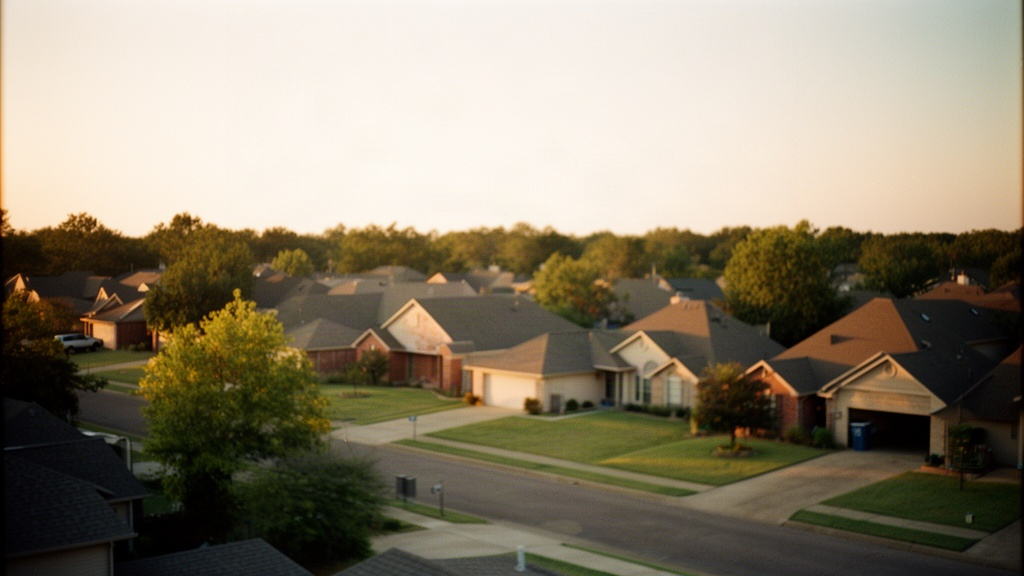
Champaign is building at a meaningful pace in 2026. The city issued residential building permits at a rate that outpaces several comparably sized Illinois cities, driven largely by demand from University of Illinois faculty and staff, healthcare professionals at Carle Health and OSF HealthCare, and workers relocating to the area for positions at tech and logistics employers along the Interstate 57 corridor. According to reporting by Starved Rock Media, Champaign has been among the more active markets for new residential construction in downstate Illinois in 2026, with permit activity concentrated in single-family detached homes and a secondary wave of attached townhome products.
Permit Volume and Build Rate
Champaign's Planning and Development Services department has tracked a consistent flow of single-family permits through the first three quarters of 2026. The bulk of that activity is concentrated in the southwest and northwest quadrants of the city, where undeveloped land parcels have been platted and infrastructure installed over the past two to three years in preparation for this current wave of building. The city's Comprehensive Plan has guided density and lot-size minimums in these corridors, which is why most of what is going up right now reads as conventional suburban subdivision product rather than dense urban infill.
What Types of Homes Are Being Built
The product mix in Champaign's 2026 new construction market skews toward three categories. First, there are traditional single-family detached homes on lots ranging from roughly 7,000 to 12,000 square feet, which make up the majority of subdivision activity. Second, there are attached townhomes and villa-style units, typically two stories with two-car garages, aimed at buyers who want lower exterior maintenance without giving up a private garage. Third, there is a smaller but growing segment of custom and semi-custom builds on larger lots, primarily in the far southwest near Windsor Road and beyond. Each category has a different price band and a different set of tradeoffs around timeline and customization.
2. Where the New Subdivisions Are Located in Champaign
New subdivisions in Champaign in 2026 are concentrated in three geographic zones. The southwest corridor along and south of Windsor Road has seen the most activity, followed by the northwest edge of the city near Interstate 74, and a smaller set of infill projects closer to downtown Champaign and the Neil Street commercial spine. Each zone has a distinct character in terms of lot size, home style, proximity to amenities, and price point.
Southwest Champaign Growth Corridor
The southwest quadrant, roughly the area south of Windsor Road and west of Duncan Road, has been the most active zone for new residential development in Champaign in 2026. Several subdivisions here are either actively under construction or have recently delivered their first completed homes. Lot sizes in this area tend to run between 8,500 and 11,000 square feet, and street layouts follow a conventional grid-adjacent pattern with cul-de-sacs at the ends of longer blocks. Proximity to the Champaign Park District's southwest facilities, including Kaufman Lake and the trails that connect to Stone Creek Golf Club, gives this corridor a sense of open space that denser infill sites cannot match.
Commute distances from southwest Champaign to the University of Illinois main quad run approximately four to five miles, translating to roughly ten to fifteen minutes by car under normal conditions. The Champaign-Urbana Mass Transit District's southwest routes connect this area to campus and downtown, though most households in these subdivisions rely primarily on personal vehicles. The Meijer on Marketview Drive and the Schnucks on Windsor Road put grocery access within a two-mile radius for most addresses in this corridor.
Northwest Champaign Expansion
The northwest side of Champaign, anchored by the Olympian Drive corridor and the area north of Interstate 74, has seen a secondary wave of new subdivision activity in 2026. This zone sits closer to the Champaign-Urbana interchange and offers relatively quick access to Interstate 74 heading toward Bloomington-Normal to the west. Subdivisions here tend to feature slightly larger lot footprints than the southwest corridor, and the mix of builders includes both regional production builders and a handful of local custom contractors. The Savoy Prairie Natural Area and the Champaign Park District's northwest parks provide green space within a short drive.
New construction on the northwest side also benefits from proximity to the Market Place Mall area on Prospect Avenue, which concentrates retail, dining, and services within two to three miles of most addresses in these subdivisions. The tradeoff is that commutes to the University of Illinois campus run longer from this quadrant, typically six to eight miles and fifteen to twenty-five minutes depending on the specific address and time of day.
Infill and Mixed-Use Sites Near the Core
A smaller but notable set of new residential construction in 2026 is happening on infill parcels closer to downtown Champaign and along the Neil Street corridor. These are not traditional subdivisions; they tend to be smaller projects of four to twenty units, often townhomes or stacked flats, built on lots that were previously commercial or underutilized residential. The addresses are typically within one to two miles of the Virginia Theatre, the Champaign Public Library, and the Boneyard Creek greenway. Walkability scores in these locations are meaningfully higher than in the outer subdivisions, and lot sizes are smaller, usually under 5,000 square feet for townhome-style products.
You can browse currently listed new construction homes across Champaign County on Homes.com's new construction listings for Champaign County, which aggregates active inventory from multiple builders and updates regularly as new phases are released.
3. Price Ranges and What You Get for Your Money in New Construction
New construction in Champaign in 2026 spans a wider price band than many buyers expect, from the upper $200,000s for attached townhomes to well over $600,000 for custom single-family builds on larger lots. The specific price you land at depends heavily on the builder, the subdivision, the lot premium, and the finish level you select during the design process. Understanding the three main tiers helps buyers set realistic expectations before they walk into a model home.
Entry-Level and Attached New Homes
Attached townhomes and villa-style new construction in Champaign currently starts in the upper $270,000s to low $300,000s for a two-bedroom, two-bath unit with a one-car garage. Two-story townhomes with three bedrooms and a two-car garage generally land between $310,000 and $370,000 depending on the builder's standard finish package. These products are concentrated in the infill sites near the core and in a few attached-home sections within the larger southwest subdivisions. HOA fees for exterior maintenance and common areas typically run $150 to $250 per month and should be factored into any affordability calculation.
Mid-Range Single-Family Homes
The bulk of new single-family subdivision homes in Champaign in 2026 are priced between $350,000 and $500,000. At that range you are typically looking at 1,600 to 2,400 square feet of finished living space, three to four bedrooms, two to three bathrooms, a two-car attached garage, and a standard finish package that includes LVP flooring, quartz or granite countertops, and stainless appliances. Unfinished basements are common in this tier, giving buyers the option to add square footage later. Lot sizes in this price band average around 9,000 square feet in the southwest corridor.
One important detail: the base price advertised by production builders rarely reflects what a completed home actually costs. Lot premiums for corner lots, cul-de-sac positions, or backing to open space can add $10,000 to $30,000. Structural options like a finished basement, extended garage, or sunroom can add $30,000 to $80,000. Design center upgrades on flooring, cabinets, and fixtures routinely add another $20,000 to $50,000. Buyers who go through the full selection process often end up $80,000 to $130,000 above the advertised base price.
Larger Lots and Premium Builds
Custom and semi-custom homes on the larger lots in Champaign's southwest corridor and in select northwest parcels are priced from the low $500,000s up to $700,000 or more for fully loaded builds. These homes typically run 2,600 to 3,800 square feet, sit on lots of 12,000 square feet or larger, and are built by smaller local contractors or regional custom builders who allow significantly more architectural flexibility than production builders. Lead times for custom homes in this tier currently run twelve to eighteen months from contract to close, depending on the builder's backlog and material availability.
4. What Buyers Should Know Before Purchasing New Construction in Champaign
Buying new construction in Champaign involves a different process than buying a resale home, and most of the differences favor the builder unless the buyer is prepared. Having a buyer's agent who knows the local new construction landscape is one of the most practical steps a buyer can take, and it costs nothing extra since builder contracts typically include the buyer's agent commission in the transaction.
Builder Contracts vs. Standard Purchase Agreements
Builder purchase agreements are written by the builder's legal team and are heavily weighted toward the builder's interests. They typically limit the buyer's ability to back out without forfeiting the earnest money deposit, which on a new construction contract in Champaign often runs one to three percent of the purchase price. The contracts also give builders wide latitude to extend the completion date without penalty. Buyers should have an independent real estate attorney review the contract before signing, and they should understand exactly what warranties are included, both the builder's own warranty and the implied statutory warranties under Illinois law.
Builders in Champaign often push buyers to use their preferred lender, sometimes offering closing cost incentives to do so. Those incentives can be real, but buyers should still get a competing quote from an independent lender to verify the rate and fee structure are competitive. The incentive is not always worth the difference if the builder's preferred lender is pricing the loan at a higher rate.
Timelines and Move-In Realities
Production builders in Champaign's active subdivisions are currently quoting six to nine months from contract signing to closing for homes that have not yet broken ground. Spec homes, meaning homes the builder started without a buyer under contract, are available for faster closings, sometimes thirty to sixty days, but they offer little or no opportunity to customize finishes. If you are relocating to Champaign on a firm start date for a new job at the University of Illinois, Carle Health, or another employer, a spec home or a resale property may be more realistic than a to-be-built contract. For buyers with flexibility, the to-be-built process allows meaningful personalization.
If you are navigating a relocation timeline, the article on finding a buyer's agent in Champaign for work relocation covers how to structure your search when you are working against a hard move-in deadline.
Resale Inventory vs. New Construction Tradeoffs
New construction in Champaign is not always the better financial choice compared to a well-maintained resale home in an established neighborhood. Resale homes in areas like Kenwood, Hessel Park, or the streets around Meadowbrook Park often sit on larger, more mature lots with established trees and landscaping that a new subdivision cannot replicate for a decade or more. The price-per-square-foot on a resale home in these areas can also come in below what a new build in the southwest subdivisions would cost after all upgrades are added. The right answer depends on your priorities around customization, lot character, commute, and timeline.
For a broader look at how resale inventory is moving right now, the article on how long homes are sitting on the market in Champaign this fall gives current days-on-market data that is useful context when comparing new construction timelines to resale availability.
5. What New Construction Means for Sellers in Champaign Right Now
New subdivision activity in Champaign in 2026 adds supply to the market, and sellers of existing homes need to understand how that affects their position. The effect is not uniform across the city. Sellers in neighborhoods where new construction is actively competing for the same buyer pool face more pressure on price and condition than sellers in established areas where new builds are not a direct substitute.
How New Supply Affects Existing Home Prices
In the southwest Champaign corridor, where new subdivisions are most active, sellers of resale homes in the $350,000 to $500,000 range are competing most directly with builder inventory. Buyers in that price range can choose between a resale home with mature landscaping and a known history, or a new build with a warranty, modern finishes, and the ability to customize. That choice puts downward pressure on resale prices in the same price band and geographic area. Sellers need to price accurately and present their homes in top condition to compete effectively. Deferred maintenance or dated finishes become more costly to overlook when a buyer can simply choose a new home with a builder warranty instead.
Sellers in established central Champaign neighborhoods, by contrast, are not competing directly with new construction because the product types are genuinely different. A 1960s ranch on a tree-lined street near Meadowbrook Park is not a substitute for a new build in a southwest subdivision, and buyers who want one are not cross-shopping the other. The new supply pressure is real but geographically and price-band specific.
Positioning Your Resale Home Against New Builds
Sellers who are competing in the same price band as new construction have a few genuine advantages to lean into. First, a resale home closes faster. A buyer who needs to be in a home in sixty to ninety days cannot wait for a new build. Second, resale homes in established subdivisions have known neighbors, finished landscaping, and no construction traffic. Third, the total cost of a resale home is transparent at offer time, while a new build's final cost often climbs significantly above the base price during the design center process. Sellers whose agents frame these advantages clearly in marketing tend to hold their price better than those who simply list and wait.
For a full picture of how to price and time a sale in the current Champaign market, the Champaign real estate market guide covering prices, neighborhoods, and timing is a useful companion to this article.
FAQ
Which builders are currently active in Champaign, Illinois subdivisions in 2026?
Several regional production builders are active in Champaign's southwest and northwest subdivisions in 2026, alongside a number of local custom contractors who work on individual lots or smaller phases within larger plats. Production builders typically offer model homes you can tour and have set finish packages with upgrade options, while local custom builders work from architect-drawn plans on a contract basis. Because builder lineups shift as phases sell out and new parcels are released, the most reliable way to get a current list is to work with a local agent who tracks new subdivision activity in real time. Carter Salvani monitors Champaign's new construction market closely and can point you toward the builders currently taking contracts in the areas that fit your criteria.
Can I use a buyer's agent when purchasing a new construction home in Champaign?
Yes, and doing so costs you nothing extra as a buyer. Builder contracts in Champaign's active subdivisions typically include the buyer's agent commission within the transaction, meaning the builder pays it and the buyer does not add it to their out-of-pocket costs. A buyer's agent who knows Champaign's new construction market can help you evaluate builder contracts, understand what is and is not negotiable, compare lot premiums across phases, and flag finish-level upgrades that add resale value versus those that are primarily personal preference. Showing up to a builder's sales office without representation is one of the more common mistakes new construction buyers make in this market.
Are there any affordable housing or subsidized new construction developments in Champaign in 2026?
Yes. The Housing Authority of Champaign County oversees several affordable housing developments in the area, and new construction or renovation activity within that portfolio is tracked on their developments page. These properties serve income-qualified households and operate under different eligibility and application rules than market-rate new construction. For buyers and renters who may qualify for income-based housing assistance, the Housing Authority of Champaign County is the appropriate starting point for understanding what is available and how to apply. Market-rate buyers looking at conventional new construction in Champaign's subdivisions would typically look at the builder-direct or MLS-listed new construction inventory instead.