

← Back to Blog
Neighborhoods
What Is It Actually Like to Live in the South Hills Neighborhood of Charleston WV
By Cayla Jespersen
Better Homes and Gardens Real Estate. Central
September 18, 2026 · 9 min read
If you are researching what it is actually like to live in the South Hills neighborhood of Charleston WV, you have come to the right place. South Hills sits on the elevated terrain south of downtown Charleston, offering a mix of mid-century and newer construction homes, tree-lined streets, and straightforward access to the city's commercial corridors. This guide covers the housing stock, price ranges, commute realities, nearby amenities, and everything else you need to make an informed decision.
1. The Geography and Layout of South Hills
South Hills occupies the ridgeline and hillside terrain directly south of downtown Charleston. The neighborhood sits within the 25314 ZIP code and is bounded roughly by MacCorkle Avenue to the north and the Kanawha County line to the south. Elevation is a defining feature here. Streets climb and curve as you move away from the valley floor, which gives many properties elevated positions with views across the surrounding hills.
Where South Hills Sits in Charleston
The neighborhood is positioned roughly 2 to 4 miles from the West Virginia State Capitol complex and the downtown Charleston business district. That proximity to the city core is one of the most practical aspects of living here. You are close enough to reach downtown in under 15 minutes on most days, yet the hillside setting creates a physical separation from the busier commercial strips along Kanawha Boulevard and Washington Street.
South Hills borders several other established Charleston neighborhoods, including Kanawha City to the east and sections of Sissonville Road corridor to the west. The 25314 ZIP code also includes portions of Cross Lanes and Dunbar at its outer edges, but the South Hills core is firmly within the city limits of Charleston proper.
Street Character and Terrain
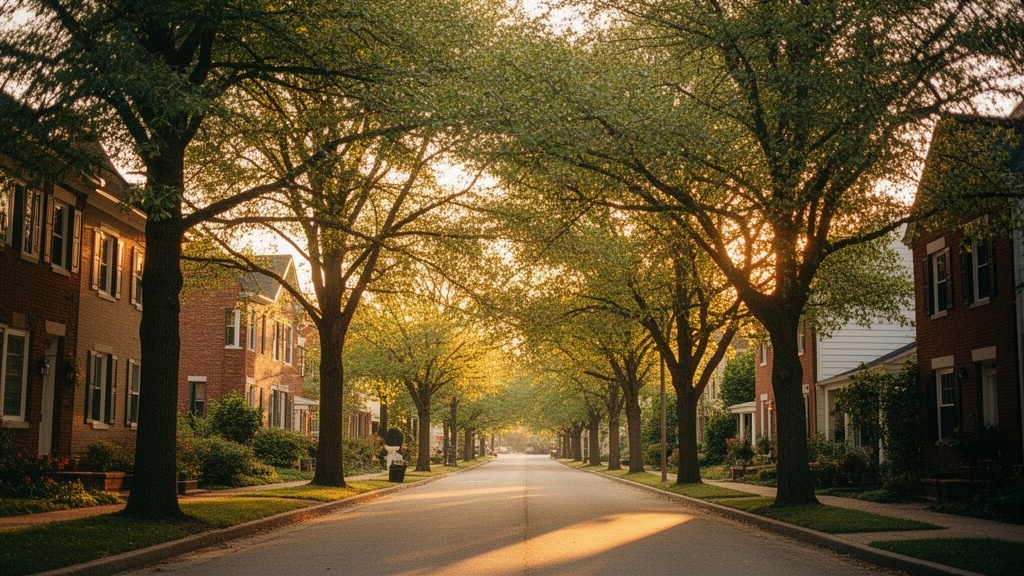
The street layout in South Hills is not a standard grid. Roads follow the natural contours of the hills, which means you will find curved streets, cul-de-sacs, and winding lanes that dead-end at ridgeline properties. Driveways are often steep. Many lots have significant grade changes from front to back, which affects yard usability and landscaping. This is simply the nature of building on hillside terrain in the Kanawha Valley, and buyers who are new to West Virginia should factor that into their expectations.
2. Housing Stock and Home Prices in South Hills
South Hills offers a wide range of housing styles and price points, from modest ranch homes to larger brick colonials. The neighborhood developed primarily between the 1940s and the 1980s, so the dominant architectural styles are mid-century ranch, split-level, and traditional two-story homes. You will also find a smaller number of newer custom builds on the upper ridgelines where lots were developed later. Brick exteriors are common, and lot sizes tend to be larger than what you would find in older in-city neighborhoods like the East End.
What Types of Homes Are Available
Ranch-style homes are the most common single-story option in South Hills, typically ranging from 1,200 to 2,000 square feet. Split-level homes are also plentiful, often offering three to four bedrooms across their staggered floor plans. Two-story colonials and cape cods appear throughout the neighborhood, particularly on the larger lots closer to the ridgeline. Garages are standard on most properties, which is a practical advantage given the hillside terrain and West Virginia winters.
Condominiums and townhomes exist in South Hills but are not the dominant housing type. The neighborhood is primarily single-family residential. If you are looking for a condo or attached home, you will find more options in areas like downtown Charleston or along the US-60 corridor in Kanawha City. For a broader look at Charleston's housing landscape, the South Hills Neighborhood Guide on Homes.com provides additional inventory context that is worth reviewing alongside current MLS listings.
Price Ranges in September 2026
As of September 2026, South Hills sits at a moderate to upper-moderate price tier within the Charleston market. Entry-level homes in the neighborhood, typically smaller ranches or older split-levels that need updating, are available in the $150,000 to $220,000 range. Move-in-ready mid-range homes with updated kitchens and three or four bedrooms generally fall between $230,000 and $380,000. Larger or fully renovated properties on premium lots can reach $400,000 to $550,000 or above, particularly those with views or significant square footage.
These price ranges reflect the neighborhood's position as one of Charleston's more established residential areas with consistent demand. Inventory in South Hills tends to move at a reasonable pace because the neighborhood draws both local buyers upsizing within Charleston and out-of-state relocators who want proximity to downtown without living directly in it.
3. Getting Around: Commutes and Connectivity
Commute times from South Hills to most Charleston destinations are short by most standards. Driving is the primary mode of transportation, as is the case throughout the Kanawha Valley. The neighborhood does not have a dedicated transit hub, and most residents rely on personal vehicles for daily errands and work travel. That said, the road connections out of South Hills are well established.
Driving to Downtown Charleston
From the interior streets of South Hills, reaching the West Virginia State Capitol or the downtown Charleston core typically takes 10 to 15 minutes by car under normal traffic conditions. The most common routes drop down from the hillside via connector roads to MacCorkle Avenue Southwest or Washington Street West, both of which feed into the city's primary east-west corridors. Morning rush hour adds 5 to 10 minutes on average, which is modest compared to commute patterns in larger metro areas.
Access to Major Roads and Employers
Interstate 64 and Interstate 77 are both accessible within 10 to 15 minutes from South Hills, connecting residents to the broader West Virginia highway network. Charleston Area Medical Center (CAMC), one of the region's largest employers, is reachable in roughly 10 minutes from most South Hills addresses. CAMC's General Hospital campus sits on Brooks Street in central Charleston, and the Women and Children's Hospital campus on MacCorkle Avenue is even closer to the South Hills corridor.
Other major employers within practical commuting distance include the West Virginia state government agencies concentrated near the Capitol, the federal courthouse complex downtown, and West Virginia University's Charleston campus on Quarrier Street. Residents who work in Teays Valley or the South Charleston industrial corridor can reach those areas via I-64 West in 15 to 25 minutes depending on the specific destination.
4. Parks, Amenities, and Daily Errands
South Hills residents have solid access to both green space and everyday retail without needing to travel far. The neighborhood's hillside position means that some of the most accessible outdoor space is literally the terrain itself, with wooded lots and natural ridge areas throughout. But there are also developed parks and commercial centers within a short drive.
Outdoor Spaces Near South Hills
Coonskin Park, operated by the Kanawha County Parks and Recreation Commission, is one of the most significant outdoor destinations near South Hills. Located off Coonskin Drive, it covers hundreds of acres and includes walking trails, a disc golf course, a pool, picnic areas, and athletic fields. It is roughly 10 to 15 minutes from the South Hills core and serves as the primary large-format park for residents in this part of Charleston.
The Kanawha State Forest is another major outdoor resource accessible from South Hills. The forest covers more than 9,000 acres and offers hiking trails, mountain biking, horseback riding, and primitive camping. Its entrance is located off Loudon Heights Road, which is reachable in under 20 minutes from most South Hills addresses. For residents who want regular access to wooded trails without leaving the Charleston area, this is a meaningful asset.
Shopping, Dining, and Services
For grocery shopping, South Hills residents most commonly use the stores along MacCorkle Avenue Southwest and the Oakwood Road corridor. Kroger and other grocery options are within 5 to 10 minutes of the neighborhood. The Southridge Centre shopping area, which includes a Target, various restaurants, and national retailers, is accessible via I-64 in approximately 10 to 15 minutes and is one of the more complete retail destinations in the greater Charleston area.
Downtown Charleston's dining scene is a short drive away and includes locally owned restaurants, breweries, and the Charleston Town Center mall area. The Elk City neighborhood and the West Side commercial strip along Quarrier Street offer additional dining variety. South Hills residents are close enough to use downtown Charleston regularly without being in the middle of it.
5. What the Day-to-Day Living Experience Feels Like
People who ask what it is actually like to live in the South Hills neighborhood of Charleston WV often want to understand the texture of daily life, not just the statistics. The honest answer is that South Hills has the feel of an established residential neighborhood where homes are well maintained, streets are quiet on weekday evenings, and neighbors tend to stay for years rather than turning over frequently. It is not a trendy or rapidly changing area; it is a stable, mature neighborhood with deep roots in Charleston's residential history.
Neighborhood Pace and Character
The pace in South Hills is unhurried. You will not find a walkable main street with coffee shops and boutiques within the neighborhood itself. The commercial activity is concentrated along the arterial roads at the neighborhood's edges, which means the interior streets stay primarily residential and quiet. Residents who want walkable retail access tend to drive to it rather than walk, which is typical of most Charleston neighborhoods outside of the downtown core.
The hillside setting also shapes daily life in practical ways. Winters in Charleston bring ice and occasional snow, and steep driveways in South Hills require attention during those periods. Most long-term residents keep a vehicle with all-wheel or four-wheel drive for this reason. The flip side is that the elevation keeps some of the summer heat slightly more tolerable than the valley floor, and the tree canopy throughout the neighborhood adds shade during warm months.
You can find additional neighborhood data, including housing density and age of housing stock, through the NeighborhoodScout profile for South Hills, Charleston WV 25314, which aggregates census and property data in a useful format for people doing relocation research.
Schools and Education Resources
South Hills falls within the Kanawha County Schools district. Specific school assignments depend on your exact address within the neighborhood, as attendance zones can shift over time. The West Virginia Department of Education and the Kanawha County Schools website publish current attendance boundary maps and school performance data, and those are the right places to verify which schools serve a specific property. This is a personal research step that every buyer with school-age children should complete directly rather than relying on neighborhood generalizations.
Private school options in the greater Charleston area include several parochial and independent schools, most of which are located within 15 to 25 minutes of South Hills. If private education is part of your household's plan, researching those options alongside the public school boundaries is worth doing early in your home search. If you are new to Charleston entirely, the Moving to Charleston: A Complete Relocation Guide on this site covers the broader context of living in the city and is a useful companion read.
FAQ
How far is South Hills from downtown Charleston WV?
South Hills is approximately 2 to 4 miles from the downtown Charleston core and the West Virginia State Capitol complex. Under normal traffic conditions, most South Hills addresses are a 10 to 15 minute drive from downtown. The route typically uses MacCorkle Avenue Southwest or Washington Street West as the primary connectors to the city's main corridors. Morning rush hour adds roughly 5 to 10 minutes in most cases.
What are home prices like in the South Hills neighborhood of Charleston WV?
As of September 2026, South Hills home prices range from roughly $150,000 for entry-level ranches or older split-levels needing updates, up to $400,000 or more for fully renovated or larger properties on premium lots. The mid-range sweet spot, covering move-in-ready three and four bedroom homes, tends to fall between $230,000 and $380,000. Prices vary significantly based on lot position, square footage, and the extent of any recent renovations. Inventory moves at a consistent pace because the neighborhood draws steady demand from both local and relocating buyers.
What outdoor activities are available near South Hills in Charleston WV?
South Hills residents have access to two major outdoor destinations within a short drive. Coonskin Park, about 10 to 15 minutes away, offers walking trails, a disc golf course, a pool, and picnic areas across hundreds of acres. The Kanawha State Forest, accessible via Loudon Heights Road in under 20 minutes, covers more than 9,000 acres and includes hiking trails, mountain biking routes, horseback riding areas, and primitive camping. The wooded, hillside character of the neighborhood itself also means many properties back up to natural terrain with mature trees.