← Back to Blog
Market Trends
Palestine, Texas Real Estate Market Guide: Prices, Neighborhoods and Timing
By Charli Hill
Landmark Realty
October 10, 2026 · 12 min read
This Palestine, Texas real estate market guide covers what you actually need to know before buying, selling, or relocating here: current price ranges, what different parts of town look like on the ground, and how to think about timing your move in September 2026. Whether you are comparing neighborhoods or trying to read the market, this guide gives you a concrete starting point.
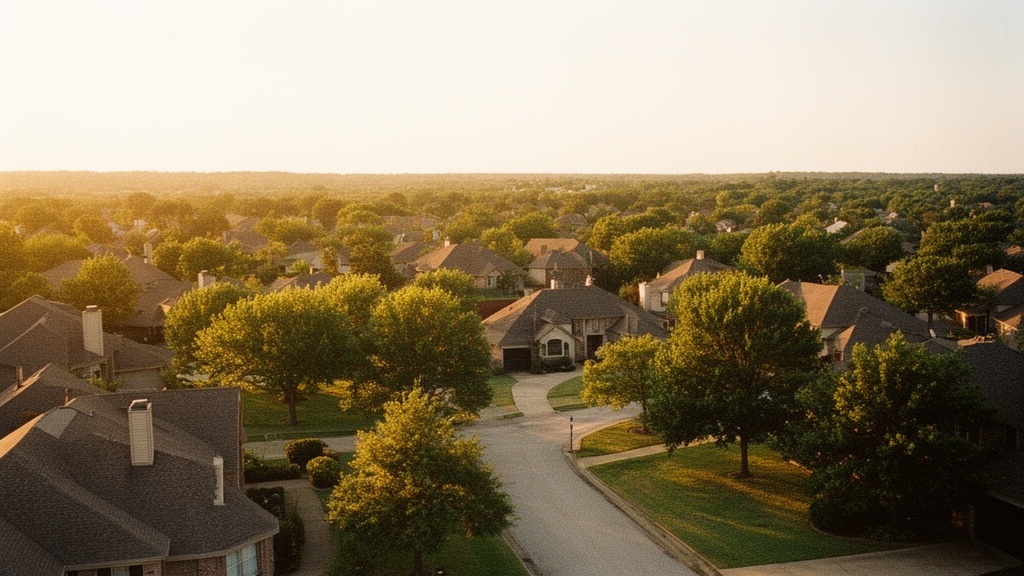
1. What Home Prices Look Like in Palestine, Texas Right Now
Median home prices in Palestine, Texas currently sit in the low-to-mid $100,000s for the bulk of the existing housing stock, with move-in-ready updated homes and larger properties pushing into the $200,000s and above. That range makes Palestine one of the more accessible ownership markets in East Texas, particularly for buyers coming from larger metros where comparable square footage costs two or three times as much.
The Current Price Range
Entry-level homes in Palestine, typically older wood-frame houses on established lots, regularly list in the $80,000 to $120,000 range. Renovated bungalows, brick ranch-style homes with three bedrooms, and properties with larger lots tend to price between $130,000 and $200,000. Newer construction and homes on acreage outside the city limits can reach $250,000 to $350,000 or higher depending on land size and finishes.
For current tracked figures, Zillow's Palestine, TX home values page publishes updated median sale price and price-per-square-foot data that you can check at any point. Tracking that number month over month gives you a reliable read on whether prices are holding, rising, or softening in real time.
Days on market is the other number worth watching alongside price. When homes are sitting for 60 or more days, buyers have room to negotiate. When well-priced homes are going under contract in under 30 days, sellers hold more leverage. Both conditions have appeared in Palestine at different points over the past two years, so current inventory levels matter more than any single headline figure.
How Palestine Compares to Nearby East Texas Markets
Palestine sits in Anderson County, roughly 110 miles southeast of Dallas and about 45 miles south of Tyler. Tyler, as the regional hub, carries noticeably higher median prices, often $50,000 to $100,000 above Palestine for comparable square footage. Nacogdoches and Jacksonville fall closer to Palestine's price range, though each has its own inventory mix. For buyers relocating from the Metroplex who want acreage, a historic home, or a lower monthly payment, Palestine's price point relative to drive time to Dallas is a meaningful factor in the decision.
If you want to track how Palestine's appreciation rate compares to state and national averages over longer time horizons, NeighborhoodScout's Palestine real estate data breaks down annual appreciation figures going back several years, which helps put the current market in context.
2. A Look at Palestine's Neighborhoods and Housing Stock
Palestine's housing stock is diverse in a way that smaller East Texas cities often are not. You can find Victorian-era homes on wide shaded lots, mid-century brick ranches, 1970s and 1980s construction on quiet cul-de-sacs, and newer subdivisions with open floor plans, all within a city of roughly 18,000 people. Understanding what each part of town offers physically helps buyers narrow their search before they ever step foot inside a house.
Historic Downtown and Surrounding Streets
The area around downtown Palestine, centered on the square along Spring Street and Oak Street, contains some of the city's oldest residential architecture. Two-story Victorian and Craftsman homes on large lots, many with original hardwood floors and covered front porches, are common within a few blocks of the historic district. These properties often need updating, which is reflected in their prices, but they offer square footage and architectural detail that newer construction rarely matches at the same price point.
Palestine's downtown itself is walkable to local restaurants, the Palestine Community Forest trails, and the Texas State Railroad depot, which is a draw for buyers who want to be close to the city's cultural core. The historic district is listed on the National Register of Historic Places, which means some properties may qualify for preservation-related tax incentives worth researching with a tax professional.
Midtown and Established Residential Areas
Moving outward from downtown, the midtown corridors along Loop 256 and the streets radiating off Highway 79 contain the largest share of Palestine's existing housing inventory. These are predominantly brick ranch-style and traditional homes built between the 1950s and 1990s, sitting on lots ranging from a quarter-acre to nearly an acre in some cases. Three-bedroom, two-bath homes in this range typically price between $110,000 and $175,000 depending on condition and updates.
These established streets are close to Palestine Regional Medical Center, Walmart, and the commercial corridor along Palestine Avenue, which means most daily errands are within a five to ten minute drive. Lot sizes in this zone are generally larger than what buyers find in comparable price ranges in Tyler or Longview, which is a practical consideration for anyone who wants outdoor space or room for a workshop or garden.
Newer Subdivisions on the North and West Sides
Palestine's newer residential development has concentrated primarily on the north and west sides of the city, with subdivisions built largely from the late 1990s through the present. These homes feature open-concept layouts, attached garages, and updated kitchens and baths as standard. Square footage tends to run from 1,400 to 2,200 square feet, with prices in the $175,000 to $280,000 range for most listings.
Buyers who want a home that requires minimal immediate work often look here first, since the mechanical systems, roofs, and HVAC units are newer and carry less deferred maintenance risk. The tradeoff compared to midtown properties is generally smaller lot sizes and more uniform streetscapes, which some buyers prefer and others find less appealing.
Rural and Lake Properties Near Palestine
Anderson County surrounding Palestine offers a substantial inventory of rural properties, from small ranchettes of two to five acres to larger tracts with ponds, timber, and pasture. Palestine's position near Lake Palestine, a 25,560-acre reservoir roughly 15 miles to the northwest, also means lakefront and lake-access properties are part of the local market. Waterfront homes on Lake Palestine range widely, from modest pier-and-beam cabins priced in the $150,000s to larger custom homes on the water asking $400,000 and up.
Rural properties outside city limits often use well water and septic systems, which require inspection and testing as part of any due diligence process. Buyers new to rural ownership should budget for those inspections and factor in the cost of maintaining a longer driveway, larger lot, and any outbuildings on the property.
3. What Drives the Palestine Market: Local Economy and Demand
Palestine's real estate market is shaped by a combination of stable local employment, steady in-migration from larger Texas cities, and a growing remote-work buyer segment. Understanding those demand drivers helps both buyers and sellers anticipate where prices are likely to move.
Major Employers and Economic Anchors
Palestine Regional Medical Center is one of the city's largest employers, drawing healthcare workers who need housing within a reasonable commute of the hospital on Loop 256. The Palestine Independent School District is another major employer, as is the Texas Department of Criminal Justice, which operates facilities in the region. Manufacturing and distribution operations in Anderson County add to the employment base, including operations tied to the oil and gas sector that runs through East Texas.
Tourism tied to the Texas State Railroad, the Dogwood Trails festival each spring, and outdoor recreation at Davey Dogwood Park and the Palestine Community Forest also brings seasonal economic activity into the city. These aren't primary housing demand drivers, but they support local retail and services, which in turn supports the stability of the residential market.
Relocation Demand and Remote Workers
A meaningful share of Palestine's buyer pool in recent years has come from buyers relocating from the Dallas-Fort Worth Metroplex, Houston, and Austin. The appeal is straightforward: Palestine is roughly 110 miles from Dallas, close enough for occasional trips but far enough to access significantly lower home prices and a slower pace. Remote and hybrid workers who need to be in a major city only a few days a month have found Palestine's price-per-square-foot ratio compelling.
This relocation demand has been one of the factors supporting prices in Palestine even during periods when the broader national market softened. Sellers with well-maintained homes have benefited from buyers who are motivated, pre-approved, and often willing to move quickly once they find the right property. For a deeper look at how the buyer side of the equation has been playing out, the article on whether the Palestine market is favorable for buyers covers current conditions in more detail.
4. Timing Your Buy or Sale in Palestine, Texas
Timing in the Palestine market follows some of the same seasonal rhythms as the broader Texas market, but with some local nuances worth understanding before you decide when to list or make an offer.
Seasonal Patterns in the Palestine Market
Spring is historically the most active season for Palestine real estate. Listings that come on in late February through May tend to see the most foot traffic and the fastest contract timelines. The Dogwood Trails festival in late March and early April draws tens of thousands of visitors to Palestine each year, and a portion of those visitors are prospective buyers who use the trip to explore the area. Sellers who list in that window benefit from that increased local awareness.
Summer activity typically holds reasonably well through July, then slows in August as the heat peaks and families settle before the school year. Fall brings a secondary wave of activity from October through November, as buyers who missed spring listings re-enter the market and sellers who need to move before year-end become more motivated. December and January are the slowest months, with fewer listings and fewer buyers actively searching.
What September 2026 Looks Like for Buyers and Sellers
Right now, in September 2026, Palestine sits in the transitional period between summer and fall activity. Inventory that did not sell over the summer is still on the market, and some of those sellers are open to negotiation after extended days on market. At the same time, motivated buyers who want to close before the holiday season are actively searching, which means well-priced, move-in-ready homes are still moving at a reasonable pace.
For sellers considering whether now is the right moment, the article on whether it is a good time to sell in Palestine, Texas walks through the current conditions in more depth, including how to price competitively for a fall listing.
For buyers, September is worth acting on rather than waiting. Homes that close in September and October allow buyers to be settled before the holidays, and sellers who have been on the market since summer are often more flexible on price and terms than they were at the peak of spring activity. Getting pre-approved now and working with an agent who knows which listings have room to negotiate can make a real difference in the final purchase price.
If you want to understand how quickly homes are actually moving right now compared to earlier in the year, the piece on which realtors in Palestine sell homes fastest gives useful context on average days-on-market and what drives faster sales.
5. What to Know Before You Make a Move in Palestine
Beyond price and timing, there are practical considerations that shape the experience of buying or selling in Palestine that this market guide would be incomplete without addressing.
Due Diligence Specifics for Palestine Buyers
Older homes in Palestine's historic and midtown areas often have deferred maintenance that is not visible at a showing. Foundation issues related to East Texas clay soil are common and worth inspecting carefully. A licensed foundation inspector separate from the general home inspector is worth the cost on any home built before 1985. Similarly, older homes may have original cast-iron or galvanized plumbing that can be expensive to replace, so a plumbing scope is a reasonable addition to your inspection package.
Flood zone status is another item to verify before making an offer, particularly for properties near Kickapoo Creek or other waterways that run through Anderson County. Your lender will require flood insurance if the property is in a designated flood zone, which adds to monthly carrying costs. Checking the FEMA flood map for the specific parcel before you fall in love with a property saves time and potential disappointment later.
Pricing Your Home Correctly for the Palestine Market
Palestine's market is local enough that national pricing tools often miss the mark. Automated valuation models from major real estate portals frequently over-estimate or under-estimate value because comparable sales data is thinner in a city this size compared to a major metro. A comparative market analysis built from actual closed sales within the past 90 days, in the same part of town, with similar square footage and lot size, is the only reliable way to price a Palestine home correctly.
Overpricing in a smaller market like Palestine carries a steeper penalty than in larger cities. The buyer pool is smaller, so a home that sits for 45 or 60 days becomes visible to every active buyer in the market, and extended days on market signals to buyers that something may be wrong even when the only issue was an aggressive initial price. Starting at the right number is more important here than in a high-volume market where new buyers are constantly entering the pool.
For sellers weighing their options right now, the article on what home prices have been doing in Palestine over the last year gives a useful baseline for understanding where values have moved and what that means for your list price strategy.
Schools, Services, and Researching Palestine for a Relocation
If you are relocating to Palestine from another city, school and community research is a personal process that should come from primary sources. The Texas Education Agency publishes campus and district accountability data at tea.texas.gov, which gives you objective performance information for Palestine ISD schools directly from the state. For community services, the City of Palestine's official website at cityofpalestine.com covers utilities, parks, and municipal services in detail.
Palestine Regional Medical Center on Loop 256 is the primary hospital serving Anderson County, with emergency services and a range of specialty clinics. For specialized care, Tyler's UT Health and Christus Trinity Mother Frances facilities are roughly 45 miles north, a drive that most residents consider manageable for non-emergency appointments.
FAQ
What is the typical price range for homes in Palestine, Texas in 2026?
Most of Palestine's existing housing stock sells in the low-to-mid $100,000s, with updated and larger homes ranging from $150,000 to $250,000 and newer construction or acreage properties reaching $280,000 to $350,000 or more. Entry-level properties, including older wood-frame homes that need work, can be found below $100,000. Waterfront homes on Lake Palestine, located about 15 miles northwest of the city, range from the $150,000s for modest cabins to well over $400,000 for larger custom builds. These ranges shift with inventory and market conditions, so checking current listings alongside a local comparative market analysis gives you the most accurate picture.
Is September a good time to buy a home in Palestine, Texas?
September sits in a transitional window that can work well for buyers. Summer inventory that did not sell is still available, and sellers who have been on the market for 60 or more days are often more open to negotiating on price and terms than they were in spring. Motivated buyers who want to close before the holiday season are also active, so well-priced homes are still moving. The practical advantage of buying in September is that you can close and be settled before November, which is more comfortable than trying to move during the December holiday period. Getting pre-approved before you start touring homes is the most important step in making a September purchase work smoothly.
What should I know about Palestine's housing stock before buying?
Palestine has a wide range of housing types, from Victorian and Craftsman homes near the historic downtown to mid-century brick ranches in established midtown neighborhoods to newer open-concept construction on the north and west sides of the city. Older homes often have clay-soil foundation considerations that are worth inspecting carefully, and properties built before 1985 may have original plumbing or electrical systems that need updating. Rural and lake properties outside city limits typically use well water and septic systems, which require their own inspections and ongoing maintenance. Understanding which part of town and which era of construction matches your priorities narrows the search considerably and helps you budget for realistic maintenance costs from the start.