

← Back to Blog
Local Living
How Far Is Palestine Texas from Tyler and What Is the Commute Like on Highway 79
By Charli Hill
Landmark Realty
September 13, 2026 · 11 min read
If you are weighing a move to Palestine, Texas and work in Tyler, the first question on your mind is probably how far is Palestine Texas from Tyler and what is the commute like on Highway 79. The straight answer: Palestine sits roughly 55 miles southwest of Tyler, and the drive on Highway 79 typically runs between 55 and 70 minutes depending on time of day and where in Tyler you are headed. This article breaks down the full commute picture, what the road is actually like, and why that drive is one of the most common trade-offs buyers are making in Anderson County right now.
1. The Distance and Drive Time from Palestine to Tyler
Palestine, Texas is approximately 55 miles from Tyler by road. The most direct and commonly used route is Highway 79, which connects the two cities in a fairly straight northeast corridor through East Texas. Google Maps typically shows 55 to 65 minutes for this drive under normal conditions, but real-world commuters report times closer to 60 to 75 minutes when accounting for traffic at the Tyler end, school zone slowdowns, or construction near the Loop 323 interchange in Tyler.
Miles and Route Overview
Starting from downtown Palestine at the intersection of Spring Street and Oak Street, you head northeast on US Highway 79 through Anderson County, then into Cherokee County, and finally into Smith County before reaching Tyler. The route passes through or near the small communities of Rusk, Jacksonville, and Gallatin before the road transitions into the heavier commercial and residential corridors approaching Tyler. The total mileage from Palestine city limits to Tyler city limits is right around 53 to 56 miles depending on your exact starting and ending points.
Some commuters who work on the south side of Tyler near Bergfeld Park or UT Health East Texas shave a few minutes off by using alternate surface roads once they enter Smith County. Those headed to the University of Texas at Tyler campus on the north side of the city add a few minutes to navigate through the city itself.
Realistic Drive Times by Time of Day
The Palestine to Tyler commute on Highway 79 is not a rush-hour nightmare by big-city standards, but it is not uniform throughout the day either. Morning departures between 7:00 and 8:30 a.m. from Palestine typically arrive in Tyler in 60 to 70 minutes because traffic begins to stack up on Loop 323 and South Broadway Avenue as you enter Tyler. Midday travel is the most predictable, running 55 to 60 minutes. Afternoon return trips leaving Tyler between 4:30 and 6:00 p.m. add 10 to 15 minutes in most cases, particularly if you exit onto Broadway or Gentry Parkway during peak retail hours.
Friday afternoons tend to be the slowest direction heading back toward Palestine, especially during fall football season when traffic around Tyler Legacy and John Tyler high school campuses creates brief but real congestion. Weekends and holidays are consistently the fastest, often under 55 minutes door to door.
2. What Highway 79 Is Actually Like to Drive
Highway 79 is a two-lane and four-lane divided highway depending on the segment, and it runs through some genuinely scenic East Texas terrain. Most of the route is posted at 70 mph through the rural stretches, dropping to 55 and 45 mph through the towns of Rusk and Jacksonville. The road is well-maintained overall, though there are sections between Rusk and Jacksonville where passing zones are limited and slower trucks or farm equipment can affect your pace during certain seasons.
Road Conditions and Character
The Palestine to Tyler stretch of Highway 79 passes through rolling pine and hardwood forests through Cherokee County, which makes it one of the more pleasant commutes in East Texas visually. There are no major mountain grades or sharp elevation changes, so the drive is smooth and predictable. TxDOT has completed several resurfacing projects along this corridor in recent years, and the pavement quality between Palestine and Jacksonville is noticeably better than it was five years ago.
One section to be aware of: the stretch through Rusk near the Cherokee County courthouse area narrows and has a few signalized intersections that can add three to five minutes if you hit red lights. This is a small town, not a traffic bottleneck, but it is worth knowing if you are timing the commute precisely.
Towns and Stops Along the Way
The route passes through Rusk, the Cherokee County seat, at roughly the halfway point. Rusk has a Dollar General, a couple of fast-food options, and a gas station, making it a reasonable midpoint stop if you need coffee or fuel. Jacksonville, about 15 miles further northeast, is a larger community with a Walmart, several chain restaurants, and a full-service H-E-B grocery store. Many Palestine-to-Tyler commuters stop in Jacksonville on the way home rather than driving all the way back into Palestine for errands, which effectively shortens the practical impact of the commute on daily life.
Fuel and Services on the Route
Fuel is available in Palestine before you leave, in Rusk at the midpoint, and throughout Jacksonville and Tyler. Gas prices along this corridor tend to run within a few cents of each other, though Palestine prices occasionally run slightly lower than Tyler due to the difference in market size. There is no stretch of Highway 79 between Palestine and Tyler where you would be more than 20 to 25 miles from a fuel stop, so range anxiety is not a factor even for smaller fuel tanks.
3. Why People Make This Commute: The Housing Cost Equation
The Palestine to Tyler commute on Highway 79 has become increasingly common because the housing price difference between the two markets is substantial. Buyers who work in Tyler but purchase in Palestine are often trading 60 minutes of drive time for significantly more house, more land, or both. That trade-off is driving real activity in the Palestine market right now, and it is something Charli Hill at Landmark Realty sees reflected in buyer conversations on a regular basis.
Palestine Home Prices vs. Tyler Home Prices
As of September 2026, median home prices in Palestine, Texas are running in the low-to-mid $180,000s for a three-bedroom home, with entry-level inventory available in the $130,000 to $160,000 range. Tyler's median sale price sits considerably higher, with the Tyler metro area frequently posting medians above $280,000 and established neighborhoods on the south and west sides of Tyler regularly trading above $320,000 to $400,000. You can review current affordability context from the National Association of REALTORS housing affordability research to understand how these price gaps play out nationally, but in the Palestine-to-Tyler corridor the gap is pronounced and well-documented locally.
For buyers curious about what is happening specifically in Palestine's market right now, the article on home prices in Palestine, Texas over the last year gives a detailed breakdown of where values have moved and what buyers and sellers can realistically expect.
What Your Dollar Buys in Palestine
In Palestine, a budget of $200,000 typically gets you a three-bedroom, two-bathroom home on a quarter-acre to half-acre lot, often with a garage and a covered porch. Many of the homes in Palestine's established neighborhoods near Loop 256 and along the Westwood Drive corridor were built between the 1970s and 1990s, with solid brick construction and mature trees. For buyers who want new construction, there are subdivisions on the northern and western edges of Palestine where new builds are coming in around $220,000 to $260,000 for 1,400 to 1,800 square feet.
The Forbes Advisor cost of living calculator for Tyler, TX offers a useful comparison tool if you want to run specific numbers on what your current budget would look like in the Tyler market versus Palestine. The difference in property taxes, insurance costs, and purchase price can add up to thousands of dollars per year in savings for buyers who choose Palestine and commute.
Forbes has also noted that small towns in Central and East Texas are drawing more attention from buyers priced out of larger metros, a trend that is very visible in Palestine right now. You can read more about that dynamic in Forbes Global Properties coverage of small Texas towns, which captures the broader pattern driving buyers toward communities like Palestine.
4. Practical Commuter Tips for the Palestine to Tyler Drive
Knowing the distance is one thing; building a commute routine that works is another. Most people who make the Palestine to Tyler drive on Highway 79 regularly find it manageable within the first month, particularly because the route lacks the stop-and-go congestion of a true urban commute. The key is understanding the variables that can stretch your drive and planning around them.
Timing Your Departure
Leaving Palestine before 7:00 a.m. puts you into Tyler well ahead of the peak traffic window and consistently delivers sub-60-minute trips. If your work schedule allows a 7:30 start in Tyler, you need to leave Palestine no later than 6:30 a.m. to have a comfortable buffer. On the return, leaving Tyler by 4:00 p.m. or after 6:30 p.m. avoids the worst of the afternoon slowdowns on Loop 323 and the South Broadway corridor.
Weather and Seasonal Considerations
East Texas winter weather is relatively mild compared to North Texas, but ice events do occur on Highway 79 between January and early March. The rural stretches through Cherokee County are particularly susceptible to black ice on bridge decks and low-lying areas during freezing rain events, which happen a few times per winter season on average. TxDOT's alert system and local radio stations in Palestine and Tyler both broadcast road condition updates during these events. Most experienced commuters on this route keep an extra 20 to 30 minutes in their schedule on any morning with overnight temperatures below 32 degrees.
Summer thunderstorms, which are frequent in East Texas from May through September, can reduce visibility on Highway 79 quickly. The two-lane sections through Cherokee County have limited shoulders, so heavy rain events warrant slowing to well below the posted speed limit. Most storms pass within 20 to 40 minutes, and pulling off in Rusk or Jacksonville to wait out a severe storm is a practical option.
Carpooling and Remote Work Hybrid Options
Several employers at UT Health East Texas, Christus Trinity Mother Frances, and the various industrial and distribution employers in Tyler have employees who live in Palestine and commute together. Informal carpool arrangements along this corridor are common and worth exploring through workplace connections before you move. For buyers with hybrid or remote work schedules, the commute becomes much more manageable: even two or three days per week in the office drops the weekly driving burden significantly and makes the Palestine housing value proposition even stronger.
5. What Palestine Offers When You Get Home
Understanding the commute is only half the picture. The other half is what Palestine itself delivers as a place to live day to day. For buyers making the Tyler commute trade-off, Palestine's local amenities are a meaningful part of the value equation, and the city has more to offer than its population of around 18,000 might suggest.
Downtown Palestine and Daily Amenities
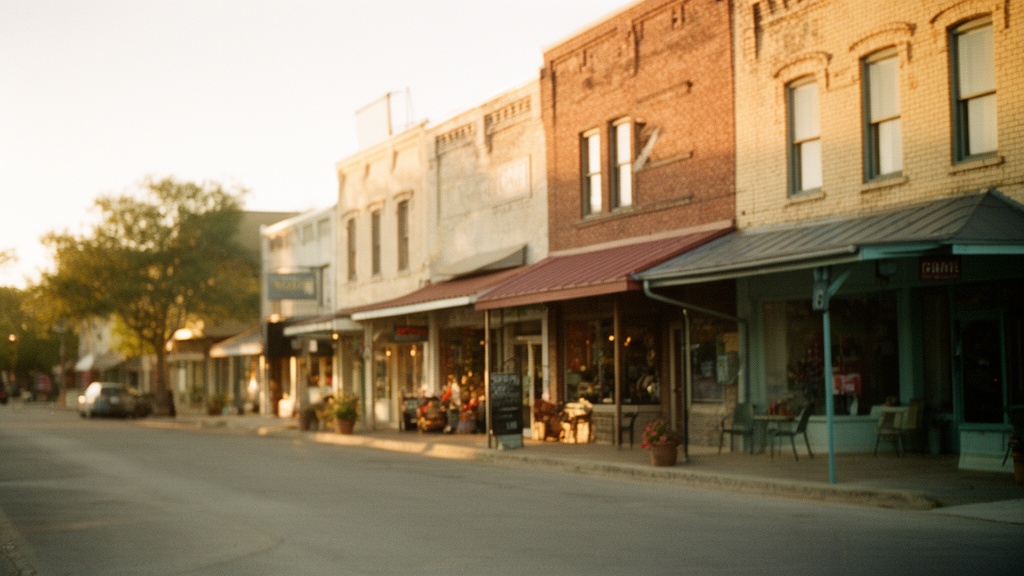
Downtown Palestine along Spring Street and Oak Street has seen consistent investment over the past several years, with locally owned restaurants, boutique shops, and the historic 1914 Courthouse anchoring the square. The Palestine H-E-B on Loop 256 handles most grocery needs, and there is a Brookshire Brothers location as well. For medical care, Palestine Regional Medical Center on South Loop 256 provides emergency and inpatient services, reducing the need to drive to Tyler for routine healthcare.
The Texas State Railroad, which runs steam and diesel excursion trains between Palestine and Rusk through the Piney Woods, is one of the most distinctive local attractions in any East Texas city. It draws visitors from across the state and gives Palestine a cultural identity that sets it apart from other small Texas cities of similar size.
Parks, Trails, and Outdoor Space
Palestine sits adjacent to Davey Dogwood Park, a 210-acre municipal park famous for its dogwood blooms each spring and its network of paved and unpaved trails. The park connects to the Palestine Trails system, which includes over 20 miles of multi-use paths winding through creek bottoms and pine forest. Gus Engeling Wildlife Management Area, about 20 miles northwest of Palestine off Highway 287, provides hunting, fishing, and wildlife observation across more than 10,000 acres of East Texas bottomland and upland habitat.
Community Character and Local Landmarks
Palestine has a walkable historic residential district east of downtown where Victorian-era homes on large lots sit along brick-paved streets. The Museum for East Texas Culture and the Howard House Museum give the city a preserved sense of its 19th-century history as a railroad town. The Palestine Civic Center and the Anderson County Fairgrounds host regular community events throughout the year, from the Dogwood Trails Festival each spring to holiday events in December.
For buyers thinking about Palestine ISD and how the school system is organized across the city, the article on what schools your kids would attend in Palestine and how Palestine ISD is set up covers the campus structure and what to research directly through the district before making a decision.
If you are also trying to understand whether now is the right moment to buy in Palestine given where the market stands, the overview of whether the Palestine housing market is favorable for buyers right now gives current context on inventory, pricing, and conditions as of September 2026.
FAQ
How far is Palestine Texas from Tyler by highway, and which route is fastest?
Palestine is approximately 55 miles from Tyler, and Highway 79 is the most direct and most commonly used route between the two cities. The drive runs northeast from Palestine through Rusk and Jacksonville before entering Tyler from the southwest. Under normal conditions this trip takes 55 to 65 minutes, though real-world commuters typically budget 65 to 75 minutes for morning and afternoon peak times. There is no significantly faster alternate route for the full distance; Highway 79 is the practical choice for daily commuters.
Is the Highway 79 commute from Palestine to Tyler stressful compared to a typical urban commute?
Most commuters describe the Palestine to Tyler drive on Highway 79 as low-stress compared to commutes in Dallas, Houston, or even central Tyler during peak hours. The majority of the route is open highway through rural East Texas with minimal traffic signals and no interchange congestion until you reach Loop 323 in Tyler. The main variables are slower vehicles on two-lane sections through Cherokee County, occasional school zone slowdowns in Rusk, and afternoon traffic on Tyler's south side. Commuters who time their departures around the peak windows generally find the drive routine within a few weeks.
What is the cost difference between buying a home in Palestine versus Tyler, and is the commute worth it financially?
As of September 2026, median home prices in Palestine are running in the low-to-mid $180,000s, while Tyler's median is frequently above $280,000 and established Tyler neighborhoods often trade well above $300,000. That gap of $80,000 to $120,000 or more in purchase price translates to a meaningful difference in monthly mortgage payments, property taxes, and homeowner's insurance. For buyers who commute five days per week, the added fuel cost of roughly $250 to $350 per month at current gas prices is typically far outweighed by the monthly savings on housing costs. Whether the commute is worth it depends on individual work schedules and lifestyle priorities, but the financial math is a primary reason buyers are actively choosing Palestine over Tyler right now.