
← Back to Blog
Local Living
Relocating to West Lake Hills, Texas: Neighborhoods, Costs and Timelines
By Crystal Olenbush
AustinRealEstate.com
September 16, 2026 · 12 min read
Relocating to West Lake Hills, Texas puts you inside a small, incorporated city of roughly 3,200 residents that sits entirely within Travis County, just five miles from downtown Austin. This guide covers what the housing stock actually looks like, what homes cost right now in September 2026, how the buying timeline unfolds, and what you need to know about commutes, utilities, and local amenities before you commit to a move.
1. What Makes West Lake Hills Different from the Rest of Austin
West Lake Hills is its own municipality. That single fact shapes almost everything about relocating to West Lake Hills, Texas. It is not a neighborhood inside Austin, not a subdivision, and not an unincorporated area. It is an independent city with its own city hall, its own code enforcement, and its own development standards, all packed into roughly 3.8 square miles west of MoPac Expressway.
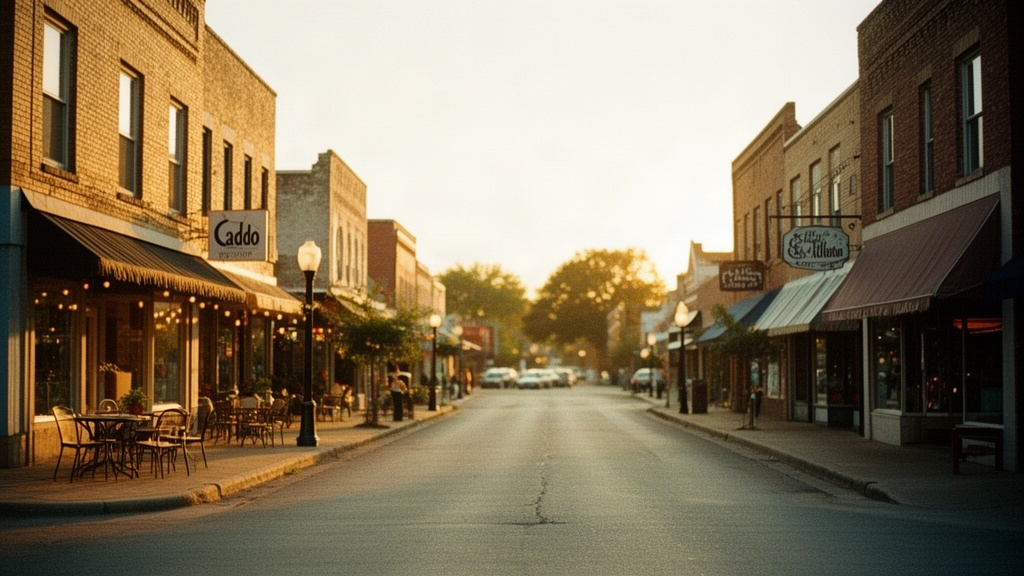
Because the city controls its own zoning, density has stayed low. You will not find apartment towers or large commercial strips inside the city limits. The streetscape is dominated by mature live oaks, cedar elms, and the rolling limestone terrain of the Texas Hill Country. That topography is not decorative; it is structural. Homes sit on hillsides, canyon edges, and flat creek-bottom lots, and the elevation changes dramatically from one street to the next.
A City Within a City
West Lake Hills is served by Eanes Independent School District, which operates separately from Austin ISD. For school-specific information, the Texas Education Agency's public data portal and the Eanes ISD website both publish enrollment, campus boundaries, and performance reports that you can review directly. School assignment is a personal research step every relocating buyer should complete before selecting a specific street or subdivision.
The city's governance structure also means permitting, setback rules, and tree ordinances are enforced locally rather than through the City of Austin. If you plan to remodel, add a pool, or expand a structure, you will deal with the West Lake Hills Building and Zoning department rather than Austin's Development Services. That process tends to be more predictable for homeowners who know what to expect going in.
Land, Lots, and Housing Stock
Lot sizes in West Lake Hills range widely, from quarter-acre in-fill lots near Bee Cave Road to multi-acre hillside parcels with canyon views. The housing stock reflects several decades of construction: you will find ranch-style homes from the 1960s and 1970s, transitional homes from the 1990s, and fully custom new builds completed within the last few years. Many lots that carried older structures have been torn down and rebuilt, so it is common to see a 2022 or 2023 construction home on a street lined with mid-century neighbors.
Square footage varies just as much as lot size. Smaller homes in the 1,800 to 2,400 square foot range exist, though they are not the majority. Most active listings in September 2026 fall between 3,000 and 5,500 square feet, with a meaningful share of custom builds exceeding 6,000 square feet. If you want detail on the luxury segment specifically, the article on the luxury home market in West Lake Hills covers that tier in depth.
2. Neighborhoods and Pockets to Know When Relocating to West Lake Hills, Texas
West Lake Hills does not have formally named subdivisions the way a master-planned community does. Locals and agents tend to identify areas by the main road that anchors them or by geographic features. Understanding these informal pockets helps you orient yourself before you start scheduling showings.
Westview Drive and Redbud Trail Corridor
The Westview Drive and Redbud Trail area sits in the eastern portion of the city, closest to MoPac and the Lake Austin waterfront. Redbud Trail itself runs along the lake, and several properties in this corridor have direct Lake Austin frontage or deeded water access. Homes here tend to be larger, newer, and priced at the top of the West Lake Hills range. The commute to downtown Austin from this pocket is roughly 10 to 14 minutes outside of peak traffic hours.
Lake Austin shoreline properties in this corridor involve a distinct set of considerations around dock permits, flood zone classifications, and LCRA regulations. If a waterfront home is on your list, the article on high-value home sales along the Lake Austin shoreline explains what buyers need to verify before making an offer.
Cuernavaca and the Northern Hillside Pockets
The Cuernavaca Drive area and the streets that branch off it to the north represent the hillside character that many buyers picture when they think of West Lake Hills. Lots here often back up to canyon drops or heavily wooded slopes. Homes sit at varying elevations, which means some properties have long-range views of the Austin skyline or the Hill Country, while others are tucked into the canopy with more privacy than view.
Construction in this pocket spans several decades, so you will encounter everything from a 1970s ranch that has been updated twice to a fully custom home completed in 2024. Lot sizes here frequently exceed half an acre, and some parcels run to one or two acres. Driveways can be steep, which is worth factoring in if you are relocating from a flat-terrain city and are not accustomed to that kind of access.
Bee Cave Road Frontage Areas
Bee Cave Road (FM 2244) is the main commercial spine that runs through and beyond West Lake Hills toward Bee Cave and Lakeway. Residential streets that feed off Bee Cave Road tend to offer slightly more accessible lots with less dramatic grade changes. Homes in this zone are often on the smaller end of the West Lake Hills spectrum, which can mean a lower entry price, though the trade-off is less seclusion and more road noise on streets close to the corridor.
This area also gives quick access to the Westbank Market shopping center, the West Lake Hills H-E-B on Bee Cave Road, and several local restaurants. For day-to-day errands, the Bee Cave Road corridor is the most convenient part of the city.
3. What It Costs to Buy a Home in West Lake Hills Right Now
West Lake Hills is one of the higher-priced residential markets in the Austin metro. In September 2026, the median sold price for a single-family home inside the city limits sits in the range of $2.1 million to $2.5 million, depending on the pocket and the size of the home. Entry-level inventory, meaning homes priced below $1.5 million, is limited and moves quickly when it appears. The upper end of the market, homes priced above $4 million, has seen steady activity from out-of-state buyers relocating from California, New York, and the Pacific Northwest.
Current Price Ranges by Home Size
Smaller homes in the 1,800 to 2,500 square foot range typically list between $1.2 million and $1.8 million in September 2026, though condition and lot position affect that range significantly. Mid-size homes between 3,000 and 4,500 square feet generally list from $2.0 million to $3.5 million. Larger custom builds above 5,000 square feet start around $3.8 million and can reach well above $7 million for waterfront or canyon-view properties with premium finishes.
Price per square foot in West Lake Hills currently runs between $550 and $900 for most non-waterfront homes, with lakefront and canyon-view properties commanding $1,000 per square foot and above. Those numbers have held relatively stable through the first half of 2026 after the correction that played out in 2023 and 2024. For a broader look at how pricing has shifted across the market, the West Lake Hills real estate market guide covers the full picture.
Property Taxes, HOA Fees, and Utility Costs
Texas has no state income tax, but property taxes are a real line item in West Lake Hills. The combined effective tax rate for properties inside the city limits typically falls between 1.6% and 1.9% of assessed value, which includes the Travis County rate, the Eanes ISD rate, and the City of West Lake Hills rate. On a home assessed at $2.2 million, that translates to roughly $35,000 to $42,000 per year in property taxes. Buyers relocating from low-tax states sometimes underestimate this number, so build it into your monthly budget before you start shopping.
Most streets in West Lake Hills have no HOA at all, which is one of the features that distinguishes it from master-planned communities in Bee Cave or Lakeway. A minority of newer homes or planned developments do carry HOA fees, typically in the $500 to $1,500 per year range when they exist. Utility costs vary by home size and whether the property uses Austin Water or a private well. Electric bills can run high in summer given the heat and the size of many homes; budgeting $400 to $700 per month for electricity from June through September is realistic for a home above 3,500 square feet.
For a detailed breakdown of ongoing living expenses beyond the purchase price, the article on the real cost of living in West Lake Hills is worth reading before you finalize your budget.
4. Commutes, Amenities, and Day-to-Day Life
West Lake Hills is close to everything Austin offers while remaining physically separate from it. That proximity is one of the primary reasons buyers choose to relocate here rather than to communities farther west along the 290 or 71 corridors. The trade-off is that the roads into and out of the city are limited, and peak-hour traffic on MoPac and Bee Cave Road can add meaningful time to a commute.
Getting to Downtown Austin and the Domain
Downtown Austin sits approximately 5 to 7 miles from the center of West Lake Hills. Off-peak, that drive takes 12 to 18 minutes via MoPac or via Westlake Drive and Lamar Boulevard. During the morning rush, roughly 7:30 to 9:00 a.m., the same trip can take 25 to 40 minutes depending on the route and the day. The MoPac Express Lane, which runs from Parmer Lane south to Slaughter Lane, does not directly serve the West Lake Hills access points, so most commuters use the general-purpose lanes or take surface streets through Tarrytown.
The Domain and the tech corridor along the North MoPac frontage road are roughly 20 to 28 minutes from West Lake Hills without traffic. Several major employers, including Apple's campus at the Domain, have offices in that corridor. Remote and hybrid workers who only commute two or three days per week find the distance manageable. Full five-day in-office commuters should drive the route at rush hour before committing to a specific address.
Parks, Trails, and the Barton Creek Greenbelt
West Lake Hills sits directly adjacent to the Barton Creek Greenbelt, one of Austin's most used open-space preserves. The Gus Fruh access point on Barton Hills Drive is roughly 10 minutes from most addresses in West Lake Hills and connects to miles of trail running along Barton Creek through limestone canyon terrain. The creek itself has several swimming holes that fill up on summer weekends.
Within the city, Emma Long Metropolitan Park is accessible via City Park Road just north of the West Lake Hills boundary, offering camping, boat ramps, and direct Lake Austin access. Bull Creek District Park is also nearby. Residents who prioritize outdoor recreation on water or on trail will find both options within a short drive without leaving the immediate area.
Local retail and dining along Bee Cave Road includes the Westbank Market center, several locally owned restaurants, a Whole Foods in the Westlake area, and the H-E-B on Bee Cave Road that serves as the primary grocery stop for most residents. The Hill Country Galleria in Bee Cave, about 8 miles west, adds a larger retail footprint with a movie theater, additional dining, and specialty retail.
5. The Buying Timeline: What to Expect When Relocating to West Lake Hills
The buying timeline in West Lake Hills is longer than in many Austin-area submarkets because inventory is thin and the price points involved require careful due diligence. Buyers who arrive without a clear picture of what they want, and without financing already structured, frequently lose homes to buyers who are better prepared. Understanding the typical sequence before you start looking saves time and frustration.
Pre-Approval Through Closing
At the price points common in West Lake Hills, most sellers expect either a strong pre-approval letter from a reputable lender or proof of funds for cash buyers before they will accept a showing on a serious offer. Jumbo loan products, which apply to most purchases here given that conforming loan limits for 2026 sit at $806,500, have their own underwriting requirements that differ from conventional financing. Getting a jumbo pre-approval in place before you tour homes is not optional; it is expected.
From the time you go under contract to the day you close, the typical timeline in West Lake Hills runs 30 to 45 days for financed purchases and 21 to 30 days for cash. The inspection period in Texas is typically the first 5 to 10 days of the contract, during which buyers use the Option Period to conduct inspections and negotiate repairs or credits. Given the age of some homes in the city, foundation inspections, septic evaluations on properties not connected to city sewer, and roof assessments are particularly important steps.
How Inventory Levels Affect Your Timeline
In September 2026, active inventory in West Lake Hills sits at roughly 3.5 to 4.5 months of supply, which places the market in a balanced to slightly buyer-favorable position compared to the tight seller's market conditions of 2021 and early 2022. That does not mean everything sits. Well-priced homes in the $1.5 million to $2.5 million range still attract multiple offers within the first two weeks. Overpriced listings, particularly those above $4 million, can sit for 90 to 180 days before sellers adjust.
If you are relocating from out of state and need to buy within a specific window, plan to spend at least two to three dedicated days touring homes in person. Most serious buyers who relocate to West Lake Hills from outside Texas take two to four months from initial search to closing, factoring in one or two trips to Austin, the contract and inspection period, and the time needed to arrange movers and school enrollment.
For sellers who are simultaneously listing a home in another market, coordinating the two closings requires careful planning. The article on selling a home in West Lake Hills outlines what that process looks like on the sell side if you are also listing a home here.
For more context on what the relocation process looks like from a logistics standpoint, Unicorn Moving's guide to living in West Lake Hills covers practical details about utilities, city services, and what to expect when you arrive.
FAQ
How long does it typically take to buy a home in West Lake Hills when relocating from out of state?
Most out-of-state buyers who are relocating to West Lake Hills, Texas complete the process in two to four months from the start of their active search to closing day. That timeline includes one or two in-person trips to Austin for showings, the contract period of 30 to 45 days for financed purchases, and time to arrange movers and transfer utilities. Buyers who arrive with a jumbo pre-approval already in hand and a clear sense of which pockets of the city interest them tend to move faster. Working with an agent who knows the inventory well cuts down the time spent on homes that will not work for your budget or criteria.
What is the realistic budget for buying a home in West Lake Hills, Texas in 2026?
In September 2026, the realistic entry point for a single-family home in West Lake Hills starts around $1.2 million for smaller or older homes that have not been fully updated. The median sold price sits in the $2.1 million to $2.5 million range, and a significant share of the market trades above $3 million. Beyond the purchase price, buyers should budget for property taxes at an effective rate of roughly 1.6% to 1.9% of assessed value, which on a $2 million home means approximately $32,000 to $38,000 per year. There are typically no HOA fees in most parts of the city, but utility costs for larger homes can run $400 to $700 per month in summer months.
Does West Lake Hills have its own city services, or does it rely on the City of Austin?
West Lake Hills is an independent incorporated city with its own city hall, building and zoning department, and code enforcement. It is not part of the City of Austin. However, many residents use Austin Water for water and wastewater service, and some properties on the western edge of the city rely on private wells or septic systems. Emergency services are provided through agreements with Travis County and Austin-area fire and EMS providers. The city's small size means local governance is accessible, and residents frequently attend city council meetings to weigh in on development decisions that affect the character of the neighborhood.