
← Back to Blog
Neighborhoods
What Kinds of Homes Are Available in Haddonfield NJ and What Architectural Styles Are Most Common
By Dae Jenkins
Real Brokers
September 18, 2026 · 11 min read
Haddonfield, New Jersey offers one of the most architecturally rich and varied housing inventories in all of Camden County, spanning nearly three centuries of building history. If you are wondering what kinds of homes are available in Haddonfield NJ and what architectural styles are most common, the short answer is: a lot more variety than most buyers expect. This guide walks through every major home type and style you will encounter as you shop the market.
1. The Overall Character of Haddonfield's Housing Stock
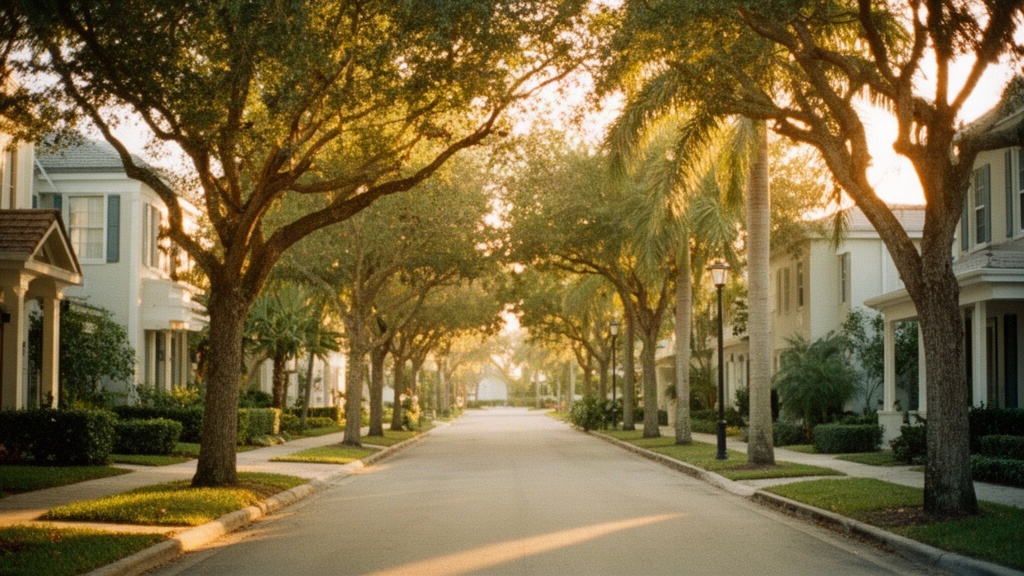
Haddonfield's housing stock is defined by age, variety, and preservation. The borough was incorporated in 1875, but settlement dates to the early 1700s, which means the oldest homes predate American independence. Unlike many South Jersey communities built out in the postwar era, Haddonfield grew slowly and organically over multiple centuries, which is why you can find an 18th-century Federal-style house sitting two blocks from a 1920s Craftsman bungalow and a 1950s Cape Cod.
The borough covers roughly 2.8 square miles, and the vast majority of its residential land is occupied by single-family homes on tree-lined streets. Kings Highway, the borough's main commercial corridor, is flanked by neighborhoods where homes sit on lots ranging from about 5,000 square feet for a compact Victorian twin up to half an acre or more for the larger estates along Ellis Street or Chews Landing Road.
A Borough Built Over Centuries
Because Haddonfield was never razed and rebuilt the way some urban neighborhoods were, it retains an unusually intact cross-section of American residential architecture. The New Jersey State Historic Preservation Office has recognized this, and a large portion of the downtown core sits within the Haddonfield Historic District, which is listed on the National Register of Historic Places. That designation shapes what owners can do with their properties and contributes directly to the architectural consistency visitors and buyers notice when they walk through town.
Lot Sizes and Street Patterns
Streets closer to Kings Highway and the PATCO Speedline station at Haddonfield tend to have narrower lots, sometimes 40 to 50 feet wide, where Victorian twins and rowhomes were built to maximize density in the late 1800s. Move outward toward the borough's edges near Crows Woods or toward the boundary with Cherry Hill, and lots open up considerably, with many single-family colonials and ranches sitting on 80-foot to 100-foot-wide lots with generous backyards.
2. The Architectural Styles Most Common in Haddonfield NJ
The most common architectural styles in Haddonfield NJ are Victorian, Colonial, Craftsman, Cape Cod, and Federal, with Victorian and Colonial homes making up the largest share of the inventory. Each era of construction left a distinct visual fingerprint on the streetscape, and understanding those styles helps buyers know what to expect in terms of floor plans, ceiling heights, maintenance needs, and renovation potential.
Victorian and Queen Anne Homes
Victorian homes, particularly the Queen Anne subtype, are the defining image of Haddonfield's residential character. Built primarily between 1870 and 1910, these houses feature steeply pitched rooflines, decorative wood trim called gingerbread, wraparound or partial front porches, bay windows, and asymmetrical facades. Many have three full stories, with the third floor tucked under a steeply gabled roof. Interior layouts typically include a formal parlor, a separate dining room, a kitchen at the rear, and four to six bedrooms spread across the upper floors.
You will find concentrations of Victorian homes along Washington Avenue, Euclid Avenue, and the blocks radiating off Kings Highway within walking distance of the downtown shops and restaurants. Many of these homes have been meticulously maintained and updated with modern kitchens and bathrooms while preserving original woodwork, pocket doors, and decorative tile fireplaces.
Colonial and Georgian Homes
Colonial-style homes are the second most abundant style in Haddonfield and span two very different eras. The oldest examples are genuine 18th and early 19th-century structures, some built with Flemish bond brick and featuring low ceilings, wide-plank floors, and small-pane windows. These true historic Colonials are rare and command significant premiums. The more common version is the Colonial Revival, built in large numbers between the 1920s and the 1960s. These homes feature a symmetrical two-story facade, a centered front door often with a decorative pediment, double-hung windows arranged in pairs, and a straightforward floor plan with living room, dining room, and kitchen on the first floor and three to four bedrooms above.
Colonial Revivals are popular with buyers who want a predictable floor plan, solid construction, and relatively easy renovation. They are common throughout the neighborhoods bordering Cherry Hill and along streets like Hopkins Lane and Chews Landing Road.
Craftsman and Foursquare Homes
Craftsman bungalows and American Foursquares were built in Haddonfield primarily from about 1905 through the 1930s. Craftsman homes are recognizable by their low-pitched gabled roofs, wide front porches with tapered columns resting on stone or brick piers, exposed rafter tails under the eaves, and interiors rich with built-in cabinetry, window seats, and natural woodwork in oak or chestnut. These homes typically run 1,200 to 1,800 square feet and offer two to three bedrooms.
The American Foursquare is a close relative: a boxy, practical two-and-a-half-story home with a hipped roof, a full front porch, and four rooms per floor arranged in a square footprint. Foursquares pack a lot of livable space into a compact lot, which made them popular in denser blocks near the center of the borough. Both styles hold strong appeal for buyers who value original character and craftsmanship.
Cape Cod and Mid-Century Ranch Homes
Cape Cods and ranches represent Haddonfield's postwar building wave, concentrated in the 1945 to 1965 period. Cape Cods are one-and-a-half-story homes with a steep gabled roof, dormers on the upper half-story, and a compact footprint of roughly 1,000 to 1,400 square feet on the main level. They typically have two bedrooms on the first floor and two additional bedrooms in the finished upper half-story. These homes sit on modestly sized lots and are often found on the quieter residential streets toward the borough's northern and eastern edges.
Ranch homes, by contrast, are single-story with an open, horizontal plan. They are less common in Haddonfield than in neighboring communities like Cherry Hill or Voorhees, but they do exist, particularly on larger lots where the single-story footprint does not feel cramped. Ranches appeal to buyers who want single-floor living without the stairs that come with Victorian or Colonial homes.
Federal and Italianate Homes
Federal-style homes are the oldest surviving residential structures in Haddonfield, dating to the late 1700s and early 1800s. They are characterized by restrained ornamentation, symmetrical facades, low-pitched roofs, and fanlights above the front door. A handful of these homes survive along Kings Highway and a few adjacent streets, and they are among the most historically significant properties in Camden County.
Italianate homes, built primarily from the 1850s through the 1880s, are less common but present. They feature low-pitched roofs with wide overhanging eaves supported by decorative brackets, tall narrow windows with elaborate hoods, and a vertical massing that gives them a distinctly romantic silhouette. When one comes to market, it tends to attract serious attention from buyers who appreciate 19th-century architectural detail.
3. What Types of Home Structures Are Available
Single-family detached homes make up the overwhelming majority of Haddonfield's housing inventory, but buyers will also find twins, townhomes, and a limited number of condominiums. Understanding the structural type matters as much as the architectural style, because it affects everything from HOA fees to renovation flexibility to resale dynamics.
Single-Family Detached Homes
The detached single-family home is the dominant structure type in Haddonfield. These homes sit on their own lots with no shared walls, giving owners full control over exterior modifications subject to historic preservation rules in applicable zones. They range from modest 1,100-square-foot Cape Cods priced in the mid-$400,000s to expansive Victorian estates exceeding 4,000 square feet that can reach $1.5 million or more, depending on condition, location, and updates.
For context on current pricing across these home types, the Homes.com local guide for Haddonfield tracks active listings and recent sales data that can help you benchmark what you are seeing in the market right now.
Twin Homes and Semi-Detached Properties
Twin homes, also called semi-detached homes, share one common wall with an adjacent property but are otherwise fully independent structures with their own lots, utilities, and entrances. Haddonfield has a solid supply of Victorian-era twins, particularly in the blocks closest to Kings Highway and the downtown core. These homes often mirror each other architecturally, which is part of the historic streetscape charm.
Twins typically offer two to four bedrooms and between 1,400 and 2,200 square feet, and they are often priced $75,000 to $150,000 below comparable detached homes, making them one of the more accessible entry points into Haddonfield's market. There are no HOA fees on most twins, which keeps monthly carrying costs lower.
Townhomes and Rowhomes
True rowhomes, where three or more units share walls in a continuous row, are less common in Haddonfield than in Philadelphia or Camden, but a handful of historic rowhome blocks do exist near the center of town. These properties tend to be narrow, sometimes 16 to 20 feet wide, but can run deep with three full stories, yielding 1,800 to 2,400 square feet of total living space.
Newer townhome developments are also present at the edges of the borough, some with HOA structures that cover exterior maintenance and landscaping. These tend to have more contemporary floor plans with open-concept main levels, attached garages, and primary suites with walk-in closets, offering a contrast to the historic homes closer to downtown.
Condominiums and Apartments
Condominiums are the smallest slice of Haddonfield's for-sale inventory. A limited number of condo conversions exist, often in buildings along or near Kings Highway, where older commercial or mixed-use structures were adapted into residential units. These tend to be one- and two-bedroom units priced in the $250,000 to $400,000 range, which represents the most accessible price point in the borough for buyers who want to own rather than rent.
4. Price Ranges by Home Type and Style
As of September 2026, Haddonfield's median home sale price sits in the $650,000 to $700,000 range, but the spread across home types is wide. Knowing roughly where each home type and style falls on the price spectrum helps buyers focus their search and set realistic expectations before touring.
Entry-Level and Smaller Homes
The lower end of the Haddonfield market, roughly $350,000 to $500,000, is where you will find condominiums, smaller Cape Cods, and Victorian twins that need updating. These properties typically offer 1,000 to 1,600 square feet and one to three bedrooms. Buyers at this price point are often trading some square footage or renovation work for the ability to own in a borough with strong long-term value retention.
Mid-Range Colonial and Victorian Homes
The $500,000 to $900,000 range is the most active segment of the Haddonfield market and covers the widest variety of home types. Here you will find updated Colonial Revivals with three to four bedrooms and 1,800 to 2,800 square feet, Craftsman bungalows with fully renovated kitchens and bathrooms, and mid-sized Victorians in good condition with original detail intact. This is also where most Foursquares and well-maintained twins fall once they have been updated.
Large Historic Estates and Premium Properties
Above $900,000, Haddonfield's inventory shifts toward large Victorian estates, fully restored Federal-period homes, and substantial Colonial Revivals on oversized lots. Homes in this range often exceed 3,500 square feet, have four to six bedrooms, and feature high-end kitchen and bath renovations alongside preserved historic detail. The most significant properties, those with documented provenance, original wide-plank floors, and period millwork throughout, can approach or exceed $1.5 million.
If you are curious about what a specific home might be worth right now, the Holly Garber Haddonfield living guide includes useful context on the borough's real estate landscape and recent market activity.
5. What Buyers Should Know Before Choosing a Home Style in Haddonfield
Choosing a home style in Haddonfield is not purely an aesthetic decision. Historic designation, renovation costs, and the practical realities of older construction all factor into the ownership experience, and buyers who understand these dynamics before they make an offer tend to be much happier with their purchase long-term.
Historic Preservation Rules
Properties within Haddonfield's Historic District are subject to review by the Historic Preservation Commission before owners can make changes to exterior features visible from the street. This includes window replacements, siding changes, additions, fences, and even some porch repairs. The commission reviews applications and issues certificates of appropriateness. This process is not prohibitive, but it does add time and requires that changes be compatible with the property's historic character.
Buyers should confirm whether a specific property falls within the historic district boundary before assuming they can make changes freely. Your real estate agent can pull the property's zoning and overlay district information as part of due diligence.
Renovation Considerations for Older Homes
Victorian and Federal-era homes in Haddonfield were built with materials and techniques that differ significantly from modern construction. Knob-and-tube wiring, cast-iron or galvanized steel plumbing, plaster walls over wood lath, and single-pane windows are all common in homes built before 1940. A thorough home inspection by an inspector experienced with older construction is essential, not optional.
Buyers should also budget for ongoing maintenance that is higher than what a newer home would require. Wood trim, slate or cedar shake roofs, brick repointing, and period windows all demand periodic attention. The payoff is a home with genuine character and craftsmanship that newer construction simply cannot replicate.
Newer Construction vs. Historic Homes
Haddonfield has very limited new construction inventory because the borough is essentially built out. The few newer homes that do exist were typically built on infill lots or as replacements for demolished structures, and they are required to be architecturally compatible with the surrounding historic context. This means even newer Haddonfield homes tend to have traditional exteriors rather than the contemporary designs you might find in a new development in Marlton or Voorhees.
If new construction is a priority for you, it is worth comparing what Haddonfield offers against nearby options. The Marlton NJ homes buyer's guide covers the newer construction landscape in that market, which can help you weigh your options across different communities.
FAQ
What is the most common home style in Haddonfield NJ?
Victorian-era homes, particularly the Queen Anne subtype, are the most visually prominent and numerous style in Haddonfield. They were built in large numbers between 1870 and 1910 as the borough grew rapidly after the railroad arrived. Colonial Revival homes from the 1920s through the 1960s are the second most common style and represent a large share of the mid-range market. Together, these two styles account for the majority of homes you will encounter while touring Haddonfield. Craftsman bungalows, Cape Cods, and a small number of Federal and Italianate homes round out the inventory.
Are there any new construction homes available in Haddonfield NJ?
New construction in Haddonfield is rare because the borough has very little undeveloped land remaining. The few new homes built in recent years have been infill projects on individual lots, and borough rules require that new construction be architecturally compatible with the surrounding historic streetscape. This means new homes in Haddonfield typically have traditional exteriors rather than contemporary designs. Buyers who want brand-new construction with modern floor plans and warranties may find more options in neighboring communities like Cherry Hill, Marlton, or Voorhees, while still being close to Haddonfield.
What do buyers need to know about purchasing a historic home in Haddonfield?
Buying a historic home in Haddonfield means understanding two layers of oversight: the borough's Historic Preservation Commission, which reviews exterior changes to properties within the historic district, and the practical realities of maintaining a home built 80 to 150 years ago. Buyers should hire a home inspector with specific experience in older construction, because issues like knob-and-tube wiring, galvanized plumbing, and original single-pane windows are common and carry real cost implications. Budget for higher ongoing maintenance than a newer home would require. The upside is that well-maintained historic homes in Haddonfield have historically held their value well and attract strong buyer demand when they come to market.