
← Back to Blog
Buying
Investment Property Guide for Haddonfield, New Jersey: What Every Investor Needs to Know
By Dae Jenkins
Real Brokers
September 19, 2026 · 11 min read
This investment property guide for Haddonfield, New Jersey covers the numbers, property types, tax picture, and market dynamics that matter most to anyone considering a real estate purchase here in September 2026. Haddonfield is a small borough of roughly 11,500 residents sitting just nine miles from Center City Philadelphia, and its combination of walkable downtown retail, PATCO rail access, and a tightly constrained housing supply creates a distinctive set of conditions for investors. Read on for a grounded, specific look at what owning investment real estate in this market actually involves.
1. Why Haddonfield Attracts Real Estate Investors
Haddonfield draws investor interest for a straightforward reason: supply is structurally limited while demand stays steady. The borough is fully built out. There is no vacant land for large residential developments, the Historic District imposes meaningful restrictions on demolition and new construction, and the total housing stock sits at roughly 4,600 units. When demand rises, prices and rents move up because new inventory cannot absorb the pressure.
A Constrained Supply Market
Constrained supply is one of the most durable advantages a real estate market can offer an investor. In Haddonfield, the combination of borough-wide Historic District protections, small lot sizes, and an established street grid means that the number of rentable units is unlikely to grow materially over any investment horizon. That structural scarcity supports both resale values and the ability to hold rents at market rates over time.
Proximity to Philadelphia and PATCO Rail
The PATCO Speedline stops at the Haddonfield station on Kings Highway, putting riders at 15th and Locust in Philadelphia in approximately 20 minutes. That commute window is a consistent draw for tenants who work in Center City, University City, or the Jefferson and Penn Medicine hospital corridors. Renters who want suburban square footage without giving up a fast rail commute represent a reliable demand pool, and Haddonfield sits squarely in that position.
Walkable Downtown and Long-Term Rental Demand
Kings Highway through the downtown core runs roughly half a mile and includes independent restaurants, specialty retail, a weekly farmers market, and the Indian King Tavern Museum. Tenants who place value on walkability and a distinct local character tend to stay longer and treat the property more carefully than those renting purely out of convenience. Lower turnover means lower vacancy costs, which matters more to net returns than most investors initially expect.
2. Property Types Available to Investors in Haddonfield
The investment property landscape in Haddonfield is dominated by single-family homes, but multi-family and smaller units do exist. Understanding which property type fits your strategy is the first practical decision in any investment property guide for Haddonfield, New Jersey, because each type carries different price points, tenant profiles, zoning considerations, and financing requirements.
Single-Family Homes
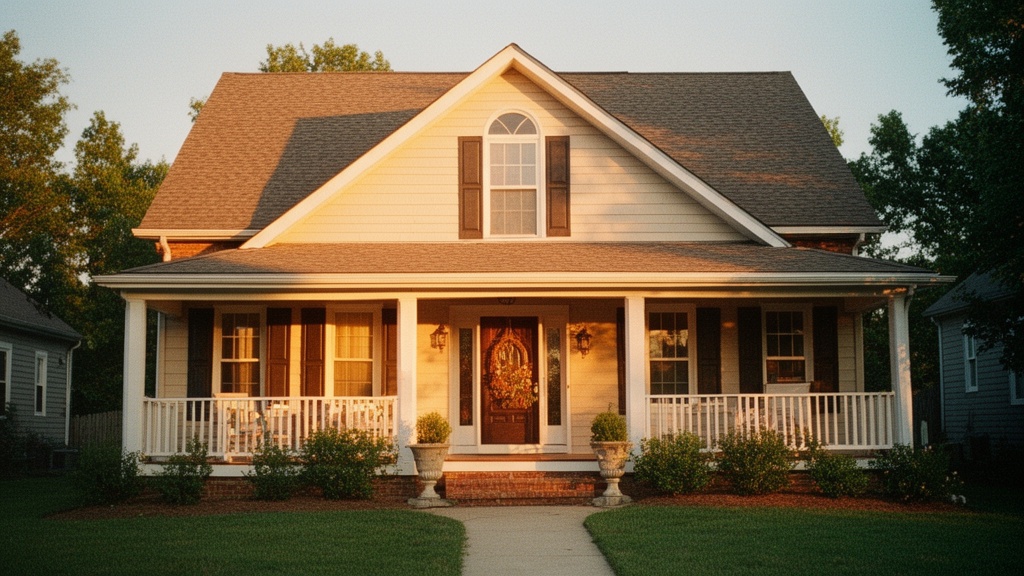
Single-family homes make up the vast majority of Haddonfield's housing stock. Architectural styles range from Federal and Victorian on the larger lots near the Historic District core to Craftsman bungalows and mid-century colonials on the borough's outer streets. Lot sizes typically run from 5,000 to 12,000 square feet, with larger parcels concentrated along Chestnut Street, Euclid Avenue, and the streets north of Haddon Avenue. As of September 2026, median sale prices for single-family homes in Haddonfield sit in the $650,000 to $750,000 range, though well-positioned Historic District properties regularly trade above $900,000.
For investors, single-family homes in Haddonfield function primarily as long-term rental plays or buy-and-hold appreciation assets. Gross yields are compressed compared to lower-priced markets, which is typical for high-barrier-to-entry suburbs with strong fundamentals. The investment case rests more on appreciation and low vacancy than on cash flow from day one.
Multi-Family and Mixed-Use Properties
True multi-family properties, meaning duplexes, triplexes, or small apartment buildings, are uncommon in Haddonfield but not absent. A small number of two-unit and three-unit structures exist, particularly on streets closer to the downtown commercial corridor. Mixed-use buildings with retail on the ground floor and residential above occasionally come to market along Kings Highway. These properties require careful zoning verification before purchase, as the borough's land use ordinances are specific about permitted uses in each zone.
When a multi-family property does come available in Haddonfield, it tends to attract significant competition from investors precisely because the supply of such assets is so thin. Moving quickly and having financing pre-arranged is essential. You can read more about the broader market dynamics in the Haddonfield, New Jersey Real Estate Market Guide.
Condos and Smaller Units
Condominiums and townhome-style units represent a smaller slice of the Haddonfield market. Where they exist, they tend to be in smaller associations rather than large complexes, and HOA fees vary considerably. Investors considering a condo purchase need to review HOA documents carefully for rental restrictions, as some associations in the area limit the percentage of units that can be rented at any given time. Always request the association's current financials and reserve fund status before making an offer.
3. The Numbers: Prices, Rents, and Returns
Understanding the return profile is central to any investment property guide for Haddonfield, New Jersey. Haddonfield is not a high-yield cash flow market. It is a low-vacancy, appreciation-oriented market where the investment thesis depends on holding period and capital preservation as much as monthly income.
Current Price Ranges
- Median single-family sale price: approximately $695,000 as of September 2026, based on recent closed transactions in the borough.
- Entry-level single-family (smaller lots, outer streets): roughly $500,000 to $600,000 for homes needing cosmetic updates.
- Historic District single-family (larger lots, period detail): $800,000 to $1.3 million and above for fully renovated examples.
- Multi-family (duplex or triplex): rare inventory; when available, typically priced between $600,000 and $900,000 depending on condition and unit mix.
- Condos and smaller units: generally $300,000 to $475,000, with HOA fees ranging from $200 to $500 per month.
Rental Rate Benchmarks
- Three-bedroom single-family rental: approximately $2,800 to $3,400 per month in September 2026, depending on condition and location within the borough.
- Four-bedroom single-family rental: roughly $3,400 to $4,200 per month for updated homes.
- Two-bedroom condo or smaller unit: approximately $2,000 to $2,600 per month.
- Individual units within a duplex: $1,800 to $2,800 per unit depending on size and finish level.
Understanding Gross Yield in This Market
Gross yield on a typical Haddonfield single-family investment runs in the 4 to 5.5 percent range before expenses. That figure drops meaningfully once you account for property taxes (which are substantial; see the next section), insurance, maintenance reserves, and any property management fees. Net yields of 2 to 3.5 percent are realistic for stabilized single-family rentals. Investors who underwrite Haddonfield on cash flow alone will find the numbers tight; those who underwrite on total return including appreciation over a 7 to 10 year hold have historically found the market rewarding.
For context on how New Jersey's investment markets compare at a state level, this overview of New Jersey real estate investing fundamentals provides useful background on financing structures, landlord-tenant law, and due diligence considerations that apply across the state.
4. Property Taxes and Carrying Costs Every Investor Must Understand
Property taxes are the single largest recurring cost in any Haddonfield investment and deserve careful attention before you commit to a purchase price. Haddonfield sits in Camden County, and the borough's effective tax rate has historically run between 1.8 and 2.2 percent of assessed value. On a property assessed at $650,000, that translates to annual property taxes of roughly $11,700 to $14,300. These figures directly affect your net operating income calculation.
How Haddonfield Tax Rates Work
New Jersey assesses property at 100 percent of market value in principle, but actual assessed values can lag recent sale prices, particularly in a rising market. After purchasing an investment property, you should expect the assessment to be updated to reflect your purchase price, which may increase your tax bill from what the prior owner was paying. Verify the current assessed value and the most recent tax bill through the Camden County Board of Taxation before closing. For a detailed breakdown of how Haddonfield taxes compare to surrounding towns, see the article on property taxes in Haddonfield and Camden County.
Estimating Annual Carrying Costs
- Property taxes: $11,000 to $16,000 per year for most single-family investment properties in the borough.
- Landlord insurance: typically $1,500 to $2,500 per year for a single-family rental in this price range.
- Maintenance reserve: a standard rule of thumb is 1 percent of property value annually; on a $700,000 home that is $7,000 per year set aside for repairs and capital expenditures.
- Property management fees: if you use a professional manager, expect 8 to 10 percent of collected rent, or roughly $2,700 to $4,000 per year on a typical Haddonfield rental.
- Vacancy allowance: Haddonfield's tight rental market supports low vacancy, but underwriting at 5 percent vacancy (roughly three weeks per year) is prudent.
5. Due Diligence, Zoning, and the Historic District
Due diligence in Haddonfield has layers that do not exist in most suburban markets, and skipping any of them can create expensive problems after closing. The borough's Historic District designation, its zoning code, and the physical age of most of its housing stock all require specific attention.
Zoning and Rental Regulations
Haddonfield's zoning ordinance governs what uses are permitted on each parcel. Most of the borough is zoned for single-family residential use, which means operating a multi-unit rental in a single-family zone is not permitted without a variance. Before purchasing any property with the intent to rent multiple units, confirm the zoning classification with the borough's zoning officer. New Jersey also has landlord registration requirements at the state level; all rental properties must be registered with the New Jersey Department of Community Affairs, and Haddonfield may have additional local registration requirements.
Short-term rentals through platforms like Airbnb or VRBO occupy a legally ambiguous space in many New Jersey municipalities. Verify Haddonfield's current ordinance on short-term rentals directly with the borough clerk before assuming that use is permitted. Regulations in this area have been evolving across New Jersey, and what was allowed in a prior year may have changed.
Historic District Considerations
Haddonfield's Historic District covers a substantial portion of the borough and imposes review requirements on exterior alterations. The Historic Preservation Commission must approve changes to windows, siding, roofing materials, additions, and other exterior modifications on contributing structures. For an investor planning renovations to improve a property's rental appeal, this means budget and timeline need to account for the review process. Projects that require HPC approval can add weeks or months to a renovation schedule.
The upside is that Historic District protections also preserve the character and streetscape that support property values over time. An investor who works within those constraints rather than against them is buying into a market with a built-in preservation mechanism. For a deeper look at what the Historic District means for real estate specifically, the Historic District real estate market guide covers the topic in detail.
Inspections and Deferred Maintenance
Most of Haddonfield's housing stock is old. A significant portion of homes were built before 1950, and many date to the late 1800s and early 1900s. That means a general home inspection is necessary but not sufficient. Budget for a separate sewer lateral inspection (cast iron and clay pipes are common and deteriorate over time), a chimney inspection if the property has one, testing for lead paint and asbestos in older structures, and an evaluation of the electrical panel if it has not been updated. These are not exotic concerns; they are standard issues in a borough where the median home age is well over 60 years.
6. Financing an Investment Property in Haddonfield
Investment property financing follows different rules than primary residence lending, and those differences affect your purchase strategy in Haddonfield's competitive market. Understanding the financing landscape before you start making offers will save time and prevent surprises.
Conventional Investment Loans
Most investors purchasing a single-family or small multi-family property in Haddonfield use a conventional investment property loan. Fannie Mae and Freddie Mac guidelines allow investment property loans on one to four unit properties. Interest rates on investment loans typically run 0.5 to 0.875 percentage points above comparable owner-occupied rates, which on a $650,000 purchase adds meaningful cost to your monthly debt service. Lenders will also scrutinize your debt-to-income ratio more carefully and will generally require documented reserves.
DSCR loans, which qualify based on the property's rental income rather than the borrower's personal income, have become more widely available in New Jersey and can be a useful tool for investors who are self-employed or who own multiple properties. These products typically carry slightly higher rates than conventional loans but offer more flexibility in underwriting. For a broader look at how New Jersey's investment markets are being financed right now, the New Jersey Realtor Magazine publishes regular market trend updates that include financing and inventory data.
Down Payment and Reserve Requirements
- Minimum down payment (single-family investment): 15 percent for a single-unit investment property under conventional guidelines; 25 percent is common for better rates and to avoid higher pricing adjustments.
- Minimum down payment (2-4 unit investment): 25 percent is the standard conventional requirement for multi-family investment properties.
- Cash reserves required: most lenders require 6 to 12 months of principal, interest, taxes, and insurance in liquid reserves after closing on an investment property.
- Closing costs: budget 2 to 4 percent of the purchase price for closing costs on a purchase transaction; New Jersey's realty transfer fee applies to the seller, but title, lender, and attorney fees fall to the buyer.
On a $700,000 Haddonfield investment property with 25 percent down, you are looking at a $175,000 down payment, approximately $21,000 to $28,000 in closing costs, and another $40,000 to $60,000 in required reserves, before any renovation budget. That total capital requirement of $235,000 to $265,000 or more is the realistic entry cost for a well-financed investment in this market. Investors who underestimate that figure frequently find themselves overextended after closing.
FAQ
Is Haddonfield, New Jersey a good market for rental property investment?
Haddonfield offers a structurally constrained supply, consistent rental demand driven by PATCO rail access to Philadelphia, and a long track record of price appreciation. The trade-off is that entry prices are high relative to achievable rents, so gross yields run lower than in higher-turnover suburban markets. Investors who approach Haddonfield as a long-term hold, prioritizing low vacancy and capital preservation over near-term cash flow, have generally found the market rewarding. It is not suited to investors who need strong immediate cash flow from day one. Consulting with a local agent who knows the specific streets, price points, and rental dynamics is the most reliable way to evaluate whether a specific property pencils out.
What should I know about New Jersey landlord-tenant law before buying a rental property in Haddonfield?
New Jersey has some of the more tenant-protective landlord-tenant laws in the country, and investors need to understand them before purchasing. The Anti-Eviction Act limits the grounds on which a landlord can remove a tenant, and the process for eviction, even for non-payment of rent, follows a specific court procedure that can take several months. Security deposits are capped at one and a half months' rent and must be held in a separate interest-bearing account. All rental properties must be registered with the New Jersey Department of Community Affairs, and failure to register can affect your ability to collect rent or pursue eviction. Consulting a New Jersey real estate attorney before your first rental purchase is money well spent.
How does Haddonfield's Historic District affect investment property renovations?
Properties within Haddonfield's Historic District are subject to review by the Historic Preservation Commission for exterior alterations. This includes changes to windows, doors, roofing materials, siding, and additions. Interior renovations are generally not subject to HPC review, which means you have more freedom to update kitchens, baths, and mechanical systems without approval. For exterior work, the review process adds time to any renovation schedule, so investors should factor in HPC application timelines when planning a project. The commission generally looks for materials and designs that are compatible with the historic character of the structure, so working with a contractor experienced in historic renovation in this area is a practical advantage.