
← Back to Blog
Buying
How Much Are Property Taxes on a $500,000 Home in Hillsborough County Florida in 2026
By Daniel Perez
Tampa Bay Luxury Group
September 19, 2026 · 10 min read
If you are buying a home near Tampa and wondering how much are property taxes on a $500,000 home in Hillsborough County Florida in 2026, the short answer is roughly $6,500 to $9,000 per year, depending on where the property sits and which exemptions you qualify for. That range is wide enough to matter when you are calculating a monthly mortgage payment, so the details behind it are worth understanding before you make an offer.
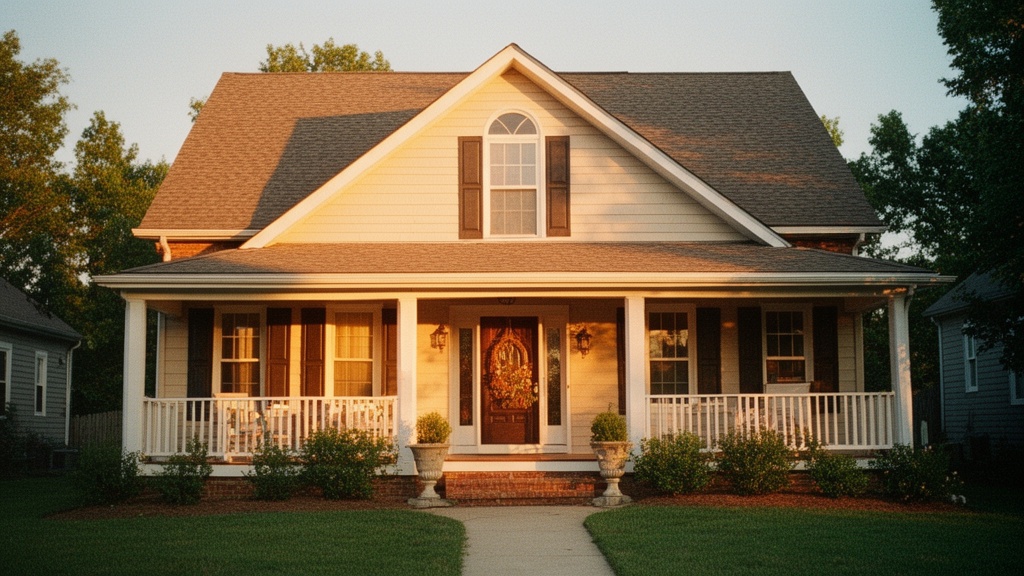
1. How Property Taxes Are Calculated in Hillsborough County
Hillsborough County property taxes are calculated by multiplying a property's taxable value by the applicable millage rate. Those two inputs, taxable value and millage rate, each have their own moving parts, which is why two $500,000 homes a mile apart in Tampa can carry meaningfully different tax bills.
Assessed Value vs. Market Value
The Hillsborough County Property Appraiser assigns every property a "just value," which is meant to reflect fair market value as of January 1 of the tax year. For a home that sold for $500,000 in 2026, the just value will typically be at or near that sale price, because a recent arm's-length transaction is the strongest evidence of market value the appraiser has.
From just value, the appraiser subtracts any exemptions you qualify for to arrive at your taxable value. That taxable value is what gets multiplied by the millage rate to produce your annual tax bill. If you have no exemptions at all, your taxable value equals your just value.
The Millage Rate Explained
A millage rate is simply the tax rate expressed per $1,000 of taxable value. One mill equals $1 of tax for every $1,000 of taxable value. Hillsborough County's total millage rate is not a single number; it is a stack of rates levied by different taxing authorities, including the county general fund, the school board, the water management district, and, if your home sits inside the City of Tampa, the city itself.
In 2026, combined millage rates in Hillsborough County generally fall between approximately 17 and 21 mills depending on location. Homes inside the City of Tampa carry higher combined rates than those in unincorporated parts of the county, because city residents pay both county and city levies. You can use the Hillsborough County Property Tax Calculator on Florida Property Tax Almanac to run the numbers for a specific address and tax district.
How the Numbers Work on a $500,000 Home
Here is a straightforward example with no exemptions applied. If your $500,000 home sits in an unincorporated part of Hillsborough County where the combined millage rate is roughly 17.5 mills, your tax bill would be approximately $8,750 per year ($500,000 divided by 1,000, multiplied by 17.5). Inside the City of Tampa, where combined rates can reach 19 to 21 mills, that same $500,000 taxable value would produce a bill closer to $9,500 to $10,500 before exemptions.
Exemptions change those figures substantially, which is why most homesteaded owners of a $500,000 home end up paying in the $6,500 to $8,000 range rather than the pre-exemption figures above. The section below explains exactly how that works.
2. Exemptions That Reduce Your Tax Bill
Florida offers several exemptions that directly reduce your taxable value, and the homestead exemption is the most significant one available to owner-occupants. Filing for the right exemptions after you close on a Tampa home is one of the most concrete ways to lower your annual tax cost.
Homestead Exemption
Florida's homestead exemption removes the first $25,000 of taxable value from all levies, and then removes an additional $25,000 from all levies except the school board portion, for a combined reduction of up to $50,000. On a $500,000 home with the full $50,000 exemption applied, your taxable value drops to $450,000. At a combined rate of 18 mills, that brings your annual bill from $9,000 down to $8,100, a savings of $900 per year.
To receive the homestead exemption, you must own the property, make it your permanent residence as of January 1, and file an application with the Hillsborough County Property Appraiser by March 1 of the tax year. If you close on a Tampa home in late 2026, you will want to file before March 1, 2027, so the exemption applies to your 2027 tax bill.
Save Our Homes Cap
Once you have a homestead exemption in place, Florida's Save Our Homes law limits how much your assessed value can increase each year to the lesser of 3% or the Consumer Price Index change. This cap does not apply in your first year of ownership, but it kicks in from year two forward. Over time, in a rising market like Tampa's, the gap between your assessed value and actual market value can grow significantly, keeping your tax bill lower than it would otherwise be.
This is also why a seller's current tax bill can look deceptively low. A long-time homeowner who bought their South Tampa home a decade ago may be paying taxes on an assessed value far below $500,000, even though the home is now worth that much. When you buy the property, the Save Our Homes cap resets to zero and your assessed value starts fresh at the purchase price.
Other Exemptions Worth Knowing
Several additional exemptions can reduce your taxable value further depending on your circumstances. Florida offers a $500 exemption for widows and widowers, additional exemptions for people with total and permanent disabilities, a full exemption for qualifying veterans with a service-connected total disability, and a senior citizen exemption for qualifying low-income homeowners aged 65 and older. Each of these requires a separate application with the Hillsborough County Property Appraiser's office.
3. How Millage Rates Vary Across Tampa and Hillsborough County
Your property's location within Hillsborough County is one of the biggest factors in your final tax bill. The county contains the City of Tampa, the City of Temple Terrace, the City of Plant City, and a large unincorporated area, and each carries a different combined millage rate.
City of Tampa vs. Unincorporated County
Homes inside the City of Tampa pay both the Hillsborough County general levy and a separate City of Tampa levy, which together push the combined rate higher than what unincorporated areas pay. In 2026, the City of Tampa's millage rate sits around 5.73 mills on top of the county and school board rates, bringing the total combined rate in the city to roughly 19 to 20 mills for most residential properties. Neighborhoods like Hyde Park, Seminole Heights, Palma Ceia, and Davis Islands all fall inside city limits and carry these higher combined rates.
Unincorporated Hillsborough County communities such as Carrollwood, Westchase, Brandon, and Riverview skip the city levy entirely. Their combined millage rates in 2026 typically land in the 17 to 18.5 mill range, which can translate to several hundred dollars less per year in taxes on a $500,000 home compared to a property inside Tampa city limits.
Special Districts and How They Add Up
Some neighborhoods in Hillsborough County sit within special taxing districts that add their own millage on top of the base rates. Community Development Districts (CDDs), fire districts, and lighting districts are common examples. A home in a newer master-planned community in Riverview or Wesley Chapel may carry a CDD levy of 1 to 3 additional mills, which can add $500 to $1,500 per year to the tax bill on a $500,000 home.
Always ask your agent to pull the full TRIM notice or tax district information for any specific property before you make an offer. The listing price alone does not tell you which taxing districts apply. For a detailed breakdown of how these rates are structured, the JVM Lending guide to Hillsborough County property taxes walks through the major components in plain language.
4. What New Buyers Actually Pay vs. What the Seller Paid
The seller's current tax bill is almost never a reliable guide to what you will pay as the new owner. This is one of the most common surprises for buyers relocating to Tampa from states that do not use Florida's homestead and Save Our Homes system.
Why Your Tax Bill Will Differ From the Seller's
When a property sells, the Save Our Homes cap resets and the Hillsborough County Property Appraiser reassesses the home at or near the sale price. A seller who bought their home in 2012 for $220,000 may currently have an assessed value of $280,000 due to the 3% annual cap, even though the home just sold for $500,000. Their tax bill reflects $280,000 in taxable value; yours will reflect $500,000.
That gap can be enormous in Tampa's market, where home values have appreciated significantly over the past decade. If you are reviewing current South Tampa home prices and comparing what sellers have been paying in taxes, do not use those figures to estimate your own costs. You can read more about current pricing trends in the article on South Tampa home prices in September 2026, which gives useful context for what $500,000 buys you in different parts of the area right now.
How to Estimate Your First-Year Tax Bill
To estimate what you will actually pay in year one, start with the purchase price as your assumed assessed value, then subtract any exemptions you qualify for to get your taxable value. Multiply that taxable value by the combined millage rate for the specific tax district where the property sits, then divide by 1,000. That gives you your estimated annual tax bill.
A concrete example for a homesteaded buyer purchasing inside Tampa city limits: purchase price $500,000, minus the $50,000 homestead exemption, equals $450,000 taxable value. At a combined rate of 19.5 mills, that produces an estimated annual tax bill of $8,775, or roughly $731 per month added to your mortgage payment if your lender escrows taxes. If the same home were in unincorporated Hillsborough County at 17.5 mills, the bill would be approximately $7,875 per year.
These estimates are a solid starting point, but the only way to get a precise figure is to look up the exact millage rate for the parcel. If you are still exploring which Tampa neighborhoods fit your budget, the complete buyer's guide to homes for sale in Tampa covers the full landscape of price points and community types across the metro area.
5. Other Costs Tied to Property Taxes in Tampa
Your Hillsborough County property tax bill includes more than just ad valorem taxes, and those additional line items can add meaningful costs that do not get reduced by exemptions. Understanding the full bill before closing prevents surprises when the first TRIM notice arrives.
Non-Ad Valorem Assessments
Non-ad valorem assessments are flat fees billed alongside your property tax but calculated independently of your home's value. In Hillsborough County, these commonly include solid waste and recycling fees, stormwater fees, and fire district assessments. For most residential properties in Tampa, these fees collectively add $200 to $600 per year to the total amount due on the November tax bill, depending on the specific services provided to that parcel.
These fees appear on the same annual Hillsborough County tax bill but are listed separately from the millage-based taxes. Homestead and other exemptions do not reduce them, because they are not based on assessed value.
Escrow and Monthly Payment Impact
Most lenders require buyers to escrow property taxes, meaning the lender collects roughly one-twelfth of the estimated annual tax bill each month as part of your mortgage payment. On a $500,000 home in Tampa with an estimated annual tax bill of $8,500 including non-ad valorem fees, that adds approximately $708 per month to your principal and interest payment. When you are comparing what you can afford, always factor this into your total monthly housing cost.
When and How Hillsborough County Collects
Hillsborough County mails property tax notices in November each year, and the full amount is due by March 31 of the following year. Florida offers an early payment discount: 4% off if you pay in November, 3% in December, 2% in January, and 1% in February. If your lender escrows your taxes, they handle the payment timing for you, but knowing the discount schedule is useful if you ever pay directly.
At closing, you will also see a property tax proration on your settlement statement. Because Florida's tax year runs January through December and the bill arrives in November for the current year, buyers typically receive a credit from the seller for the portion of the year the seller owned the home. This is a standard part of every Tampa closing and your title company will calculate it automatically.
FAQ
How much are property taxes on a $500,000 home in Hillsborough County Florida in 2026 if I claim the homestead exemption?
With the full $50,000 homestead exemption applied, your taxable value drops from $500,000 to $450,000. At combined millage rates that range from roughly 17.5 mills in unincorporated Hillsborough County to around 19.5 mills inside the City of Tampa, your estimated annual tax bill would fall between approximately $7,875 and $8,775, before non-ad valorem fees are added. Non-ad valorem assessments for services like solid waste and stormwater typically add another $200 to $600 per year. You must file for the homestead exemption with the Hillsborough County Property Appraiser by March 1 of the year you want it to apply.
Will my property taxes be the same as what the seller currently pays on a $500,000 home in Tampa?
Almost certainly not. When a property sells in Florida, the Save Our Homes cap resets and the property is reassessed at or near the new sale price. A seller who has owned their Tampa home for many years may have an assessed value far below the current market value due to the 3% annual cap on increases, meaning their tax bill reflects a much lower base than yours will. Your first-year tax bill as the new owner will be calculated on the purchase price, which could be significantly higher than what the seller has been paying. Always ask your agent or lender to estimate your specific tax liability rather than relying on the seller's current bill.
Are there property tax exemptions in Hillsborough County beyond the standard homestead exemption?
Yes. Florida and Hillsborough County offer several additional exemptions that can reduce your taxable value further. These include a $500 exemption for widows and widowers, additional reductions for homeowners with total and permanent disabilities, a full exemption from ad valorem taxes for veterans with a service-connected total and permanent disability, and a low-income senior exemption for qualifying homeowners aged 65 and older. Each exemption requires a separate application filed with the Hillsborough County Property Appraiser's office, and most have a March 1 annual deadline. Checking with the appraiser's office directly is the best way to confirm which exemptions you qualify for.