← Back to Blog
Neighborhoods
What Are the Different Neighborhoods in Rutherford NJ and What Is Each One Like?
By Danny Simone
September 4, 2026 · 11 min read
Rutherford, New Jersey is a 2.9-square-mile borough in Bergen County, and the different neighborhoods in Rutherford NJ each have a distinct character shaped by their housing stock, proximity to the train, and local streetscape. Whether you are buying, selling, or relocating, knowing how these pockets of town differ from one another is the first step to finding the right fit. This guide breaks down every major section of Rutherford with real numbers, named streets, and the kind of ground-level detail that only comes from spending time here.
1. A Quick Orientation: How Rutherford Is Laid Out
Rutherford covers roughly 2.9 square miles in Bergen County, bordered by East Rutherford to the east, Lyndhurst to the south and west, and Wood-Ridge to the north. For a borough that small, it has a surprising amount of internal variety.
The Railroad as a Natural Dividing Line
The NJ Transit Main Line cuts through the center of town, and most long-time residents use it as a mental compass. Streets west of the tracks tend to have larger lots and more detached single-family homes on quieter residential blocks. Streets closer to the station and to Park Avenue, the main commercial corridor, are denser, with more foot traffic and a shorter walk to shops and restaurants.
How Boundaries Blur in a Small Borough
Rutherford does not have formally named neighborhoods the way a larger city might. There are no official neighborhood associations with posted signs at every corner. Instead, locals and real estate professionals tend to describe areas by their general compass direction, their proximity to landmarks like Rutherford Station or Lincoln Park, or by the dominant street names in a section. The descriptions below reflect how buyers, sellers, and agents actually talk about the different parts of town.
For a broader snapshot of Rutherford's housing market before you read the neighborhood breakdown, the average home price guide for September 2026 covers current median prices and how inventory is moving right now.
2. Downtown and the Station Area
The blocks immediately surrounding Rutherford Station and stretching along Park Avenue toward Passaic Avenue form the most walkable and densely developed section of the borough. This is where you find the highest concentration of retail, dining, and services within walking distance of a front door.
Housing Stock and Architecture
Victorian-era and early 20th-century homes dominate the blocks closest to the station. You will find Queen Anne Victorians with wraparound porches on streets like Montross Avenue and Highland Cross, along with two-family homes and converted multi-unit buildings from the same era. Many of these properties have been updated inside while preserving original exterior details: decorative woodwork, bay windows, and steeply pitched rooflines. The density is higher here than anywhere else in Rutherford, with lots running narrower and homes sitting closer to the sidewalk.
Price Range and Market Pace
Single-family homes in the station area have been trading in the $550,000 to $750,000 range through most of 2026, depending on size, condition, and exact block. Two-family properties in this section often attract buyers who want rental income to offset carrying costs, and those have been moving quickly, sometimes with multiple offers within the first week of listing. Condos and smaller attached units near Park Avenue can start below $400,000, making this section one of the more accessible entry points in the borough for buyers who prioritize walkability over square footage.
Walkability and Daily Life
Park Avenue runs through the heart of this section and is lined with independent restaurants, a handful of coffee shops, a pharmacy, and local service businesses. The Rutherford Public Library sits on Park Avenue as well, and Williams Plaza offers additional retail within a short walk. NJ Transit trains to Penn Station in Manhattan take roughly 25 to 30 minutes from Rutherford Station, and the station itself is walkable from most addresses in this section, usually under ten minutes on foot.
If you are specifically focused on buying in this part of town, the downtown Rutherford buying guide walks through the full purchase process, typical costs, and what to expect on the timeline.
3. The West End
The West End of Rutherford, roughly the area west of the railroad tracks and north of Rutherford Avenue, is where you find the borough's most spacious single-family homes and the largest lot sizes. Streets like Elm Avenue, Maple Avenue, Chestnut Street, and the blocks running toward the Wood-Ridge border define this section.
Streets and Home Styles
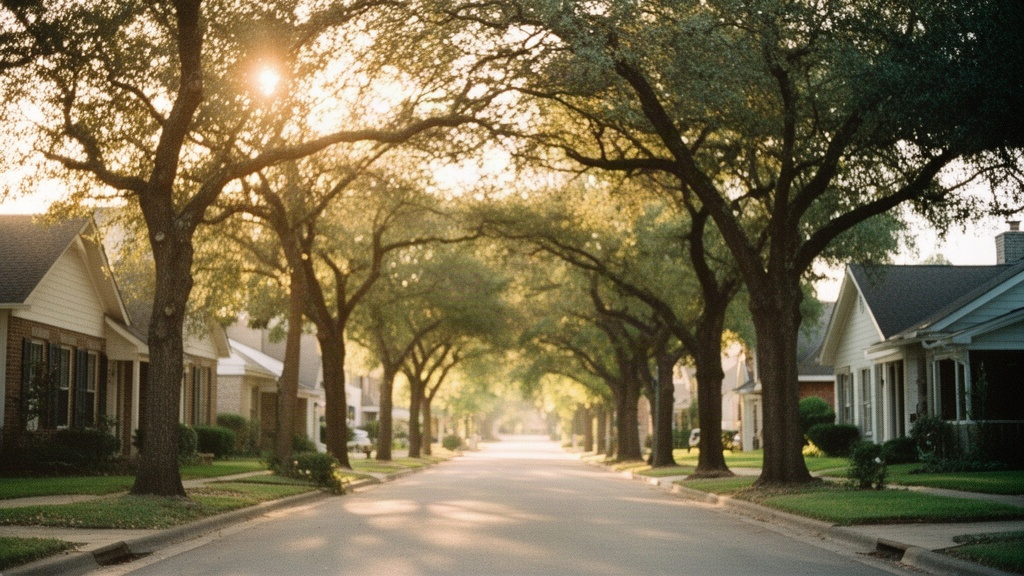
Tudor Revival and Colonial Revival homes from the 1920s and 1930s are common in the West End, alongside Craftsman bungalows and a number of mid-century ranches built in the postwar period. The streetscape here is noticeably quieter than the station area. Tree canopy is dense on many blocks, and the sidewalks see less foot traffic. Garages and driveways are more common, which matters to buyers who commute by car rather than by train.
Lot Sizes and Outdoor Space
Lots in the West End frequently run 50 by 125 feet or larger, and some properties on the wider streets approach 60 by 150 feet. That translates to meaningful backyard space by Bergen County standards, where lot sizes in many surrounding towns are comparable or smaller. Buyers who want room for a deck, a garden, or outdoor entertaining tend to focus their search in this section. Prices for well-maintained single-family homes here have been running from roughly $625,000 to $900,000 in 2026, with fully renovated properties on premium lots testing above that range.
Proximity to Parks and the Passaic River
The western edge of Rutherford runs along the Passaic River, and Riverside Park sits along that stretch of riverbank. The park includes walking paths, open lawn areas, and river views. It connects to a broader network of Bergen County open space. Lincoln Park, the borough's central park with a pond, athletic fields, and a bandshell, is also accessible from the West End within a reasonable walk. The combination of green space and quieter residential streets makes this section a draw for buyers who want suburban scale without leaving Bergen County.
4. The East Side and Union Avenue Corridor
East of the tracks, the borough transitions into a section bounded roughly by Orient Way to the east and Rutherford Avenue to the south. Union Avenue is the main north-south spine here, connecting this part of town to the station area and to Route 17 just over the East Rutherford border.
Colonial and Cape Cod Concentration
The east side has a high concentration of Colonial and Cape Cod style homes built primarily between the 1930s and 1960s. These are typically three-bedroom, one-and-a-half or two-bath homes on standard 50-by-100-foot lots. Many have been updated over the decades, and the section includes a mix of original-condition homes that buyers can renovate and move-in-ready properties that have already been updated. Prices in this section have generally ranged from $475,000 to $675,000 in 2026, sitting slightly below the West End on average because lots are smaller and the homes are more modest in scale.
Commute Access and Parking
The east side is a short drive or a 10 to 15 minute walk to Rutherford Station, and many homes in this section have driveways, which helps buyers who drive to the station rather than walking. Route 17, one of the primary north-south commercial and commuting routes in Bergen County, is accessible within minutes from this section. That makes it practical for buyers who split their time between train commutes and car-based travel. The proximity to the Meadowlands Sports Complex in East Rutherford is another feature of this location: MetLife Stadium and the Meadowlands Racetrack are roughly two miles east.
For a broader look at how the Rutherford housing market is performing across all sections of town, the homes for sale buyer's guide covers what buyers are competing against and how to position an offer in the current market.
5. The Ames Avenue Area and Southern End
The southern portion of Rutherford, roughly the area south of Rutherford Avenue and west of the tracks toward the Lyndhurst and Carlstadt borders, has its own distinct character. Ames Avenue, Mortimer Avenue, and the blocks running toward the borough's southern edge define this section.
Entry-Level Inventory and Condo Options
This section includes some of Rutherford's more modestly priced single-family homes, along with a handful of condominium and townhouse developments that do not appear in other parts of the borough. For buyers who want to get into Rutherford at a lower price point, the southern end often has the most options below $500,000. The trade-off is that this section is farther from the train station, generally a 15 to 20 minute walk or a short drive, and the streetscape is more mixed, with some light commercial and industrial uses near the borough's southern boundaries.
Borders with Lyndhurst and Carlstadt
The southern edge of Rutherford shares a border with Lyndhurst along Rutherford Avenue and with Carlstadt to the southwest. Buyers comparing these municipalities sometimes find that a block or two in either direction can mean a meaningful difference in property tax rate or home price. Rutherford's property tax rate and how it compares to surrounding Bergen County towns is covered in detail in a separate post on this site. The southern section of Rutherford is also close to the New Jersey Turnpike interchange and the Meadowlands, which matters for buyers who travel frequently or commute by car.
6. How the Different Neighborhoods in Rutherford NJ Compare at a Glance
Each section of Rutherford has a different combination of housing type, price range, lot size, and proximity to transit. Here is a side-by-side summary of the key distinctions.
- Downtown and Station Area: Victorian and early 20th-century homes, higher density, two-family inventory, walkable to Park Avenue retail and NJ Transit, prices from roughly $400,000 for condos to $750,000 for single-family homes.
- West End: Tudor, Colonial Revival, and Craftsman homes from the 1920s to 1950s, largest lot sizes in the borough (often 50x125 feet or more), quietest residential streets, close to Riverside Park and Lincoln Park, prices from roughly $625,000 to $900,000 and above.
- East Side and Union Avenue Corridor: Cape Cod and Colonial homes from the 1930s to 1960s, standard 50x100-foot lots, driveway parking common, 10 to 15 minute walk or short drive to the station, close to Route 17 and the Meadowlands, prices from roughly $475,000 to $675,000.
- Southern End and Ames Avenue Area: Mix of modest single-family homes, condos, and townhouses, most accessible price points in the borough (some options below $500,000), 15 to 20 minute walk to the station, borders Lyndhurst and Carlstadt, close to Turnpike access.
For additional context on how these price ranges fit into the broader Bergen County picture, NeighborhoodScout's Rutherford market data provides demographic and real estate data you can review directly.
7. What to Consider When Choosing a Section of Rutherford
Once you understand the different neighborhoods in Rutherford NJ, the next step is matching the right section to your priorities. The factors below tend to drive most buyer decisions in this market.
- Train commute priority: If you commute to Midtown Manhattan by train, proximity to Rutherford Station is worth weighing carefully. The station area and parts of the east side put you within a 10-minute walk. The West End and southern section generally require a short drive or bike ride to the platform.
- Lot size and outdoor space: The West End consistently offers the most generous lot sizes. If outdoor space is a top priority, that section warrants a close look, though the price per square foot reflects that demand.
- Budget and entry price: The southern section and parts of the east side offer the most options under $550,000. The station area has condo inventory that can start below $400,000. The West End skews higher.
- Architectural preference: Victorian and late 19th-century homes cluster near the station. Tudor and Craftsman styles are more common in the West End. Cape Cods and postwar Colonials dominate the east side and southern section.
- Schools and districts: Rutherford is served by the Rutherford Public School District for most of the borough. For detailed information on schools, the New Jersey Department of Education's School Performance Reports are the most reliable source to consult directly, as school research is a personal decision best made with current official data.
- Car access and parking: The east side and southern section have more homes with driveways and garages. The station area, with its denser lot coverage, has more street parking and fewer off-street spaces per property.
If you are also thinking about the timing of a purchase or sale, the guide on whether now is a good time to sell in Rutherford covers current market conditions and what sellers are seeing across all sections of the borough.
8. Local Landmarks That Anchor Each Part of Town
Understanding the different neighborhoods in Rutherford NJ is easier when you anchor each section to a landmark or institution you can physically locate. These reference points also come up constantly in real estate conversations.
- Rutherford Station and Park Avenue: The geographic and commercial center of the borough. The train platform, the main retail strip, and the library are all within a block or two of each other.
- Lincoln Park: A roughly 20-acre park near the center of the borough with a pond, athletic fields, a bandshell, and paved walking paths. It draws residents from multiple sections of town.
- Riverside Park and the Passaic River: Located along the western boundary, this park offers river access and is the closest thing Rutherford has to a waterfront amenity.
- Rutherford High School and Pierrepont Avenue: The high school campus sits in the northern part of the borough near the Wood-Ridge border and is a common reference point for buyers navigating the West End.
- Orient Way and Route 17: The eastern edge of the borough runs along Orient Way, which connects to Route 17 and the broader commercial corridor between Rutherford and East Rutherford. This is the access point for the Meadowlands area.
For a deeper look at what day-to-day life looks like across the whole borough, the NJLux neighborhood guide for Rutherford is a useful additional reference with photos and local context.
FAQ
What are the different neighborhoods in Rutherford NJ?
Rutherford does not have officially named neighborhoods, but locals and real estate professionals generally describe four main sections: the downtown and station area near Park Avenue and Rutherford Station, the West End west of the railroad tracks with larger lots and older architectural styles, the east side along the Union Avenue corridor with Cape Cod and Colonial homes, and the southern section near Ames Avenue and the Lyndhurst border with more modest pricing and some condo inventory. Each section has a distinct housing stock, price range, and proximity to transit. The railroad tracks that run through the center of the borough serve as the most useful dividing line for orienting yourself.
Which part of Rutherford NJ is closest to the train station?
The station area and the blocks immediately surrounding Park Avenue are the closest to Rutherford Station, with most addresses within a five to ten minute walk to the platform. Parts of the east side along Union Avenue are also walkable, typically ten to fifteen minutes on foot. The West End and the southern section of the borough are generally a short drive or bike ride from the station, though many residents in those areas use the station daily without difficulty. NJ Transit Main Line trains from Rutherford reach Penn Station in Manhattan in approximately 25 to 30 minutes, which is a key selling point for the entire borough regardless of which section you live in.
What is the price range for homes in the different sections of Rutherford NJ?
In September 2026, prices vary meaningfully across the different neighborhoods in Rutherford NJ. The West End commands the highest prices, with well-maintained single-family homes generally ranging from $625,000 to $900,000 or above on larger lots. The station area runs roughly $550,000 to $750,000 for single-family homes, with condos available from below $400,000. The east side typically falls in the $475,000 to $675,000 range for Colonial and Cape Cod homes. The southern section offers the most accessible entry points, with some single-family homes and condos priced below $500,000. These ranges reflect current market conditions and shift with inventory levels, so working with a local agent who tracks each section closely is the most reliable way to get current pricing.