← Back to Blog
Local Living
What Is It Actually Like to Live in Rutherford NJ Day to Day
By Danny Simone
September 4, 2026 · 10 min read
If you are considering a move and want to know what is it actually like to live in Rutherford NJ day to day, the honest answer is this: it is a small borough with a walkable downtown, a direct train to Midtown Manhattan, and a housing stock that ranges from Victorian colonials to compact condos, all within a 2.8 square mile footprint. This guide covers the commute, the grocery run, the weekend routine, the cost of housing, and everything in between so you can picture yourself here before you ever schedule a showing.
1. The Morning Routine: Commuting Out of Rutherford
Most Rutherford residents who commute to New York City start their morning at the Rutherford NJ Transit station on Erie Avenue. The station sits on the Main/Bergen County Line, and trains run frequently during peak hours, with the ride to Penn Station taking roughly 30 to 35 minutes depending on the service. That is a straightforward commute by regional standards, and it is one of the first things people mention when they explain why they chose Rutherford over other Bergen County towns.
The Train to Manhattan
The station is walkable from most of the borough's central neighborhoods. Residents who live near the eastern side of town, closer to Boiling Springs Lane or the streets around Williams Plaza, can walk to the platform in under ten minutes. Those who live farther west, near the border with Carlstadt, typically drive and park in the station lot. Monthly parking permits are available through the borough, and the lot fills up early on weekday mornings, so permit holders tend to arrive by 7:15 a.m. to secure a spot.
Off-peak and reverse-peak service is also available, which matters for residents who work non-traditional hours or who commute to Newark or Secaucus Junction for transfers. The Secaucus connection opens up the entire NJ Transit rail network, meaning residents are not locked into a single line.
Driving and Bus Options
Rutherford sits about 10 miles from Midtown Manhattan, and Route 3 runs along the borough's southern edge. That proximity is convenient for driving to the Lincoln Tunnel, though Route 3 westbound in the morning and eastbound in the evening can be congested, particularly near the Meadowlands. Residents who drive to the city typically budget 45 to 60 minutes for the trip during peak hours. For those who prefer not to drive, NJ Transit bus routes also serve the borough and connect to the broader Bergen County network.
The Meadowlands itself is minutes away. MetLife Stadium, the Meadowlands Racetrack, and American Dream mall are all within a five to ten minute drive from most parts of Rutherford, which means residents have easy access to concerts, sporting events, and a large retail and entertainment complex without a long trip.
2. The Downtown Experience on an Ordinary Day
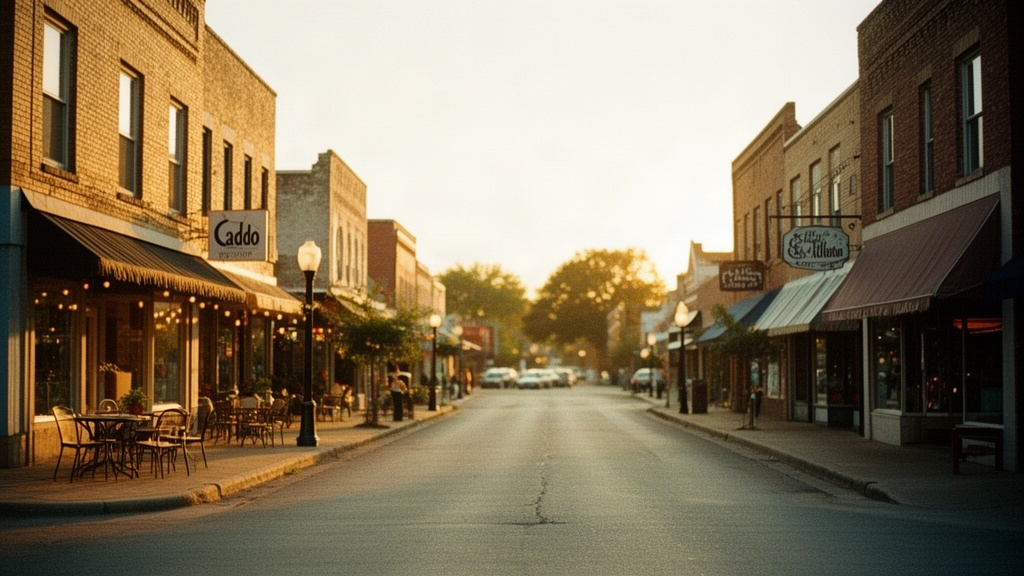
Daily life in Rutherford NJ centers on Park Avenue, the borough's main commercial corridor. It is a genuine small-town main street with independently owned restaurants, a handful of cafes, a pharmacy, a barbershop, and enough foot traffic on weekday mornings to feel lively without feeling overwhelming. The scale is human: you can walk from one end of the active retail stretch to the other in about eight minutes.
Park Avenue and What You Will Find There
The dining options on and around Park Avenue lean toward casual and neighborhood-oriented. There are Italian spots, a couple of well-regarded BYOB restaurants, a sushi bar, a Mexican restaurant, and a few places where residents clearly go regularly enough to be recognized. The borough has a farmers market that runs seasonally, typically from late spring through early fall, drawing residents from across the borough on weekend mornings. Coffee options include independent cafes as well as the standard chain options for those who prefer consistency.
The Williams Center for the Arts on Spring Street is a civic anchor. It hosts theater productions, concerts, and community events throughout the year. Rutherford also has a public library on Park Avenue that is well-used and regularly hosts programming for various age groups. These are the kinds of institutions that give a borough its texture and make the day-to-day feel like more than just errands and commuting.
Errands and Everyday Convenience
Rutherford does not have a large grocery store within the borough itself, which is one of the practical realities of living in a 2.8 square mile town. Most residents drive to nearby Lyndhurst, East Rutherford, or Carlstadt for their weekly grocery shopping. Stop and Shop, ShopRite, and Whole Foods locations are all within a five to ten minute drive. This is a common pattern in smaller Bergen and Hudson County boroughs, and most residents factor it into their routine without much friction.
For a broader look at the borough's day-to-day profile, the Homes.com local guide for Rutherford covers a range of practical details including population figures, commute data, and neighborhood characteristics that can help you orient yourself before visiting.
3. Housing: What the Streets Actually Look Like
The housing stock in Rutherford is one of the most visually distinctive things about the borough. Drive through the streets north of Park Avenue and you will see large Victorian and Colonial Revival homes on tree-lined blocks, many of them built between 1890 and 1930. The architecture is varied and well-preserved, with wraparound porches, original woodwork, and front yards that give the blocks a residential depth you do not find in newer suburbs.
Architecture and Lot Sizes
Lot sizes in Rutherford tend to be modest by suburban standards, typically running 50 by 100 feet for a standard single-family home. That means yards exist but are not expansive. Most homes have a backyard suitable for a patio and garden, but not for a large pool or multiple outbuildings. The density is higher than in towns like Glen Rock or Ridgewood, which gives Rutherford more of a walkable, neighborhood feel rather than a spread-out suburban one.
The borough also has a meaningful stock of two-family homes, particularly on the blocks south of Park Avenue and near the train station. These properties attract buyers who want to offset carrying costs with rental income, and they tend to move quickly when priced correctly.
Condos and townhouses are less common but do exist, particularly in the Williams Plaza area and a few converted buildings near the downtown core. They represent a lower entry price point and appeal to buyers who want low-maintenance ownership close to the train.
Price Ranges in September 2026
As of September 2026, single-family homes in Rutherford are trading in a range that reflects both the borough's desirability and its proximity to Manhattan. Entry-level single-family homes, typically smaller Capes or older colonials that need updating, start in the high $500,000s. Move-in-ready colonials and larger Victorians on the north side of the borough are commonly priced from the mid-$700,000s into the $900,000s. Two-family homes span a wide range depending on condition and unit configuration, often from the $650,000s to over $850,000.
For a detailed breakdown of what homes are selling for right now, the current average home price guide for Rutherford covers median prices, days on market, and what buyers are competing against in the current inventory environment.
4. Parks, Green Space, and Weekend Life
Rutherford has several parks spread across the borough that residents use regularly for recreation and leisure. The borough is not wilderness, but it has enough green space to make outdoor time a real part of the weekly routine rather than something that requires a long drive.
Rutherford's Parks and Recreation
Tamblyn Park on Orient Way is one of the larger recreational spaces, with athletic fields used by local leagues for baseball, softball, and soccer throughout the spring, summer, and fall seasons. Residents also use Lincoln Park, which sits closer to the center of the borough and includes a playground and open lawn space. The Rutherford Recreation Department runs programming for children and adults through the year, including swim lessons at the municipal pool at Tamblyn Park, which is open during summer months.
The Passaic River runs along the western edge of the borough, and the Kingsland Overlook area in neighboring Lyndhurst provides riverfront access and walking paths that Rutherford residents frequently use. It is a short drive or a longer walk from the western neighborhoods.
Nearby Day Trips and Regional Access
Living in Rutherford NJ day to day means having a lot of regional options within a short drive. The Jersey Shore is roughly an hour south via the Garden State Parkway. The Delaware Water Gap and the Kittatinny Mountains are about 75 miles northwest, reachable in under 90 minutes. Hoboken and Jersey City are 15 to 20 minutes by car. Newark Liberty International Airport is approximately 20 minutes away, which matters for residents who travel frequently for work or leisure.
American Dream mall in East Rutherford, less than two miles from the borough center, has an indoor ski slope, an indoor water park, an NHL-sized ice rink, and a large retail and dining complex. It is unusual infrastructure for a suburban area and residents either use it regularly or treat it as a convenient option for inclement weather weekends.
5. The Rhythms and Trade-Offs of Borough Life
Understanding what it is actually like to live in Rutherford NJ day to day means being honest about both what works well and what requires adjustment. No town is a perfect fit for every buyer, and Rutherford has a specific character that resonates strongly with some people and less so with others.
What Residents Tend to Love
The train commute is consistently the top reason people cite for choosing Rutherford. Thirty-five minutes to Penn Station on a direct line, with a walkable downtown on the other end, is a combination that is hard to replicate at this price point in Bergen County. Residents also frequently mention the sense of knowing their neighbors, the walkability of the downtown, and the visual character of the older housing stock as things they did not fully anticipate appreciating until they moved here.
The borough government is engaged and accessible at a scale where residents can actually attend a council meeting and be heard. Property owners who want to be involved in local decisions about zoning, parks, or municipal services find that the borough's size makes participation practical rather than performative.
For more on what the borough's housing market looks like from a buyer's perspective, the guide to homes for sale in Rutherford NJ walks through inventory, what to expect in negotiations, and how the market has been behaving.
What Takes Adjustment
Parking is the most common practical frustration for residents, particularly for homes near the downtown and the train station. Many of the older homes were built before two-car households were the norm, and driveways are often single-car or nonexistent. Street parking near Park Avenue fills up during evening dining hours and on weekends. Buyers coming from more suburban environments sometimes find this adjustment more significant than they expected.
Property taxes are another factor to weigh carefully. Bergen County tax rates vary by municipality, and Rutherford's effective rate means that a home assessed at $700,000 will carry a meaningful annual tax bill. Buyers who are budgeting carefully should factor this in alongside their mortgage payment. The borough's tax rate reflects the cost of maintaining municipal services, the school system, and infrastructure in a densely populated area.
The borough also does not have a large grocery store, as noted earlier, and residents who prefer to walk to a supermarket will need to adjust expectations. For buyers relocating from urban environments where a grocery store is on every block, this is a minor but real shift.
For a fuller picture of the buying process in this market, including timelines and closing costs, the guide to buying a home in downtown Rutherford NJ covers what to expect from offer to closing.
6. Schools, Community Resources, and Civic Life
Rutherford operates its own public school district, serving students from kindergarten through twelfth grade at schools within the borough. The district includes Lincoln School, Pierrepont School, and Rutherford High School, all of which are located within the borough and accessible without long bus rides for most students. For detailed information about curriculum, test scores, and district programs, the New Jersey Department of Education's School Performance Reports at nj.gov are the most accurate and up-to-date resource for prospective residents to consult directly.
Beyond the public schools, Rutherford has a public library, a senior center, and a robust parks and recreation department that runs programming across age groups. The borough hosts annual community events including a street fair, holiday tree lighting, and seasonal farmers market that draw participation from across the community. These events give the borough a civic rhythm that residents often cite as one of the things that distinguishes it from neighboring towns of similar size.
For a grounded perspective on the community character and what the borough feels like at street level, this local guide to living in Rutherford NJ offers additional detail on the borough's layout and day-to-day feel from a resident's point of view.
FAQ
Is Rutherford NJ walkable for daily errands?
Rutherford is walkable for a meaningful portion of daily life, particularly for residents who live near Park Avenue. Coffee, dining, the library, the post office, and several small shops are all reachable on foot from the central neighborhoods. Grocery shopping is the main exception: there is no large supermarket within the borough, so most residents drive to nearby Lyndhurst, East Rutherford, or Carlstadt for their weekly shopping. The walk score varies significantly by block, with streets closest to the train station and downtown core scoring highest.
What is the commute from Rutherford NJ to New York City like?
The NJ Transit Main/Bergen County Line serves Rutherford with a direct ride to Penn Station in Midtown Manhattan that takes approximately 30 to 35 minutes during peak hours. Trains run frequently during morning and evening rush, and the station is walkable from most of the borough's central neighborhoods. Driving to Midtown via the Lincoln Tunnel typically takes 45 to 60 minutes during peak hours, depending on Route 3 traffic near the Meadowlands. Most commuters who use the train consider the ride one of the stronger practical arguments for living in Rutherford.
What are the biggest trade-offs of living in Rutherford NJ day to day?
The two most commonly cited trade-offs are parking and property taxes. Many of the borough's older homes were built before two-car households were standard, so driveways are often single-car or absent entirely, and street parking near the downtown fills up during evenings and weekends. Property taxes in Rutherford reflect Bergen County's overall tax environment and the cost of maintaining a full municipal infrastructure in a dense borough, so buyers should model their total monthly costs carefully. The lack of an in-borough grocery store is a minor but real logistical adjustment for residents coming from more urban environments where supermarkets are within walking distance.