← Back to Blog
Market Trends
Bastrop Texas Real Estate Market Guide: Prices, Neighborhoods, Timing
By Des Leon
September 2, 2026 · 9 min read
People researching the Bastrop, Texas real estate market often ask whether it actually lives up to the hype, and that is a fair question. This guide covers what the numbers look like right now in September 2026, what different parts of Bastrop offer in terms of housing stock and commute access, and how to think about timing your move so you are not guessing. Whether you are buying, selling, or relocating, here is what you need to know before making a decision.
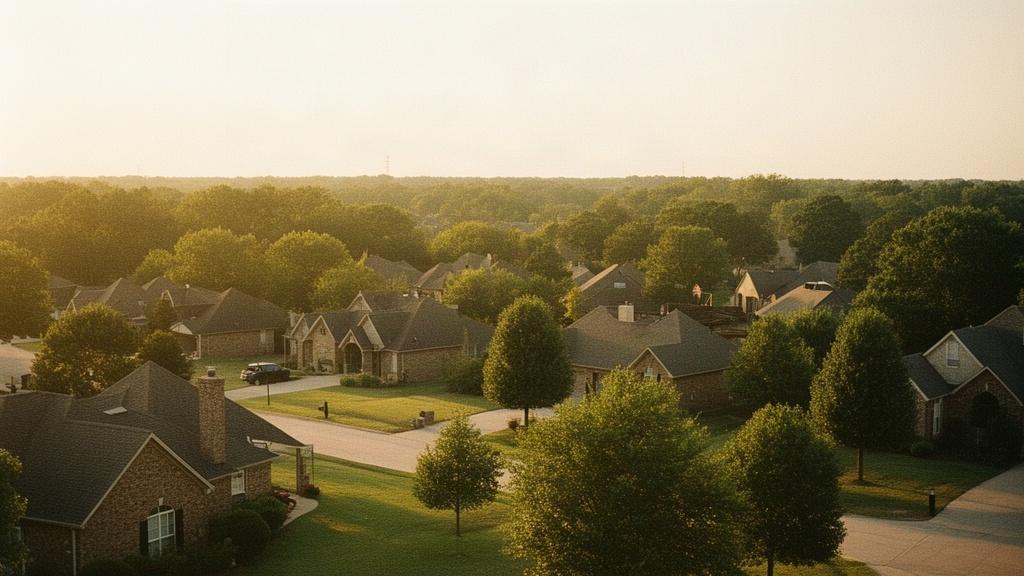
1. What the Bastrop, Texas Real Estate Market Actually Looks Like Right Now
The Bastrop market has shifted meaningfully since its 2022 peak, and that shift is worth understanding clearly. Prices ran up sharply during the pandemic relocation wave, then corrected as interest rates climbed through 2023 and 2024. As of September 2026, the market has found a more stable footing: not the frenzy of 2021, but not a buyer's windfall either.
Median Prices and Inventory in September 2026
Median home prices in Bastrop County are currently sitting in the low-to-mid $300,000s for single-family homes, with the city of Bastrop itself ranging from roughly $270,000 for older or smaller homes near downtown up to $500,000 and beyond for newer construction on larger lots. Active inventory has grown compared to 2022 levels, meaning buyers have more options and sellers need to price with more precision. Homes that are priced correctly for their condition and location are still moving within 30 to 60 days in most cases.
For a deeper look at recent transaction data and trend lines, Community Impact's coverage of Bastrop's housing market trends provides useful local context on how the numbers have moved over recent years.
How Bastrop Compares to the Broader Central Texas Market
Bastrop sits roughly 30 miles southeast of Austin, and that distance has historically translated into lower price points than Travis County while still offering reasonable access to the metro. Austin proper continues to trade at medians well above $500,000, which keeps Bastrop attractive to buyers who need more space or a lower entry price. The tradeoff is commute time, which we cover in detail below.
Bastrop County also includes Cedar Creek, Smithville, and Elgin, each with their own price points and character. If you are weighing those options, our guide to homes for sale in Cedar Creek breaks down what that part of the county offers buyers specifically.
2. A Practical Look at Bastrop's Neighborhoods and Housing Stock
Bastrop's neighborhoods vary considerably in terms of lot size, architecture, age of construction, and proximity to the Colorado River and Bastrop State Park. Understanding what each area physically offers helps you match your priorities to the right part of town before you start scheduling showings.
Downtown Bastrop and the Historic Core
The blocks surrounding Bastrop's Main Street Historic District contain some of the oldest housing stock in the area, with homes dating back to the late 1800s and early 1900s. You will find craftsman bungalows, Victorian cottages, and early Texas vernacular styles on relatively small lots, typically a quarter acre or less. Many of these homes have been renovated, and prices here range from around $280,000 for a smaller fixer to over $450,000 for a fully updated historic property.
The appeal of this area is walkability to the Colorado River waterfront, the Bastrop County Museum, local restaurants on Main Street, and the Fisherman's Park boat ramp. Buyers who want character and proximity to Bastrop's commercial core tend to focus their search here, though they should budget for older infrastructure and potential renovation costs.
Tahitian Village and the Piney Woods Areas
Tahitian Village is a large, established community northeast of downtown Bastrop, set within the Lost Pines region, which is a geographically distinct stand of loblolly pines separated from the main East Texas pine belt. Lots here are typically a quarter to half an acre, heavily wooded, and the housing stock ranges from 1970s and 1980s construction to more recent builds. Prices in Tahitian Village generally run from the mid $200,000s to the low $400,000s depending on size, condition, and proximity to the Colorado River.
This area borders Bastrop State Park, which covers over 6,000 acres and offers hiking, camping, a golf course, and the park's iconic cabin rentals. Buyers drawn to wooded surroundings and outdoor access often concentrate their search in Tahitian Village and the adjacent piney woods corridors.
Pecan Park and Newer Subdivisions
Pecan Park and similar newer-construction subdivisions on the north and west sides of Bastrop offer more standardized floor plans, HOA-maintained common areas, and homes built from the 2000s through the present. Lot sizes here tend to be smaller than Tahitian Village, often in the 6,000 to 10,000 square foot range, and the homes themselves are larger in square footage, frequently in the 1,800 to 2,800 square foot range. Prices typically start around $300,000 and climb to $450,000 for larger or more recently built homes.
These subdivisions are close to the SH 71 corridor, which is the main artery connecting Bastrop to Austin, and they offer easy access to the HEB on Highway 71, Walmart, and the growing retail and dining options along that stretch.
Rural Acreage and the Colorado River Corridor
Outside the city limits, Bastrop County offers rural properties ranging from two to fifty or more acres, often with Colorado River frontage or creek access. These properties vary enormously in price based on acreage, water features, and improvements, but entry-level rural land with a modest home can be found from the low $400,000s, while riverfront properties with updated homes command $700,000 and above.
Buyers pursuing rural properties in Bastrop County should factor in well and septic systems, road access, flood zone status along the Colorado River, and the implications of agricultural exemptions on property taxes. These details require local knowledge that a generalist agent may not have, which is why working with someone who knows Bastrop County specifically matters.
3. Commute Times, Infrastructure and What Buyers Often Overlook
Commute realities are one of the most common surprises for buyers who move to Bastrop from out of state or from closer-in Austin suburbs. Understanding the actual drive times before you commit to a neighborhood can save significant frustration later.
Getting to Austin and the Airport
From downtown Bastrop to downtown Austin via SH 71, the drive is approximately 30 to 35 miles and takes 40 to 55 minutes in normal traffic conditions. During peak morning and evening hours, that same drive can stretch to 70 or 80 minutes depending on conditions on SH 71 and the merge onto US 183 or I-35. Austin-Bergstrom International Airport is slightly closer at around 25 miles from Bastrop city limits, typically a 30 to 40 minute drive.
Tesla's Gigafactory is located approximately 15 miles northwest of Bastrop near Giga Texas on SH 130, which has made Bastrop a practical base for employees working there. The SH 130 toll road also provides an alternative route north toward Round Rock and Pflugerville without going through downtown Austin, which changes the commute calculus for buyers working in those corridors.
Local Amenities and Services in Bastrop
Bastrop has grown its local amenity base considerably over the past decade. The city now has an HEB grocery store, a Walmart Supercenter, urgent care facilities, and Ascension Seton Bastrop, a full-service hospital. The downtown area has a growing restaurant and retail scene anchored by Main Street, and the Bastrop Convention and Exhibit Center hosts community events year-round.
Buyers who want to research schools in the Bastrop Independent School District should visit the Texas Education Agency's website directly at tea.texas.gov, where campus-level data, accountability ratings, and enrollment information are published and updated regularly. Those are personal decisions best made with the state's own data rather than third-party rankings.
4. Timing the Bastrop Market: When to Buy and When to Sell
Timing in Bastrop follows both local seasonal patterns and broader interest rate conditions, and both matter for your bottom line. Neither buyers nor sellers should make a move based on market timing alone, but understanding the rhythms helps you negotiate from a stronger position.
Seasonal Patterns in Bastrop
Spring, specifically March through May, is historically the most active listing season in Bastrop. More homes come to market, buyer competition increases, and sellers tend to see stronger offers. Summer activity remains solid through July before tapering in August as Texas heat slows foot traffic. September, which is right now, marks the beginning of the fall window: inventory is still available, competition from other buyers has eased slightly, and sellers who have not sold over summer are often more willing to negotiate.
Winter months, November through January, see the lowest transaction volume in Bastrop, which can work in a buyer's favor on price but limits available inventory. Sellers who list in winter are often more motivated, which creates its own negotiating opportunity.
What Rate Conditions Mean for Your Decision
Mortgage rates have remained elevated compared to the historic lows of 2020 and 2021, which has cooled buyer demand and given the Bastrop market more breathing room than it had during the peak frenzy. For buyers, this means less competition and more room to negotiate on price and terms. For sellers, it means pricing accuracy matters more than it did when every home received multiple offers within days.
If you are weighing whether to act now or wait for rates to drop further, our article on whether right now is a good time to buy in Bastrop walks through that question in detail, including the risk of waiting versus acting in the current environment.
The broader Texas housing picture is also worth understanding. HousingWire's analysis of Texas housing market trends provides useful statewide context on inventory levels, migration patterns, and what economists are projecting for the near term.
5. What Sellers Need to Know About Pricing and Positioning
Sellers in Bastrop right now are operating in a market that rewards accuracy and preparation. The days of listing at an aspirational price and watching offers roll in are largely behind us. That does not mean the market is bad for sellers; it means the strategy has to be deliberate.
Pricing Strategy in a Normalizing Market
Overpricing a home in Bastrop's current market leads to extended days on market, which triggers buyer skepticism and often results in a lower final sale price than a correct initial list price would have produced. A well-supported comparative market analysis, looking at homes that actually closed in the past 90 days within the same neighborhood and price band, is the foundation of a sound pricing decision.
Sellers should also pay attention to list-to-sale price ratios in their specific area of Bastrop. Tahitian Village, for example, has different absorption dynamics than Pecan Park or the historic downtown, and pricing strategy should reflect those differences rather than applying a county-wide average.
Presentation and Local Buyer Expectations
Bastrop buyers in 2026 are doing more research online before they ever set foot in a home. Professional photography, accurate floor plan details, and honest descriptions of lot features, such as tree coverage, flood zone status, and proximity to the state park, move listings faster than generic marketing copy. Buyers relocating from Austin or from out of state often make initial shortlists based entirely on online presentation before scheduling in-person tours.
If you are preparing to list and want to understand what the process looks like in Bastrop specifically, our guide on choosing a realtor to sell your home in Bastrop covers what to look for in an agent and what questions to ask before you sign a listing agreement.
For buyers who are still in the research phase and want a comprehensive look at what is currently listed across the city, our overview of Bastrop TX real estate listings breaks down what is on the market right now and how to evaluate what you are seeing.
FAQ
Is the Bastrop, Texas real estate market worth it compared to buying closer to Austin?
Bastrop offers meaningfully lower price points than Austin and its closer-in suburbs, with median home prices currently in the low-to-mid $300,000s compared to Austin medians above $500,000. The tradeoff is a 40 to 55 minute commute to downtown Austin under normal conditions, which can stretch longer during peak traffic. Buyers who work remotely, work in the SH 130 corridor near Giga Texas, or make fewer daily trips to Austin often find the math works in Bastrop's favor. The key is being honest with yourself about how often you will actually need to make that drive before committing to a location.
How long are homes sitting on the market in Bastrop right now?
As of September 2026, correctly priced homes in Bastrop are generally going under contract within 30 to 60 days. Homes that are priced above comparable recent sales tend to sit longer, often 90 days or more, and frequently require price reductions before selling. The specific area within Bastrop matters: newer subdivisions with more consistent comparable sales tend to have more predictable days-on-market figures than rural acreage properties, which can take longer to find the right buyer regardless of pricing. Working with an agent who tracks hyperlocal data, not just county-wide averages, gives you the most accurate picture.
What should out-of-state buyers know before relocating to Bastrop, Texas?
Out-of-state buyers often underestimate two things: the heat and the commute. Central Texas summers are genuinely intense, and homes in the piney woods areas of Bastrop require regular maintenance for fire defensible space, particularly after the 2011 Bastrop County Complex Fire reshaped awareness of wildfire risk in the region. On the commute side, buyers should test-drive the SH 71 route to wherever they plan to work during actual peak hours before committing to a neighborhood. On the positive side, Bastrop's property tax rates, while not low by national standards, are offset by Texas having no state income tax, which changes the overall cost calculation for buyers coming from high-income-tax states. Our guide for out-of-state relocators covers many of these specifics in more detail.