← Back to Blog
Local Living
What Is It Actually Like to Live in Bastrop, Texas Day to Day: Grocery Stores, Restaurants, and Things to Do
By Des Leon
September 3, 2026 · 11 min read
People researching a move to Bastrop, Texas often find plenty of information about home prices and neighborhoods, but far less about what a regular Tuesday or Saturday actually looks like here. This guide covers the day-to-day reality of living in Bastrop: where people buy groceries, where they eat out, how long the drive to Austin takes, and what there is to do on a weekend when you do not feel like leaving town.
1. Running Errands and Buying Groceries in Bastrop
Bastrop is not a grocery desert. The city has enough retail infrastructure to handle most weekly shopping without leaving Bastrop County, though residents who want a wider selection do make the roughly 30-mile drive toward Austin a few times a month.
Major Grocery Options
H-E-B is the anchor of grocery shopping in Bastrop. The store on State Highway 71 is a full-size Texas H-E-B with a butcher counter, prepared foods, a pharmacy, and a fuel station. For most residents, this single store covers the bulk of their weekly needs. H-E-B's Texas-specific product selection, including local meats, tortillas, and regional produce, means you are not sacrificing quality for convenience.
Walmart Supercenter on Highway 71 provides a second full-service option. It handles groceries alongside electronics, clothing, automotive supplies, and garden center needs. Many Bastrop households split their shopping: H-E-B for fresh food and Walmart for household goods, which keeps most errands within a few miles of each other.
Specialty and Local Markets
The Bastrop Farmers Market runs on Saturday mornings at Fisherman's Park along the Colorado River. Local vendors bring seasonal produce, eggs, honey, baked goods, and handmade items. It is a practical supplement to weekly grocery runs, not just a weekend activity. The market runs roughly from spring through fall and draws a consistent crowd of regulars.
For specialty items, organic brands, or a wider wine selection, residents typically drive to the Whole Foods or Central Market locations in the Bee Cave or South Austin area, roughly 35 to 45 minutes depending on traffic. This is a trade-off most people adjust to quickly, often combining that trip with other Austin errands.
Big Box and Hardware Stores
Bastrop has a Home Depot on Highway 71, which handles most home improvement and landscaping needs. Dollar General and Family Dollar locations are scattered throughout the county for quick household staples. AutoZone and O'Reilly Auto Parts are both present in town. For larger appliance purchases or furniture, residents typically head toward Round Rock or the Austin metro area.
2. Where People Eat Out in Bastrop
Bastrop's restaurant scene is small but has genuine character. It is not Austin, and it is not trying to be. What it offers is a mix of long-standing local spots, a growing number of independently owned restaurants, and the national chains you would expect along Highway 71. Day to day, most residents cycle through a handful of favorites rather than constantly discovering new places.
Sit-Down Restaurants and Local Spots
Maxine's Cafe on Main Street is one of the most talked-about spots in Bastrop. It occupies a historic building in the downtown area and serves comfort food with a Texas twist. Portions are large, prices are reasonable, and it draws both locals and visitors. Expect a wait on weekend mornings.
Neighbor's Kitchen and Yard is another locally owned option with a casual outdoor seating area and a menu that rotates seasonally. For Mexican food, Jalisco Cafe has been a Bastrop staple for years. The Colorado River Cafe near the river is a reliable option for casual dining with a view. These are the kinds of places where staff recognize regulars, which tells you something about the pace of life here.
Casual and Quick Bites
Along Highway 71, you will find the standard national chains: Chick-fil-A, Whataburger, McDonald's, Sonic, Subway, Domino's, and a handful of others. These are the go-to options for weeknight dinners when nobody wants to cook. Bastrop also has a few local barbecue spots and taco trucks that residents swear by, which tend to come and go but are worth seeking out when you arrive.
Coffee and Breakfast
Bastrop has a small but growing coffee culture. Lost Pines Coffee and a few other independent cafes have opened in recent years, giving residents an alternative to the Starbucks drive-through on Highway 71. The downtown area has seen more foot traffic as new businesses have opened, and morning coffee has become a social ritual for many residents who work remotely.
3. Things to Do in and Around Bastrop Day to Day
Living in Bastrop, Texas day to day means spending a lot of time outdoors. The city sits inside a stretch of loblolly pine forest that is geographically unusual for Central Texas, and the Colorado River runs directly through the middle of town. Both shape what residents do with their free time in ways that are hard to replicate in a suburb closer to Austin.
Outdoor Recreation and Parks
Bastrop State Park is the centerpiece of outdoor life here. The park covers more than 6,000 acres and includes hiking trails through the Lost Pines, a swimming pool open seasonally, campsites, and a historic stone lodge built by the Civilian Conservation Corps in the 1930s. The park sits about two miles from downtown Bastrop, which means residents can be on a trail within ten minutes of leaving the house.
Buescher State Park, located about 12 miles from Bastrop near Smithville, connects to Bastrop State Park via the Park Road 1C scenic drive. Together, the two parks give residents access to more than 20 miles of hiking and mountain biking trails. Fishing along the Colorado River is a regular weekend activity, and the river is navigable by kayak and canoe through sections of town. If you are considering a home near the water, the article on buying a home on the Colorado River in Bastrop covers the specifics of what that process looks like.
Fisherman's Park in downtown Bastrop sits along the Colorado River and serves as a community gathering point. It has a boat ramp, picnic areas, and a playground. The Bastrop River Walk connects several parks along the riverbank and is popular with walkers, joggers, and cyclists. Lake Bastrop, managed by the Lower Colorado River Authority, is about four miles north of town and offers swimming, fishing, boating, and camping.
Downtown Bastrop and Local Events
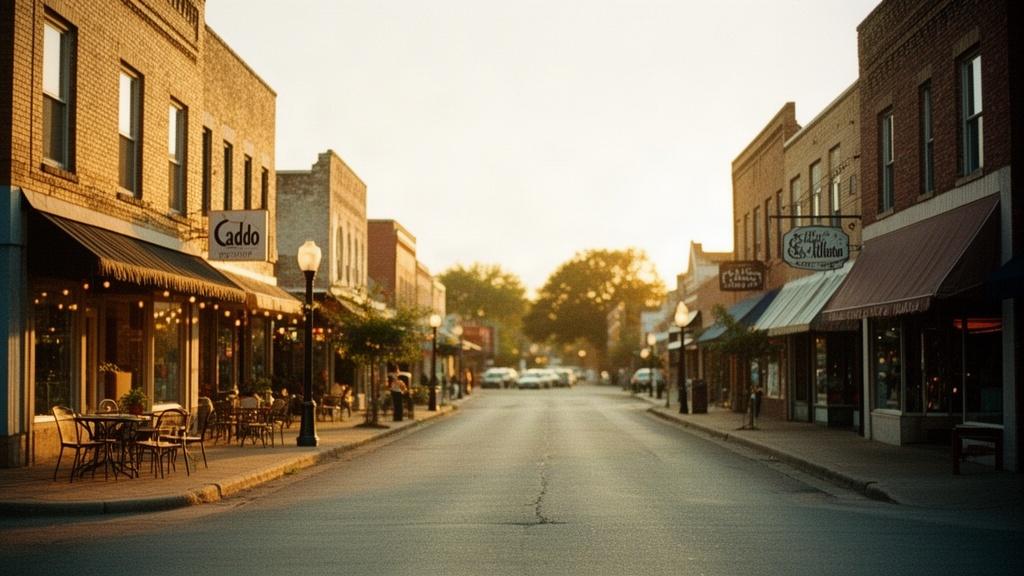
Downtown Bastrop is a genuine small-town Main Street, not a manufactured one. The historic district along Main Street and Chestnut Street includes antique shops, locally owned boutiques, a hardware store, a pharmacy, and several restaurants. The buildings date primarily from the late 1800s and early 1900s, and the streetscape has been maintained rather than redeveloped. It is walkable on a Saturday afternoon in a way that many Texas small cities are not.
The city hosts a consistent calendar of community events throughout the year. The Bastrop County Fair and Rodeo runs each fall and is a major local event. The Patriot Festival draws crowds in the summer. First Friday events in the downtown area bring live music and extended shop hours on the first Friday of most months. The Bastrop Opera House, a restored 1889 building, hosts live performances, concerts, and community theater productions year-round.
Arts, Culture, and Entertainment
The Museum of Art and Regional History in downtown Bastrop holds rotating exhibits focused on local history, Texas art, and regional culture. It is a modest but well-maintained institution. The Bastrop Public Library is active and hosts regular programming for all ages. For movie theaters, the nearest multiplex is in Buda or Kyle, roughly 25 to 30 miles west, though Bastrop occasionally hosts outdoor film events at local parks.
The Lost Pines area west of downtown has become a destination in its own right. Hyatt Regency Lost Pines Resort sits along the Colorado River and operates a public-facing spa, golf course, and river activities that Bastrop residents can access. It is not an everyday outing, but it is the kind of amenity that makes the area feel more complete than its population of roughly 11,000 might suggest.
4. Getting Around: Commutes, Distances, and Practical Logistics
Bastrop is a car-dependent city. There is no commuter rail and no meaningful public transit. Every errand and commute involves driving. That said, the road network is straightforward: Highway 71 is the primary east-west corridor connecting Bastrop to the Austin metro, and State Highway 21 connects north toward Elgin and south toward Smithville.
Driving to Austin and the Airport
The drive from Bastrop to downtown Austin is approximately 30 miles and takes 35 to 50 minutes depending on traffic. The stretch of Highway 71 between Bastrop and the Highway 183 interchange in Austin is two lanes for most of its length, which creates bottlenecks during peak hours. Residents who commute to Austin typically leave before 7:00 a.m. or after 9:00 a.m. to avoid the worst of it. The return trip in the afternoon follows similar patterns.
Austin-Bergstrom International Airport is approximately 25 miles from downtown Bastrop, which translates to a 30 to 40 minute drive without traffic. This is one of the practical advantages of Bastrop's location. Many residents who travel frequently find the airport more accessible from Bastrop than from some neighborhoods inside Austin itself. Tesla's Gigafactory, located off Highway 130 near Austin, is roughly 20 miles from Bastrop and is a significant employer for residents in the area.
Local Services and Healthcare
Bastrop has a hospital: Ascension Seton Bastrop, a community hospital with an emergency room and a range of outpatient services. For specialized care, most residents travel to Austin. The hospital serves as the primary point of care for routine emergencies and primary care visits. Several physician clinics and urgent care centers operate in town, which reduces the need to drive to Austin for minor medical needs.
Banking, dental offices, veterinary clinics, and other day-to-day services are all available within Bastrop city limits. The city has multiple pharmacy options including the H-E-B pharmacy, a CVS, and the hospital pharmacy. For residents with children, the Bastrop Independent School District operates the local public schools; the Texas Education Agency website at tea.texas.gov publishes current performance data for anyone who wants to review it directly.
Internet and Utilities
Internet connectivity in Bastrop has improved significantly over the past several years. Spectrum cable internet is available throughout most of the city, and Starlink satellite internet has become a practical option for residents in rural parts of Bastrop County where cable does not reach. Fiber availability is expanding but is not yet universal. If you work remotely, confirming service availability at a specific address before closing is a step worth taking.
Electricity in Bastrop is served by Bluebonnet Electric Cooperative for much of the county and by Entergy Texas in some areas. Water and wastewater services vary by location: city of Bastrop utilities serve properties within city limits, while rural properties may rely on well water and septic systems. This is a detail that matters during a home purchase, and it is covered in more depth in the guide to homes for sale in Bastrop, Texas.
5. The Honest Trade-Offs of Small-City Life in Bastrop
Understanding what it is like to live in Bastrop, Texas day to day means being honest about both sides. The city offers things that are genuinely difficult to find closer to Austin: lower land costs, a historic downtown, direct access to state parks and the Colorado River, and a pace of life that does not feel rushed. It also has real limitations that anyone relocating should factor in before signing a contract.
What You Gain
More space per dollar is the most concrete advantage. As of September 2026, median home prices in Bastrop are running significantly below comparable properties in Austin or Cedar Park. A budget that buys a townhouse in a north Austin suburb can buy a three-bedroom home on a half-acre lot in Bastrop. The Lost Pines area and the neighborhoods along the Colorado River offer scenery that no amount of money can replicate inside the Austin city limits.
The community scale is also a real draw for many residents. Bastrop is large enough to have the services you need day to day but small enough that you recognize faces at the grocery store and know your neighbors. The downtown district has a functioning civic life: local government meetings, community organizations, and events that bring people together in ways that are harder to sustain in a larger city.
What You Give Up
Dining variety is the most common adjustment. Bastrop has good food but a limited number of cuisines represented. If you eat Thai, Vietnamese, Korean, or Indian food regularly, you will be making that drive to Austin. The same applies to live music beyond occasional local events: Austin's music scene is 30 miles away, which is close but not walkable.
Shopping options outside of groceries and hardware are limited. There is no mall in Bastrop. Clothing, electronics, and furniture shopping happen online or during Austin trips. The Highway 71 corridor has grown in recent years and continues to add retail, but it is still a fraction of what you find in the suburbs closer to Austin. For a detailed look at how the real estate market reflects these trade-offs, the Bastrop real estate market guide covers current pricing and neighborhood conditions in depth.
Who Tends to Thrive Here
Bastrop works well for people who prioritize outdoor access, lower housing costs, and a slower pace of life, and who are comfortable driving for the things the city does not yet have. Remote workers have found it particularly practical because the commute pressure is removed entirely. People who moved here from larger Texas cities often describe an adjustment period of a few months followed by a settled feeling that is hard to articulate but easy to observe: they stop talking about moving back.
For a broader perspective from people who have made this move, this honest account of things they don't tell you about moving to Bastrop covers some of the surprises, both positive and practical, that new residents commonly encounter.
FAQ
Is Bastrop, Texas a good place to live if you work in Austin?
Bastrop is a workable commute to Austin for many people, but it requires planning. The drive along Highway 71 is approximately 30 miles and takes 35 to 50 minutes depending on traffic, with the worst congestion occurring between 7:00 and 9:00 a.m. and again in the late afternoon. Many residents who commute to Austin have shifted to hybrid schedules that reduce the number of days they make the drive. For people who work fully remotely, the commute question disappears entirely, and Bastrop's lower housing costs and outdoor access become the dominant factors. The airport proximity, roughly 25 to 30 miles from downtown Bastrop, is an additional practical advantage for frequent travelers.
What grocery stores are in Bastrop, Texas?
Bastrop has an H-E-B on Highway 71 as its primary full-service grocery store, along with a Walmart Supercenter on the same corridor. These two stores handle the majority of weekly shopping for most residents. The Bastrop Farmers Market at Fisherman's Park runs on Saturday mornings and offers local produce, eggs, honey, and baked goods from area vendors. For specialty items, organic groceries, or a wider selection, residents typically drive to Austin-area stores in Bee Cave or South Austin, a trip of roughly 35 to 45 minutes.
What is there to do in Bastrop, Texas on weekends?
Bastrop State Park is the most consistent weekend destination for residents: more than 6,000 acres of Lost Pines forest with hiking trails, a seasonal swimming pool, and campsites about two miles from downtown. Lake Bastrop, managed by the Lower Colorado River Authority, offers boating, fishing, and swimming about four miles north of town. Downtown Bastrop has antique shops, local restaurants, and the restored Bastrop Opera House, which hosts live performances year-round. First Friday events in the downtown district bring live music and extended business hours on the first Friday of most months. The Bastrop County Fair and Rodeo is a major annual event each fall.