← Back to Blog
Buying
Buying a Home in Chestnut Hill Philadelphia: Process, Costs and Timeline
By Dominique Ferguson
September 3, 2026 · 12 min read
Buying a home in Chestnut Hill Philadelphia is a distinct experience from purchasing anywhere else in the city: the housing stock is older and architecturally varied, the price range runs considerably higher than the Philadelphia median, and competition for well-priced properties moves fast. This guide walks you through the full process, from financing to closing, with real cost figures and an honest timeline so you know exactly what to expect before you make an offer.
1. What Makes Chestnut Hill Different From the Rest of Philadelphia
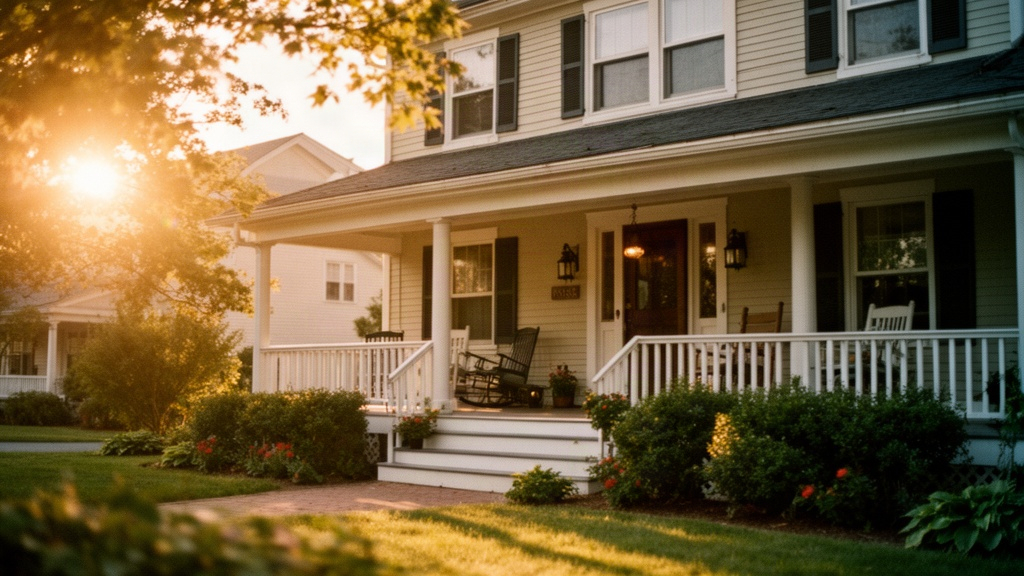
Chestnut Hill sits at the northwest tip of Philadelphia, about 11 miles from Center City. It is one of the few Philadelphia neighborhoods where single-family detached homes on generous lots are the norm rather than the exception, and where the streetscape feels closer to a small town's main street than to a dense urban grid.
The Housing Stock
Architecture here is genuinely diverse. You will find late-Victorian stone houses, Tudor revivals, Colonial revivals, and mid-century ranches, many of them built between the 1880s and the 1940s when Chestnut Hill was developed as a planned streetcar suburb. Lot sizes typically run from about 5,000 square feet on the narrower blocks near Germantown Avenue up to half an acre or more on the quieter residential streets to the east and west. Many properties have original details: slate roofs, hardwood floors, plaster walls, and stone or brick exteriors that require specific maintenance knowledge.
Townhomes and twins do exist in Chestnut Hill, particularly along the blocks closest to Germantown Avenue and the two regional rail stations, but detached single-family homes make up the largest share of the for-sale inventory. Condos are rare; when they appear, they are usually conversions of larger historic properties.
The Market Conditions in September 2026
As of September 2026, Chestnut Hill remains one of the higher-priced residential neighborhoods within Philadelphia's city limits. The median sale price for single-family homes currently sits in the range of $650,000 to $750,000, with well-maintained larger properties on quiet streets regularly trading above $900,000 and some historic estates exceeding $1.5 million. Smaller twins and end-of-row properties start closer to $450,000. Inventory is limited: the neighborhood rarely has more than 40 to 50 active listings at any given time, and correctly priced homes are going under contract within two to three weeks.
If you are comparing Chestnut Hill to other parts of the city, the broader Philadelphia market context is worth understanding before you start your search. The Philadelphia Real Estate Market Trends 2025 guide on this site covers citywide price movements and how Chestnut Hill fits within the larger picture.
2. The Step-by-Step Process for Buying a Home in Chestnut Hill Philadelphia
The process of buying a home in Chestnut Hill Philadelphia follows the same legal framework as any Pennsylvania residential purchase, but several steps carry neighborhood-specific considerations that can affect your outcome. Here is how it unfolds from start to finish.
Step 1: Get Pre-Approved
Pre-approval is non-negotiable in this market. Sellers in Chestnut Hill receive offers from buyers who have done their homework, and a listing agent will often ask to see a pre-approval letter before scheduling a showing on a desirable property. Your pre-approval should come from a lender who can close on a conventional loan in 30 days or fewer; sellers here are not interested in extended contingency periods when competing offers may be all-cash.
At the price points common in Chestnut Hill, most buyers are using conventional financing with 20 percent down to avoid private mortgage insurance. Jumbo loan territory begins at $766,550 in Philadelphia County for 2026, so buyers targeting larger properties will need a lender experienced with jumbo products. The NAR's Consumer Guide on Preparing for Homeownership is a solid starting point for understanding what lenders look at before issuing a pre-approval.
Step 2: Define Your Search Criteria
Chestnut Hill is a geographically compact neighborhood, roughly one mile wide and two miles long, but the character shifts noticeably from block to block. Properties east of Germantown Avenue tend to sit on larger lots with more separation between houses. Properties west of Germantown Avenue, closer to the Wissahickon Valley Park boundary, often have wooded settings and longer driveways. Blocks near the Chestnut Hill East and Chestnut Hill West SEPTA stations are more walkable to the Germantown Avenue retail corridor, which runs about half a mile and includes independent restaurants, boutiques, and a weekly farmers market.
Before touring homes, decide which features matter most: garage versus no garage, walkability to Germantown Avenue, proximity to Wissahickon trails, or a specific square footage threshold. In a low-inventory market, buyers who know their priorities make faster decisions and win more offers.
Step 3: Make an Offer
Pennsylvania uses the Agreement of Sale, a standardized contract that covers price, deposit, contingencies, and settlement date. In Chestnut Hill, earnest money deposits typically run between 1 and 3 percent of the purchase price; on a $700,000 home, expect to put down $7,000 to $21,000 at signing. That deposit goes into escrow and is credited toward your closing costs at settlement.
Offer strategy matters here. On a property priced at $675,000, a competitive offer in September 2026 might come in at list price or slightly above, with a 21-day inspection period and a 45-day settlement. Waiving the inspection contingency entirely is risky on older Chestnut Hill homes, where deferred maintenance on slate roofs, knob-and-tube wiring, and aging HVAC systems is common. A better approach is to keep the inspection contingency but limit it to major structural or safety issues.
Step 4: Navigate Inspections and Due Diligence
Budget for a thorough home inspection, not a quick walkthrough. A general home inspection on a 3,000-square-foot Chestnut Hill property typically costs $450 to $650. Given the age of the housing stock, you will likely want additional specialist inspections: a chimney inspection ($150 to $250), a sewer scope ($200 to $350 to check the lateral line running to the street), and potentially a radon test ($150 to $200). Older homes may also warrant an oil tank sweep if the property was previously heated with an underground storage tank.
Philadelphia requires a seller's disclosure, but the disclosure form covers what the seller knows, not what a qualified inspector will find. Do not skip inspections to save time or money on a property that is 80 to 120 years old.
Step 5: Clear the Mortgage and Reach the Closing Table
After inspection negotiations are resolved, your lender orders an appraisal and begins underwriting. The appraisal on a Chestnut Hill property can take 10 to 15 days to schedule and return, because the appraiser must find comparable sales within a reasonable radius; the neighborhood's relatively small inventory means the appraiser may need to pull comps from adjacent Mt. Airy or Wyndmoor. If the appraisal comes in below purchase price, you will need to negotiate with the seller or cover the gap in cash.
The period between a signed agreement and settlement involves title search, title insurance commitment, homeowner's insurance binding, and final loan approval. The NAR's Consumer Guide: Steps Between Signing and Closing explains each of these steps clearly for buyers going through it for the first time.
3. What Does It Actually Cost to Buy in Chestnut Hill?
The total cost of buying a home in Chestnut Hill Philadelphia goes well beyond the purchase price. Here is a realistic breakdown of every dollar you need to plan for.
Purchase Price Range
- Twins and smaller row-style homes: $420,000 to $550,000 as of September 2026, typically 1,400 to 2,000 square feet.
- Mid-size detached single-family homes: $600,000 to $850,000, typically 2,200 to 3,500 square feet, often with a garage.
- Larger historic homes and estates: $900,000 to $1.8 million or more, with 4 to 7 bedrooms, substantial lot, and original architectural details.
Closing Costs
In Pennsylvania, buyers carry a meaningful share of closing costs. On a $700,000 purchase, total closing costs typically land between $14,000 and $21,000, or roughly 2 to 3 percent of the purchase price. The largest line items are as follows.
- Pennsylvania Realty Transfer Tax: 2 percent of the purchase price, split between buyer and seller (1 percent each) unless negotiated otherwise. On a $700,000 sale, that is $7,000 total, with $3,500 owed by the buyer.
- Philadelphia City Transfer Tax: 3.278 percent of the purchase price on top of the state tax, also typically split. The city portion alone on a $700,000 purchase is approximately $22,946, shared between buyer and seller.
- Lender fees: Origination, underwriting, and processing fees typically total $1,500 to $3,000 depending on the lender and loan size.
- Title insurance (owner's policy): Approximately $1,800 to $2,800 on a $700,000 purchase in Pennsylvania, paid once at closing.
- Prepaid items: Homeowner's insurance premium, prepaid mortgage interest, and escrow reserves for property taxes add another $3,000 to $6,000 at closing depending on your settlement date and tax timing.
- Recording fees and miscellaneous: Philadelphia County recording fees and settlement agent fees typically add $500 to $1,000.
Note on Philadelphia transfer tax: the combined state and city transfer tax rate in Philadelphia is one of the highest in Pennsylvania. Buyers relocating from other parts of the state or from other cities are often surprised by this figure. It is worth building it into your budget early.
First-Year Ownership Costs to Budget For
Property taxes in Chestnut Hill vary based on the city's assessed value, which does not always track closely with market value. A home selling for $700,000 might carry an annual property tax bill of $6,000 to $10,000 depending on when it was last reassessed. You can look up any property's current assessed value and tax bill on the Philadelphia Office of Property Assessment's public portal before making an offer.
Older homes also carry higher routine maintenance costs than newer construction. A slate roof that needs spot repairs, a boiler that needs servicing, or a stone foundation that needs repointing are common first-year expenses in Chestnut Hill. Budget at least 1 to 1.5 percent of the purchase price annually for maintenance on a pre-1950 home, which on a $700,000 property means setting aside $7,000 to $10,500 per year.
4. How Long Does the Process Take?
From the day you start seriously searching to the day you receive keys, buying a home in Chestnut Hill Philadelphia realistically takes three to five months for most buyers. Here is how that time breaks down.
Realistic Timeline From Search to Keys
- Pre-approval and preparation: 1 to 3 weeks. Gathering documents, choosing a lender, and receiving a pre-approval letter.
- Active home search: 4 to 10 weeks. Given Chestnut Hill's limited inventory, buyers who are flexible on style but firm on location tend to find homes faster than those waiting for a specific property type.
- Offer to signed agreement: 1 to 5 days. Counter-offers are common; most negotiations resolve within a week.
- Inspection period: 10 to 21 days from signed agreement, including scheduling, completing, and negotiating inspection results.
- Mortgage processing and appraisal: 3 to 5 weeks from signed agreement, running concurrently with the inspection period.
- Clear to close and settlement scheduling: 5 to 10 days from final loan approval to settlement date. Pennsylvania settlements typically happen at a title company's office.
- Total from signed agreement to keys: 30 to 60 days, with 45 days being the most common settlement period in Chestnut Hill.
What Slows Things Down in Chestnut Hill Specifically
The appraisal is the most common delay in Chestnut Hill transactions. Because the neighborhood has a relatively small number of annual sales compared to denser parts of the city, appraisers sometimes struggle to find three or four recent comparable sales within a half-mile radius. If the appraiser needs to expand the search area or make significant adjustments, the report takes longer and may come in below contract price.
Inspection negotiations on older homes can also extend the timeline. A buyer who discovers a failing boiler, evidence of past water intrusion, or outdated electrical panels has legitimate grounds to renegotiate, and those conversations sometimes take several rounds. Going in with a realistic expectation that older homes will have issues, and deciding in advance how you want to handle them, keeps the process moving.
5. Chestnut Hill Neighborhood Details Every Buyer Should Know
Understanding the physical layout and practical details of Chestnut Hill helps you evaluate properties more accurately and avoid surprises after you move in.
Streets, Architecture and Lot Sizes
Germantown Avenue is the commercial and social spine of the neighborhood, running diagonally from the southeast corner to the northwest. Residential streets branch off both sides. Streets like Seminole, Cherokee, Hartwell, and Mermaid Lane have some of the neighborhood's most substantial historic homes. Benezet Street and Willow Grove Avenue are more active corridors with a mix of residential and light commercial use. Most blocks are tree-lined with mature oaks and maples, and many properties have established gardens.
Commute and Transportation
Chestnut Hill is served by two SEPTA Regional Rail lines: the Chestnut Hill East line and the Chestnut Hill West line, both of which connect to Center City's Jefferson Station and Suburban Station. The train ride to Center City runs approximately 25 to 35 minutes depending on the line and the time of day. Trains run frequently during peak commute hours. Driving to Center City takes 20 to 35 minutes without traffic, longer during morning and evening rush hours on Lincoln Drive and Kelly Drive.
For buyers who work in King of Prussia, Plymouth Meeting, or other northwestern suburbs, Chestnut Hill offers reasonable access via Germantown Pike and Route 309 without requiring a Center City commute at all.
Parks, Retail and Daily Life
Wissahickon Valley Park borders the western edge of Chestnut Hill and offers over 50 miles of trails through a wooded gorge along Wissahickon Creek, all within Philadelphia city limits. The park is managed by the Fairmount Park system and is one of the largest urban natural areas in the country. Trail access points are within walking distance of most Chestnut Hill addresses.
Germantown Avenue's retail corridor includes grocery options, a Saturday farmers market at Chestnut Hill Hotel, independent bookstores, cafes, hardware stores, and a range of restaurants. Residents can handle most daily errands on foot or by a short drive within the neighborhood. Larger grocery stores and big-box retail are accessible via a 5 to 10 minute drive toward Flourtown or Erdenheim in Montgomery County.
Buyers relocating from other parts of Philadelphia may also want to compare notes on how other high-demand neighborhoods are priced. The Rittenhouse Square Philadelphia Real Estate Market Guide covers another segment of the city's upper-tier market and is useful for buyers weighing urban versus residential-neighborhood options.
FAQ
How much do I need for a down payment to buy a home in Chestnut Hill Philadelphia?
At the current median price range of $650,000 to $750,000, a 20 percent conventional down payment means bringing $130,000 to $150,000 to the table before closing costs. Some buyers use 10 percent down with private mortgage insurance, which reduces the upfront cash requirement but increases the monthly payment. On properties above $766,550, you are in jumbo loan territory, which typically requires at least 20 percent down and stronger credit and reserve requirements. In addition to the down payment, budget another 2 to 3 percent of the purchase price for closing costs, plus inspection fees and moving expenses.
Is Chestnut Hill a good area to buy if I plan to resell in five to seven years?
Chestnut Hill has historically held value well within Philadelphia's market because of its limited inventory, distinctive housing stock, and proximity to Wissahickon Valley Park. Properties that are well-maintained and correctly priced tend to sell relatively quickly even in slower market conditions. That said, past performance does not guarantee future appreciation, and resale outcomes depend heavily on the specific property, its condition, and broader market conditions at the time you sell. A local agent with transaction history in Chestnut Hill can give you a more precise read on which property types and price points have shown the most consistent demand.
Can I use an FHA loan to buy a home in Chestnut Hill?
Technically yes, FHA loans are available for properties in Chestnut Hill, but the FHA loan limit for Philadelphia County in 2026 is $524,225 for a single-family home. Since the majority of Chestnut Hill's inventory is priced above that threshold, FHA financing covers only a narrow slice of available properties, primarily smaller twins or entry-level homes. Buyers using FHA financing should also be aware that sellers in a competitive market may prefer offers backed by conventional financing, which has fewer property condition requirements and is perceived as lower-risk. Discussing your financing options with both a lender and your buyer's agent before you start touring homes will help you understand exactly which properties fall within your range.