← Back to Blog
Market Trends
Is Right Now a Good Time to Buy a Home in Philadelphia, Pennsylvania or Should I Wait
By Dominique Ferguson
August 27, 2026 · 7 min read
If you have been asking yourself whether right now is a good time to buy a home in Philadelphia, Pennsylvania or whether you should wait, you are not alone. The 2026 market has shifted in ways that make this question harder to answer with a simple yes or no. This post breaks down what is actually happening in Philadelphia real estate right now so you can make a decision that fits your finances, your timeline, and your life.
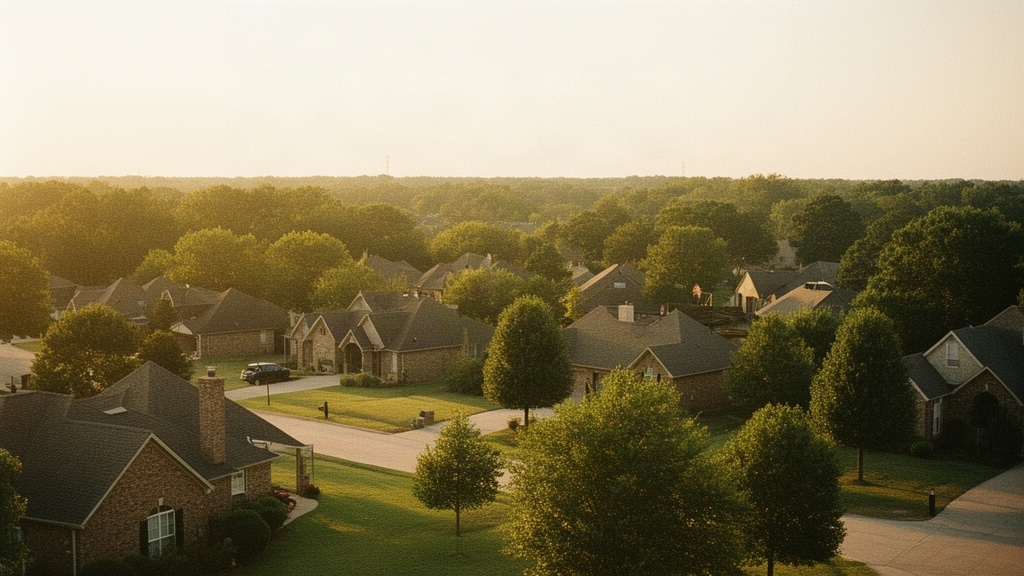
1. What the Philadelphia Housing Market Looks Like Right Now
Philadelphia's housing market in August 2026 is active, competitive in certain price bands, and moving faster than many buyers expect. Inventory has loosened compared to the historic lows of 2022 and 2023, but the city is not sitting on a surplus of homes. Well-priced properties in neighborhoods close to Center City, University City, and along the SEPTA Regional Rail corridors are still generating multiple offers within the first week of listing.
Inventory and Competition
The Philadelphia metro area has consistently seen homes sell faster than the national average. According to reporting from HousingWire, Philadelphia metro homes sell faster than the national pace, a trend that has held through the rate environment of the past two years. Buyers who are waiting for a dramatic slowdown in Philly may be waiting longer than they anticipate.
The starter home segment, roughly properties priced between $200,000 and $375,000, remains the most competitive tier in the city. Row homes in areas like Kensington, Frankford, and parts of South Philadelphia at that price point are moving quickly. Move-up buyers looking at properties in the $400,000 to $650,000 range in neighborhoods like East Passyunk, Brewerytown, or Roxborough are finding slightly more breathing room but still need to move decisively when the right home appears.
How Philadelphia Compares to National Trends
Nationally, housing economists have flagged 2026 as a year of gradual recalibration rather than dramatic correction. The National Association of Realtors predicted a 2026 comeback for the housing market, driven by more inventory coming to market and modest mortgage rate movement. Philadelphia, as a dense urban market with strong institutional demand and a large renter population that continues to convert to buyers, tends to track national trends but with less volatility on the downside.
2. The Case for Buying Now in Philadelphia
If you have been sitting on the sidelines wondering whether right now is a good time to buy a home in Philadelphia, Pennsylvania, there are several concrete reasons to take the question seriously this month. Waiting is not a neutral decision. Every month you wait, you are paying rent, not building equity, and potentially watching the homes you want move further from your budget.
Prices Are Still Moving
Philadelphia home prices have not collapsed, and the data does not suggest they are about to. The city's median sale price has held firm through the higher rate environment because demand from buyers priced out of the suburbs continues to flow back into Philadelphia proper. A row home in Bella Vista or a twin in Germantown that was listed at $320,000 two years ago is likely listed closer to $350,000 or higher today.
Philadelphia also benefits from its relative affordability compared to New York, Washington D.C., and Boston. That gap continues to attract remote workers and relocating professionals who find that a budget of $400,000 to $500,000 goes significantly further here than in those markets. That steady inflow of demand puts a floor under prices.
Locking In Before Further Appreciation
Buying now means your mortgage payment is fixed even if prices rise further. If rates ease later in 2026 or into 2027, you can refinance. What you cannot do is go back and buy at today's price if values climb another five to eight percent over the next eighteen months. Philadelphia's housing stock is finite, and new construction in the city is limited by land constraints and permitting timelines.
3. The Case for Waiting
Waiting makes sense in specific circumstances, and it is worth being honest about those before making one of the largest financial decisions of your life. The question of whether right now is a good time to buy a home in Philadelphia, Pennsylvania depends heavily on your personal financial picture, not just the market.
Mortgage Rate Uncertainty
Mortgage rates remain elevated relative to the 2020 and 2021 lows, and that affects monthly payment calculations significantly. On a $350,000 loan, a one-point difference in your interest rate translates to roughly $200 per month. If your budget is tight and you believe rates will drop meaningfully in the next six to twelve months, waiting to lock a lower rate could make a real difference in your monthly cash flow.
The honest reality is that rate predictions have been consistently wrong over the past three years. Economists and lenders who forecast sharp rate drops in 2024 and 2025 were largely incorrect. Waiting for a specific rate target is a strategy that can leave you waiting indefinitely while prices continue to climb.
Personal Financial Readiness
If your credit score needs improvement, your down payment is not yet where you want it, or your income situation is unstable, waiting is the right call regardless of market conditions. Philadelphia has programs through the Philadelphia Housing Development Corporation and the Pennsylvania Housing Finance Agency that offer down payment assistance to qualifying buyers, so it is worth exploring those before assuming you need to wait years to save a full twenty percent down.
4. Philadelphia Neighborhoods and Price Ranges to Know
Philadelphia's housing stock is one of the most architecturally varied of any major American city, and the price range you are working with will shape which parts of the city are realistic for you. Understanding what your budget actually buys here is a critical part of deciding whether now is the right time to move forward.
Row Homes, Condos, and Twin Houses
The classic Philadelphia row home is the backbone of the city's residential market. These two and three-story brick structures, typically with two to four bedrooms, are found across nearly every neighborhood from South Philly to the Northeast. They offer more square footage per dollar than comparable urban condos and often include a small backyard or rear patio. Condo inventory is more concentrated in Center City, Northern Liberties, and along the Delaware River waterfront, with prices ranging from the mid-$200,000s for a studio to well over $700,000 for a larger unit with parking.
What Your Budget Gets You
In August 2026, a budget of $250,000 to $325,000 opens up row homes in areas like Port Richmond, Olney, and parts of West Philadelphia with good access to the Market-Frankford Line. Buyers with $375,000 to $550,000 can look seriously at properties in Manayunk, Mt. Airy, and Chestnut Hill, where larger twins and detached homes on tree-lined streets sit within thirty to forty-five minutes of Center City by car or SEPTA. Above $600,000, the inventory in Society Hill, Fairmount, and Queen Village includes renovated historic homes steps from the Philadelphia Museum of Art, Rittenhouse Square, and the Italian Market.
For buyers relocating from out of state, Philadelphia's commuter rail network is a genuine asset. SEPTA Regional Rail connects the city to the suburbs of Montgomery, Delaware, and Bucks counties, and Amtrak's 30th Street Station offers direct service to New York Penn Station in under two hours. If your job is flexible or hybrid, that connectivity expands your options considerably.
5. How to Make the Decision That Is Right for You
The answer to whether right now is a good time to buy a home in Philadelphia, Pennsylvania is not the same for every buyer. It depends on your financial readiness, your timeline, and how long you plan to stay in the home. As a general rule, buyers who plan to own for at least five years are in a much stronger position to weather any short-term market fluctuation than those who may need to sell in two or three years.
Get pre-approved before you start touring homes. In Philadelphia's market, sellers are not going to take your offer seriously without a current pre-approval letter, and the process of getting pre-approved often surfaces credit or income issues that are better resolved before you fall in love with a property.
Work with a local agent who tracks Philadelphia's specific neighborhoods, not just regional averages. The difference between what is happening on a block in Fishtown versus a block in Mayfair can be significant, and national headlines about the housing market often have little to do with the specific street you are trying to buy on.
FAQ
Will Philadelphia home prices drop in 2026?
Most housing economists are not forecasting meaningful price drops in Philadelphia for 2026. The city's relatively affordable price point compared to other major East Coast metros continues to support demand, and inventory, while improved from prior years, has not reached levels that would put significant downward pressure on prices. Forbes Advisor's 2026 housing market analysis notes that price corrections, where they occur nationally, are concentrated in markets that saw the most dramatic pandemic-era appreciation, which Philadelphia did not experience to the same degree. That said, individual properties can be overpriced, and a knowledgeable local agent can help you identify fair value before you make an offer. Monitoring the market monthly with a professional is the most reliable way to track what is actually happening at the neighborhood level.
Is it better to buy or keep renting in Philadelphia right now?
This depends on how long you plan to stay in Philadelphia and where your finances stand today. Renting offers flexibility, but Philadelphia rents for a two-bedroom apartment in many neighborhoods now exceed $1,800 to $2,200 per month, and that money builds no equity. Buyers who purchase a row home in a stable Philadelphia neighborhood and hold it for five or more years have historically come out ahead of comparable renters when you factor in equity accumulation and the fixed nature of a mortgage payment. The break-even timeline in Philadelphia is generally shorter than in higher-cost cities like New York or San Francisco, making homeownership a realistic option for many current renters. Running a detailed rent-versus-buy comparison with a local agent and a lender is the most useful first step.
What should I do first if I am thinking about buying a home in Philadelphia?
The single most useful first step is getting a mortgage pre-approval from a lender, not just a pre-qualification. Pre-approval requires full documentation of your income, assets, and credit, and it gives you a firm budget to work with rather than an estimate. Once you know your number, connect with a Philadelphia-based real estate agent who can walk you through current inventory in the specific neighborhoods that fit your commute, budget, and lifestyle preferences. Philadelphia has dozens of distinct neighborhoods, each with its own housing stock, price trends, and character, and having a local expert in your corner helps you move quickly and confidently when the right property comes to market. Down payment assistance programs through the Pennsylvania Housing Finance Agency are also worth exploring before you assume you need to save more before starting the process.