← Back to Blog
Market Trends
Bound Brook, New Jersey: Do Locals Actually Trust the Real Estate Market? A Guide to Prices, Neighborhoods and Timing
By Donna Haigh
Keller Williams Towne Square
September 27, 2026 · 10 min read
People who have lived in Bound Brook, New Jersey for years tend to have a complicated relationship with its real estate market: they know the borough's value, but they also know its quirks. This guide answers the questions locals and newcomers alike are asking right now, covering prices, neighborhood character, flood considerations, commute math and the timing decisions that separate a good move from a costly one.
1. What Locals Know About Bound Brook That the Listings Don't Say
The Borough's Real Identity
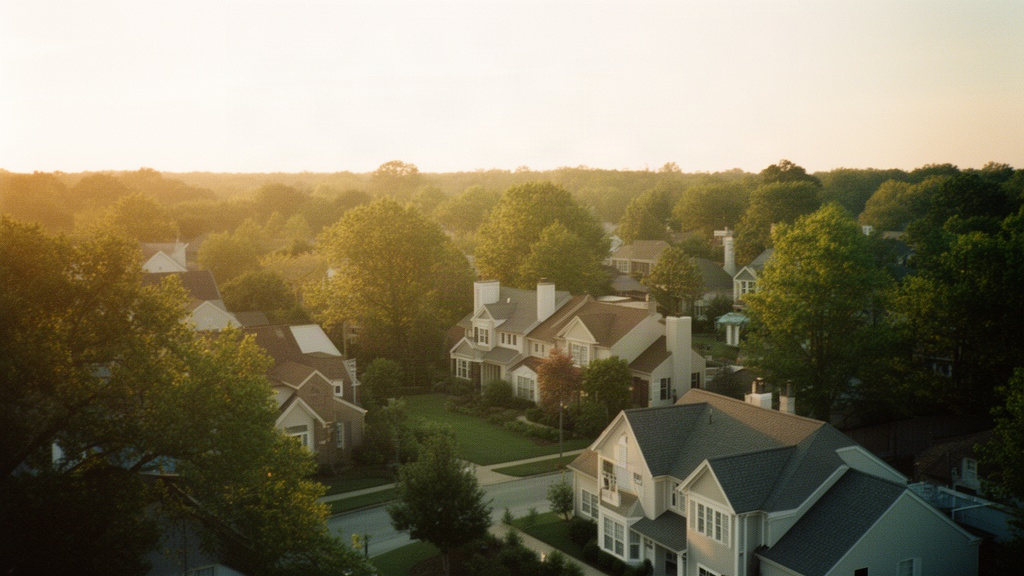
Bound Brook is a one-square-mile borough in Somerset County, about 35 miles southwest of Midtown Manhattan. That density matters: nearly every street in the borough is within a short walk of something useful, whether it is the NJ Transit Raritan Valley Line station on South Main Street, the restaurants and shops along East Main Street, or the recreational fields along the Raritan River. The borough has roughly 11,000 residents and a housing stock that spans late-Victorian two-family homes, mid-century Cape Cods, brick colonials and a growing number of renovated single-family houses that have been updated for modern buyers.
What longtime residents understand is that Bound Brook punches above its price weight relative to neighboring Somerville and Bridgewater. A buyer who moves here from a higher-cost borough often finds that their money goes noticeably further, while still landing in a walkable, transit-connected community. That reputation is not marketing language; it shows up consistently in how quickly well-priced homes move off the market.
What the Price Range Actually Reflects
Bound Brook's price range is wide, and that width is intentional, not a sign of instability. At the lower end, you find two-family homes on smaller lots that need cosmetic updating. At the upper end, you find fully renovated colonials on the higher-elevation streets west of the downtown core. The spread between those two poles can be $200,000 or more, which means a buyer's budget and priorities determine which Bound Brook they experience. Locals who have watched the market for a decade know that the borough rewards buyers who understand those distinctions rather than treating every listing as interchangeable.
2. Where Prices Stand in September 2026
Median Sale Prices and What Drives Them
As of September 2026, the median sale price for single-family homes in Bound Brook sits in the mid-to-upper $400,000s, with well-renovated properties on elevated streets routinely closing above $500,000. Two-family homes, which make up a meaningful share of the borough's housing stock, typically trade in the $380,000 to $470,000 range depending on condition and location. Condominiums and townhomes, concentrated near the downtown corridor, generally list between $280,000 and $380,000, making them the most accessible entry point in the borough.
Three factors are driving prices right now. First, inventory remains constrained: the number of active listings in the borough at any given moment is small, which keeps competition among buyers elevated. Second, the Raritan Valley Line's direct service to Newark Penn Station and one-seat ride discussions to New York continue to anchor commuter demand. Third, buyers priced out of Somerville and Bridgewater are consistently looking at Bound Brook as an alternative, which puts a floor under values even when broader New Jersey market conditions soften.
How Bound Brook Compares Within Somerset County
Somerset County as a whole has seen price appreciation moderate in 2026 compared to the peak years of 2021 and 2022, a pattern consistent with what HousingWire has reported about cooling New Jersey markets. Bound Brook has held up relatively well within that context because its price point is lower than Bernardsville or Far Hills, which means demand from a broader pool of buyers remains active. The borough is not immune to rate sensitivity, but its affordability relative to the county median gives it a cushion that higher-priced towns do not have.
Property taxes in Bound Brook run roughly $8,500 to $11,500 annually for a typical single-family home, depending on assessed value and any exemptions in place. That range is worth factoring into your monthly payment calculation before you compare Bound Brook to a neighboring town with a lower list price but higher tax rate. The full picture of carrying costs is what determines whether a home is affordable, not the sticker price alone.
3. Neighborhood Character: Streets, Stock and What You Get for Your Money
Bound Brook's neighborhoods are defined more by housing type, lot size and elevation than by named districts. Understanding those physical differences is the practical starting point for any buyer trying to match a budget to a street. For a detailed look at walkability and proximity to the train station by street, the guide on walkable neighborhoods and streets in Bound Brook breaks that down block by block.
The West Side and Mountain Avenue Corridor
Streets on the western and northwestern edges of the borough, including the Mountain Avenue corridor and the blocks climbing toward the Watchung ridge, tend to sit at higher elevations. The housing stock here skews toward larger single-family colonials and split-levels on lots that range from a quarter to a third of an acre. These homes were built primarily from the 1950s through the 1980s, and many have been updated with modern kitchens and baths. Buyers who prioritize elevation, lot size and garage parking tend to concentrate their search in this part of the borough, and prices reflect that: expect the upper portion of Bound Brook's price range here.
Downtown and the East Main Street Area
The blocks surrounding East Main Street and the downtown core contain the borough's most walkable real estate. Housing here is denser, with two-family homes, Victorian-era single-families and smaller colonials on lots typically under a fifth of an acre. The trade-off for the smaller lot is the ability to walk to the train station, the restaurants on East Main Street, Bound Brook Memorial Library and the small businesses that line the commercial corridor. For buyers who want to minimize car dependence, this part of the borough delivers on that goal in a way that the outer streets do not.
The East Main Street area has its own detailed market guide on this site. The East Main Street area real estate guide covers specific price ranges and recent sale data for that corridor if you want to go deeper on that pocket of the borough.
The Watchung Avenue and South Side Streets
The southern portion of the borough, including streets near Watchung Avenue and those running toward the Raritan River, contains some of the most varied housing stock in Bound Brook. You find everything from modest Cape Cods to larger two-families here, and the price range reflects that variety. Some of these streets sit in or near FEMA-designated flood zones, which affects insurance costs and lender requirements. That is a concrete, checkable fact that buyers need to address before making an offer, not after. The flood zone guide on this site explains exactly how to research a specific property's flood status before you commit.
4. Timing the Market: When to Buy and When to Sell in Bound Brook
The Seasonal Pattern That Repeats Every Year
Bound Brook follows a predictable seasonal rhythm that has held across multiple market cycles. Listing activity picks up in late February and March, peaks through April and May, and then softens through the summer. A second, smaller wave of activity runs from mid-September through mid-November as buyers who missed the spring market make another push before the holidays. December and January are the quietest months for both listings and sales, though serious buyers who search during that window often face less competition.
What September 2026 Specifically Looks Like for Buyers
Right now, in September 2026, buyers are entering the fall window with slightly more breathing room than the spring offered. Inventory is still lean by historical standards, but the frenzy of multiple offers within 48 hours has moderated on most listings. Homes that are priced correctly and in good condition still move quickly, often within two to three weeks. Homes that are overpriced or have deferred maintenance are sitting longer, which gives buyers more room to negotiate on those specific properties. The key distinction right now is that the market is not uniform: a well-priced updated home on a high-elevation street will still draw competitive offers, while a flood-zone property with dated finishes may sit for six to eight weeks.
For a detailed look at how long homes are sitting on the market across the borough right now, the article on days on market in Bound Brook NJ gives current figures by property type.
What September 2026 Specifically Looks Like for Sellers
Sellers who list in September and October in Bound Brook are catching buyers who are motivated to close before the end of the year. Those buyers often have lease expirations, school-year constraints or mortgage rate locks pushing them toward a year-end closing, which means they are not browsing casually. The risk for sellers is overpricing into this window: buyers in the fall are more experienced than spring buyers because many of them have already lost out on homes and recalibrated their expectations. An overpriced listing in October does not get the benefit of the doubt the way a spring listing sometimes does.
5. The Questions Locals Ask Before Trusting Any Real Estate Decision
Flood Zones and Insurance: The Honest Answer
Flood risk is the single most important local variable that outside buyers consistently underestimate in Bound Brook. The borough sits at the confluence of the Raritan River and the Green Brook, and portions of it carry FEMA Special Flood Hazard Area designations. That designation affects whether a lender requires flood insurance, how much that insurance costs annually and what your resale pool looks like when you eventually sell. The answer is not to avoid the borough; it is to check the FEMA Flood Map Service Center for the specific parcel before you make an offer, and to get a flood insurance quote as part of your due diligence rather than after closing.
The full breakdown of how flood zones work in Bound Brook, what elevation certificates do and how to read a flood map is covered in the guide on flood risk and flood zone concerns for buying a home in Bound Brook. Read it before you fall in love with a listing.
The Commute Math That Makes or Breaks the Decision
The NJ Transit Raritan Valley Line runs through Bound Brook station on South Main Street, with trains to Newark Penn Station in roughly 50 to 60 minutes depending on the service pattern. From Newark, connections to New York Penn Station via NJ Transit or the PATH train add another 20 to 30 minutes. For buyers who work in Newark or Jersey City, the math is more favorable: a direct trip to Newark in under an hour is competitive with many closer-in suburbs that carry significantly higher price tags. Buyers who drive to work should note that Route 28, Interstate 287 and Route 22 are all accessible within a few minutes of the borough, making car-based commutes to central and northern New Jersey workable.
How to Read a Bound Brook Listing Like a Local
Locals who have watched the Bound Brook market for years have developed a short checklist they run through on every listing before deciding whether to look further. First, they check the street's elevation relative to the Raritan River. Second, they look at how long the property has been on the market and whether there have been price reductions. Third, they check the tax record to see when the home last sold and what it sold for, which tells them whether the current ask is grounded in reality or wishful thinking. Fourth, they look at the lot size and parking situation, because street-only parking on a dense block is a quality-of-life issue that photographs do not reveal.
The broader market context for all of this sits within a national picture where certain mid-size transit-connected markets have held up better than others. The NAR's top homebuying hot spots for 2026 consistently highlight affordability combined with transit access as the defining traits of markets that attract sustained buyer demand, which describes Bound Brook's core value proposition accurately.
For sellers, understanding what buyers are actually scrutinizing is the foundation of a good pricing strategy. The guide on selling a home in Bound Brook and what to expect from the process walks through how to position a listing to meet that buyer scrutiny rather than fight it.
FAQ
Is the Bound Brook, New Jersey real estate market a good place to buy right now in September 2026?
The Bound Brook market in September 2026 offers buyers modestly more negotiating room than the spring peak, with some overpriced or flood-zone listings sitting longer and accepting price reductions. Well-priced, updated homes on higher-elevation streets are still moving competitively, so buyers need to be pre-approved and ready to act on those properties. The borough's median price in the mid-to-upper $400,000s for single-family homes remains more accessible than neighboring Somerville or Bridgewater, which continues to draw buyers from those markets. Whether it is the right time for you specifically depends on your financing, timeline and which part of the borough you are targeting. A conversation with a local agent who tracks week-to-week activity is the most reliable way to calibrate that decision.
Which streets or areas in Bound Brook, NJ are outside the flood zone?
Generally speaking, streets at higher elevations on the western and northwestern sides of the borough, including portions of the Mountain Avenue corridor, tend to sit outside FEMA Special Flood Hazard Areas. However, flood zone boundaries are drawn at the parcel level, not the neighborhood level, so two houses on the same block can carry different designations. The only reliable way to check a specific property is to look it up on the FEMA Flood Map Service Center using the property's address or parcel number. Your lender will also order a flood zone determination as part of the mortgage process, but it is worth checking before you make an offer rather than waiting for that step. An experienced local agent can help you interpret what the designation means for insurance costs and resale.
How long does it typically take to sell a home in Bound Brook, New Jersey?
In September 2026, correctly priced and well-presented homes in Bound Brook are generally going under contract within two to three weeks of listing. Homes that are overpriced relative to recent comparable sales, or that carry flood zone designations requiring additional buyer due diligence, are taking six to eight weeks or longer. The spring market, from March through May, tends to produce the fastest sales and the most competitive offer situations. Fall listings, from September through mid-November, attract motivated year-end buyers who move quickly when the price is right. Sellers who invest in pre-listing preparation, including fresh paint, decluttering and accurate pricing, consistently outperform those who list as-is at an aspirational price.