← Back to Blog
Market Trends
Arlington Heights Road Real Estate Market Guide: Prices, Neighborhoods and Timing
By Elizabeth Kania
September 2, 2026 · 11 min read
The Arlington Heights Road corridor is one of the most active stretches of real estate in the northwest suburbs, and understanding what drives prices and timing here can make a real difference in what you pay or what you net. This Arlington Heights Road real estate market guide covers current prices, the neighborhoods that sit along and near this corridor, and the seasonal patterns that shape when to buy or sell. Whether you are relocating to Arlington Heights, Illinois, or already live here and are planning your next move, the numbers and local context below will help you make a more confident decision.
1. What the Arlington Heights Road Corridor Actually Looks Like
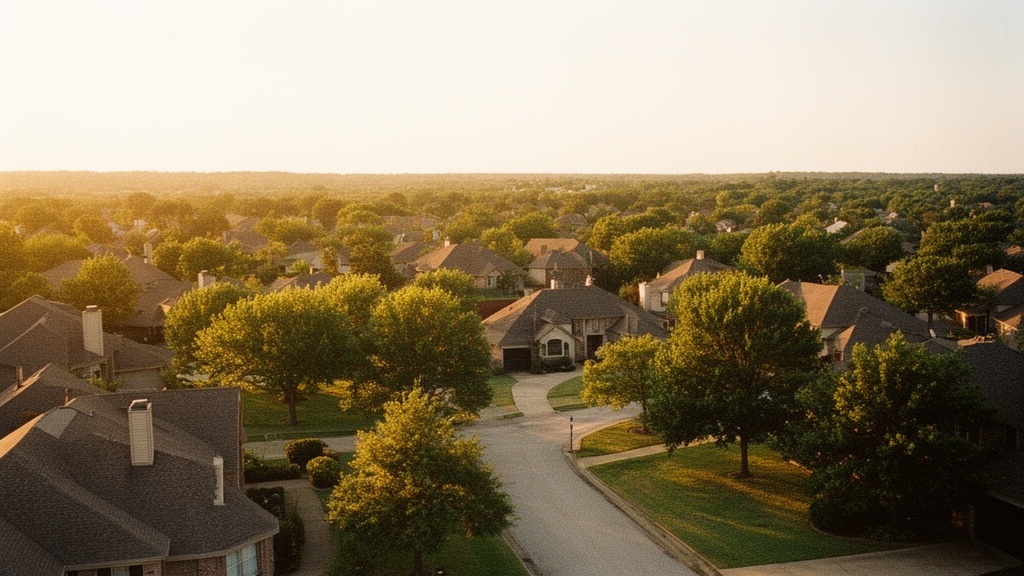
Arlington Heights Road runs roughly north to south through the heart of Arlington Heights, Illinois, connecting major cross streets like Palatine Road, Euclid Avenue, and Kirchhoff Road before continuing south toward the Cook County line. It is not a single neighborhood but a spine that stitches together several distinct residential pockets, each with its own housing stock, lot sizes, and price points.
The Physical Stretch and Its Housing Mix
The housing stock along this corridor is genuinely varied. Within a half-mile on either side of Arlington Heights Road, you will find postwar ranch homes from the 1950s and 1960s sitting a few blocks from colonial-style two-stories built in the 1980s, and newer construction infill homes that have gone up over the last decade as older cottages were torn down and replaced. Lot sizes range from compact 6,000-square-foot parcels near the road itself to deeper 10,000-plus-square-foot lots on the quieter residential side streets.
The corridor also passes near several of Arlington Heights' most-used commercial and civic anchors: Mariano's on Palatine Road, the Metropolis Performing Arts Centre a short drive east on Campbell Street, and the Arlington Heights Memorial Library on Dunton Avenue. Proximity to these amenities is part of what keeps demand steady in neighborhoods that feed off this corridor.
Price Ranges Along the Corridor Right Now
As of September 2026, single-family homes within a half-mile of Arlington Heights Road are trading in a wide band. Entry-level ranches and smaller split-levels are generally priced between $380,000 and $460,000. Updated four-bedroom colonials and larger two-stories with finished basements are clustering between $520,000 and $680,000. Newer construction or fully gut-renovated homes on deeper lots are pushing $700,000 to $850,000 in some blocks, particularly north of Euclid where lot sizes tend to be larger.
Condominiums and townhomes also appear along this corridor, especially closer to the Palatine Road intersection. Those units are generally priced between $220,000 and $360,000 depending on square footage and whether the unit has been updated. This range makes the corridor one of the more accessible entry points into Arlington Heights homeownership without leaving the village limits.
2. Neighborhood Pockets Along and Near Arlington Heights Road
The corridor does not have a single character. Each segment has its own feel, price level, and housing type, and knowing the differences helps buyers focus their search and helps sellers understand how their home compares to nearby listings.
North of Euclid Avenue
North of Euclid, the streets feeding off Arlington Heights Road tend to have larger lots and more mature tree canopy. Many of the homes here were built between 1960 and 1985 and have been updated over the years, though you will still find original-condition homes that represent renovation opportunities. The Nickol Knoll Golf Club sits in this general area, and Nickol Knoll Park offers a sledding hill, picnic shelters, and open green space. Homes within easy walking distance of that park have historically attracted strong buyer interest.
Median prices in this northern segment are currently running closer to the $520,000 to $640,000 range for four-bedroom homes, with some outliers above that on premium lots. Days on market for well-priced homes in this pocket have been averaging 18 to 28 days through the summer of 2026, which reflects consistent but not frenzied demand.
Central Section Near Palatine Road
The intersection of Arlington Heights Road and Palatine Road is one of the busiest commercial nodes in the village. Residential streets just a block or two off this intersection offer the convenience of walkable grocery, pharmacy, and restaurant access. The trade-off is that lots are somewhat smaller and traffic noise is a factor on the blocks immediately adjacent to Palatine Road. Buyers who prioritize walkability over quiet tend to be drawn to this central section.
Townhome and condo inventory is most concentrated in this central stretch. Single-family homes here are often the 1,400 to 1,900 square foot ranch or raised ranch style, and they are priced accordingly, typically between $390,000 and $490,000 for move-in-ready condition. Homes that need work are still selling, but buyers in 2026 are negotiating more aggressively on condition than they were two years ago.
South Toward Campbell Street and Sigwalt
As Arlington Heights Road approaches the downtown core, the residential streets feeding off it begin to take on a different character. Homes closer to Campbell Street and Sigwalt Street are within easy reach of the Metra Union Pacific Northwest Line station on Davis Street, putting downtown Chicago roughly 35 to 40 minutes away by train. That commute access has historically supported price premiums in this southern section of the corridor.
This southern stretch also borders the downtown Arlington Heights area, which has its own distinct market dynamics covered separately. For the corridor itself, homes in this section are priced between $450,000 and $700,000 depending on size, updates, and proximity to the Metra station. If you want a deeper look at the downtown submarket specifically, the Downtown Arlington Heights Area Real Estate Market Guide covers that area in detail.
3. Current Market Conditions: September 2026
The Arlington Heights market in September 2026 sits in a more balanced position than the extreme seller's market of 2021 and 2022, but it has not swung to a buyer's market either. Inventory is higher than it was two years ago, but well-priced homes in good condition are still moving quickly.
How Inventory Has Shifted
Active listings along the Arlington Heights Road corridor are currently running about 15 to 20 percent higher than they were in September 2025. That increase is meaningful but not dramatic. It means buyers have more options and a bit more negotiating room than they did a year ago, but sellers who price correctly are not sitting on the market for months. The homes that are lingering are generally overpriced relative to condition or are in locations with specific drawbacks like backing to a busy commercial strip.
For historical context on how Arlington Heights inventory and prices have moved over a longer arc, the Arlington Heights Real Estate Market Trends: 2016 to 2025 report from CARA provides a decade-long view that puts current conditions in perspective.
What Buyers Are Competing For
Multiple-offer situations are still happening in September 2026, but they are concentrated in a narrower slice of the market. Homes priced between $420,000 and $560,000 in move-in condition are the most competitive segment along this corridor right now. That price band captures a large pool of buyers who are qualified at current mortgage rates and do not want to take on a renovation project. If a home in that range is well-staged and priced at or slightly below comparable sales, it is not unusual to see two to four offers within the first weekend.
Above $650,000, the market is slower. Buyers at that price point have more choices, take longer to decide, and are more likely to negotiate on price and inspection items. Sellers in that range should expect 30 to 60 days on market as a realistic baseline in the current environment.
How to Read Local Trends Against National Data
National housing headlines often do not reflect what is happening on a specific street in Arlington Heights. The NAR publishes metro-level median price data that covers the broader Chicago metropolitan area, which includes markets that behave very differently from the northwest suburbs. Understanding how to filter that data for your local submarket is a skill worth developing before you make any pricing decisions. The HousingWire guide on reading national trends in your local market walks through exactly how to do that translation.
For Arlington Heights specifically, the Cook County portion of the village tends to track slightly differently from the Lake County border areas. The Arlington Heights Road corridor sits entirely within Cook County, which means property tax rates, township assessments, and municipal services all fall under Cook County jurisdiction. That is worth understanding when comparing prices to homes just north of the village in areas served by different county structures.
4. Timing the Arlington Heights Market: When to Buy and When to Sell
Timing matters in any real estate market, and the Arlington Heights Road corridor follows recognizable seasonal patterns while also being influenced by interest rate movements that can shift demand quickly.
Spring and Summer Activity
March through June is consistently the highest-volume period for listings and sales along this corridor. Sellers who list in late March or April capture the largest pool of active buyers, many of whom are trying to close before the school year ends in June. Competition among buyers is highest during this window, which tends to support list-price or above-list-price offers on well-prepared homes. For sellers, this is the window where preparation and pricing strategy matter most.
July and August see a modest dip in new listings but buyer activity remains solid. Families who did not find a home in spring are still actively searching, and the inventory that carries into summer is sometimes more negotiable because sellers have already been on the market for a few weeks. The summer of 2026 followed this pattern, with a noticeable uptick in price reductions on homes that were listed above market value in April and May.
Fall and Winter Opportunities
September through November brings a second, smaller wave of activity. Right now, in early September 2026, new listings are coming to market from sellers who want to close before the holidays. Buyers who are active this month face less competition than they would have in April, and sellers who are listing now are often genuinely motivated. That combination can create good transaction conditions for both sides if expectations are calibrated correctly.
December and January are the slowest months on this corridor, as they are across most of the Chicago suburbs. Fewer listings come to market, but the buyers who are active in winter are serious. Homes that sell in December often do so at negotiated prices, but sellers benefit from essentially no competition from other listings in their price range.
What Mortgage Rates Are Doing to Timing
Rate sensitivity is higher in 2026 than it was before 2022 because so many current homeowners are locked into sub-4% mortgages from prior years. That lock-in effect is one reason inventory along the Arlington Heights Road corridor has not surged even as demand has softened slightly. Many would-be sellers are choosing to stay put rather than trade into a higher-rate mortgage. For buyers, this means the inventory shortage is structural, not just seasonal, and waiting for a flood of new listings may not be a productive strategy.
If rates move meaningfully lower in late 2026 or into 2027, the expectation among local market observers is that a wave of sellers who have been waiting will list, which would increase competition among sellers and give buyers more negotiating leverage. That scenario is not guaranteed, but it is worth factoring into your timing calculus if you have flexibility.
5. Practical Steps for Buyers and Sellers on This Corridor
Understanding the market is the first step. Acting on it effectively requires a clear plan specific to your situation, whether you are buying your first home along this corridor or selling a home you have owned for twenty years.
For Buyers: What to Prioritize
Get fully pre-approved before you tour homes on this corridor, not just pre-qualified. In the $420,000 to $560,000 range where competition is highest, sellers and their agents will often not take an offer seriously without a solid pre-approval letter from a reputable lender. Know your ceiling and your comfortable monthly payment at current rates before you fall in love with a specific address.
Research the specific block, not just the neighborhood. A home on a quiet residential side street feeding off Arlington Heights Road will live very differently from one that backs to the road itself or sits adjacent to a commercial property. Walk the block at different times of day before making an offer. Check the Cook County Assessor's website for the property's tax history and any pending reassessments.
If you are buying as a first-time buyer and want guidance on how to navigate this process in Arlington Heights specifically, the first-time home buyer guide for Arlington Heights covers the key steps in detail.
For Sellers: How to Position Your Home
Pricing is the single most important decision a seller makes, and it is more consequential in September 2026 than it was in 2021. Buyers are doing their homework. They are tracking comparable sales, and they know when a home is priced above what the data supports. Homes that launch at the right price are selling in under 30 days. Homes that launch high and reduce are sitting for 60 to 90 days and often netting less than they would have with a correct initial price.
Condition matters more than it did two years ago. Buyers have enough options that they are willing to pass on a home that needs a new roof or has deferred maintenance, unless the price reflects those issues. Sellers who invest in pre-listing repairs and professional staging are consistently outperforming those who list as-is in the mid-range price bands along this corridor.
For a fuller picture of what to expect when selling in Arlington Heights, including timelines and pricing strategy, the Arlington Heights selling guide covering pricing and timeline is worth reading before you decide on a list date.
FAQ
What is the median home price along the Arlington Heights Road corridor in September 2026?
Single-family homes within a half-mile of Arlington Heights Road are currently trading between roughly $380,000 on the low end for smaller ranches and split-levels, and $850,000 or more for newer construction or fully renovated homes on larger lots. The most active price band sits between $420,000 and $560,000, where demand is strongest and competition among buyers is most consistent. Condominiums and townhomes along the corridor are generally priced between $220,000 and $360,000. These figures reflect September 2026 market conditions and can shift as inventory and interest rates change. Working with a local agent who tracks this corridor specifically will give you the most current comparable sales data before you make any offer or listing decision.
Is it a buyer's market or a seller's market along Arlington Heights Road right now?
As of September 2026, the market along the Arlington Heights Road corridor is best described as balanced, leaning slightly toward sellers in the mid-price range. Active inventory is about 15 to 20 percent higher than it was a year ago, which gives buyers more options and a bit more negotiating room than they had in 2024 or 2025. However, well-priced homes in move-in condition are still generating multiple offers, particularly in the $420,000 to $560,000 range. Above $650,000, conditions favor buyers more clearly, with longer days on market and more room to negotiate on price and inspection items. The market is not uniform across price points, so your experience will depend heavily on which segment you are buying or selling in.
What schools serve the Arlington Heights Road corridor and how can I research them?
The Arlington Heights Road corridor spans multiple elementary and middle school attendance boundaries within Township High School District 214 and several elementary districts including Districts 21, 23, and 25, depending on the specific block. Because school assignments are boundary-specific and can change, the most reliable approach is to contact the Illinois State Board of Education or the individual school district directly with the exact address you are considering. Each district publishes its own attendance boundary maps and enrollment information online. School selection is a personal decision and one that Elizabeth Kania encourages every buyer to research independently using official district and state education department sources before making an offer.