
← Back to Blog
Market Trends
Ridgewood, New Jersey Has the Best Reputation Real Estate Market Guide: Prices, Neighborhoods and Timing
By Fabienne Theard
September 17, 2026 · 10 min read
Ridgewood, New Jersey has the best reputation among Bergen County towns for its walkable downtown, direct NJ Transit rail access to Midtown Manhattan, and a housing stock that spans Tudor cottages to substantial Colonials. Whether you are buying, selling, or relocating, this market guide covers current prices, neighborhood distinctions, and the timing factors that actually move the needle in Ridgewood right now.
1. What Makes the Ridgewood Real Estate Market Distinctive
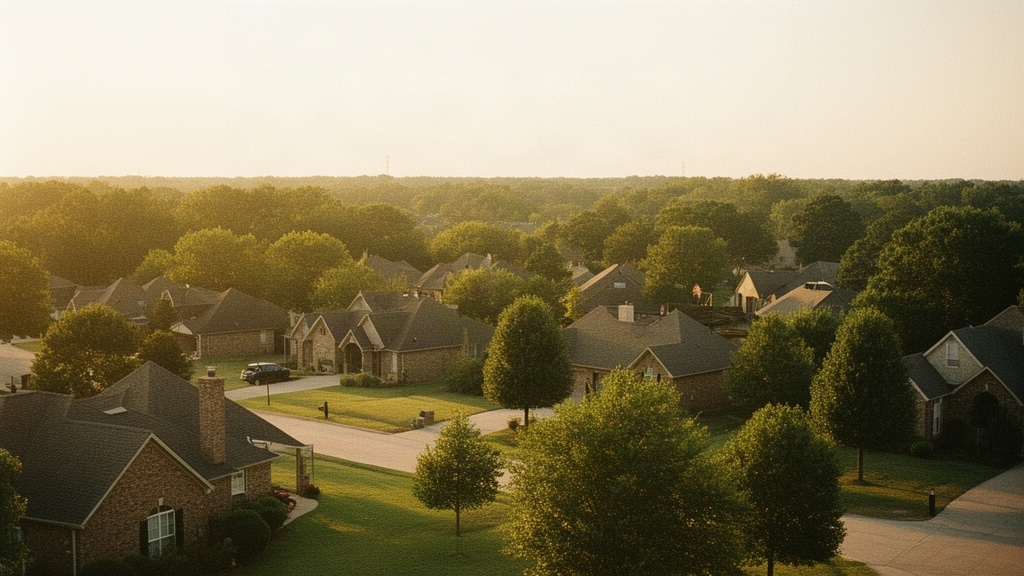
Ridgewood, New Jersey has the best reputation among Bergen County communities for a specific combination of features that very few towns can match at once: a true walkable downtown centered on Ridgewood Avenue, a NJ Transit Main Line station with roughly 50-minute express service to Penn Station, and a residential grid of architecturally varied homes on tree-lined streets that have held value through every market cycle in recent memory.
That reputation is not accidental. The borough covers about 5.9 square miles, which keeps it compact. The downtown has independent restaurants, specialty retail, the Ridgewood Public Library, and a weekly farmers market at Van Neste Square. Graydon Pool, a 1.5-acre freshwater swimming facility in Graydon Park, is a summer anchor for residents. These physical features drive consistent housing demand from buyers who want suburban space without surrendering urban conveniences.
A Supply Story That Defines the Market
Ridgewood is essentially built out. There is almost no vacant land for new construction, so the inventory of single-family homes is fixed. When demand rises, prices rise because sellers have nothing to compete with except each other, and the pool of sellers is small. This structural supply constraint is the single most important fact to understand before entering this market, whether you are buying or selling.
Bergen County as a whole has been experiencing this pressure for several years. HousingWire has reported on how tight supply across Bergen County has frustrated both buyers and agents, with available listings moving faster than buyers can organize financing and inspections. Ridgewood sits at the sharper end of that trend because its commuter profile and downtown amenities attract a particularly motivated buyer pool.
What Buyers Are Competing For
The housing stock in Ridgewood is genuinely diverse in style. You will find Tudor Revival homes with stucco and half-timbering on the blocks closest to the village center, Colonial Revivals and Craftsman bungalows in the mid-borough streets, and larger center-hall Colonials on the wider lots toward the borough's borders. Older Victorian-era homes appear occasionally, particularly near the downtown core. This variety means buyers with different budgets and spatial needs can find something, but the competition for each price tier is real.
2. Ridgewood Home Prices: What the Numbers Say in September 2026
Ridgewood home prices have continued to reflect the borough's constrained supply and strong demand. As of September 2026, the median sale price for a single-family home in Ridgewood sits in the range of $1.1 million to $1.3 million, depending on size, condition, and proximity to the train station and downtown. That figure represents meaningful appreciation from the $900,000 to $1.05 million range that characterized the market in 2023 and early 2024.
Median Prices and Price Per Square Foot
Price per square foot in Ridgewood currently runs between $450 and $600 for most resale homes, with well-renovated properties in the highest-demand streets pushing above that range. Homes within a half-mile of the Ridgewood train station on Broad Street consistently command a premium over comparable homes farther from the platform, often 8 to 12 percent higher on a per-square-foot basis. That premium has been stable for several years and shows no sign of compressing.
For additional data context, the Ridgewood NJ Real Estate Market Report covering 2025 and 2026 tracks median prices, days on market, and list-to-sale price ratios over time, which gives buyers and sellers useful historical context alongside current figures.
How Prices Vary by Property Type
Entry-level in Ridgewood means something different than in most Bergen County towns. A smaller three-bedroom, one-and-a-half-bath Colonial or Cape Cod in need of updating typically lists between $850,000 and $975,000. A four-bedroom, two-bath home in move-in condition on a standard 75-by-150-foot lot generally falls between $1.1 million and $1.4 million. Larger homes, those with five or more bedrooms, expanded square footage above 3,000 square feet, or significant lot sizes, regularly transact between $1.5 million and $2.5 million, with some fully renovated properties on the most coveted streets exceeding that range.
Condominiums and townhomes represent a smaller share of Ridgewood's housing stock but offer a lower entry point. Units in the borough's condo buildings near the downtown core have been trading in the $400,000 to $650,000 range as of September 2026, which attracts buyers who want Ridgewood's walkability without the maintenance of a single-family home.
3. Ridgewood Neighborhoods: A Block-by-Block Overview
Ridgewood is a single borough, not a collection of named neighborhoods with formal boundaries, but buyers and agents consistently talk about the market in terms of four loosely defined areas. Each area has a distinct character in terms of lot size, architecture, and proximity to amenities. Prices and competition levels vary meaningfully across these zones.
The Central Village and Train Station Area
The blocks radiating from Ridgewood Avenue and the Broad Street train station form the borough's most intensely competitive micro-market. Lots here tend to be smaller, averaging 6,000 to 9,000 square feet, and the homes are older, with many dating to the 1920s and 1930s. The architectural character is strongest here: Tudor Revivals, Craftsman bungalows, and early Colonials sit shoulder to shoulder on streets like Cottage Place, Maple Avenue near the core, and Oak Street.
Walkability to the train, to Ridgewood's restaurants on East Ridgewood Avenue, and to Van Neste Square makes this zone highly sought after. Buyers who prioritize a short walk to NJ Transit should expect to pay at or above the borough's median price even for homes that need updating. Bidding wars with multiple offers are common here, particularly for anything listed under $1.1 million.
North Ridgewood and the Maple Avenue Corridor
Moving north toward the Wyckoff border, lots begin to widen and homes tend to be larger. Many properties in this zone sit on 10,000 to 15,000 square feet of land, with center-hall Colonials and split-levels from the 1950s through 1970s making up a significant portion of the stock. Buyers who need more interior square footage or a larger yard often find slightly more breathing room in this area compared to the village core, though prices remain firmly above $1 million for four-bedroom homes.
South Ridgewood and the Ho-Ho-Kus Border
The southern portion of Ridgewood, where the borough meets Ho-Ho-Kus, features a mix of mid-century ranch homes and two-story Colonials on streets that feel quieter than the village center. The Schedler property, a 23-acre former estate that has been the subject of long-running community discussions about its future use, sits in this part of the borough and represents one of the few large undeveloped parcels in Ridgewood. Pricing in south Ridgewood can be slightly more accessible than the train-adjacent streets, making it a zone worth exploring for buyers with a firm budget ceiling.
West Ridgewood and Larger Lots
The western edge of Ridgewood, bordering Glen Rock and Midland Park, contains some of the borough's largest residential lots. Properties here sometimes exceed a quarter acre, which is notable for a Bergen County town. Homes in this zone tend to be larger overall, with more garage space and setback from the street. Buyers who want the Ridgewood address with more outdoor space often focus their search here, though the trade-off is a longer walk to the train station, typically 15 to 25 minutes on foot.
4. Timing Your Move in the Ridgewood Market
Timing matters in every real estate market, but in a supply-constrained borough like Ridgewood, the seasonal patterns are sharper than in larger, more liquid markets. Understanding when inventory peaks, when competition intensifies, and when buyers occasionally find more room to negotiate can meaningfully affect the outcome of a transaction.
When Sellers Have the Most Leverage
March through June is consistently the most competitive stretch of the Ridgewood calendar. Buyers who want to close before the following school year begins flood the market in spring, and because inventory does not expand proportionally, sellers who list in this window routinely receive multiple offers. List-to-sale price ratios above 100 percent, meaning homes selling over asking price, are common during this period for well-priced, well-presented properties.
September, the current month, also sees a secondary surge in buyer activity. Buyers who missed out in spring, or who relocated for work over the summer, re-enter the market in September and October with urgency. Sellers who list in early fall often benefit from this motivated buyer pool with less competition from other listings than they would face in April or May.
When Buyers Find More Room to Negotiate
November through January is the closest thing Ridgewood has to a buyer's window. Inventory is at its seasonal low, but so is buyer competition. Sellers who list during this period often have a specific reason for doing so, such as a job relocation or a life change, and they tend to be more flexible on price and terms than sellers who listed in peak spring. Buyers willing to search during the colder months occasionally find properties that have sat on the market since fall and carry more negotiating room.
The trade-off is selection. A buyer who waits for winter will see fewer choices. In a market with Ridgewood's level of demand, waiting for a better deal can mean waiting for months for the right home to appear. Most buyers in this market find that acting quickly when the right property appears matters more than optimizing for seasonal timing.
5. What Buyers and Sellers Need to Know Right Now
As of September 2026, Ridgewood remains a seller-leaning market with limited inventory and consistent buyer demand. Interest rates have moderated compared to the peak of 2023, which has brought more buyers back to the table without a corresponding increase in listings. That combination keeps upward pressure on prices.
Advice for Buyers Entering This Market
Get fully pre-approved before you tour a single home. In Ridgewood, well-priced homes regularly go under contract within days of listing. A pre-approval letter from a lender who can close quickly is a baseline requirement, not an advantage. Buyers who arrive with only a pre-qualification letter, or who need extra time to secure financing, routinely lose out to buyers who are ready to move.
Know your non-negotiables before you start. Ridgewood is compact enough that the difference between a home you love and one you settle for often comes down to a few blocks or one extra bedroom. Buyers who have clearly defined their must-haves, such as a specific lot size, a garage, or a particular distance to the train, can make faster decisions when a listing appears. Speed is a genuine competitive advantage in this market.
If you are weighing multiple agents, understanding what distinguishes top local agents from one another is a useful starting point before you commit to representation.
Advice for Sellers Pricing in September 2026
Accurate pricing is the most consequential decision a Ridgewood seller makes. Overpricing, even slightly, in a market where buyers have seen dozens of comparable homes, causes a listing to sit. Once a home sits for more than three or four weeks in Ridgewood, buyers begin to wonder what is wrong with it. A price reduction then signals weakness and often results in a lower final sale price than a correctly priced listing would have achieved from day one.
Presentation matters as much as price. Homes that are professionally staged and photographed consistently outperform comparable unstaged homes in Ridgewood, both in days on market and final sale price. Buyers in this price range, where most transactions fall between $1 million and $1.5 million, expect a certain level of presentation and will discount mentally for homes that look tired online.
For sellers who want to understand how an agent's track record affects outcomes, reviewing what separates agents who sell homes quickly from those who don't is worth doing before you sign a listing agreement.
FAQ
What is the average home price in Ridgewood, New Jersey right now?
As of September 2026, the median sale price for a single-family home in Ridgewood, NJ falls in the range of $1.1 million to $1.3 million, depending on size, condition, and location within the borough. Smaller homes in need of updating can list closer to $850,000, while larger, fully renovated properties on sought-after streets regularly exceed $1.5 million. Condominiums and townhomes near the downtown offer a lower entry point, generally between $400,000 and $650,000. Price per square foot for most resale homes runs between $450 and $600, with a consistent premium for homes within a half-mile of the Broad Street train station.
How long do homes stay on the market in Ridgewood, NJ?
Well-priced, well-presented homes in Ridgewood regularly go under contract within one to two weeks of listing, and some attract multiple offers within the first weekend. Homes that are overpriced or need significant work can sit for four to eight weeks before receiving an offer, and that extended time on market typically leads to price reductions. The spring market from March through June and the early fall market in September and October see the fastest absorption rates. Homes listed in November through January tend to sit slightly longer, though the buyer pool is smaller and more motivated during that period.
Is September a good time to buy or sell a home in Ridgewood, NJ?
September is a productive month for both buyers and sellers in Ridgewood. Sellers benefit from a secondary wave of motivated buyers who missed out in the spring market or relocated over the summer and are now ready to act before year-end. For buyers, September brings a fresh set of listings that were not available in spring, and the competition, while still meaningful, is slightly less intense than the peak March-to-June window. Buyers who are fully pre-approved and clear on their priorities can move quickly enough to compete effectively. The key for both sides is preparation: sellers should have their home staged and photographed before going live, and buyers should have financing fully organized before touring.