← Back to Blog
Market Trends
Imperial Missouri Real Estate Market Guide: Prices, Neighborhoods
By Heather Smith, REALTOR®
EpiqueRealty
September 7, 2026 · 10 min read
This Imperial, Missouri real estate market guide covers everything buyers, sellers, and relocating households need to know right now: what homes cost in September 2026, what the different pockets of Imperial look and feel like, and how to time your move strategically in the current market.
1. What the Imperial, Missouri Housing Market Looks Like Right Now
Imperial sits in a balanced-to-moderately-competitive position in September 2026. Median home prices in Imperial are currently running in the low-to-mid $300,000s, with entry-level ranch homes and smaller split-levels starting closer to $230,000 and larger four-bedroom colonials and newer construction pushing past $420,000 depending on finishes and lot size. That range reflects a market that has appreciated steadily since 2022 without the extreme volatility seen in some St. Louis suburbs.
Median Prices and Inventory Levels
Active inventory in Imperial has ticked up modestly compared to September 2025, which gives buyers a bit more selection than they had during the tightest stretch of the market. You can review current transaction data for the area through the Imperial, Missouri housing market report on Rocket Homes, which tracks median sale prices, days on market, and list-to-sale price ratios updated monthly. That data is a useful baseline before you start touring homes or setting a list price.
Days on market for well-priced homes in Imperial currently average in the two-to-three-week range. Overpriced homes are sitting longer, sometimes 45 to 60 days, which is a meaningful shift from the multiple-offer environment of 2021 and 2022. Sellers who price accurately from day one are still seeing strong results; those who test the market high are finding they need to reduce before generating serious offers.
How Imperial Compares Within Jefferson County
Imperial occupies the northern edge of Jefferson County, which puts it in a distinct position relative to communities like Arnold, Barnhart, and Festus. Prices in Imperial tend to run slightly higher than those in Festus or Crystal City further south, partly because of the shorter drive to St. Louis and the density of established subdivisions with larger lots. Arnold, which borders Imperial to the north, has a similar price profile, so buyers comparing the two markets are often making decisions based on specific street locations and lot characteristics rather than dramatic price differences.
2. Neighborhoods and Housing Stock in Imperial
Imperial is not a single uniform neighborhood. It is a collection of subdivisions, some platted in the 1960s and 1970s and others developed through the 2000s and 2010s, spread across a mix of rolling terrain and flatter stretches along Highway 61 and Imperial Main Street. Understanding the different pockets helps buyers focus their search and helps sellers understand how their home is positioned.
Older Established Subdivisions
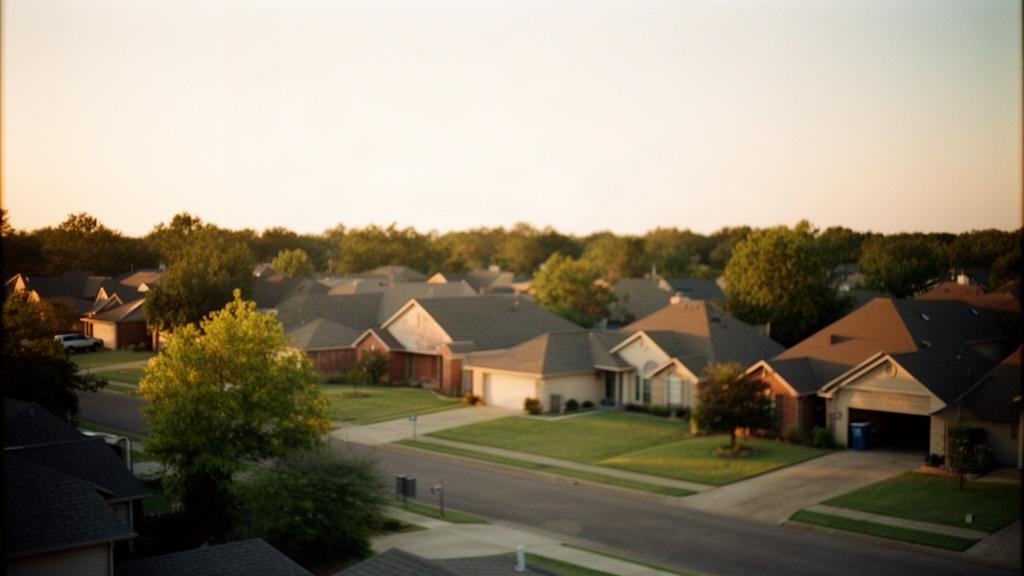
The older sections of Imperial, built primarily between the late 1960s and mid-1980s, feature brick ranch homes and split-levels on lots that commonly run a quarter acre to half an acre. These homes typically have two-car attached garages, full basements, and mature trees that give the streets a settled, canopy feel. Square footage in this tier usually ranges from about 1,100 to 1,800 square feet above grade, with the basement adding usable space depending on how the previous owners finished it. Buyers in this price range, generally $230,000 to $310,000, will find that many of these homes have been updated in kitchens and baths but still carry original windows or roofs that may need attention within a few years of purchase.
Newer Construction Areas
Subdivisions developed from the late 1990s through the 2010s brought a different housing type to Imperial: two-story colonials and larger ranch plans with open floor concepts, vaulted ceilings, and three-car garages on lots ranging from a third of an acre to over half an acre. These homes cluster in subdivisions with names like Rockwood Estates and similar planned communities along the eastern and southern edges of the Imperial area. Prices here typically start around $330,000 and run to $460,000 or higher for fully updated homes with finished lower levels. Buyers looking for larger square footage, generally 2,000 to 3,200 square feet above grade, will find the most options in this tier.
Lot Sizes, Architecture and Price Tiers
One of Imperial's consistent characteristics is lot size. Even in the more affordable price tiers, it is uncommon to find homes on lots smaller than 8,000 square feet, and many of the mid-range and upper-range properties sit on half-acre to one-acre parcels. That sets Imperial apart from denser inner-ring St. Louis suburbs where quarter-acre lots are the norm at comparable price points. Buyers who prioritize outdoor space, whether for gardens, play areas, or simply distance from neighbors, will find Imperial's lot sizes a notable feature of the market.
For a current look at what is actively listed across these price tiers, the Homes for Sale in Imperial, Missouri 2026 page on this site is updated regularly and organized by price range and neighborhood type.
3. Commutes, Amenities and What Is Physically Here
Location is one of the most concrete factors in Imperial's real estate appeal, and it is worth being specific about distances and drive times rather than relying on vague descriptions.
Getting to St. Louis and Surrounding Employment Centers
Imperial sits approximately 22 miles south of downtown St. Louis, with Highway 61 and Interstate 55 both accessible within a few minutes of most neighborhoods. A typical morning commute to downtown St. Louis runs 30 to 45 minutes depending on traffic and the specific origin and destination points. The drive to major employment corridors in Arnold or Fenton is considerably shorter, often 10 to 20 minutes. Meramec Community College's Arnold campus is about 10 miles north, and the Gravois Bluffs retail corridor in Fenton is roughly 15 miles away via I-55.
For households with one member commuting to St. Louis and another working locally in Jefferson County, Imperial's position on the county line makes it a practical choice. The Meramec River forms part of the natural boundary to the north, and the terrain shifts noticeably as you move south into the hillier stretches of the county, which affects both drive times and the visual character of neighborhoods.
Parks, Retail and Daily Conveniences
Mastodon State Historic Site is one of Imperial's most distinctive landmarks, a state park located on Imperial Main Street that preserves one of the largest known mastodon fossil sites in North America. The park includes hiking trails through forested terrain, a museum with original fossil specimens, and open picnic areas. It covers over 400 acres and provides a significant amount of green space within walking or short driving distance of most Imperial neighborhoods.
Daily retail needs are covered by the commercial corridor along Highway 61, which includes grocery stores, pharmacies, home improvement retailers, and a range of restaurants. Imperial does not have a traditional downtown commercial district in the way that some older Missouri towns do, but the Highway 61 strip and the nearby Arnold retail areas fill that role practically. Jefferson County Library has a branch serving the Imperial area, and several community parks with athletic fields and playgrounds are distributed through the residential sections of the community.
4. Timing the Imperial Market: When to Buy and When to Sell
Timing matters in any real estate transaction, and the Imperial market follows patterns that are worth understanding before you set a date.
Seasonal Patterns in Jefferson County
Spring, specifically March through May, is the most active listing season in the Imperial area and across Jefferson County broadly. More homes come to market, more buyers are actively searching, and competition for well-priced properties is at its highest. Summer maintains solid activity through July, then volume typically eases in August and September as the back-to-school period shifts household priorities. Fall and winter bring fewer listings and fewer buyers, which creates a different dynamic: less competition for buyers, but also a smaller pool of motivated sellers.
Missouri's broader housing market context is useful here. According to Norada Real Estate's Missouri housing market outlook, the state has maintained relatively stable appreciation compared to coastal markets, with demand supported by in-migration and a constrained supply of move-in-ready homes. That statewide pattern holds in Jefferson County and in Imperial specifically.
What September 2026 Means for Your Decision
September 2026 is a transitional moment in the Imperial market. The peak spring and summer buying season has wound down, which means active inventory is starting to thin as some sellers who did not close during summer pull listings or wait until spring. Buyers who are ready to act in September and October often find less competition than they would have faced in April or May, and sellers who are motivated to close before year-end are frequently more willing to negotiate on price, closing costs, or possession dates.
For sellers, listing in September still captures buyers who want to be settled before the holidays, which is a real and consistent segment of the market. Pricing accurately is more important in fall than in spring, because the cushion of multiple competing offers that can push a price above list is thinner. A well-prepared home, priced at or slightly below comparable sales, will still move in September; an overpriced home will sit through the fall and likely need to re-launch in spring.
5. What Buyers and Sellers Need to Know Before They Act
Whether you are buying or selling in Imperial, the practical steps you take before going active in the market will largely determine your outcome.
Buyer Checklist for Imperial Homes
Buyers in Imperial should come to the market with financing already in place. Pre-approval, not just pre-qualification, is expected by sellers and their agents in the current market. Homes priced accurately in the $280,000 to $380,000 range are still moving in two to three weeks, so a buyer who needs time to arrange financing after finding a home they like will often lose it to a buyer who is already approved.
Inspection contingencies remain standard in Imperial transactions and should not be waived lightly. Older homes in the 1970s and 1980s sections of the community may have aging HVAC systems, original electrical panels, or roofs that are 15 to 20 years old. A thorough inspection gives buyers the information they need to negotiate repairs or credits, or to walk away if the issues are significant. Buyers should also budget for a sewer lateral inspection, which is a separate test from a standard home inspection and is particularly relevant for homes built before 1990.
Understanding what you are looking at across different price tiers is easier with current listing data at hand. The Homes for Sale in Imperial, Missouri 2026 page on this site breaks down active inventory by price and gives context on what each tier typically includes.
Seller Priorities in the Current Market
Sellers in Imperial in September 2026 need to lead with condition and pricing, in that order. Buyers in the current market are more selective than they were two or three years ago. A home that shows well, with clean paint, updated fixtures, and a tidy exterior, will consistently outperform a comparable home that has been neglected cosmetically, even if the underlying bones are similar. Spending $2,000 to $5,000 on targeted cosmetic updates before listing almost always returns more than the cost at closing.
Professional photography is not optional in the current market. The majority of buyers in the Imperial area begin their search online, and the quality of listing photos determines whether a buyer schedules a showing or scrolls past. Sellers should also be prepared to disclose known issues upfront; Missouri's disclosure requirements are specific, and surprises discovered during inspection are the most common reason deals fall apart after a contract is signed.
Pricing strategy should be grounded in recent comparable sales within Imperial, not in what a neighbor got two years ago or what online automated valuation tools suggest. Those tools use broad data sets and frequently miss the nuances of a specific street, lot orientation, or subdivision. A comparative market analysis from a local agent who knows the Imperial market will give you a far more accurate picture of where to position your home.
FAQ
What is the median home price in Imperial, Missouri right now?
As of September 2026, median home prices in Imperial are running in the low-to-mid $300,000s, with entry-level homes starting around $230,000 and larger or newer properties reaching $420,000 and above. Prices have appreciated steadily over the past several years without the sharp peaks and corrections seen in some larger metro markets. The specific price you can expect to pay or receive depends heavily on the age of the home, the subdivision, lot size, and condition. Reviewing recent comparable sales with a local agent gives you the most accurate picture for a specific property.
Is September a good time to buy a home in Imperial, Missouri?
September is a practical time to buy in Imperial for buyers who are ready to act. The spring and summer competition has eased, meaning fewer competing offers on well-priced homes, and motivated sellers who did not close during the peak season are often more willing to negotiate on price or terms. Inventory does thin out in fall, so the selection of available homes is smaller than it would be in April or May. Buyers who have financing in place and a clear sense of their priorities can find real value in the September-to-November window.
What should I know about the different parts of Imperial before I buy?
Imperial's housing stock spans several decades and price tiers, from brick ranch homes on large lots built in the 1970s and 1980s to newer two-story colonials developed in the 2000s and 2010s. Older sections typically offer more mature landscaping, larger lots relative to price, and brick exteriors, but may carry deferred maintenance on roofs, HVAC systems, or electrical. Newer subdivisions offer open floor plans, larger square footage, and updated mechanical systems, but at higher price points. Lot sizes across Imperial are generally generous by suburban standards, with many homes sitting on a quarter acre to half an acre or more. Spending time in different sections of the community, and reviewing the specific subdivision's age and infrastructure, will help you narrow your search effectively.