← Back to Blog
Neighborhoods
Relocating to Imperial, Missouri: Neighborhoods, Costs and Timelines
By Heather Smith, REALTOR®
EpiqueRealty
September 8, 2026 · 11 min read
Relocating to Imperial, Missouri involves more decisions than simply choosing a house. This guide covers the neighborhoods you will actually encounter, the real costs of buying here in September 2026, and the timelines you should plan around so nothing catches you off guard.
1. Why People Are Relocating to Imperial, Missouri Right Now
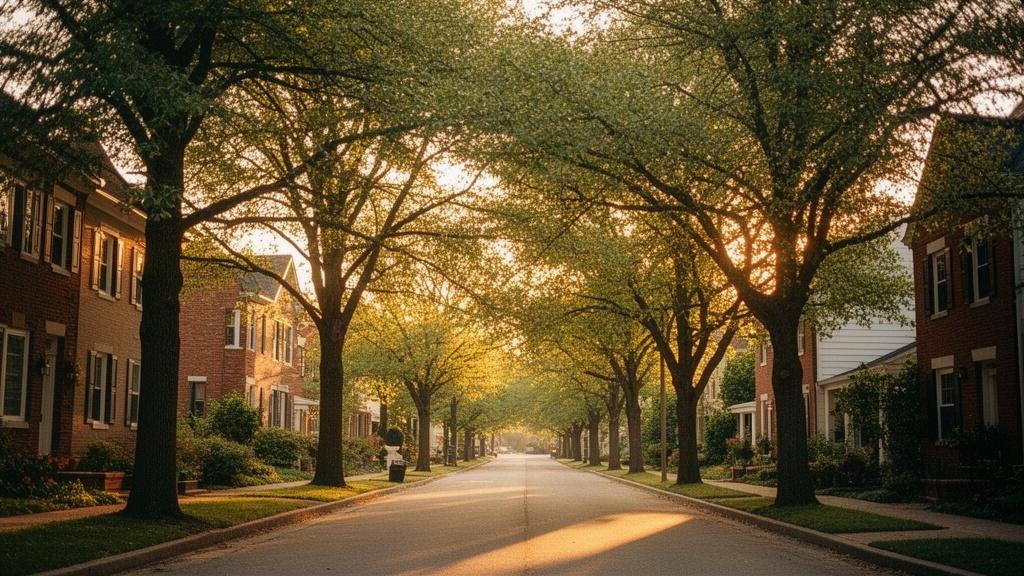
Imperial draws a steady stream of relocating buyers because it sits at a practical crossroads. You get established subdivisions, tree-lined streets, and a Jefferson County address, all within roughly 25 miles of downtown St. Louis. That combination is increasingly rare as inner-ring suburbs have seen prices climb sharply over the past several years.
What Is Drawing Buyers Here
The housing stock is the main draw. Imperial has a wide range of single-family homes, from 1970s ranch-style builds on quarter-acre lots to larger two-story colonials constructed in the 2000s and 2010s. Buyers relocating from higher-cost metro areas often find they can purchase significantly more square footage here than in the neighborhoods they are leaving behind.
According to reporting from Inman, homebuyers are increasingly turning to suburban markets to stretch their purchasing power in today's environment. How Homebuyers Are Stretching Their Dollar In Today's Market documents this suburban shift in detail, and Imperial fits that pattern well. Buyers priced out of Clayton, Webster Groves, or even parts of South County are landing here and finding the transition straightforward.
How Imperial Compares to St. Louis City Costs
The price gap is real and meaningful. Homes in comparable St. Louis County suburbs frequently list in the $400,000 to $600,000 range for similar square footage, while Imperial's median sits noticeably below that threshold as of September 2026. That difference translates directly into lower monthly mortgage payments, smaller down payment requirements, and more room in a household budget.
Jefferson County's property tax rates are also a factor buyers frequently mention after closing. The effective rate on a mid-range Imperial home tends to produce an annual tax bill that is lower than what many buyers paid in St. Louis County, though every parcel is assessed individually. For a detailed breakdown of what to expect, the post on home prices in Imperial Missouri right now walks through current figures street by street.
2. Neighborhoods and Housing Stock in Imperial
Imperial is an unincorporated community, which means it does not have a single downtown or a formal city boundary. Instead it is a collection of subdivisions, commercial corridors, and older residential streets that together make up what locals call Imperial. Understanding the different pockets helps relocating buyers narrow their search quickly rather than chasing every listing that appears in the zip code.
Seckman Estates and Surrounding Subdivisions
The Seckman area is one of the most active pockets for buyers relocating to Imperial. Homes here were largely built between the late 1980s and early 2000s, with lot sizes typically ranging from about 0.2 to 0.4 acres. You will find a mix of brick-front two-stories, ranch homes with attached two-car garages, and some larger custom builds on cul-de-sacs. Finished square footage commonly runs from 1,600 to 2,800 square feet, with list prices in September 2026 generally falling between $280,000 and $390,000 depending on updates and lot position.
Subdivisions like Seckman Meadows, Fox Creek, and Timber Ridge sit within this broader corridor. Streets are quiet and curvilinear, with mature trees on most blocks. The area is close to Seckman Road and Telegraph Road, which puts grocery stores, pharmacies, restaurants, and hardware stores within a short drive.
Older Established Streets Near Highway 61
The streets closer to Highway 61 (also called Telegraph Road through this stretch) tend to feature older housing stock, primarily ranches and split-levels built in the 1960s and 1970s. These homes often sit on larger lots than newer subdivisions and offer buyers a lower entry price in exchange for more renovation potential. List prices in this segment frequently start in the low $200,000s and can reach the mid-$300,000s for fully updated examples.
Buyers who prioritize lot size, single-level living, or a lower purchase price often gravitate toward this part of Imperial. Access to Interstate 55 at the Imperial exit is quick from here, which matters for commuters heading north toward St. Louis or south toward Festus and Crystal City.
New Construction Pockets
A handful of newer developments have added inventory to Imperial over the past decade. These homes typically feature open floor plans, taller ceilings, and energy-efficient construction. Prices for new or near-new builds in Imperial currently start around $350,000 and can exceed $500,000 for larger homes with premium finishes. Buyers relocating from markets where new construction commands a steep premium often find Imperial's newer inventory surprisingly accessible.
For a broader look at what is currently listed across all these pockets, the homes for sale in Imperial, Missouri guide covers active inventory and what buyers are competing for right now.
3. What It Costs to Buy a Home in Imperial in September 2026
The total cost of relocating to Imperial includes more than the purchase price. Buyers who plan for all the line items avoid surprises at the closing table.
Median Prices and Price Ranges
As of September 2026, the median sale price for single-family homes in Imperial hovers in the mid-to-upper $300,000s. Entry-level homes, typically older ranches needing cosmetic updates, start around $200,000 to $230,000. Move-in-ready homes in the Seckman corridor cluster between $300,000 and $400,000. Larger or newer homes with finished basements and updated kitchens regularly reach $420,000 to $500,000. Luxury or custom builds on premium lots can push past $550,000, though that segment sees fewer transactions.
Closing Costs and Upfront Expenses
Buyers in Missouri typically pay closing costs equal to roughly 2% to 3% of the purchase price. On a $350,000 home, that works out to approximately $7,000 to $10,500. Those costs include lender origination fees, title insurance, the home inspection (generally $350 to $500 for a standard Imperial single-family), prepaid homeowner's insurance, and escrow setup for property taxes. Some buyers negotiate seller concessions to offset a portion of closing costs, which is worth discussing with your agent before submitting an offer.
Down payment requirements vary by loan type. Conventional loans require as little as 3% down for qualifying first-time buyers, while FHA loans require 3.5%. VA and USDA loans, where eligible, can eliminate the down payment entirely. On a $350,000 purchase, a 10% conventional down payment equals $35,000, with the remaining balance financed.
Property Taxes and Ongoing Costs
Jefferson County assesses property at 19% of its appraised value for residential parcels. The combined levy rate for Imperial addresses, which includes county, road district, fire district, and library levies, produces an effective annual tax bill of roughly $2,800 to $4,200 on homes priced between $300,000 and $450,000. These figures vary by the specific taxing districts that apply to a given parcel, so verifying the exact address-level levy with the Jefferson County Assessor is always worth doing before closing.
Homeowner's insurance in this part of Jefferson County typically runs $1,200 to $1,800 per year for a standard single-family home, though homes with pools, older roofs, or higher replacement values will see higher premiums. HOA fees apply in some subdivisions and generally range from $150 to $400 annually where they exist.
4. Your Relocation Timeline: From Decision to Move-In Day
A realistic timeline for relocating to Imperial runs between 60 and 120 days from the moment you start seriously searching to the day you collect keys. The exact length depends on how quickly you get pre-approved, how competitive the segment you are shopping in turns out to be, and whether you are also selling a home simultaneously.
Phase One: Research and Pre-Approval
Plan two to four weeks for this phase. During this window you are identifying your price range, understanding what different Imperial neighborhoods look like in person, and getting a mortgage pre-approval letter in hand. Pre-approval is not optional in the current market; sellers in the $300,000 to $400,000 range in Imperial regularly receive multiple offers, and an offer without pre-approval rarely gets taken seriously.
If you are relocating from out of state or from a distant metro area, virtual tours and video walkthroughs can help you narrow the field before you make a trip. Most buyers who are seriously relocating to Imperial plan at least one dedicated in-person visit to see several homes in a single day, ideally with a local agent who can point out details that do not show up on a listing sheet.
Phase Two: Active Search and Offer
This phase typically lasts two to six weeks, though it can be shorter if you know exactly what you want. Imperial's inventory turns over at a moderate pace. Well-priced, move-in-ready homes in the Seckman corridor can go under contract within days of listing. Homes that need work or are priced at the upper end of the market tend to sit longer, giving buyers more time to evaluate. Monitoring new listings daily and being ready to move quickly on properties that match your criteria is the practical approach in this market.
Once you find the right home, your agent will guide you through offer strategy, inspection contingencies, and negotiation. The Imperial market in September 2026 is not the frenzied environment of 2021 or 2022, but desirable homes still attract competition. Understanding list-to-sale price ratios and average days on market for specific sub-segments helps you calibrate your offer without overpaying.
Phase Three: Contract to Closing
From accepted offer to closing, plan 30 to 45 days in most cases. This window covers the home inspection, appraisal, lender underwriting, title search, and final walkthrough. Cash buyers can sometimes close in as few as 14 to 21 days, but financed purchases follow the lender's timeline. Jefferson County title companies are experienced with the volume of transactions in this corridor, and closings here are generally straightforward when paperwork is in order.
For a deeper look at how long the process typically takes from the seller's side, the article on how long it takes to sell a house in Imperial Missouri this fall gives useful context, especially if you are selling a home elsewhere while buying here.
5. Practical Things to Know Before You Move
Relocating to a new community involves more than finding the right house. The day-to-day logistics matter just as much once you are settled in.
Commute and Transportation
Imperial sits along Interstate 55, which is the primary route north into St. Louis. The drive from Imperial to downtown St. Louis covers approximately 24 to 27 miles depending on your exact address. Off-peak, the trip takes around 30 to 35 minutes. During morning rush hour heading north, travel times can stretch to 45 to 60 minutes or more, particularly around the Bayless interchange and the I-55 and I-44 merge near the city. Highway 61 runs parallel and provides an alternative route, though it involves more traffic signals.
Festus, Arnold, and Fenton are all within 10 to 20 minutes of most Imperial addresses, which matters for buyers whose employers are in those communities rather than downtown St. Louis. Metrolink light rail does not serve Jefferson County, so personal vehicle commuting is the norm for Imperial residents.
Everyday Amenities and Services
Imperial's commercial corridor along Telegraph Road handles most everyday needs without requiring a trip to a larger city. Grocery options include a Schnucks and an Aldi within the immediate area. Home improvement stores, national pharmacy chains, fast food and sit-down restaurants, and urgent care clinics are all accessible within a short drive. SSM Health St. Clare Hospital in Fenton, roughly 12 miles north, is the nearest full-service hospital for most Imperial residents.
Outdoor recreation is a genuine draw for many people relocating to this part of Jefferson County. Mastodon State Historic Site sits within Imperial's boundaries and includes trails, a picnic area, and a museum centered on the ancient mastodon excavation that took place here. Pickle Springs Natural Area and the Meramec River corridor are both within a 20 to 30 minute drive for hiking and water recreation.
Selling a Home Before You Buy
Many people relocating to Imperial are also selling a home somewhere else. Coordinating both transactions requires careful timing. Contingent offers, bridge loans, and sale-leaseback arrangements are all tools that can help buyers manage the gap between selling and closing on a new home. The right approach depends on how quickly your current market moves and how much flexibility the Imperial seller is willing to extend.
If you are selling in a slower market, getting your home listed and under contract before you start seriously shopping in Imperial reduces pressure and strengthens your negotiating position here. The guide on selling a home in Imperial, Missouri is useful if you are also selling locally and need to understand both sides of the transaction.
Forbes has compiled practical advice from agents who specialize in relocation transactions. The piece on best relocation tips from real estate agents is worth reading if you have never navigated a long-distance purchase before. The consistent theme across agents is to work with someone who knows the destination market deeply, not just someone who can write a contract.
FAQ
How long does it realistically take to relocate to Imperial, Missouri from another state?
Most out-of-state buyers who are relocating to Imperial complete the process in 90 to 120 days from initial research to move-in. The research and pre-approval phase takes two to four weeks, the active search and offer phase takes two to six weeks, and the contract-to-closing period typically runs 30 to 45 days. Buyers who are also selling a home in another state often add four to eight weeks to the front end of that timeline to get their current home under contract first. Working with a local Imperial agent from the start compresses the learning curve significantly, especially for buyers who cannot visit in person frequently.
What are the total upfront costs when buying a home in Imperial, Missouri?
On a $350,000 home in Imperial, a buyer using a conventional loan with 10% down should budget approximately $35,000 for the down payment, $7,000 to $10,500 for closing costs, and $350 to $500 for the home inspection. That puts total upfront cash in the range of $43,000 to $46,000 before moving expenses or any immediate repairs. FHA loans reduce the down payment to 3.5%, which lowers the cash requirement but adds mortgage insurance premiums to the monthly payment. Your lender will provide a Loan Estimate within three business days of application that itemizes every cost specific to your loan and the property you are purchasing.
Does Imperial, Missouri have an HOA, and what should relocating buyers know about it?
Imperial is an unincorporated community, not a city, so there is no municipality-wide HOA. However, many individual subdivisions within Imperial do have their own homeowner associations with their own rules and fee structures. Annual HOA fees in Imperial subdivisions that have them generally range from $150 to $400, though some communities with amenities like pools or gated entrances charge more. Before closing, buyers should request the HOA disclosure documents, which include the covenants, current budget, reserve fund balance, and any pending special assessments. Reviewing these documents carefully is important because HOA restrictions affect what you can do with the property after you own it.