← Back to Blog
Market Trends
Mountain Home, Arkansas Real Estate Market Guide: Prices, Neighborhoods and Timing
By Heather Hendricks
ERA Doty Real Estate
September 1, 2026 · 12 min read
If you are researching the Mountain Home, Arkansas real estate market guide covering prices, neighborhoods, and timing, this article gives you the concrete numbers and local context you need to make a confident decision. Mountain Home sits in the Ozark hills along the White River corridor, bounded by Bull Shoals Lake to the north and Norfork Lake to the southeast, and its housing market reflects that geography in ways that set it apart from most Arkansas cities. Whether you are buying, selling, or relocating, here is what the market actually looks like right now.
1. What Home Prices Look Like in Mountain Home Right Now
Median home prices in Mountain Home, Arkansas currently sit in the low-to-mid $200,000s, though the range is wide depending on property type, proximity to water, and lot size. Lakefront homes on Bull Shoals or Norfork routinely list in the $400,000 to $800,000 range, while inland single-family homes on standard city lots are frequently priced between $150,000 and $280,000. That spread is one of the defining characteristics of this market.
Median Price Benchmarks
According to current data tracked by Rocket Homes, Mountain Home's median sale price has climbed steadily over the past two years, reflecting both national price pressure and strong in-migration from larger metro areas in Texas, Missouri, and Tennessee. The city's median is notably higher than the Arkansas statewide median for rural markets, which speaks to the demand pull from retirees and remote workers drawn to the lake-and-river lifestyle.
As a practical benchmark for buyers in September 2026: a three-bedroom, two-bath home in an established Mountain Home subdivision with a two-car garage typically lists between $195,000 and $260,000. Add a boat dock or direct lake frontage and that same footprint can jump to $450,000 or more. Acreage properties outside city limits, particularly along the White River or near the Norfork tailwater, command premiums tied to fishing access and privacy.
Price Per Square Foot and What Drives It
Price per square foot in Mountain Home generally runs between $110 and $160 for non-lakefront residential properties, with lakefront properties frequently exceeding $200 per square foot. The key variables are water access, the age and condition of the structure, and whether the property is inside or outside the Mountain Home city limits. Homes built in the 1990s and early 2000s dominate the mid-range inventory; newer construction from 2015 onward commands a premium because the supply of new builds in Baxter County has remained limited.
How Mountain Home Compares to the Broader Baxter County Market
Mountain Home is the county seat of Baxter County and accounts for the largest share of residential transactions in the county. Smaller communities like Norfork, Lakeview, and Gassville each have their own character and price points, which is worth understanding if you are open to living outside the Mountain Home city limits. For a deeper look at how the broader county market works, the Baxter County buyers guide covers those distinctions in detail.
2. The Housing Stock: What You Will Actually Find for Sale
Mountain Home's housing inventory is diverse in ways that surprise many buyers who expect a small Arkansas city to offer only modest ranch homes. The market includes everything from 1960s brick ranches on quarter-acre city lots to custom-built lakefront estates with private docks, and that variety means buyers with very different budgets and priorities can find something here.
Single-Family Homes and Lot Sizes
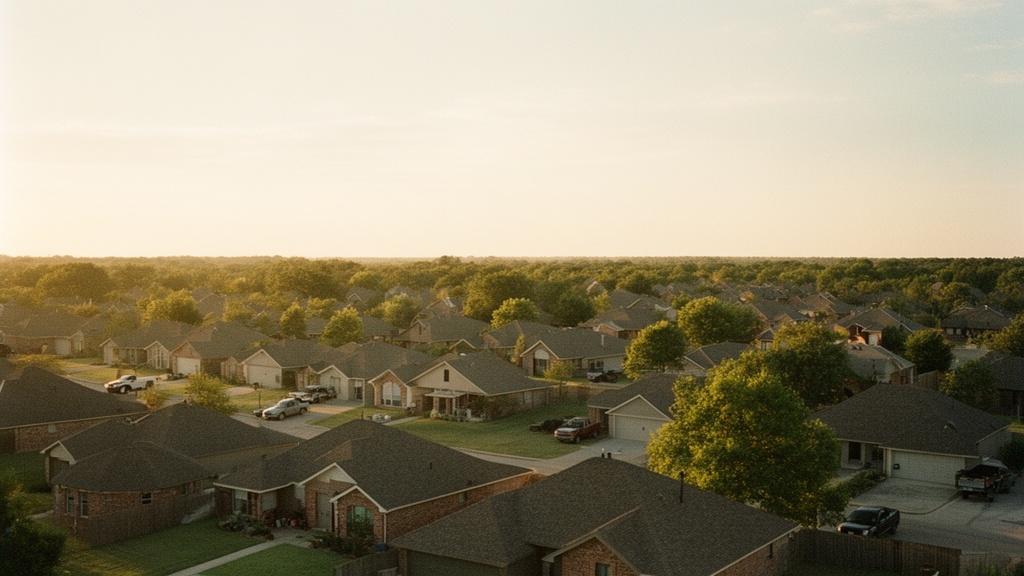
The dominant housing type in Mountain Home is the single-family detached home, typically on lots ranging from a quarter acre to one acre within city limits. Brick construction is common in homes built before 1990, while vinyl siding and fiber cement are more typical in newer builds. Many homes in established neighborhoods like those along Highland Circle, Country Club Road, and the areas near Baxter Regional Medical Center feature mature trees, level yards, and attached garages. Basements are less common here than in some Ozark communities due to the rocky limestone substrate, so buyers who want below-grade storage or living space should flag that early in their search.
Lakefront and Lake-Access Properties
Bull Shoals Lake and Norfork Lake together give Mountain Home one of the largest concentrations of lakefront real estate in the Arkansas Ozarks. Bull Shoals, formed by the Army Corps of Engineers dam on the White River, stretches over 45,000 acres with more than 1,000 miles of shoreline. Norfork Lake adds another 22,000 acres just to the southeast. Lakefront homes typically include a private dock or deeded dock slip, and many properties sit on Corps of Engineers lease lots, which affects how the land is titled and what improvements are permitted. Buyers new to this type of ownership should understand the lease structure before making an offer.
Lake-access properties, meaning homes within a short walk or drive of a public boat ramp or marina but without private frontage, offer a middle-ground price point that many buyers find attractive. Areas around Lakeview on Bull Shoals and the Norfork community near the dam are good examples of where this type of inventory concentrates. For more on working with an agent who knows the lakefront segment specifically, see the article on lakefront property specialists in Mountain Home.
Condos, Manufactured Homes, and Rural Acreage
Condominiums are a small but present segment of the Mountain Home market, concentrated near the lakes and occasionally in the downtown corridor. Manufactured and modular homes on owned land are common throughout Baxter County, particularly on rural parcels of five acres or more. These properties are often priced well below site-built comparables and can represent strong value for buyers whose lender is comfortable with manufactured construction on a permanent foundation. Rural acreage listings, sometimes including timber, creek frontage, or hunting ground, appear regularly and range from ten to several hundred acres.
3. Neighborhoods and Areas Inside Mountain Home
Mountain Home covers roughly 15 square miles and sits at an elevation of about 800 feet above sea level, giving it a slightly cooler summer climate than much of Arkansas. The city is compact enough that most addresses are within ten minutes of the main commercial corridor along Highway 62, yet the areas within and just outside city limits vary noticeably in character, lot size, and price. Understanding those differences helps buyers focus their search and helps sellers understand how their property is positioned.
The City Core and Established Subdivisions
The neighborhoods closest to downtown Mountain Home and Baxter Regional Medical Center contain some of the city's oldest housing stock, with many homes dating to the 1950s through 1970s. These blocks feature mature oaks and maples, sidewalks, and smaller lot sizes, typically between 0.15 and 0.40 acres. Prices in this zone tend to be in the $140,000 to $220,000 range for move-in-ready homes. The proximity to the hospital, the Baxter County Courthouse, and the commercial services on Hwy 62 makes this part of town convenient for people who want walkable errands and short commutes.
Newer subdivisions developed in the 1990s and 2000s spread outward from the core toward the north and west, offering larger lots, newer mechanical systems, and more open floor plans. Neighborhoods in this band frequently include homes in the $220,000 to $320,000 range. Some of these subdivisions are within the Mountain Home School District boundary, which buyers can verify directly through the Arkansas Department of Education's district locator tool.
The Highway 62 and Highway 5 Corridors
Highway 62 is the main commercial spine of Mountain Home, running east-west through the city and connecting to Gassville to the west and toward the Bull Shoals Dam area to the east. Residential neighborhoods sit both north and south of this corridor, and buyers will find a mix of price points within a half-mile of the highway. Highway 5 runs north-south and is the primary route toward Bull Shoals Lake, passing through Lakeview before reaching the dam. Properties along the Hwy 5 corridor often appeal to buyers who want lake access without the full lakefront price tag, with commute times back to Mountain Home's commercial center running roughly 15 to 20 minutes.
Rural Routes and Unincorporated Baxter County
A significant share of the properties that buyers associate with Mountain Home are technically outside city limits in unincorporated Baxter County. These addresses may carry a Mountain Home mailing address while being served by county roads, well water, and septic systems rather than city utilities. That distinction matters for financing, insurance, and ongoing maintenance costs. Rural Baxter County properties frequently offer more land per dollar than city-limit addresses, and many buyers relocating from urban areas specifically seek that tradeoff.
4. Market Conditions and Timing: When to Buy or Sell
The Mountain Home real estate market in September 2026 is best described as a balanced-to-seller-leaning market, with inventory levels that have improved modestly from the tight conditions of 2023 and 2024 but remain below the historical norms of the pre-2020 era. Well-priced homes in the $180,000 to $280,000 range are moving in 30 to 60 days on average, while lakefront properties can sit longer due to the narrower buyer pool and higher price thresholds.
Inventory Levels and Days on Market
Active listings in Baxter County have grown compared to the inventory lows of 2022, but the market has not swung to a buyer's market across the board. Homes that are priced accurately and show well are still receiving multiple offers in some price bands. Properties that sit longer tend to be either overpriced relative to recent comparable sales or have condition issues that buyers are pricing in. The median days on market for Mountain Home properties currently runs in the 45 to 75 day range depending on price tier, with sub-$250,000 homes moving faster and properties above $500,000 taking longer to find their buyer.
You can track current Mountain Home price trends and inventory movement through the Zillow Mountain Home market overview, which is updated regularly and gives a useful baseline for understanding where the market sits at any given time. Pairing that data with local MLS insight from an agent who works Mountain Home daily gives you a much more complete picture.
Seasonal Patterns in the Mountain Home Market
Mountain Home follows a seasonal pattern that differs slightly from typical national trends because of its lake-driven demand. Spring, from March through May, is the most active listing season, as sellers want to catch buyers who arrive with the warm weather and the opening of boating season on Bull Shoals and Norfork. Summer stays active, particularly for lakefront inventory, as buyers who visit on vacation often make purchase decisions during or shortly after their trips. Fall brings a secondary wave of activity from buyers who have decided to relocate before the following year. Winter is the slowest period, which can create opportunity for buyers who are willing to shop with less competition.
For sellers, listing in late February or early March positions a home to catch the spring surge. For buyers, shopping in November and December often surfaces motivated sellers and properties that have had price reductions after sitting through the fall. Neither window is universally better; the right timing depends on your own situation and the specific property type you are targeting.
What Broader 2026 Trends Mean Locally
Nationally, 2026 has been characterized by mortgage rates that remain elevated compared to the 2020 to 2021 lows, which has slowed transaction volume in many markets while keeping prices sticky due to low resale inventory. Mountain Home is not immune to those pressures, but it has a structural buffer: a steady stream of buyers who are cashing out equity from higher-cost markets in Texas, Tennessee, and the Midwest and purchasing in Mountain Home with large down payments or all-cash offers. That cash buyer presence reduces the market's sensitivity to mortgage rate fluctuations compared to a typical suburban market. Sellers benefit from this dynamic; buyers competing with cash offers need to be well-prepared and pre-approved.
If you are weighing whether right now is the right moment to sell, the article on whether it is a good time to sell in Mountain Home walks through the current seller-side calculus in more detail.
5. Practical Steps for Buyers and Sellers in Mountain Home
Knowing the market conditions is only useful if you translate that knowledge into action. The steps below are specific to how the Mountain Home market operates, not generic advice that applies anywhere.
Steps for Buyers Entering This Market
Get pre-approved before you search seriously, not just pre-qualified. In a market where cash buyers are common, a pre-approval letter from a lender who has actually reviewed your documents carries more weight than a soft qualification estimate. Sellers in Mountain Home have seen enough out-of-town buyers make offers that fall apart at underwriting; a strong pre-approval signals that you are a serious buyer.
Understand the property type before you make an offer. If you are buying a lakefront home with a Corps of Engineers lease lot, have your agent explain the lease terms and what the annual fees and restrictions look like. If you are buying rural acreage with a well and septic, budget for a well water test and a septic inspection in addition to the standard home inspection. These are not optional steps in the Mountain Home market; they are standard due diligence.
Be ready to move when you find the right property. In the sub-$250,000 price band, well-presented homes can go under contract within days of listing. Having your financing in order, your inspection contacts lined up, and your decision criteria clear before you start touring will keep you from losing a home to a faster buyer.
Steps for Sellers Preparing to List
Price your home based on recent comparable sales, not on what you paid or what you need to net. The Mountain Home market is small enough that buyers and their agents quickly identify overpriced listings, and a home that sits for 90 days without offers will attract lower bids than one that is priced correctly from day one. A comparative market analysis from a local agent who has closed transactions in your specific neighborhood is worth more than an automated estimate from a national platform.
Invest in professional photography, especially if your property has any outdoor or water features. Mountain Home buyers frequently begin their search online from out of state, and the quality of listing photos directly affects how many showings you book. Drone photography is particularly valuable for lakefront, acreage, and properties with elevated views of the Ozark hills.
Working With a Local Expert
The Mountain Home real estate market has enough local nuance, Corps of Engineers lease lots, well and septic considerations, seasonal demand swings, and a strong cash buyer presence, that working with an agent who knows the area deeply is genuinely useful rather than just a formality. Heather Hendricks of ERA Doty Real Estate has worked this market and knows its specific patterns across both the city and the surrounding Baxter County area. If you want to understand how to find and evaluate a local agent, the guide on finding a good real estate agent in Mountain Home covers what to look for and what questions to ask.
FAQ
What is the average home price in Mountain Home, Arkansas in 2026?
As of September 2026, the median home price in Mountain Home sits in the low-to-mid $200,000s for non-lakefront residential properties. Lakefront homes on Bull Shoals or Norfork Lake typically list between $400,000 and $800,000 depending on frontage, dock quality, and home size. Entry-level homes on city lots can still be found in the $140,000 to $180,000 range, while newer construction and larger homes in established subdivisions cluster in the $250,000 to $350,000 range. The wide spread reflects the diversity of the housing stock rather than volatility in the market.
Is Mountain Home, Arkansas a buyer's market or a seller's market right now?
In September 2026, Mountain Home leans toward a balanced-to-seller's market in the most active price bands, particularly below $280,000, where inventory remains limited and well-priced homes move in 30 to 60 days. The market has more available inventory than it did in 2022 and 2023, so buyers have more choices than they did at the peak of the shortage. However, the steady flow of cash buyers relocating from higher-cost states keeps upward pressure on prices and limits how much negotiating room buyers typically have. Lakefront properties are more balanced because the buyer pool is smaller and price thresholds are higher.
What should out-of-state buyers know before purchasing in Mountain Home, Arkansas?
Out-of-state buyers should understand a few things that are specific to this market before making an offer. First, many lakefront and lake-area properties sit on Army Corps of Engineers lease lots, which means the land under the home is leased rather than owned outright; this affects financing options and what improvements you can make. Second, a large share of properties outside city limits rely on private wells and septic systems, both of which require specific inspections that go beyond a standard home inspection. Third, Mountain Home's in-migration from Texas, Tennessee, and Missouri means that cash buyers are common competition, so having financing locked in before you search is important. Working with a local agent who knows which properties have these characteristics, and what they mean for your offer strategy, is the most efficient way to navigate the market from a distance.