
← Back to Blog
Selling
Selling a Home in Mountain Home, Arkansas: What Consistently Gets Sellers the Highest Sale Price
By Heather Hendricks
ERA Doty Real Estate
September 26, 2026 · 12 min read
Selling a home in Mountain Home, Arkansas and getting the highest sale price is not about luck. It comes down to a repeatable set of decisions around pricing, preparation, and timing that experienced local sellers use every time. This guide breaks down exactly what works in the Mountain Home market, from the moment you decide to sell through the day you hand over the keys.
1. Why Pricing Is the Single Biggest Lever for Mountain Home Sellers
Price your home correctly from day one and you attract the widest pool of qualified buyers. Price it too high and you train buyers to scroll past your listing, which means price reductions later that signal weakness and often result in a lower final sale price than if you had priced it right to begin with. In Mountain Home, where the buyer pool is smaller than in a metro market, every misstep in pricing is amplified.
How Buyers in Mountain Home React to List Price
Mountain Home draws a significant share of buyers relocating from larger cities, many of them comparing your property against homes they have already seen in Fayetteville, Little Rock, or out of state. These buyers are often pre-approved and financially prepared, and they research values carefully before making an offer. They notice immediately when a home is priced above its comparable sales.
Local buyers, including retirees downsizing from larger homes in Baxter County and move-up buyers already living in Mountain Home, are equally price-aware. They have often watched the market for months before acting, so they know what comparable homes have sold for on streets like Highland Terrace, near Lake Norfork, or in the established neighborhoods around Cranfield Park.
The Cost of Overpricing in a Smaller Market
In a market the size of Mountain Home, with Baxter County's total population around 42,000, there are fewer active buyers at any given moment than in a major metro. That means a home that sits for 45 or 60 days without an offer becomes visible to every agent and buyer in town. Buyers start to wonder what is wrong with it, and they come in with lower offers. Days on market is a negotiating signal, and sellers who overprice pay for it twice: once in time, and again in final sale price.
Research consistently shows that homes priced accurately from the start sell faster and closer to list price than homes that undergo reductions. The National Association of Realtors consumer guide on home pricing outlines the key factors that go into an accurate list price, including recent comparable sales, active competition, and current market absorption rates.
How a Comparative Market Analysis Works Here
A comparative market analysis, or CMA, pulls recent closed sales of homes similar to yours in size, condition, and location. In Mountain Home, that comparison has to account for meaningful local variables: whether a property has lake access or lake views on Bull Shoals or Norfork Lake, whether it sits on acreage outside the city limits, whether it has a shop or outbuilding, and what condition the roof and HVAC are in. Two homes with the same square footage on the same street can have a $40,000 or $50,000 price difference based on these factors.
A skilled local agent runs the CMA and then layers in current market conditions: how many competing homes are listed right now, how long they have been sitting, and whether buyers are active or waiting. That combination produces a price range with a defensible floor and ceiling, giving you the data to decide where to position your home for maximum response.
2. Preparing Your Mountain Home Property to Command Top Dollar
Preparation before listing is where sellers leave money on the table or pick it up. In Mountain Home, buyers touring homes near the Twin Lakes area, along Sylamore Creek Road, or in the subdivisions off Highway 62 West expect homes to show well. Presentation affects both how quickly you receive offers and how strong those offers are.
What Buyers Notice First in Mountain Home Homes
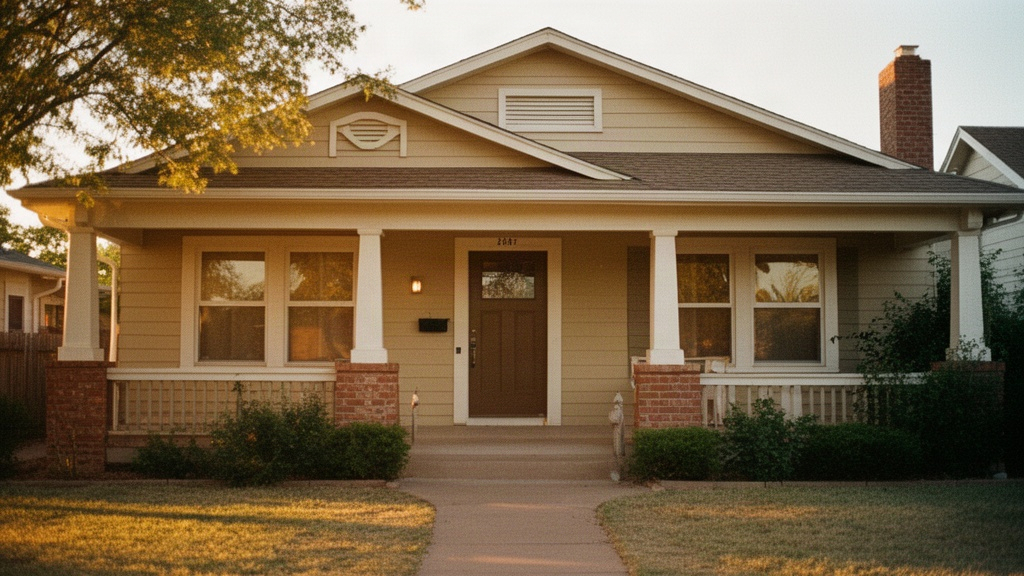
Curb appeal in Mountain Home carries extra weight because many buyers are arriving from out of town and forming their first impression as they pull into the driveway. Mowed grass, trimmed shrubs, a clean front door, and visible gutters in good condition all communicate that the home has been maintained. Properties with natural settings, mature trees, or views of the Ozark hills benefit from clearing sight lines rather than letting overgrown landscaping block them.
Inside, buyers focus on the kitchen, primary bathroom, and the condition of floors and ceilings. Popcorn ceilings, dated laminate counters, and worn carpet are not automatic deal-breakers, but they give buyers a reason to lower their offer. Deep cleaning, fresh neutral paint, and decluttered rooms cost very little and consistently improve buyer perception.
Repairs and Updates That Move the Needle
Not every repair is worth doing before you list. In Mountain Home, where the median home price as of September 2026 sits in the low-to-mid $200,000 range for standard residential properties (with lakefront and acreage homes running considerably higher), spending $30,000 on a kitchen remodel rarely returns dollar for dollar. What does return well: replacing a failing roof before listing rather than negotiating a credit at closing, servicing the HVAC system and providing documentation, fixing any visible water damage or foundation cracks, and addressing deferred maintenance that will surface in a buyer's inspection.
Sellers who complete a pre-listing inspection have a significant advantage. You learn what a buyer's inspector will find, you can fix items on your own schedule and budget, and you remove the uncertainty that causes buyers to pad their repair requests or walk away after inspection. In Mountain Home's market, where buyers often travel from out of state to tour homes, the last thing you want is a deal falling apart over a $2,000 plumbing issue that could have been fixed for $800 before listing.
Staging and Photography in a Lakefront Market
Mountain Home has a meaningful share of lakefront and lake-view properties on Bull Shoals Lake and Norfork Lake, and those homes require photography that captures the water. Drone photography is standard for any property with acreage, water access, or elevated views. Interior photography should be shot in natural light with wide-angle lenses, and rooms should be staged to feel spacious rather than full of personal items.
For standard residential homes in Mountain Home's in-town neighborhoods, professional photography still matters enormously because most buyers begin their search online. A buyer relocating from Dallas or Kansas City will decide whether to schedule a showing based entirely on listing photos. Blurry or dark images of a well-maintained home can cost you showings, and fewer showings mean fewer offers.
3. The Mountain Home Selling Timeline: What to Expect Week by Week
Most sellers in Mountain Home should plan for a total timeline of 60 to 120 days from the decision to sell through closing, depending on the price point and condition of the home. Lakefront and luxury properties often take longer because the buyer pool is smaller and more selective. Entry-level and mid-range homes in good condition can move much faster, sometimes going under contract within the first two weeks of listing.
Pre-Listing Phase
The pre-listing phase typically runs two to four weeks and includes signing the listing agreement, completing the CMA and setting the price, making agreed-upon repairs, decluttering and staging, and scheduling professional photography. Your agent will also prepare the seller's disclosure form, which Arkansas law requires, and gather information on property taxes, utility costs, HOA details if applicable, and any known material defects. Buyers, especially those relocating, will ask for this information early.
Sellers who want to understand the full cost picture of their transaction should review the breakdown of typical closing costs and seller-side fees before they list. Knowing your net proceeds in advance helps you evaluate offers clearly and negotiate from a position of confidence. You can find a detailed breakdown in the article on closing costs and fees when buying a home in Mountain Home, which also covers what buyers pay and how those costs affect offer structures.
Active Listing Phase
Once your home goes live on the MLS, the first two weeks are the most critical. Buyer interest peaks early, and a well-priced, well-presented home in Mountain Home will typically receive its strongest offers in the first ten to fourteen days. Your agent should be tracking showing requests, gathering buyer feedback after each showing, and reporting back to you on what buyers are saying.
If you have had ten showings and no offers after two weeks, that is data. It usually means the price needs to be adjusted, or something in the presentation is creating hesitation. A good agent will tell you this directly rather than letting the home sit. Speed matters in Mountain Home because a price reduction after 30 days on market is public information that every buyer's agent in town will notice.
Under Contract Through Closing
Once you accept an offer, the contract period in Arkansas typically runs 30 to 45 days. During this time the buyer will schedule a home inspection (usually within the first ten days), complete their appraisal if they are financing the purchase, and work through any lender conditions. As the seller, your job is to keep the home accessible for inspections and appraisals, respond to any repair requests promptly, and avoid making major changes to the property.
Closing in Mountain Home happens at a title company, and Arkansas is an attorney-optional state, meaning you are not required to have an attorney present though some sellers choose to. You will sign the deed and transfer documents, the title company will disburse funds, and you will hand over keys. The entire closing appointment typically takes less than an hour.
4. Negotiation and Offers: Protecting Your Net Proceeds
Getting a strong offer is only the first step. Keeping your net proceeds intact through negotiation is where sellers either gain or give back thousands of dollars. In Mountain Home, buyers at every price point will negotiate. Understanding how to evaluate what you are looking at in an offer protects your bottom line.
Reading an Offer Beyond the Price
The purchase price on an offer is not the same as what you will net at closing. Buyers may ask you to pay a portion of their closing costs, which in Arkansas typically runs between two and four percent of the purchase price. They may request a home warranty, a specific closing date that requires you to carry two mortgages, or a long inspection period. Each of these terms has a dollar value, and a $220,000 offer with $5,000 in seller concessions is not the same as a $215,000 clean offer.
Financing type also matters. Cash offers close faster and eliminate appraisal risk. VA loans have specific property condition requirements that can create complications on older Mountain Home homes. FHA loans require the property to meet minimum condition standards. Knowing the implications of each financing type helps you compare offers accurately rather than just looking at the number at the top of the page.
Seller Concessions in the Mountain Home Market
Seller concessions are common in Mountain Home and are not a sign of a weak negotiating position if handled correctly. Many buyers, especially first-time buyers and relocating buyers who have tied up cash in moving costs, ask for closing cost assistance. The key is that concessions should be negotiated against a higher purchase price when possible, so your net proceeds stay close to your target. An experienced agent will walk you through this math before you counter.
Multiple Offers and How to Handle Them
Well-priced homes in Mountain Home do receive multiple offers, particularly in the $150,000 to $250,000 price range where buyer competition is strongest. When multiple offers arrive, your agent has several options: accept the strongest offer outright, counter one or more buyers, or issue a highest-and-best deadline that asks all buyers to submit their best offer by a specific time. Each approach has pros and cons depending on how many offers you have and how close they are in price and terms.
For more detail on what drives speed and competition in local sales, the article on who sells homes fastest in Mountain Home breaks down the factors that separate quick, high-price sales from homes that linger on the market.
5. Working With a Local Expert to Maximize Your Sale Price
Selling a home in Mountain Home, Arkansas and consistently getting the highest sale price requires someone who knows this specific market, not just real estate in general. The pricing strategies that work in Fayetteville or Little Rock do not translate directly to a smaller lakefront market in the Ozarks. Local knowledge changes the outcome.
What Local Market Knowledge Actually Changes
An agent who has sold dozens of homes in Mountain Home and Baxter County knows which streets command premiums and why, which buyer pools are most active right now, and how to position a home against the specific competing listings on the market today. They know that a home with a view of Bull Shoals Lake needs to be marketed differently than a home two miles away without water access, even if the square footage is identical. They know which local lenders close on time and which inspection companies tend to be thorough versus superficial.
Strategic pricing in a shifting market is not a static formula. As Inman notes in its guide to helping sellers price strategically, the best agents adjust pricing recommendations based on real-time absorption data, not just historical comps. In Mountain Home, where inventory levels can shift meaningfully from one quarter to the next, that real-time read matters.
Questions to Ask Before You Sign a Listing Agreement
Before you commit to an agent, ask how many homes they have sold in Mountain Home and Baxter County in the past 12 months, what their average list-to-sale price ratio looks like, and how they plan to market your specific property. Ask whether they will provide professional photography, how they handle offers and negotiations, and what their communication process looks like once you are under contract. The answers tell you quickly whether you are talking to someone who knows this market or someone who is learning it on your dime.
Heather Hendricks of ERA Doty Real Estate has built her reputation in Mountain Home on exactly this kind of local, data-driven approach to pricing and marketing. Sellers who want to understand how other local agents view the market and refer clients can read about that dynamic in the Mountain Home Realtor referrals guide, which covers how professional reputation shapes outcomes for sellers and buyers alike.
If you are also thinking about what buyers in your price range are experiencing on the other side of the transaction, the relocating buyers guide for Mountain Home gives useful context on what motivates buyers here, which in turn helps you understand what makes your home more or less attractive to the people most likely to make an offer.
FAQ
What is the best time of year to sell a home in Mountain Home, Arkansas?
Spring and early summer, from March through June, historically see the most buyer activity in Mountain Home, as relocating families try to move before the school year starts and outdoor enthusiasts begin planning moves to the Bull Shoals and Norfork Lake area. That said, Mountain Home's retirement and relocation-driven market means buyers are active year-round in a way that purely family-oriented markets are not. Fall listings face less competition from other sellers, which can offset the slightly smaller buyer pool. The most important factor is not the month you list but whether your price and presentation are right when you do list. A well-prepared home listed in October will outperform an overpriced home listed in April.
How do I know if my Mountain Home home is priced correctly?
The clearest signal is showing activity in the first two weeks. A correctly priced home in Mountain Home will generate multiple showings and at least one serious inquiry within the first ten to fourteen days of listing. If you have had several showings with no offers and buyer feedback consistently mentions price, that is a strong indicator the list price needs to come down. Your agent should provide you with a detailed CMA before listing that compares your home to closed sales within the past three to six months in similar condition and location. Relying on Zillow estimates alone is not sufficient in Mountain Home, where the market has enough unique property types, including lakefront, rural acreage, and in-town residential, that automated valuations often miss by a wide margin.
How much do sellers typically net after costs in Mountain Home, Arkansas?
In Mountain Home, sellers should plan for total transaction costs of roughly eight to ten percent of the sale price, which includes agent commissions, title and closing fees, any seller-paid concessions, prorated property taxes, and transfer costs. On a $225,000 sale, that works out to approximately $18,000 to $22,500 in total costs before any mortgage payoff. Sellers who complete repairs before listing rather than negotiating credits at closing tend to net more because buyer-requested credits are often padded above the actual cost of the repair. Getting a clear net sheet from your agent before you accept any offer is the best way to compare competing offers accurately and avoid surprises at the closing table.