← Back to Blog
Buying
Homes for Sale in Saint Louis: Your Complete Buyer's Guide to the Market
By Heather Smith
September 5, 2026 · 12 min read
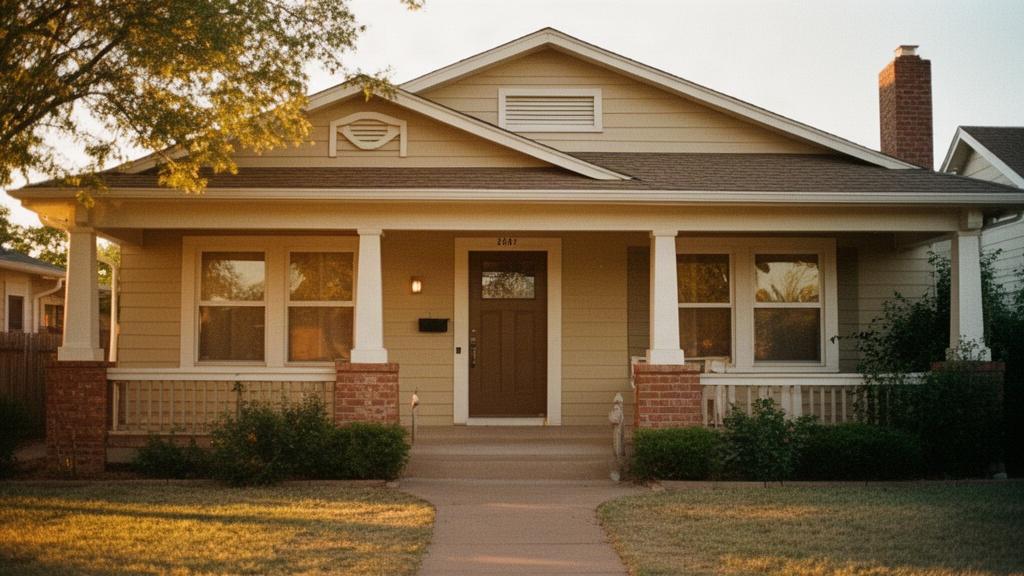
If you are searching for homes for sale in Saint Louis, you are looking at one of the Midwest's most architecturally diverse and historically layered housing markets. From the ornate brick row houses of the city's older districts to the sprawling ranch homes in the western suburbs, Saint Louis offers a wide range of housing stock at price points that remain more accessible than most major metros. This guide walks you through everything you need to know before you buy, including current market conditions, what your budget gets you, how the buying process works here, and how to position yourself to compete.
1. What the Saint Louis Housing Market Looks Like Right Now
Saint Louis is a competitive but navigable market in September 2026. Inventory has been tighter than the historical norm for the past two years, but the pace of appreciation has moderated compared to the frenzied conditions of 2021 and 2022. Buyers who come in prepared with financing and realistic expectations are closing successfully.
Current Prices and Inventory
As of September 2026, the median sale price for homes in the greater Saint Louis metro sits around $265,000 to $280,000, depending on which part of the market you are tracking. Saint Louis City proper tends to run lower, with medians closer to $185,000 to $210,000 in many zip codes, while municipalities in western St. Louis County such as Chesterfield, Wildwood, and Town and Country push well above $400,000. The spread reflects the sheer geographic and architectural variety of the region rather than any single trend.
Active listings across the metro have been running roughly 15 to 20 percent below the five-year pre-pandemic average, which means well-priced homes in desirable areas still attract multiple offers within the first week. Days on market for move-in-ready properties in the $200,000 to $375,000 range has been hovering between 8 and 18 days. Homes that need work or are priced above current comps are sitting longer, sometimes 45 to 60 days, which creates real opportunity for buyers willing to take on a project.
How Saint Louis Compares to National Trends
Nationally, existing-home sales have been climbing back from the lows seen in late 2023 and 2024. According to the National Association of Realtors' existing-home sales data, transaction volume has been recovering steadily through 2026 as mortgage rates stabilized in the mid-to-upper 6 percent range. Saint Louis has followed that trajectory, but with one important distinction: affordability here held up better than in coastal metros, so the pullback in buyer demand was less severe and the recovery has been more consistent.
The NAR's Summer 2026 real estate market analysis notes that Midwest markets with strong employment bases and below-average price-to-income ratios are among the most stable in the country right now. Saint Louis, anchored by healthcare, financial services, and higher education employers including BJC HealthCare, Edward Jones, and Washington University, fits that description closely.
2. What Homes for Sale in Saint Louis Actually Look Like
Saint Louis has some of the most distinctive residential architecture in the Midwest. The city was built in waves from the 1870s through the 1960s, and the housing stock reflects every era. Understanding what is physically available in each part of the metro helps you know where to focus your search.
City Neighborhoods and Housing Stock
Saint Louis City proper is defined by its red brick architecture. The most common housing type is the two-story brick row house or single-family brick bungalow, typically built between 1890 and 1940. Many of these homes have original hardwood floors, plaster walls, ornate woodwork, and deep front porches. Lot sizes in the city tend to be narrow and deep, often 25 to 35 feet wide, which gives neighborhoods like Tower Grove South, Benton Park, and the Fox Park area their characteristic dense, walkable feel.
The Central West End and Lafayette Square feature larger Victorian and Edwardian homes, some with four or five bedrooms and original carriage houses. Midtown and Grand Center are more mixed, with flats and multi-family buildings alongside single-family homes. The Shaw neighborhood, adjacent to the Missouri Botanical Garden, is known for well-maintained brick Craftsman bungalows on tree-lined streets. Soulard, one of the oldest neighborhoods in the city, has Federal-style row houses dating to the 1840s and 1850s sitting next to 20th-century infill.
Inner-Ring Suburbs
The inner-ring municipalities of St. Louis County, including Webster Groves, Kirkwood, Maplewood, Clayton, and University City, were developed primarily between 1900 and 1960. Housing here is a mix of Colonial Revivals, Cape Cods, brick ranch homes, and mid-century split-levels. Lot sizes are larger than in the city, typically 6,000 to 12,000 square feet, with mature trees and established landscaping. Clayton functions as the county seat and has a walkable downtown core surrounded by single-family homes on quarter-acre lots, with prices generally starting around $450,000 and climbing well above $1 million for larger properties.
Kirkwood and Webster Groves both have active Metra commuter rail access to downtown Saint Louis via MetroLink, with the light rail line running through Clayton and into the city. The drive from Kirkwood to the Gateway Arch area is roughly 18 to 22 minutes without traffic via Interstate 44. Maplewood, which borders Clayton to the south, has a commercial strip along Manchester Road with independent restaurants, coffee shops, and breweries, and its housing stock includes a high concentration of 1920s and 1930s bungalows priced between $200,000 and $380,000.
Outer Suburbs and St. Louis County
Moving west and south into St. Louis County, the housing stock shifts toward newer construction. Chesterfield, located about 25 miles west of downtown via Interstate 64, has a large inventory of homes built between 1980 and 2010, including brick colonials, two-story traditional homes, and newer construction patio homes. Lot sizes here often run from a quarter-acre to half an acre. Wildwood, further west, has a more rural character with homes on one to five-acre lots, many of them custom-built in the 1990s and 2000s.
Ballwin and Ellisville, which sit along the Highway 40/64 corridor, offer a dense inventory of 1970s and 1980s ranch homes and two-stories in the $250,000 to $400,000 range. O'Fallon and St. Peters in St. Charles County, just across the Missouri River to the north, have seen significant new construction activity and represent some of the most affordable entry points in the metro, with new builds starting around $280,000 to $320,000 for a three-bedroom home.
3. What Your Budget Gets You in Saint Louis
One of the strongest arguments for buying in Saint Louis is what your dollar actually purchases here. Compared to Chicago, Denver, or Nashville, the same budget buys significantly more square footage and land. Here is a realistic breakdown of what to expect at different price points as of September 2026.
Under $250,000
Below $250,000, you will find the most options inside Saint Louis City and in the north and south county areas. In the city, this budget covers a two or three-bedroom brick bungalow in neighborhoods like Dutchtown, Carondelet, or Gravois Park, typically 1,000 to 1,400 square feet with a small yard. Many of these homes have original character but need updating in the kitchen and baths. In south county, the same budget gets you into 1960s ranch homes with two-car garages and larger lots in municipalities like Affton or Mehlville.
Between $250,000 and $500,000
This is the most active price band in the metro right now, and competition is real. In this range you can access updated bungalows and Craftsman homes in Webster Groves and Maplewood, brick colonials in Kirkwood, newer construction townhomes in Chesterfield, and larger ranch homes throughout Ballwin and Ellisville. At $350,000 to $450,000 in the inner-ring suburbs, you are typically looking at three to four bedrooms, 1,600 to 2,400 square feet, and a finished basement, which is standard in this part of Missouri given the tornado risk and the region's preference for below-grade living space.
Above $500,000
Above $500,000, the market opens into Clayton's most desirable streets, large custom homes in Wildwood and Town and Country, and the historic estates of Ladue, where properties on multi-acre wooded lots routinely list between $800,000 and $3 million. Frontenac, Creve Coeur, and Des Peres also have strong inventories in the $550,000 to $900,000 range, typically featuring four to six bedrooms, three-car garages, finished walkout basements, and professionally landscaped yards. New construction luxury product in Chesterfield Valley is also active in this range, with builders offering full customization on lots that back to Monarch Levee trails or the Chesterfield Valley Athletic Complex.
4. How to Buy a Home in Saint Louis: The Process Step by Step
Buying a home in Saint Louis follows the same broad steps as buying anywhere in Missouri, but local customs and market conditions shape how each step plays out. Knowing what to expect at each stage prevents surprises and helps you move quickly when the right home comes up.
Get Pre-Approved Before You Search
In the current Saint Louis market, a pre-approval letter from a lender is not optional. Sellers in the $200,000 to $400,000 range, where competition is highest, will not seriously consider an offer without one. Pre-approval is different from pre-qualification: it involves a full credit pull, income verification, and asset documentation, and it gives you a firm borrowing ceiling. Missouri has no state-level first-time buyer program that applies universally, but the Missouri Housing Development Commission offers down payment assistance programs worth looking into if you are buying your first home.
Work With a Local Agent Who Knows the Market
Saint Louis is a hyper-local market. Conditions in Kirkwood can be meaningfully different from conditions two miles away in Webster Groves, and what is competitive in Soulard does not necessarily apply in Chesterfield. A local agent tracks days on market, list-to-sale price ratios, and seller motivation at the neighborhood level. They also know which streets in a given zip code have drainage issues, which subdivisions have upcoming special assessments, and which sellers are motivated versus just testing the market.
Make a Competitive Offer
In September 2026, well-priced homes in the city and inner-ring suburbs are still seeing multiple offers, particularly in the $220,000 to $375,000 range. Escalation clauses, shortened inspection periods, and flexible closing timelines are all tools buyers are using to stand out. Missouri is an attorney-optional state for closings, meaning a title company typically handles the transaction without a real estate attorney present, which keeps closing costs slightly lower than in attorney-required states.
Navigate Inspections and Closing
Missouri is a buyer-beware state, which means the inspection contingency is your primary protection. Given the age of Saint Louis's housing stock, inspections here regularly turn up items like aging knob-and-tube or aluminum wiring in city homes, older HVAC systems, and foundation issues common in clay-soil areas. A thorough inspection by a licensed Missouri home inspector, typically costing $350 to $550 depending on the home's size, is worth every dollar. The average time from accepted offer to close in Saint Louis is 30 to 45 days.
5. Key Costs and Considerations Before You Close
The purchase price is only part of what you will pay. Several Saint Louis-specific cost factors can meaningfully affect your monthly payment and long-term ownership costs, and understanding them before you make an offer prevents budget surprises at the closing table.
Property Taxes in Saint Louis City vs. County
Saint Louis City and Saint Louis County are separate political entities, and their tax structures differ. Saint Louis City has a higher personal property tax rate and an earnings tax of 1 percent on income earned within city limits, which affects the total cost of living for city residents. Property tax rates in the city run roughly 1.6 to 2 percent of assessed value annually. In St. Louis County, rates vary by municipality and school district but generally fall between 1.1 and 1.7 percent. St. Charles County, which includes O'Fallon and St. Peters, tends to run slightly lower. Always confirm the exact millage rate for any specific property before you finalize your budget.
Flood Zones and Insurance
The Missouri and Mississippi Rivers both run through the Saint Louis metro, and flood zone designation is a real consideration for certain areas. Chesterfield Valley, parts of the Meramec River corridor in south county, and some lower-lying areas near the riverfront carry Special Flood Hazard Area designations that require federally backed flood insurance. This can add $800 to $2,500 per year to your carrying costs depending on the structure and zone. FEMA's flood map service center lets you check any address before you make an offer.
HOA Fees and Condo Assessments
Many newer subdivisions in Chesterfield, Wildwood, and Ballwin have homeowners associations with monthly fees ranging from $30 to $150 for basic common area maintenance. Condo buildings in Clayton and the Central West End carry higher monthly assessments, often $300 to $600 or more, which cover building maintenance, exterior insurance, and sometimes utilities. Always request the HOA's financial statements and reserve fund balance before closing. An underfunded reserve can mean a special assessment landing on your doorstep within the first few years of ownership.
6. Relocating to Saint Louis: What to Know Before You Move
Saint Louis is a genuine relocation destination in 2026. Inbound moves from higher-cost metros including Chicago, Austin, and the coasts have been steady, driven by the combination of lower home prices, a strong job market, and a cultural scene that surprises many newcomers.
What Saint Louis Offers Beyond Housing
Forest Park, at 1,371 acres, is larger than Central Park in New York and houses the Saint Louis Zoo, the Saint Louis Art Museum, the Missouri History Museum, and the Muny outdoor theater, all free to visit. The Gateway Arch National Park sits on the Mississippi riverfront and anchors a downtown that has seen significant reinvestment through the 2020s. The Saint Louis Cardinals at Busch Stadium draw over two million visitors annually. The food and restaurant scene, particularly along South Grand Boulevard, Cherokee Street, and in the Delmar Loop near University City, reflects the city's diverse culinary history.
Commute and Transportation
Most Saint Louis residents commute by car. The metro's highway grid, centered on Interstates 44, 55, 64, and 70, makes cross-county travel manageable outside of rush hour. The MetroLink light rail system runs from Lambert-St. Louis International Airport through Clayton and into downtown, then across the river to Shiloh, Illinois, covering about 46 miles of track with 38 stations. For buyers who work downtown or in Clayton, proximity to a MetroLink station can meaningfully reduce commute stress and parking costs.
Lambert International Airport offers direct flights to most major U.S. hubs and several international destinations, which matters for buyers who travel frequently for work. The airport is located in the northwest part of the county, roughly 20 to 30 minutes from most of the metro by car.
FAQ
What is the average home price in Saint Louis right now?
As of September 2026, the median sale price across the greater Saint Louis metro ranges from approximately $265,000 to $280,000, depending on the data source and geographic boundaries used. Saint Louis City proper runs lower, with medians in many zip codes between $185,000 and $210,000, while western St. Louis County municipalities like Chesterfield and Clayton push the average significantly higher. St. Charles County, which includes O'Fallon and St. Peters, offers some of the most accessible price points in the metro, particularly for new construction. Prices have appreciated modestly through 2026 after the sharper gains seen between 2020 and 2022.
Is it a good time to buy a home in Saint Louis?
Market timing is a personal financial decision that depends on your income stability, savings, how long you plan to stay, and your local alternatives. What the current September 2026 data shows is that Saint Louis remains more affordable than most comparable metros, inventory is below historical norms which supports prices, and mortgage rates have stabilized enough that monthly payments are more predictable than they were in 2022 and 2023. Buyers who are financially prepared and planning to stay at least five to seven years have historically done well in this market. Speaking with a local agent about specific neighborhoods and price points will give you a clearer picture than any national headline can.
What should I know about Saint Louis neighborhoods before I buy?
Saint Louis has over 79 recognized neighborhoods in the city alone, plus dozens of distinct municipalities in St. Louis County and St. Charles County, and the character, housing stock, price range, and commute times vary significantly from one to the next. For school district information, the Missouri Department of Elementary and Secondary Education publishes annual report cards for every district at dese.mo.gov, which is the most objective source for that data. For municipal services and local governance information, each city and county has its own website with budget documents and planning information. A local real estate agent who works across the metro can walk you through the factual differences in housing stock, lot sizes, tax rates, and proximity to amenities so you can make the comparison that fits your priorities.