← Back to Blog
Market Trends
Saint Louis MO Housing Market Trends: What Imperial Buyers and Sellers Need to Know in 2026
By Heather Smith
September 28, 2026 · 10 min read
The Saint Louis MO housing market trends shaping 2026 are directly affecting what buyers pay and what sellers net in Imperial, Missouri, right now. Whether you are relocating to Jefferson County, upsizing from a condo in the city, or listing a ranch-style home off Telegraph Road, understanding the broader metro picture gives you a real edge. This article breaks down current conditions, what the numbers mean locally, and how to move forward with confidence.
1. Where the Saint Louis Metro Market Stands Right Now
The Saint Louis MO housing market trends in September 2026 point to a market that is neither a runaway seller's market nor a buyer's bonanza. Prices have held firm across most of the metro, inventory remains below the historical norm of five to six months of supply, and well-priced homes are still moving within a few weeks of listing. The market is more balanced than it was during the frenzied pace of 2021 and 2022, but sellers in most price ranges still hold a meaningful advantage.
Inventory Levels and What They Mean
Active listings across the St. Louis metro have climbed modestly compared to September 2025, but total supply is still sitting below four months in most sub-markets, including Jefferson County. A market with less than four months of supply generally favors sellers because buyers have fewer options to choose from and less leverage to negotiate price reductions or seller concessions. That dynamic is visible in Imperial right now, where move-in-ready homes in established subdivisions like Fox Creek and Seckman Estates tend to attract multiple showings in the first week.
Nationally, analysts have noted that local supply and demand shifts are creating divergent conditions even within the same metro area. HousingWire's analysis of housing market signals and local supply and demand confirms that ZIP-code-level data often tells a very different story than metro-wide averages. That is exactly why buyers and sellers in Imperial should look beyond the St. Louis headline numbers and focus on what is actually happening in the 63052 and surrounding Jefferson County ZIP codes.
Price Trends Across the Metro
Median home prices in the St. Louis metro have appreciated steadily through 2026. According to data compiled by Norada Real Estate, the St. Louis market has continued to see price appreciation through 2026, with the median sale price for the broader metro area sitting in the mid-to-upper $200,000 range as of this year. That figure masks significant variation: entry-level homes in some city neighborhoods trade below $150,000, while larger single-family homes in suburban Jefferson County communities like Imperial regularly list in the $300,000 to $500,000 range depending on lot size, finish level, and school district access.
Inman reported earlier this year that home prices ticked up in most U.S. metros during Q1 2026, and the St. Louis area followed that national pattern. Prices did not spike dramatically, but they did not pull back either. That steady appreciation means sellers who bought even three or four years ago have built meaningful equity, while buyers need to come to the table with realistic price expectations.
2. How Imperial, Missouri Fits Into the Broader Saint Louis Housing Market
Imperial sits in northern Jefferson County, roughly 20 to 25 miles southwest of downtown St. Louis via Interstate 55. That commute corridor, combined with the community's mix of established subdivisions and newer construction, makes it a distinct sub-market within the broader Saint Louis MO housing market trends conversation. Understanding what sets Imperial apart from other St. Louis suburbs is essential context for anyone buying or selling here.
Imperial's Housing Stock and Price Range
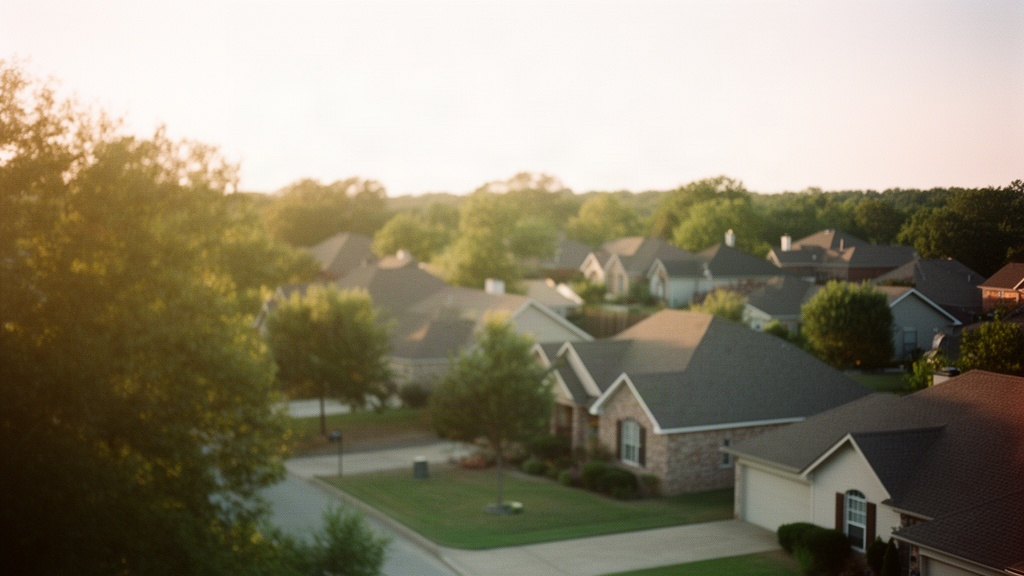
The housing stock in Imperial spans several decades of construction. You will find brick ranch homes built in the 1970s and 1980s on generous lots, two-story colonials from the 1990s and early 2000s in planned subdivisions, and more recently built homes with open floor plans and attached three-car garages. Lot sizes tend to be larger than what you would find closer to the St. Louis city limits, with many properties sitting on a quarter acre or more. That extra space is one of the reasons Imperial draws buyers who want room for a deck, a garden, or a detached garage without leaving the metro area.
In September 2026, actively listed single-family homes in Imperial are generally priced between $250,000 and $480,000, with the sweet spot for three-bedroom, two-bathroom homes falling roughly in the $290,000 to $380,000 range. Homes with finished basements, updated kitchens, or backing to wooded lots tend to command the upper end of that range. Buyers relocating from higher-cost markets like Chicago or Kansas City often find that the price-per-square-foot in Imperial compares favorably to what they left behind.
Why Jefferson County Is Drawing Attention
Jefferson County as a whole has seen sustained buyer interest through 2026 because it offers a different physical environment than the denser inner-ring suburbs of St. Louis County. The Meramec River runs through portions of the county, Mastodon State Historic Site is located just minutes from Imperial's center, and the area has direct access to Hawn State Park and other Missouri Department of Conservation properties within a short drive. For buyers who want outdoor access alongside suburban conveniences, that combination is hard to replicate closer to the city.
Telegraph Road and Old Lemay Ferry Road serve as the main commercial corridors, giving Imperial residents access to grocery stores, restaurants, medical offices, and retail without driving into St. Louis County. The I-55 on-ramps near Imperial make the commute to downtown St. Louis, South County, or even Illinois employers across the Jefferson Barracks Bridge manageable for most households.
3. What Mortgage Rates Are Doing to Buyer Behavior
Mortgage rates remain the single biggest variable shaping buyer behavior across the Saint Louis MO housing market right now. Rates on 30-year fixed mortgages have moderated compared to their 2023 peak but are still elevated relative to the historically low levels buyers enjoyed between 2020 and 2022. That means monthly payments on a $350,000 home today are meaningfully higher than they were four years ago at the same price point, even though the purchase price itself has not doubled.
Affordability Math in the Current Rate Environment
At a 6.75% rate on a 30-year fixed loan, a buyer putting 10% down on a $340,000 Imperial home is looking at a principal and interest payment of roughly $1,985 per month before taxes and insurance. That number matters because it determines how many households can qualify and how aggressively they can compete. Buyers who can bring a larger down payment or who qualify for a VA or USDA loan program may have a structural cost advantage over conventional borrowers in the same price range. Jefferson County properties outside the Imperial town center may qualify for USDA rural development financing depending on exact location, which is worth verifying with a lender.
How Sellers Are Responding
Many existing homeowners in Imperial who locked in rates below 3.5% are choosing to stay put rather than sell and take on a higher-rate mortgage for their next purchase. This "rate lock" effect is one of the primary reasons inventory has not surged even as buyer demand has softened from its 2021 peak. Sellers who do list tend to be motivated by life events: job relocations, estate sales, upsizing for a growing household, or downsizing after children leave home. Those sellers are serious, which means the homes that do hit the market in Imperial are generally priced with intent rather than as tests of the water.
4. Key Signals That Tell You Whether to Buy or Sell Right Now
Three metrics give the clearest real-time picture of conditions in any local market: days on market, the ratio of list price to final sale price, and seasonal inventory patterns. Watching these numbers in the Imperial and broader Jefferson County sub-market tells you far more than metro-wide averages from a national report.
Reading Days on Market
In September 2026, well-priced homes in Imperial are typically going under contract within 15 to 25 days of listing. Homes sitting beyond 45 days are usually carrying a pricing issue, a condition concern, or both. When you see a listing that has been on the market for 60 days or more in this environment, that is a signal worth investigating before assuming it is a bargain. Heather Smith tracks days-on-market data for Jefferson County listings regularly and can help you interpret what a specific property's history actually means.
List Price vs. Sale Price Ratios
Homes in Imperial have been closing at approximately 97% to 99% of list price on average through 2026, which means sellers are not routinely accepting large discounts. Buyers who come in with offers significantly below asking price on move-in-ready homes are often losing out to more competitive bids. That said, homes with deferred maintenance or dated interiors are seeing more negotiation room, sometimes closing at 94% to 96% of list. Knowing which category a home falls into before you write an offer is critical, and that distinction requires local knowledge of comparable sales.
Seasonal Timing in the Imperial Area
September is historically a transition month in the St. Louis metro housing market. The summer rush has wound down, buyer competition is slightly less intense than it was in May and June, and sellers who did not close during peak season are often more willing to negotiate on price or closing costs. For buyers who missed out on spring listings, the fall window from September through November can offer a second opportunity to find a home in Imperial without competing against six other offers. Sellers, on the other hand, may want to consider whether waiting until the following spring makes sense given their timeline.
If you are weighing a move to or from Imperial and want broader context on the St. Louis metro, the guides on homes for sale in Saint Louis and homes for sale in Clayton, MO on this site offer useful comparisons for understanding how Imperial's price points and housing stock stack up against other parts of the metro.
5. What to Expect From the Saint Louis Housing Market Through Early 2027
The Saint Louis MO housing market trends point toward continued price stability with modest appreciation through the first half of 2027, barring a significant shift in interest rates or the broader economy. The factors that have kept prices firm through 2026, limited inventory, steady employment in the metro's healthcare, logistics, and manufacturing sectors, and ongoing demand from relocating buyers, are unlikely to reverse quickly.
Supply Constraints and New Construction
New construction in Jefferson County has been active but not at a pace that would dramatically loosen supply. Builders have been developing lots in communities near Imperial, but land availability, permitting timelines, and construction costs have kept new home prices in the $350,000 to $550,000 range for most new builds. That means new construction is not pulling the resale market down; instead, it is serving a different segment of buyers who want a blank slate and are willing to pay a premium for it. Resale homes in Imperial that are well-maintained and priced correctly are not losing ground to new construction.
Price Forecast and What It Means for Imperial
Forecasts from Norada Real Estate's detailed look at the St. Louis housing market trends and forecast for 2026 to 2027 suggest the metro will continue to see low-to-moderate appreciation rather than sharp price swings in either direction. For Imperial specifically, that means sellers who list a properly prepared home at market value should still find buyers, while buyers who wait for a price correction may be waiting longer than they expect.
If mortgage rates drop meaningfully in late 2026 or early 2027, economists expect a wave of sidelined buyers to re-enter the market, which would put upward pressure on prices in supply-constrained areas like Imperial. Buyers who can qualify and act now may be purchasing ahead of that demand surge rather than into it. Sellers who have been waiting for the market to improve should note that current conditions are already favorable by historical standards.
One broader trend worth watching is what NAR has described as the tension between slow transaction volume and persistently high prices. Fewer homes are changing hands nationally, but prices are not falling. That combination creates a market where both buyers and sellers need to be more strategic than they did when volume and price were both rising together.
FAQ
Is now a good time to buy a home in Imperial, Missouri?
Whether now is the right time to buy depends on your personal financial situation, your timeline, and how long you plan to stay in the home. In September 2026, Imperial's housing market has stable prices, limited inventory, and competition that is less intense than the spring peak, which means motivated buyers can find opportunities without the multiple-offer frenzy of a few years ago. If you are financially ready and planning to stay in the home for at least four to five years, the current environment in Imperial is generally workable for buyers who are prepared. Waiting for a significant price drop is not a strategy supported by current Saint Louis MO housing market trends data. Speaking with a local agent like Heather Smith who tracks Jefferson County inventory daily will help you time your search around what is actually available.
What is the average home price in Imperial, Missouri right now?
As of September 2026, most actively listed single-family homes in Imperial, Missouri are priced between $250,000 and $480,000, with the median for a three-bedroom, two-bathroom home falling roughly in the $290,000 to $380,000 range. Homes with finished basements, updated kitchens, or larger lots at the upper end of that spectrum tend to sell quickly. Entry-level homes and those needing updates can still be found below $270,000 in some cases. These figures reflect current list prices in the 63052 ZIP code area; final sale prices have been running at approximately 97% to 99% of list price for move-in-ready properties through 2026.
How does Imperial, Missouri compare to other St. Louis suburbs for home buyers?
Imperial offers a different physical profile than many St. Louis County suburbs: larger lot sizes, a mix of housing eras from 1970s brick ranches to newer construction, and direct access to outdoor amenities like Mastodon State Historic Site and the Meramec River corridor. Price-per-square-foot in Imperial is generally more accessible than in established St. Louis County communities closer to the city, and the I-55 corridor keeps downtown St. Louis within a 25-mile commute. Buyers comparing Imperial to other parts of the metro should weigh commute distance, lot size preferences, and price range alongside any other priorities specific to their household. For a broader look at how different St. Louis communities compare on housing stock and price, the buyer's guide to homes for sale in Saint Louis on this site covers additional context.