← Back to Blog
Market Trends
Sarasota, Florida Real Estate Market Guide: Prices, Neighborhoods and Timing
By Holly Wikfors
September 7, 2026 · 10 min read
This Sarasota, Florida real estate market guide covers what buyers, sellers, and relocating households need to know right now: where prices stand in September 2026, what each major area of the city looks like on the ground, and how to time a purchase or sale in a market that has shifted considerably over the past eighteen months. Whether you are comparing waterfront condos near downtown or single-family homes east of I-75, the details below will help you move forward with confidence.
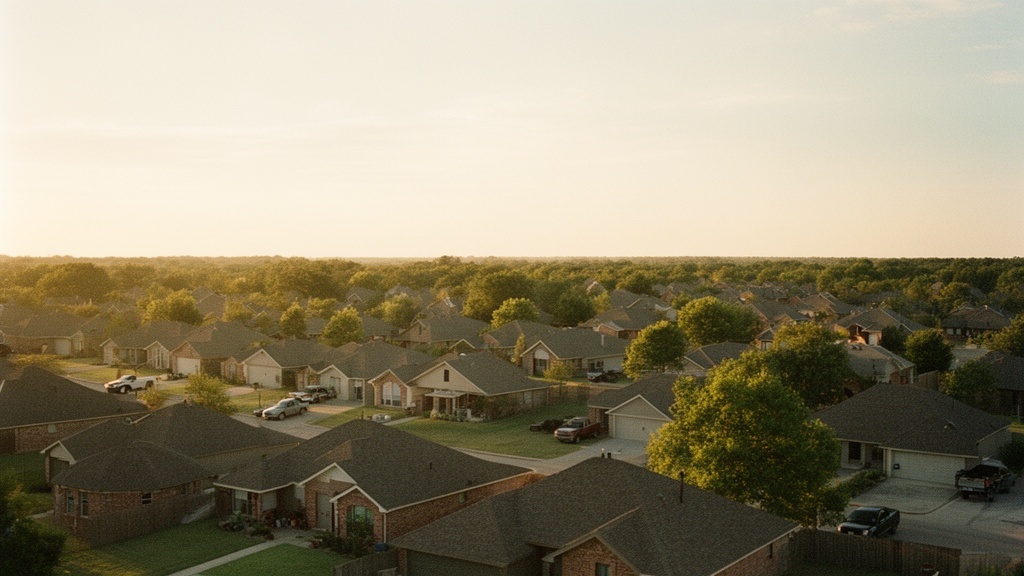
1. Where Sarasota Home Prices Stand Right Now
Sarasota County's median sale price sits in the mid-to-upper $400,000s as of September 2026, a figure that reflects meaningful softening from the peaks recorded in 2022 and 2023, though prices remain well above pre-pandemic levels.
Median Sale Price and Price Per Square Foot
Median sale price: Sarasota County's median closed price for single-family homes is approximately $475,000 in September 2026, while attached units including condos and townhomes are closing closer to $340,000 at the median. Price per square foot for single-family homes runs roughly $265 to $310 depending on location, condition, and proximity to water.
The year-end 2025 data published by the REALTOR Association of Sarasota and Manatee showed that closed sales volume had declined year-over-year while median prices held relatively steady, a pattern that has continued into 2026 as higher mortgage rates kept some move-up buyers on the sidelines.
Luxury and waterfront properties skew the averages significantly. Bayfront and Gulf-front listings on Siesta Key or along Golden Gate Point routinely close above $2 million, while inland properties in areas like Fruitville or Bee Ridge offer substantially more square footage for under $400,000.
How Inventory Has Changed
Active listing inventory in Sarasota County has climbed considerably since early 2024. Months of supply, which measures how long it would take to sell all current listings at the current pace of sales, is running above four months for single-family homes and above six months for condos as of September 2026. That puts the condo segment firmly in buyer's market territory, while single-family homes remain closer to a balanced market.
New construction has added to that supply pressure. Builders in master-planned communities east of I-75 continued delivering homes through 2025 and into 2026, giving buyers more choices and more negotiating leverage than they had two years ago.
Days on Market in September 2026
Days on market: The median days on market for Sarasota County homes is currently around 60 to 75 days, a sharp increase from the 15 to 20 day medians seen during the peak frenzy of 2021 and 2022. Florida broadly has seen homes sitting longer, with some statewide analyses tracking median days on market approaching 90 to 100 days for certain price bands.
Correctly priced homes in desirable locations still move faster. A well-maintained single-family home priced within five percent of its appraised value in an area like Palmer Ranch or Gulf Gate Estates can still receive multiple showings in the first two weeks. Overpriced listings, on the other hand, are sitting and accumulating price reductions.
2. Sarasota Neighborhoods: What the Housing Stock Actually Looks Like
Sarasota's geography shapes its real estate in a way that few Florida cities can match. The city sits between Sarasota Bay to the west and a string of inland lakes and preserves to the east, with the barrier islands of Siesta Key, Lido Key, and Longboat Key extending into the Gulf of Mexico. Each of these zones has its own housing type, price range, and character.
Downtown Sarasota and the Bayfront
Downtown Sarasota centers on Main Street and the Rosemary District, with a mix of high-rise condos along the bayfront, historic bungalows in Laurel Park, and newer mid-rise developments near Five Points. Condo prices downtown range from around $300,000 for a one-bedroom in an older building to well over $3 million for a penthouse with bay views in a newer tower. The Van Wezel Performing Arts Hall, the Sarasota Opera House, and a walkable restaurant corridor along Palm Avenue give this area a dense cultural footprint.
Single-family homes in the downtown core are rare and often historic. Laurel Park, which sits just south of Mound Street, contains some of Sarasota's oldest residential architecture, including Craftsman bungalows and Florida vernacular cottages on small lots. These properties sell in the $600,000 to $1.2 million range depending on renovation level and lot size.
Siesta Key and the Barrier Islands
Siesta Key is connected to the mainland by two bridges: the Stickney Point Road bridge to the south and the Siesta Drive bridge to the north. The island's housing stock spans everything from older concrete block cottages built in the 1950s and 1960s to newly constructed canal-front homes with private docks. The quartz-sand beach at Siesta Key Public Beach is one of the widest in Florida, and it drives significant demand for properties within walking distance.
Price range on Siesta Key: Entry-level condos in older complexes start around $350,000, while Gulf-front single-family homes routinely exceed $5 million. Canal-front homes with boat access but no direct Gulf view typically fall between $1.2 million and $2.5 million. Flood insurance costs are a meaningful line item here, and buyers should budget for them before making an offer.
Lido Key sits just west of downtown, accessed via the John Ringling Causeway. St. Armands Circle, a circular shopping and dining district on Lido Key, anchors the area's commercial life. Single-family homes on Lido range from $900,000 to over $4 million, and the island has a much smaller residential footprint than Siesta Key.
Palmer Ranch and South Sarasota
Palmer Ranch is a large planned development south of Clark Road, roughly five to eight miles from downtown Sarasota. It contains dozens of gated and non-gated communities with homes built primarily between the mid-1980s and the early 2010s. Lot sizes tend to be modest, typically 6,000 to 9,000 square feet, but many properties back up to preserves or lakes. Median home prices in Palmer Ranch communities run from about $400,000 for a two-bedroom villa to $750,000 or more for a larger pool home in a gated section.
The Legacy Trail runs through this corridor. This paved multi-use path stretches roughly 18 miles from downtown Sarasota south toward Venice, passing through Palmer Ranch and offering direct access to Oscar Scherer State Park. Proximity to the trail is a selling point that agents and buyers reference frequently in this part of the county.
East of I-75: Lakewood Ranch Adjacent Areas
The area east of I-75 along the Sarasota-Manatee county line has seen the most new construction activity over the past decade. While Lakewood Ranch itself sits primarily in Manatee County, the communities along Fruitville Road, Bee Ridge Road extended, and Clark Road east of I-75 fall within Sarasota County and offer newer homes at prices that undercut the barrier islands and downtown significantly.
New construction pricing east of I-75: Builder base prices in this corridor start around $350,000 for a three-bedroom home and climb past $700,000 for larger models with premium lots. Resale homes in established communities like Tatum Ridge or Villages of Piney Point offer similar square footage at slight discounts to new construction, particularly as builder incentives have increased in 2026.
Commute times from this area to downtown Sarasota run 25 to 40 minutes depending on traffic and the specific origin point. The I-75 interchange at Fruitville Road and the one at Clark Road are the primary access points, and both can back up during morning and afternoon peak hours.
3. Understanding the Sarasota Real Estate Market Guide for Buyers
Buyers in Sarasota right now have more leverage than at any point since 2019. Rising inventory, longer days on market, and sellers who have adjusted their expectations mean that negotiating on price, closing costs, and repairs is realistic again in most price bands.
What Buyers Are Competing Against
Multiple-offer situations still occur but are no longer the default. In September 2026, they tend to cluster around well-priced, move-in-ready homes under $500,000 in established neighborhoods, and around new construction communities where builders have released limited inventory at a set price. Above $700,000, most listings are seeing single-digit showings before going under contract.
Cash buyers remain active in Sarasota, particularly in the luxury and waterfront segments. Roughly 35 to 40 percent of Sarasota County transactions closed without a mortgage in 2025, a figure that reflects both the affluent buyer pool and the appeal of avoiding financing contingencies in a competitive offer situation. Financed buyers can still compete effectively by getting fully underwritten pre-approvals rather than standard pre-qualification letters.
For a detailed breakdown of what to expect when searching active listings, the buyer's guide on this site walks through the process of finding and evaluating homes for sale in Sarasota in 2026.
Financing Conditions in September 2026
Mortgage rates have eased from their 2023 highs but remain elevated relative to the 2020 and 2021 environment. Thirty-year fixed rates in September 2026 are generally in the mid-to-upper 6 percent range for well-qualified borrowers, which means monthly payments on a $475,000 home with 20 percent down are roughly $2,400 to $2,600 before taxes and insurance. Florida property insurance costs are a significant additional expense and vary substantially by flood zone, construction year, and roof age.
Jumbo loan thresholds apply to a meaningful share of Sarasota transactions. The conforming loan limit for Sarasota County in 2026 is $806,500 for a single-unit property. Purchases above that amount require jumbo financing, which carries its own underwriting standards and typically requires larger reserves.
Commute Times and Infrastructure
Sarasota does not have a commuter rail system, so driving is the primary mode of transportation for most residents. US-41 (Tamiami Trail) is the main north-south corridor through the city and connects Sarasota to Bradenton to the north and Venice to the south. I-75 runs parallel about five to eight miles inland and is the faster route for longer trips. Sarasota-Bradenton International Airport sits just north of downtown, roughly a 10-minute drive from the city center.
Commute benchmarks buyers frequently ask about: Siesta Key to downtown Sarasota is roughly 20 to 30 minutes during peak hours. Palmer Ranch to downtown runs 20 to 35 minutes. The east-of-I-75 corridor to downtown is 25 to 45 minutes depending on traffic. Sarasota to Tampa via I-75 takes approximately 60 to 80 minutes under normal conditions.
4. Timing Your Sale: What Sellers Need to Know
Selling in Sarasota in September 2026 requires a different approach than it did in 2021 or 2022. The market still rewards well-prepared, accurately priced homes, but the days of listing with a high aspirational price and waiting for multiple offers are largely over in most segments.
Seasonal Demand Patterns
Sarasota has a pronounced seasonal buying cycle driven by snowbird and relocation traffic. Buyer activity typically builds from November through April, peaking in February and March when northern visitors are in town and making purchase decisions. Listing in October or November to catch that incoming wave is a proven strategy for sellers who want maximum exposure during the high-demand window.
Summer months, particularly July and August, see reduced buyer activity. This is partly weather-driven and partly because many seasonal residents have returned north. September marks the beginning of the transition back toward the active season, making it a reasonable time for sellers to prepare their homes and list ahead of the fall surge rather than waiting until January.
Pricing Strategy in a Higher-Inventory Market
Overpricing is the single most common mistake Sarasota sellers make in the current market. With months of supply elevated and buyers having more choices, a home priced even ten percent above its market value will sit, accumulate days on market, and eventually sell for less than it would have if priced correctly from the start. Buyers in 2026 are watching price history closely and will discount a listing that has had one or more reductions.
Preparation matters more than it did during the seller's market years. Homes that have been professionally staged, photographed with wide-angle lenses, and offered with a pre-listing inspection report are closing faster and closer to list price than comparable homes that were listed without those steps. In a market where buyers have options, presentation is a differentiator.
Florida's broader homebuilding landscape is also shaping buyer expectations. As noted in HousingWire's analysis of Florida's homebuilding market in 2026, the state is not one uniform market but a patchwork of local conditions, and Sarasota's resale sellers are competing directly with builder inventory that comes with warranties, design-center upgrades, and financing incentives. Resale homes need to be priced and presented to compete with that.
Concessions are back on the table. Seller-paid closing costs, rate buydowns, and repair credits are all being negotiated in September 2026 in a way that was rare during the 2021 to 2022 peak. Sellers who budget for these concessions upfront can price accordingly and still net a strong outcome.
FAQ
Is September 2026 a good time to buy a home in Sarasota, Florida?
September 2026 offers buyers in Sarasota more leverage than they have had in several years. Inventory is elevated across most price bands, days on market have stretched to 60 to 75 days at the median, and sellers are more willing to negotiate on price and concessions. Buyers who are pre-approved and ready to move have real choices and are not facing the bidding wars that defined 2021 and 2022. The main headwind is mortgage rates, which remain in the mid-to-upper 6 percent range, so buyers should run detailed payment scenarios before setting a price range.
What are the most affordable areas in Sarasota County for home buyers?
The most affordable single-family home options in Sarasota County are generally found east of I-75 along corridors like Fruitville Road and Bee Ridge Road extended, where new construction starts around $350,000 and resale homes can be found in the $320,000 to $450,000 range. Areas like North Sarasota and the Newtown corridor offer older housing stock at lower price points as well. Condo buyers can find units in the $250,000 to $350,000 range in older complexes throughout the county, though buyers should carefully review HOA fees, reserve fund status, and any upcoming special assessments before purchasing, particularly in buildings constructed before 1990.
How do flood zones affect home buying in Sarasota?
Flood zone designation is one of the most important factors in the Sarasota real estate market and directly affects both insurability and insurance cost. Properties in FEMA-designated AE or VE flood zones, which include much of the barrier islands and bayfront areas, require flood insurance if financed with a federally backed mortgage, and premiums can range from a few hundred dollars to several thousand dollars per year depending on the structure's elevation relative to the base flood elevation. Buyers should request the current elevation certificate for any property in a special flood hazard area and get insurance quotes before going under contract. FEMA's flood map service center allows anyone to look up a specific address's flood zone designation at no cost.