← Back to Blog
Selling
Selling a Home in Tallahassee: Pricing, Timeline and What to Expect
By Jacqueline Betancourt
Hill Spooner & Elliott, Real Estate, Inc.
September 28, 2026 · 11 min read
Selling a home in Tallahassee in September 2026 means navigating a market that has shifted noticeably from the frenzied pace of recent years. Buyers have more choices, pricing precision matters more than ever, and the sellers who close quickly are the ones who prepare carefully before they list. This guide walks through everything you need to know: how to price your home, how long the process takes, and what happens at each stage.
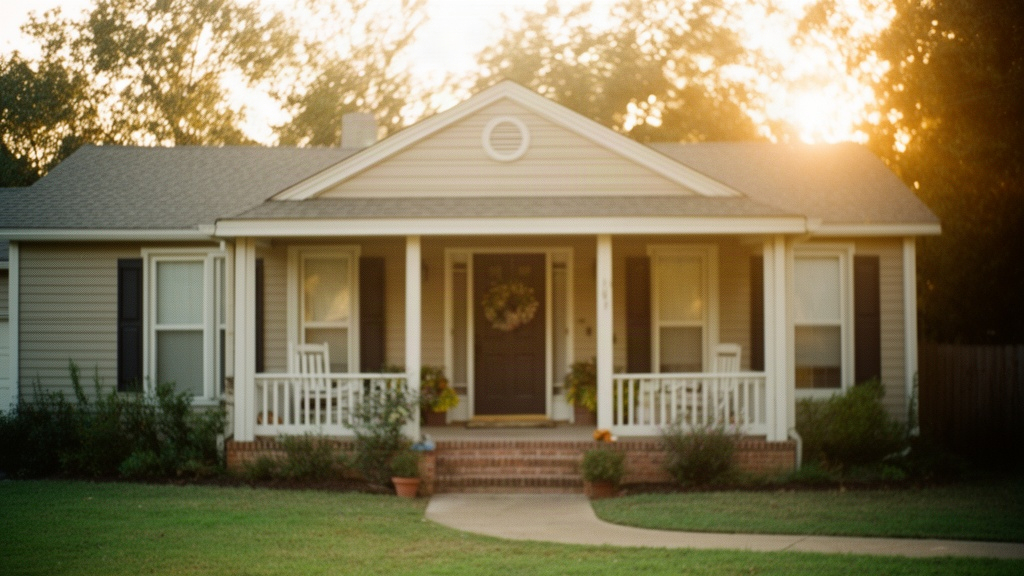
1. What the Tallahassee Market Looks Like Right Now for Sellers
Tallahassee's housing market in September 2026 is a balanced-to-slightly-buyer-favoring market. Median sale prices have held relatively steady compared to September 2025, but homes are sitting on the market longer before going under contract, and sellers are more frequently meeting buyers on price rather than the other way around.
Inventory and Buyer Demand
Active listings across Leon County have increased through 2026, giving buyers more options than they had in 2022 or 2023. The median days on market across Tallahassee is running in the 45 to 65 day range as of this month, depending on price point and location. Homes priced between $250,000 and $375,000 continue to see the most activity, driven by the steady demand from state government employees, Florida State University and Florida A&M University faculty and staff, and buyers relocating from higher-cost Florida metros.
Mortgage rates have remained elevated compared to the historic lows of 2020 and 2021, which has compressed purchasing power for many buyers. That compression is one reason why correctly pricing a home from the first day on the market matters so much right now. Buyers in this environment are doing careful comparisons, and an overpriced listing loses momentum fast.
What This Means If You Are Selling
Selling a home in Tallahassee right now is absolutely achievable, but it rewards preparation. Sellers who take time to address deferred maintenance, price strategically based on current comparable sales, and market their home well are still closing at solid prices. Those who list at aspirational prices and wait are typically experiencing longer market times and eventual price reductions that net them less than a correct initial price would have.
For a broader picture of how different parts of the city are performing, the Tallahassee Real Estate Market Guide: Prices, Neighborhoods and Timing breaks down current conditions across northwest and southwest Tallahassee in detail.
2. How to Price Your Home Correctly in Tallahassee
Pricing is the single most consequential decision you make when selling a home in Tallahassee. Set the price too high and the listing goes stale; set it too low and you leave money on the table. The goal is to land within a range that attracts serious buyers immediately while protecting your equity.
How a Comparative Market Analysis Works
A comparative market analysis, commonly called a CMA, is the foundation of any sound pricing decision. It pulls recent closed sales of similar homes within roughly a half-mile to one-mile radius of your property, adjusting for differences in square footage, lot size, age, condition, and features like a pool or updated kitchen. In a market like Tallahassee, where neighborhoods can shift in character and price within a few blocks, those hyper-local comparables matter enormously.
The National Association of Realtors outlines the key factors that go into pricing a home, and it is worth reading before you meet with an agent. You can find that resource here: Consumer Guide: What Goes Into Pricing Your Home. Understanding those factors helps you evaluate a CMA critically rather than just accepting whatever number you are given.
Pricing by Area and Property Type
Tallahassee's price landscape varies considerably by location and home type. As of September 2026, single-family homes in established neighborhoods on the northeast side, such as Killearn Estates and Killearn Lakes, are generally trading in the $300,000 to $500,000 range depending on size and condition. Midtown bungalows and cottages, many of them built in the 1940s through 1960s on lots between a quarter and half an acre, are seeing strong interest in the $250,000 to $380,000 range. Newer construction in planned communities like SouthWood, where homes often include HOA amenities and energy-efficient builds, is pricing from the mid $300,000s into the $500,000s.
Townhomes and condos downtown and near the FSU campus occupy a different tier. Those properties often price between $175,000 and $300,000 and attract a different buyer pool than suburban single-family homes. If you are selling in the luxury segment, above roughly $600,000, expect a longer marketing period and a smaller buyer pool; that segment requires a targeted strategy.
The Cost of Overpricing
Overpricing is the most common mistake sellers make, and it is especially costly in the current Tallahassee market. When a home sits for more than 30 to 45 days without an offer, buyers start to wonder what is wrong with it. The first price reduction often brings a wave of lowball offers rather than the full-price interest you would have seen from a correct initial price. Data from Florida's broader housing market confirms this pattern: sellers who price accurately from day one consistently net more than those who start high and reduce later.
A recent analysis of Florida's housing market pricing realities found that sellers across the state are increasingly facing the reality that 2021-era price expectations do not align with 2026 buyer behavior. Tallahassee is no exception.
3. The Full Selling Timeline: From Prep to Closing
Most Tallahassee sellers should plan for a total process of 60 to 120 days from the start of preparation to the day they hand over keys. That range depends on how much pre-listing work is needed, how quickly the home attracts an offer, and how smoothly the contract-to-close period goes. Here is how each phase typically breaks down.
Pre-Listing Preparation
Two to four weeks before listing is the standard preparation window for most Tallahassee homes. This phase includes completing a CMA with your agent, addressing any obvious deferred maintenance items, deep cleaning, decluttering, and having professional photos taken. In Tallahassee's humid climate, exterior issues like peeling paint, moss on the roof, or overgrown landscaping are particularly visible and can pull down a buyer's first impression significantly.
Some sellers choose to do a pre-listing inspection. This costs roughly $300 to $500 for a standard single-family home in Leon County, but it gives you the chance to identify and fix issues before a buyer's inspector finds them and uses them as negotiating leverage. It is not required, but it can reduce surprises during the contract period.
Active Listing Period
Once your home is live on the MLS, the goal is to generate showings and an offer within the first two to three weeks. That first window is when buyer interest is highest. Professional photos, a well-written listing description, and accurate pricing are what drive that early traffic. Homes in Tallahassee that receive strong showing activity in week one almost always go under contract faster and at prices closer to list.
If showings are slow after the first two weeks, that is a signal worth taking seriously. It usually points to a pricing issue rather than a marketing issue, though both should be evaluated. Your agent should be giving you weekly feedback on showing counts, buyer comments, and how your listing compares to new competition that has entered the market.
Under Contract to Closing
Once you accept an offer, the contract-to-close period in Tallahassee typically runs 30 to 45 days. During this time, the buyer will schedule a home inspection (usually within 10 to 15 days of contract), an appraisal (typically 2 to 3 weeks in), and their lender will complete underwriting. Cash transactions can close in as few as 14 to 21 days, but the majority of Tallahassee sales involve mortgage financing.
The inspection period is where many deals hit turbulence. Florida's standard residential contract gives buyers the right to cancel during the inspection period for any reason, or to request repairs. Sellers who have addressed obvious issues before listing tend to have smoother inspection negotiations. Common repair requests in Tallahassee homes include HVAC servicing, roof certification, and moisture or drainage concerns, all of which are tied to the region's climate.
4. Costs Every Tallahassee Seller Should Budget For
Sellers in Tallahassee typically net between 88% and 94% of their gross sale price after all selling costs are accounted for. Knowing what those costs are in advance prevents surprises at the closing table and helps you plan your next move accurately.
Seller Closing Costs
Florida sellers typically pay the following at closing, though exact amounts vary by transaction and negotiation. Real estate commission is the largest line item, typically 5% to 6% of the sale price, split between the listing agent and the buyer's agent. Documentary stamp taxes on the deed are paid by the seller in Florida at a rate of $0.70 per $100 of the sale price, so on a $350,000 home that is $2,450. Title insurance for the owner's policy is also customarily paid by the seller in Leon County, and on a $350,000 sale that typically runs $1,500 to $2,000. Prorated property taxes, HOA fees if applicable, and any agreed-upon seller concessions to the buyer round out the typical seller cost sheet.
Pre-Sale Repairs and Staging
Pre-sale preparation costs vary widely depending on the home's condition. A well-maintained home might need only a few hundred dollars in touch-ups and a professional cleaning. A home with deferred maintenance could require $5,000 to $20,000 in repairs before it is competitive with other listings. Professional staging for a vacant home in Tallahassee typically runs $1,500 to $3,500 for the first month, though many sellers opt for occupied staging guidance from their agent at no additional cost.
The return on targeted pre-sale improvements is generally positive. Fresh interior paint, updated light fixtures, and landscaping cleanup consistently yield more than they cost in Tallahassee's current market, where buyers are comparing multiple listings and gravitating toward move-in-ready homes. Cosmetic updates are almost always worth doing; major structural or mechanical repairs should be evaluated case by case with your agent.
5. What Sellers Often Get Wrong and How to Avoid It
The sellers who struggle most are usually those whose expectations were set in a different market. Understanding the specific pitfalls of selling in Tallahassee right now can save you weeks of frustration and thousands of dollars.
Timing Misconceptions
Many sellers assume spring is the only good time to list, but Tallahassee's market has its own rhythm. The city's large university and government employee population creates demand that does not follow a purely seasonal pattern. Faculty and staff relocations tied to FSU and FAMU academic calendars generate buyer activity in late summer and early fall. State government hiring cycles also drive moves in the fall. September 2026 is an active period for Tallahassee real estate, not a slow one.
If you are weighing the timing question carefully, the article on selling a home in Tallahassee in fall versus spring covers that comparison in depth and is worth reading before you decide when to list.
Negotiation Mistakes
Rejecting a reasonable first offer because it feels low is one of the most common and costly mistakes in the current Tallahassee market. In a balanced market, the first offer is often the best offer. Buyers who submit early are typically the most motivated. Counter-offering strategically is almost always better than declining outright, even if the initial offer is below your target. Your agent should help you evaluate each offer in the context of current market conditions rather than in isolation.
Concessions are also more common in September 2026 than they were two or three years ago. Buyers are frequently asking sellers to contribute toward closing costs, buy down their mortgage rate, or include appliances. These requests are negotiable, but sellers who dig in on every point risk losing buyers who have other options. Understanding which concessions actually cost you money and which are largely neutral is a key part of the negotiation strategy your agent should be walking you through.
Disclosure Requirements in Florida
Florida law requires sellers to disclose any known material defects that are not readily observable and that could affect the property's value. This includes issues like a history of flooding, roof leaks, foundation concerns, or prior pest damage. Tallahassee's geography, with its rolling terrain, numerous sinkholes in the broader region, and proximity to wetland areas in parts of Leon County, means that drainage and moisture history are frequently relevant disclosure items. Failing to disclose known issues is not just an ethical problem; it can expose you to legal liability after closing.
Your agent and a real estate attorney can help you complete the seller's disclosure accurately. When in doubt, disclose. Buyers who discover undisclosed issues after closing have legal remedies, and those situations are far more disruptive and expensive than addressing a disclosure item upfront.
If you are also thinking about your next move after selling, the guide on relocating to Tallahassee from out of state covers what incoming buyers are looking for, which can help you see your home through a buyer's eyes.
FAQ
How long does it take to sell a home in Tallahassee right now?
As of September 2026, the median days on market for homes in Tallahassee is running between 45 and 65 days from list date to accepted offer, depending on price point and location. Add another 30 to 45 days for the contract-to-close period, and most sellers should plan for a total timeline of 75 to 110 days from the day they list to the day they close. Homes priced accurately and in good condition in the $250,000 to $375,000 range tend to move faster than that average. Luxury properties above $600,000 typically take longer, sometimes 90 to 150 days on market before going under contract.
What are typical seller closing costs in Tallahassee, Florida?
Tallahassee sellers typically pay real estate commission (5% to 6% of the sale price), Florida documentary stamp taxes on the deed ($0.70 per $100 of the sale price), the owner's title insurance policy (roughly $1,500 to $2,000 on a $350,000 sale), prorated property taxes, and any negotiated seller concessions to the buyer. In total, sellers in Leon County generally see closing costs consume between 7% and 10% of the gross sale price, which means netting roughly 88% to 94% of the sale price after all costs. Your agent should prepare a net sheet for you before you list so you know exactly what to expect.
Should I make repairs before listing my Tallahassee home?
In the current Tallahassee market, targeted pre-sale repairs and cosmetic updates almost always pay off. Buyers in September 2026 are comparing multiple listings and tend to gravitate toward move-in-ready homes, often discounting fixer-uppers more heavily than the actual cost of the repairs would justify. Cosmetic improvements like fresh paint, updated fixtures, and landscaping cleanup consistently yield strong returns. Larger structural or mechanical repairs should be evaluated with your agent on a case-by-case basis, since some major items are better disclosed and priced into the list price rather than completed before sale. A pre-listing inspection for $300 to $500 can help you identify which issues are likely to come up in a buyer's inspection and plan accordingly.