
← Back to Blog
Market Trends
Tallahassee Real Estate Market Guide: Prices, Neighborhoods and Timing
By Jacqueline Betancourt
Hill Spooner & Elliott, Real Estate, Inc.
September 27, 2026 · 10 min read
This Tallahassee real estate market guide covers what buyers, sellers, and relocating households need to know right now: where prices stand in September 2026, what different parts of the city offer in terms of housing stock and commute distances, and how to read the current market so your timing works in your favor. Whether you are weighing a purchase on the northwest side near Ox Bottom Road or thinking about listing a home in Southwest Tallahassee, the details below will ground your decision in real local numbers.
1. Where Tallahassee Home Prices Stand Right Now
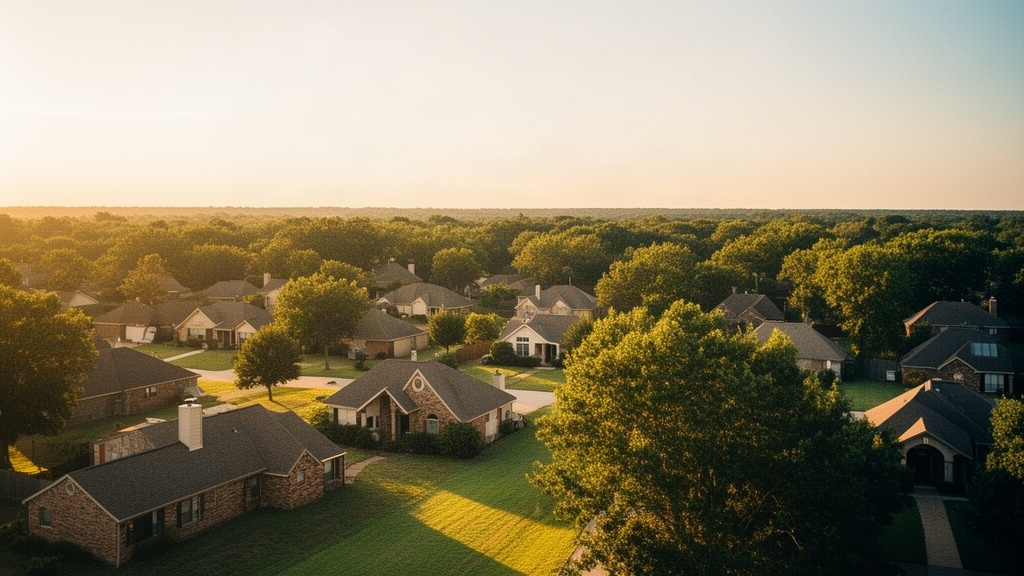
The Tallahassee real estate market guide picture for September 2026 shows a city that has held its value through a period of national rate pressure while remaining more affordable than most other Florida metros. Median sale prices across Leon County currently sit in the low-to-mid $300,000s, with the broader range running from the upper $100,000s for smaller in-town properties to well above $700,000 for larger homes on wooded lots in established subdivisions.
Median Sale Price and Price Per Square Foot
Price per square foot is one of the most useful figures for comparing homes across different parts of the city. In Tallahassee, that figure currently ranges from roughly $150 per square foot for older or smaller homes in the urban core to $200 or more per square foot in newer planned communities and larger-lot subdivisions on the northeast and northwest sides. Homes in the $250,000 to $350,000 range are the most active segment of the market, accounting for a large share of closed sales each month.
For a deeper look at how these numbers have shifted over recent years, the Tallahassee housing market analysis at Norada Real Estate provides useful trend context going back several years, including how appreciation rates have compared to other mid-size Florida cities.
How Prices Vary Across the City
Geography shapes price significantly in Tallahassee. The northeast quadrant, anchored by corridors like Thomasville Road and Centerville Road, tends to carry higher price points because of larger lots, mature tree canopy, and proximity to the Capital Circle corridor. The northwest side, running out toward Ox Bottom Road and Bannerman Road, is home to newer construction that often lists in the $350,000 to $550,000 range. Southwest Tallahassee, which includes the planned SouthWood community off Capital Circle Southeast, offers a distinct mix of townhomes, single-family homes, and larger estate-style properties.
The urban core and areas near Florida State University and FAMU carry a different profile: smaller square footage, older construction from the 1950s through 1980s, and lower price points that appeal to buyers looking for walkability or proximity to campus employment.
2. A Practical Look at Tallahassee's Key Areas
Tallahassee is a city of distinct quadrants, and each one has a different housing character, price range, and commute profile. Understanding those differences is central to any Tallahassee real estate market guide.
Northwest Tallahassee
The northwest side has seen substantial new construction over the past decade. Subdivisions along Bannerman Road and Thomasville Road north of I-10 feature four-bedroom homes with two-car garages, open floor plans, and HOA-managed common areas. Lot sizes typically run from a quarter acre to just under half an acre. Commute times to the Capitol Complex downtown average 20 to 30 minutes depending on the specific subdivision and the time of day, with most routes running south on Thomasville Road or via Capital Circle Northwest.
Price points in active northwest subdivisions currently range from the low $300,000s for smaller newer homes to the mid $500,000s for larger builds with premium lots. The area also includes Killearn Estates, one of Tallahassee's most established planned communities, developed beginning in the 1960s and still one of the most active resale markets in the city.
Southwest Tallahassee
Southwest Tallahassee is anchored by the SouthWood community, a master-planned development that sits roughly six miles southeast of the Capitol along Capital Circle Southeast. SouthWood includes townhomes starting in the mid $200,000s, single-family homes in the $300,000 to $500,000 range, and larger properties approaching $700,000. The community has its own town center, walking trails, and a golf course. For a detailed breakdown of that specific market, the SouthWood area real estate market guide covers pricing and inventory in more depth.
Beyond SouthWood, the southwest corridor includes older neighborhoods along Apalachee Parkway and Capital Circle Southwest, where ranch-style homes from the 1970s and 1980s are available in the $180,000 to $280,000 range. Commute distances to the downtown state government employment hub run 10 to 20 minutes via Apalachee Parkway or Capital Circle.
Northeast Tallahassee
The northeast quadrant is characterized by heavily wooded lots, rolling terrain, and some of the largest homes in the city. Centerville Road, Fleischmann Road, and the area around Killearn Lakes Plantation define this corridor. Lot sizes here frequently exceed half an acre, and many properties back up to conservation land or lakes. Homes in the $400,000 to $800,000 range are common, with luxury properties pushing well past $1 million on premium lakefront or acreage lots.
If you are thinking about listing in this part of the city, the article on selling a home in Northeast Tallahassee walks through pricing strategy and what to expect from the timeline in this specific submarket.
The Urban Core and Midtown Corridor
Midtown Tallahassee sits between the Capitol Complex and the university district, roughly bounded by Tharpe Street to the north and Tennessee Street to the south. The housing stock here is a mix of bungalows and cottages from the 1940s through 1960s, mid-century ranch homes, and a growing number of renovated properties. Prices in Midtown currently range from the upper $200,000s to the low $500,000s depending on lot size, condition, and renovation level. The area is walkable to Midtown's restaurant and retail district along Thomasville Road. For a full breakdown, the Midtown Tallahassee real estate market guide covers that corridor specifically.
The area immediately surrounding FSU and FAMU, including neighborhoods like Betton Hills, Forest Heights, and the streets near Myers Park, contains some of the most architecturally interesting homes in the city. Brick colonials, Florida vernacular cottages, and mid-century moderns appear on the same block. Prices here have risen steadily as buyers have recognized the value of proximity to employment, parks, and the Cascades trail system.
3. Market Conditions: Supply, Demand, and Days on Market
Understanding supply and demand is the core of any real estate market guide, and in Tallahassee right now the balance has shifted toward a more neutral position after several years of intense seller-side pressure.
Inventory Levels in September 2026
Active listings in Leon County have increased compared to the low inventory environment of 2022 and 2023. Buyers currently have more options than they did two or three years ago, and the negotiating dynamic has softened in many price ranges. That said, well-priced homes in desirable subdivisions on the northeast and northwest sides are still moving within two to three weeks of listing. The segment that has seen the most inventory buildup is the $500,000-and-above range, where higher mortgage rates have reduced the pool of qualified buyers.
For a focused look at how long homes are currently sitting before going under contract, the article on days on market in Tallahassee this month breaks down the current pace by price range.
What the Pace of Sales Tells Buyers and Sellers
A months-of-supply figure below three signals a seller's market; above six signals a buyer's market. Tallahassee is currently hovering in the three-to-five-month range depending on price band, which means the market is closer to balanced than it has been in several years. Sellers can still achieve strong prices with correct initial pricing, but the days of receiving multiple offers the first weekend are more selective now, concentrated in the $250,000 to $400,000 range where demand from first-time and move-up buyers remains solid.
The state government employment base, which includes thousands of positions in the Capitol Complex, state agency offices along Apalachee Parkway, and the court system, provides a steady floor of housing demand that insulates Tallahassee from the boom-and-bust cycles seen in coastal Florida markets. FSU, FAMU, and Tallahassee Community College add additional employment stability.
4. Timing Your Move: When to Buy or Sell in Tallahassee
Timing is a genuine variable in the Tallahassee market, not just a talking point. The city has a seasonal rhythm driven by the academic calendar, the legislative session, and the summer heat that shapes when listings appear and when buyers are most active.
The Seasonal Pattern in Leon County
Spring is historically the most active listing season in Tallahassee. March through May brings the highest volume of new listings and the most buyer activity, coinciding with the end of the Florida legislative session and the period when state employees often relocate for new assignments. Summer sees a dip in foot traffic as temperatures push into the upper 90s and families with children tend to pause their searches. Fall, from September through November, is a secondary active window as those same buyers who paused in summer return to the market with renewed urgency to close before the end of the year.
What Fall 2026 Looks Like for Sellers
Sellers listing in September and October 2026 are entering a window with less competition from other sellers than spring, but with a meaningful pool of motivated buyers. Buyers who are under contract by late October can typically close before the holidays, which creates a natural deadline that works in a seller's favor. The key risk in fall is overpricing: with more inventory available than in prior years, buyers are more willing to walk away from a home that is not priced to current market conditions. For a direct comparison of fall versus spring timing, the article on selling in fall 2026 versus waiting until spring lays out both scenarios with specific considerations.
What Fall 2026 Looks Like for Buyers
For buyers, fall is one of the more practical times to purchase in Tallahassee. Competition from other buyers is lower than in spring, sellers who have been on the market since summer are often more willing to negotiate on price or concessions, and lenders are typically not as backlogged as they are in the spring rush. Mortgage rates remain elevated compared to the historic lows of 2020 and 2021, but Tallahassee's price point relative to other Florida metros means the monthly payment difference is less severe here than in Miami, Orlando, or Tampa.
5. Costs, Taxes, and Financial Context
A complete Tallahassee real estate market guide has to address the full cost of ownership, not just the purchase price. Property taxes, closing costs, and insurance all affect what a home truly costs each month.
Property Taxes in Leon County
Leon County's effective property tax rate runs roughly 1.0% to 1.3% of assessed value for most residential properties, though the exact figure depends on which taxing districts apply to your specific address. A home assessed at $350,000 would carry an annual tax bill in the range of $3,500 to $4,550 before any exemptions. Florida's homestead exemption reduces the assessed value by up to $50,000 for primary residents, and the Save Our Homes cap limits annual assessment increases to 3% or the rate of inflation, whichever is lower, once the exemption is in place. For a full explanation of how these figures are calculated, the article on property taxes in Tallahassee covers the mechanics in detail.
Closing Costs and Affordability Pressure
Buyers in Tallahassee should budget between 2% and 4% of the purchase price for closing costs, which include lender fees, title insurance, prepaid homeowners insurance, and escrow deposits for property taxes. On a $320,000 purchase, that translates to roughly $6,400 to $12,800 in cash needed at closing beyond the down payment. Sellers typically pay the real estate commission and their share of title costs, which together often run 5% to 7% of the sale price. Affordability has been the central challenge in Tallahassee over the past two years, as income growth has not kept pace with the combination of higher prices and higher rates.
For context on how affordability has shifted, the Tallahassee home affordability report from Manausa Real Estate provides a detailed look at income-to-payment ratios and how they have changed over recent years, which is useful background even as specific figures continue to evolve into 2026.
Homeowners insurance in North Florida has also risen meaningfully, driven by statewide carrier challenges. Buyers purchasing in Leon County should obtain insurance quotes early in the process, before removing inspection contingencies, to avoid surprises. Most homes in Tallahassee are not in FEMA special flood hazard areas, but properties near Lake Jackson, Lake Bradford, and drainage corridors near Miccosukee Road warrant a flood zone check.
FAQ
What is the typical home price range in Tallahassee right now?
As of September 2026, the median sale price in Leon County sits in the low-to-mid $300,000s, with the active market ranging from the upper $100,000s for smaller older homes near the university district to $700,000 and above for larger properties on wooded lots in the northeast and northwest quadrants. The most competitive segment, where well-priced homes move fastest, is the $250,000 to $400,000 range. Price per square foot currently runs from roughly $150 for older urban-core homes to $200 or more in newer planned subdivisions. These figures can shift as new listings enter the market each month, so checking current active listings alongside recent sold data gives the clearest picture.
Is it a buyer's market or a seller's market in Tallahassee in September 2026?
Tallahassee is currently in a more balanced market than it was in 2021 and 2022, with months of supply running in the three-to-five-month range depending on price band. Homes priced between $250,000 and $400,000 still favor sellers, with well-priced listings moving in two to three weeks. Above $500,000, inventory has built up and buyers have more negotiating room. Sellers who price accurately from day one are still achieving strong results, while overpriced listings are sitting longer than they would have two years ago. Buyers entering the market this fall have more choices and more leverage on concessions than at any point since 2019.
How do Tallahassee's different quadrants compare in terms of housing stock and price?
Each quadrant of Tallahassee has a distinct character. The northwest side features newer construction subdivisions along Bannerman and Ox Bottom roads, with prices generally from the low $300,000s to the mid $500,000s. The northeast quadrant is known for larger wooded lots, mature landscaping, and higher price points from the $400,000s into the $800,000s and beyond. Southwest Tallahassee includes the SouthWood planned community with a broad price range from the mid $200,000s to near $700,000, plus older ranch-style neighborhoods along Apalachee Parkway in the $180,000 to $280,000 range. Midtown and the urban core offer bungalows and mid-century homes from the upper $200,000s to the low $500,000s, with walkability to restaurants, parks, and the Cascades trail system. The right area depends on your commute needs, lot size preferences, and budget.